Cleveland Museum of Art
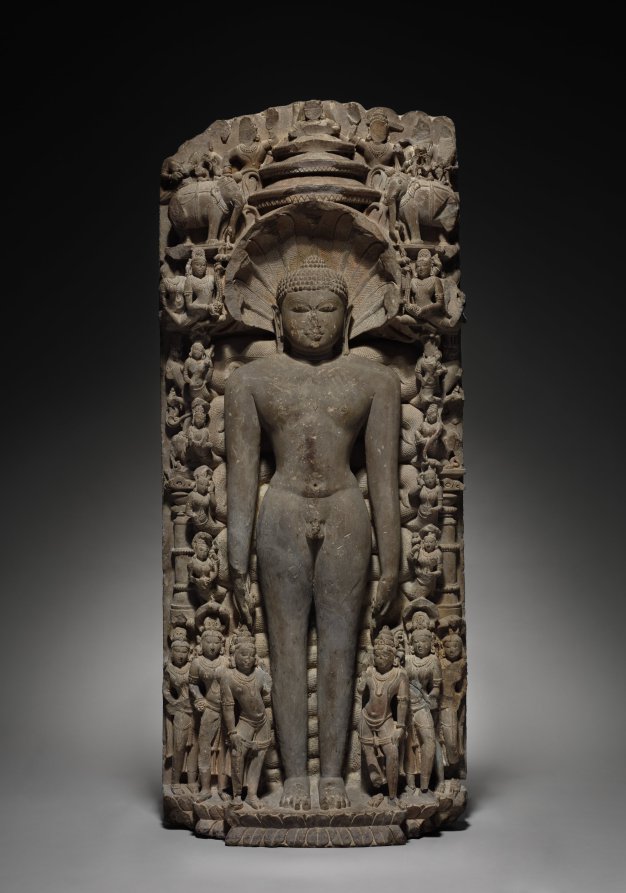
Parshva
- Date
- 800s
- Medium
- sandstone
- Culture
- Central India
- Department
- Indian and Southeast Asian Art
- Institution
- Cleveland Museum of Art
- Object ID
- 136944
From the Cleveland Museum of Art record
Parshva is the 23rd of the 24 Jinas who achieved liberation. He is the only one who is depicted with a serpent. This sculpture was made for followers of the branch of Jainism called Digambara, who enforce the regulations of total nudity among those actively seeking liberation. The only adornment of his figure is the auspicious symbol on his chest and the wheels of righteousness on his palms. The stark form of thenude body standing in a posture of meditation is masterfully set off from the array of gods and serpent divinities who venerate him. He stands with his feet on a lotus pedestal, but his hierarchically tall form reaches to the heavens, where gods fly to honor him with flower garlands. Three umbrellas over his head indicate his status as a liberated being worthy of worship.
The authoritative record is held by Cleveland Museum of Art. LinkedCulture surfaces this object and its connections; it does not alter institutional metadata.
Get printable QR codesHide QR codes
Open QR codes for this object page and the museum record. They stay collapsed until needed.
Provenance & credit
As published by the source institution. Coverage varies — not every institution's open-data feed includes ownership history.
- Credit line
- John L. Severance Fund
- Provenance
- ?–1961: (Khalil Rabenou, New York, NY, sold to the Cleveland Museum of Art) | 1961–: The Cleveland Museum of Art, Cleveland, OH
Part of a LinkedCulture topic
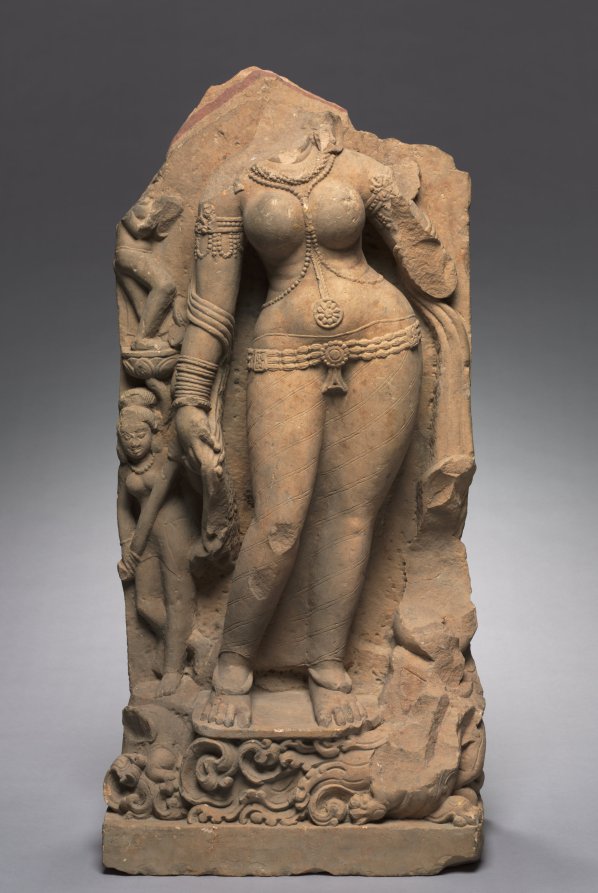 Hindu Deities and Mythology
These objects depict Hindu gods, goddesses, and mythological narratives, particularly featuring Durga slaying the buffalo demon Mahishasura, along with other deities like Ganesh, Krishna, and Brahma from various South an
59 objects from 3 institutions
Related across collections
Semantically similar works from Cleveland Museum of Art and other institutions.