Cleveland Museum of Art
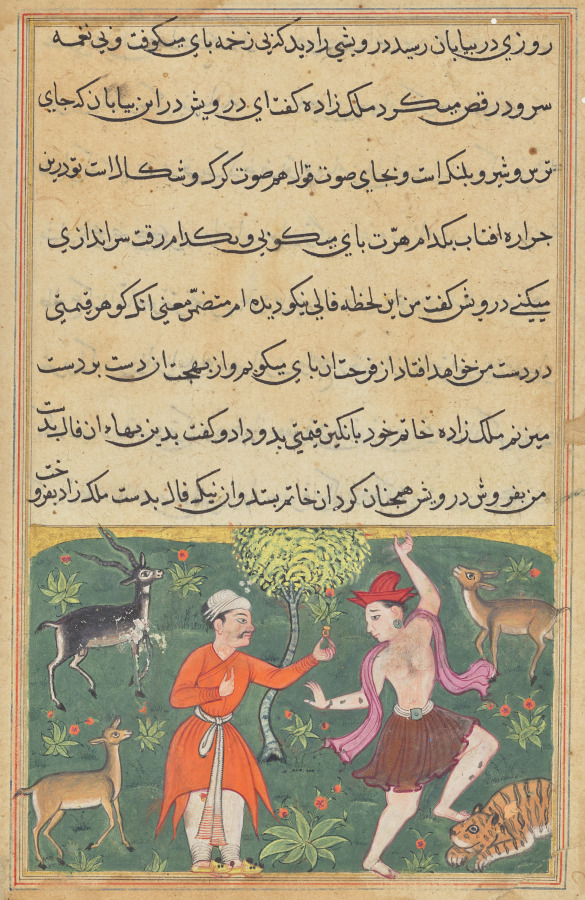
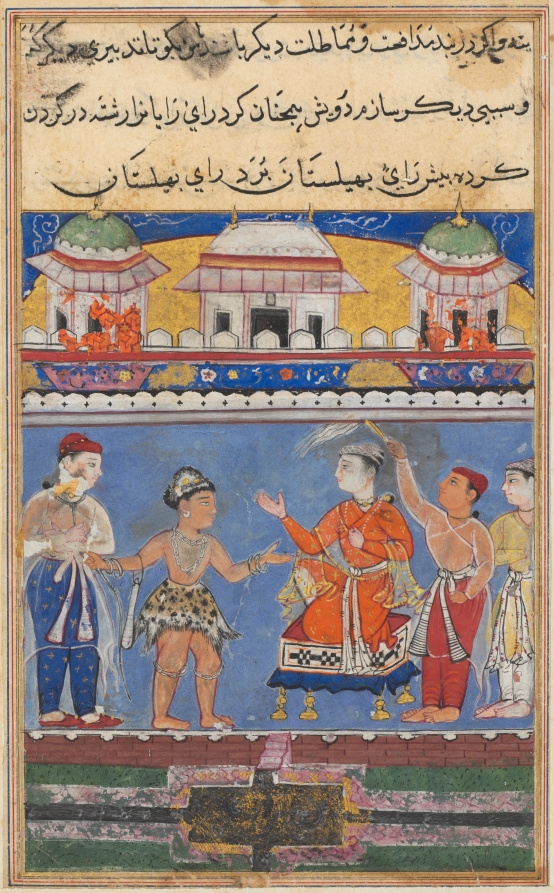
The prince meets a carefree dancing dervish whose good fortune he purchases for his ring, from a Tuti-nama (Tales of a Parrot): Eighteenth Night
- Date
- c. 1560
- Medium
- gum tempera, ink, and gold on paper
- Culture
- Mughal India, court of Akbar (reigned 1556–1605)
- Department
- Indian and Southeast Asian Art
- Institution
- Cleveland Museum of Art
- Object ID
- 137429
From the Cleveland Museum of Art record
The prince, in the orange tunic, had been exiled by his older brother who inherited the throne, so he decided to travel the country. In a wilderness he met a dancing dervish to whom wild animals seemed mystically drawn; the deer are unconcerned about the tiger nearby. Dervishes are Sufi holy men whose dances bring them closer to god, but in this ironic story, the dervish dances for joy, because he just perceived an omen that he was about to become rich. The prince handed him his signet ring in exchange for the dervish’s good fortune. The animals in the wilderness include a tiger, two does, and a blackbuck.
The authoritative record is held by Cleveland Museum of Art. LinkedCulture surfaces this object and its connections; it does not alter institutional metadata.
Get printable QR codesHide QR codes
Open QR codes for this object page and the museum record. They stay collapsed until needed.
Provenance & credit
As published by the source institution. Coverage varies — not every institution's open-data feed includes ownership history.
- Credit line
- Gift of Mrs. A. Dean Perry
- Provenance
- ?–1959: Estate of Breckinridge Long [1881–1958], Bowie, MD | 1959–1962?: (Harry Burke Antiques, Philadelphia, PA) | 1959?–1962: (Bernard Brown Agency, Milwaukee, WI, sold to the Cleveland Museum of Art. Purchased with funds from Mrs. A. Dean [Helen Wade Greene] Perry) | 1962–: The Cleveland Museum of Art, Cleveland, OH
Related across collections
Semantically similar works from Cleveland Museum of Art and other institutions.
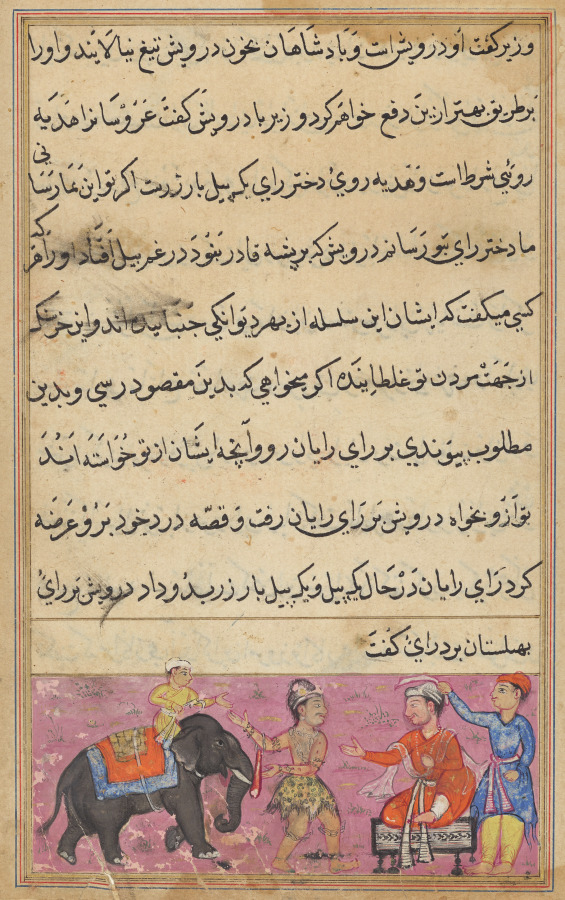
The dervish brings in as dowry an elephant laden with gold, from a Tuti-nama (Tales of a Parrot): Seventh Night
Cleveland Museum of Art
#137894
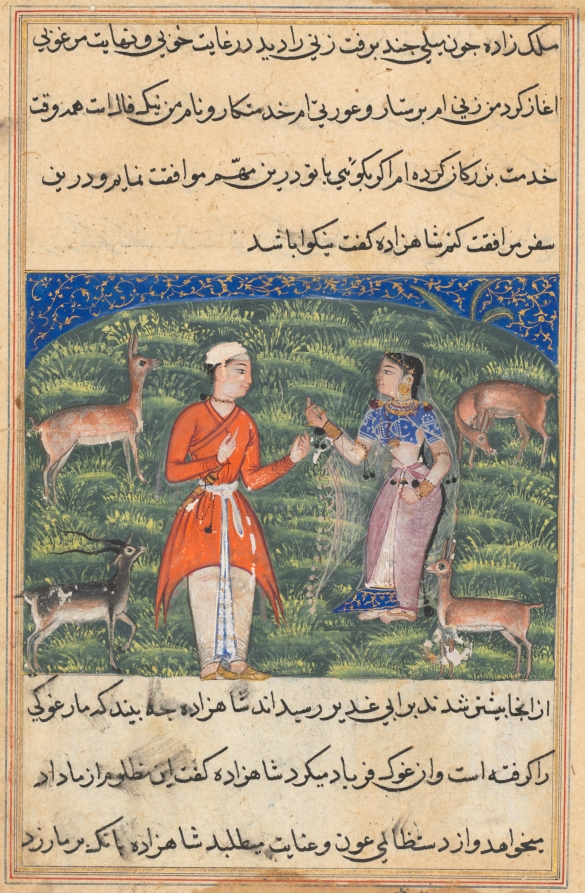
Nikfal, the fortune of the prince in the form of a woman, offers to accompany him, from a Tuti-nama (Tales of a Parrot): Eighteenth Night
Cleveland Museum of Art
#137430
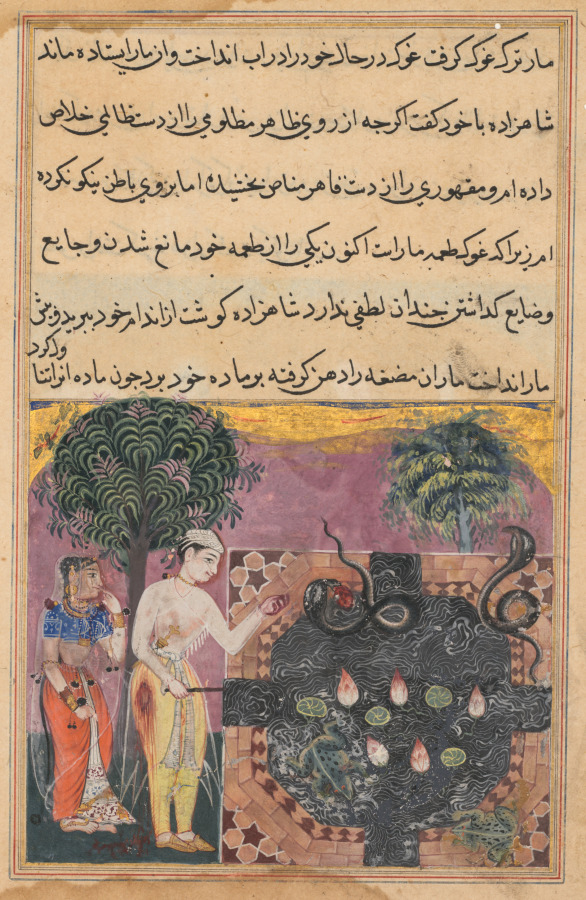
The prince, having deprived the snake of its natural food, a frog, feeds it with a piece of his own flesh, from a Tuti-nama (Tales of a Parrot): Eighteenth Night
Cleveland Museum of Art
#137431
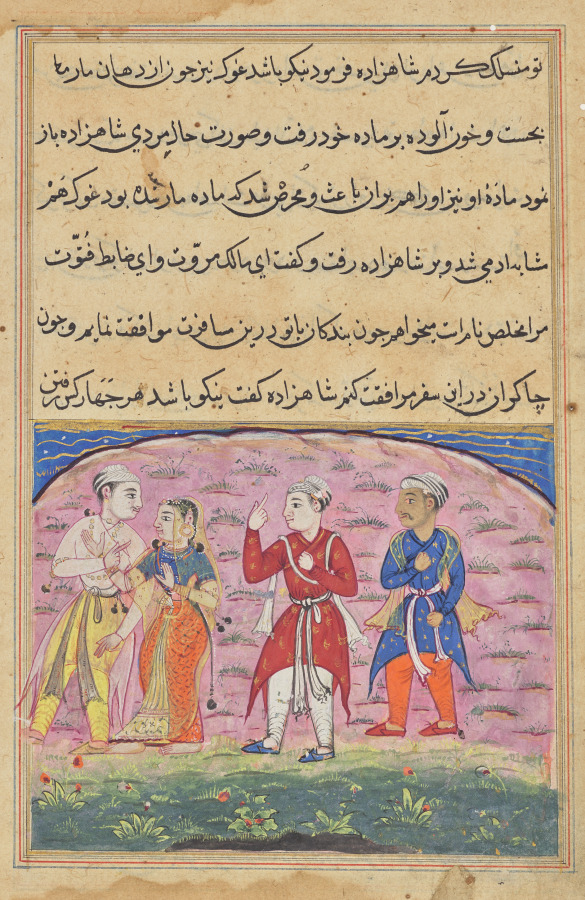
The prince and Nikfal are joined by Khalis and the Mukhlis who are the grateful snake and frog in human form, from a Tuti-nama (Tales of a Parrot): Eighteenth Night
Cleveland Museum of Art
#137435
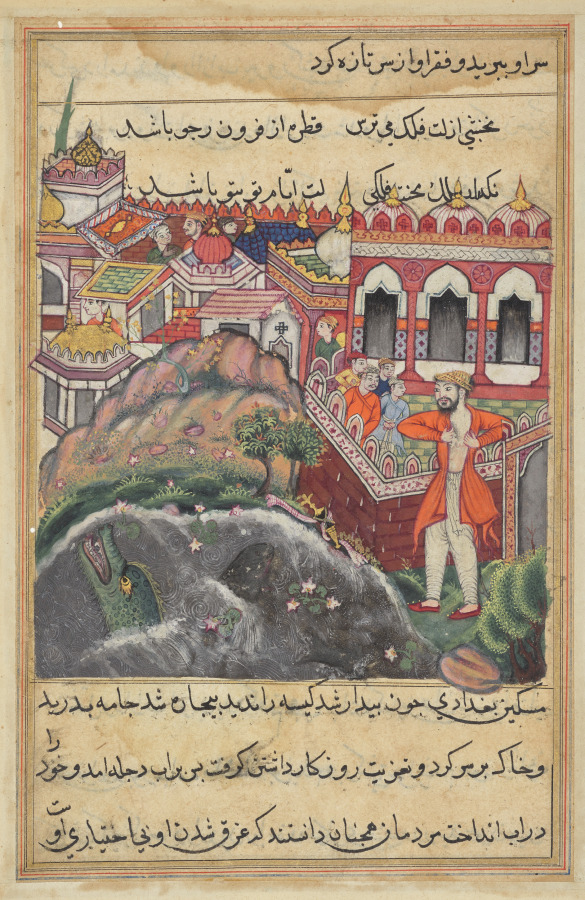
The bag of gold which he received for the slave girl being stolen in a mosque, the young man of Baghdad tears his cloths and is about to fling himself into the Tigris, from a Tuti-nama (Tales of a Parrot): Forty-eighth Night
Cleveland Museum of Art
#137796
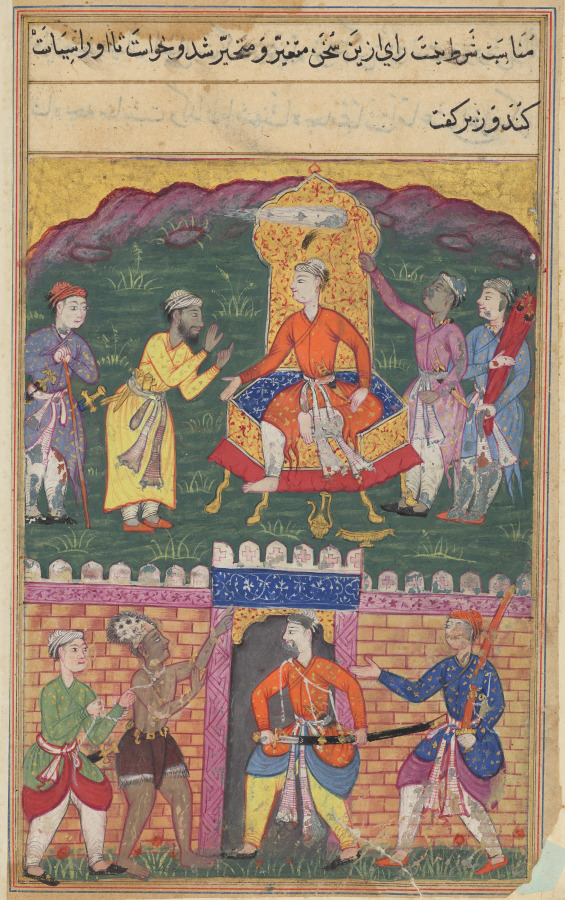
The vizier dissuades the king of Bahilistan from executing the dervish who asks for his daughter’s hand in marriage, from a Tuti-nama (Tales of a Parrot): Seventh Night
Cleveland Museum of Art
#137893
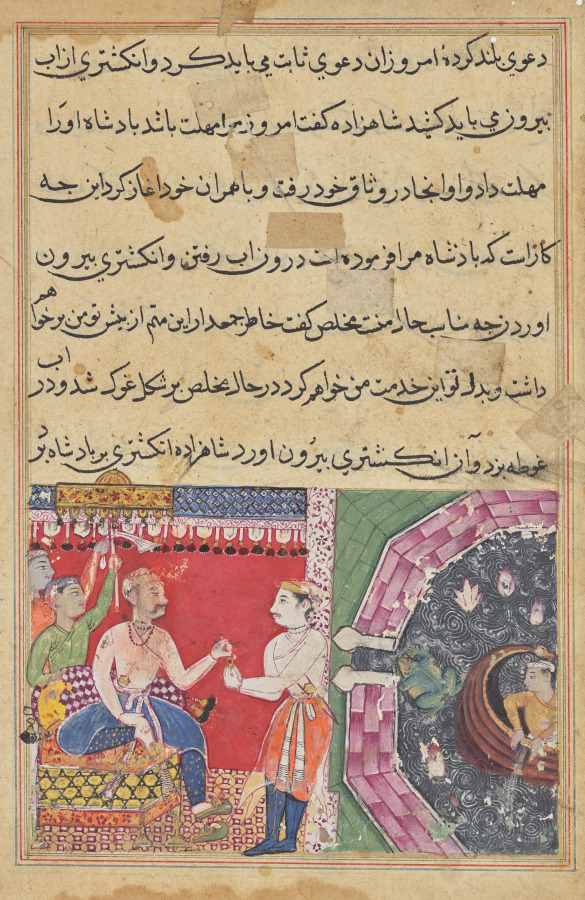
The prince, with the help of Mukhlis who changes into a frog, recovers the ring lost in the sea, and returns it to the king, from a Tuti-nama (Tales of a Parrot): Eighteenth Night
Cleveland Museum of Art
#137437
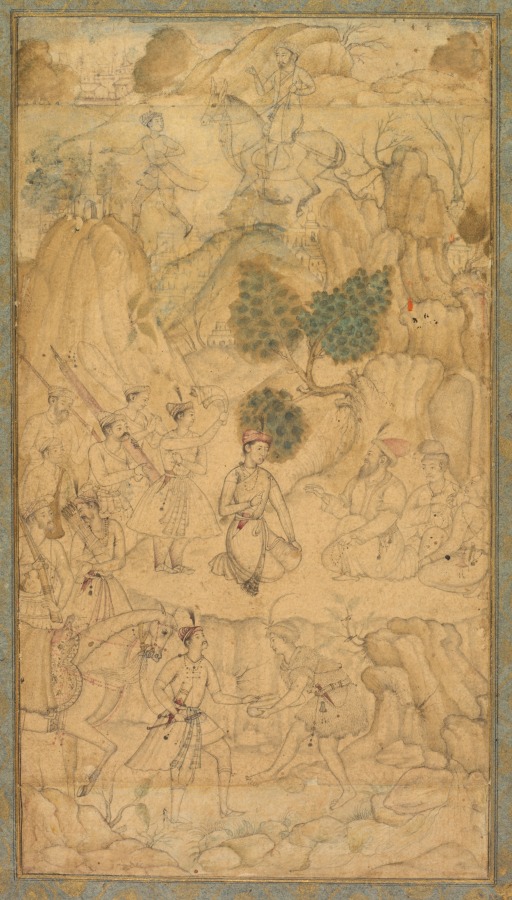
A prince visiting a holy man in a rocky landscape
Cleveland Museum of Art
#170797
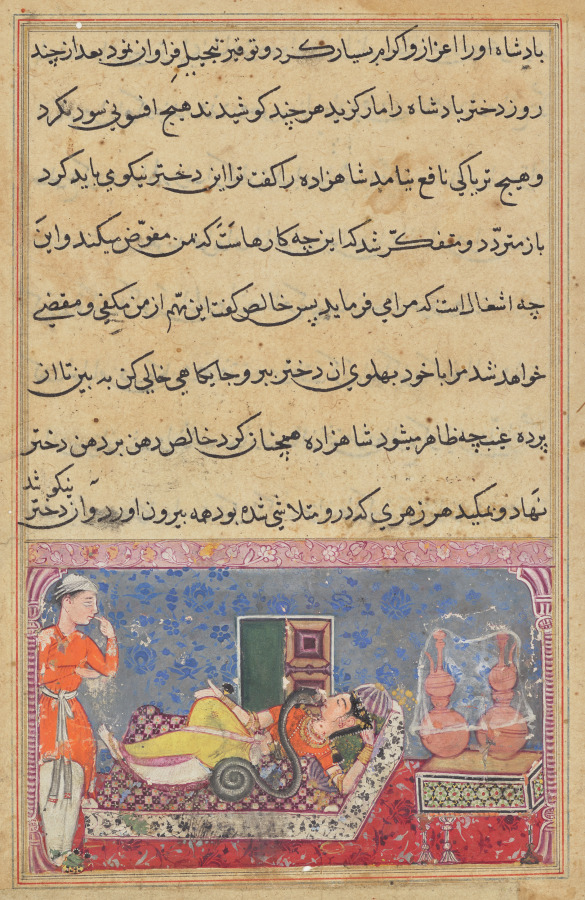
Khalis repays the prince for his kindness by changing into a snake and sucking the poison from the king’s daughter, from a Tuti-nama (Tales of a Parrot): Eighteenth Night
Cleveland Museum of Art
#137438
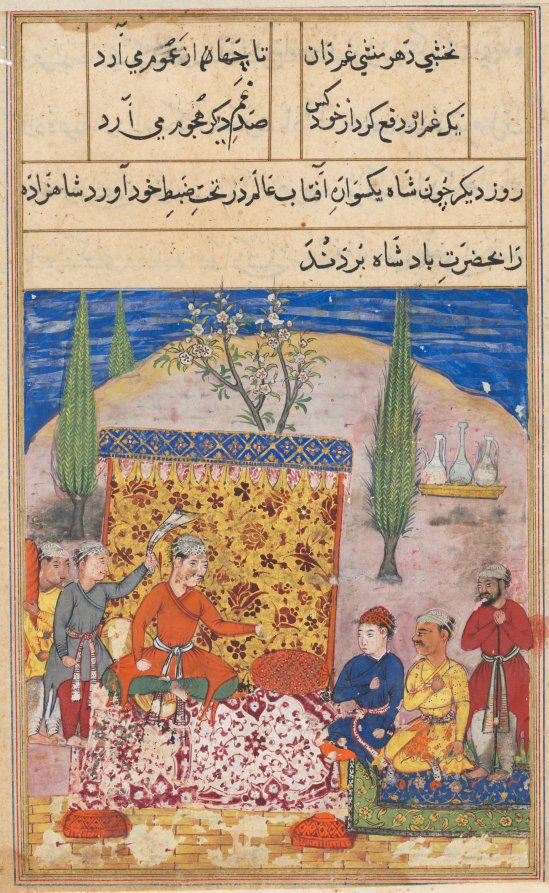
The young prince is presented to the king, his father, by his teacher, but refuses to speak, from a Tuti-nama (Tales of a Parrot): Eighth Night
Cleveland Museum of Art
#137915
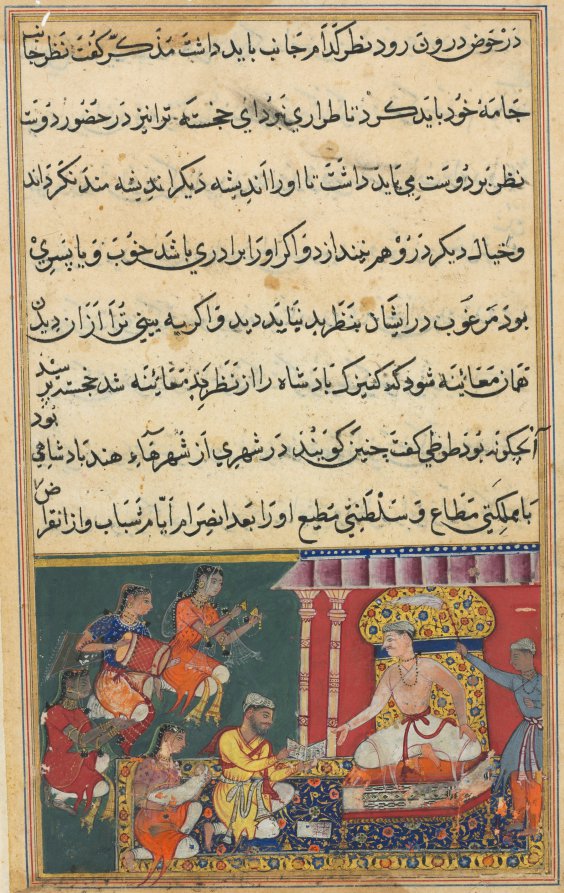
The astrologer predicts a calamity for the newly born prince in his thirteenth year, but one which he would be able to overcome, from a Tuti-nama (Tales of a Parrot): Eighth Night
Cleveland Museum of Art
#137911
The dervish brings the King of Kings before the king of Bahilistan, from a Tuti-nama (Tales of a Parrot): Seventh Night
Cleveland Museum of Art
#137896