Cleveland Museum of Art
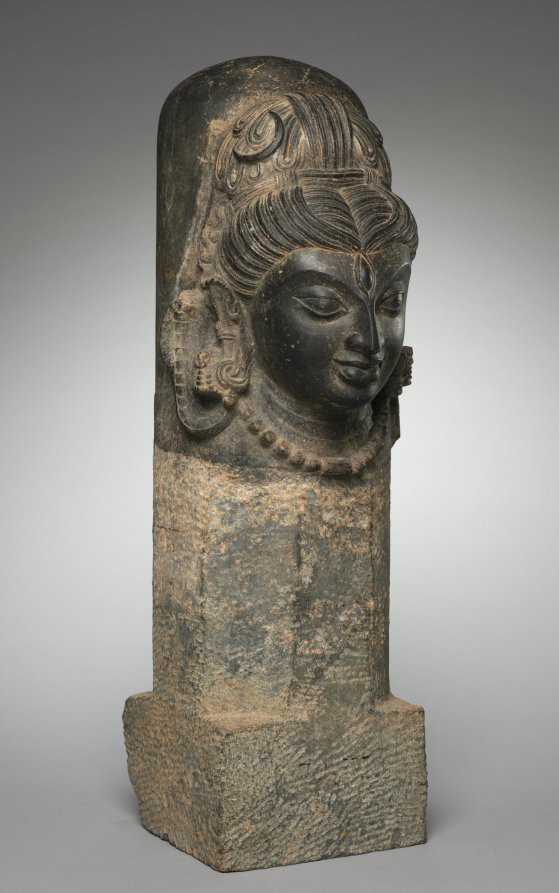
One-Faced Linga (Ekamukhalinga)
- Date
- 600s–700s
- Medium
- chloritic schist
- Culture
- Eastern India, Bihar, Medieval period, Pala dynasty
- Department
- Indian and Southeast Asian Art
- Institution
- Cleveland Museum of Art
The innermost sanctum of a Hindu temple dedicated to Shiva is called a womb chamber in which a stylized phallus called a linga is installed. Together, the chamber and linga represent the potentiality of creation. Artists depict the first stage of creation by a face emerging from the phallus, which embodies one aspect of Shiva. This face is of a powerful yogi, with long matted locks adorned with a crescent moon. He has a penetrating gaze with all three of his eyes. This icon would have been accessed primarily by Brahmin priests who would perform rituals honoring Shiva as the ultimate creator of the world. Some lingas have four faces that indicate a more advanced stage of creation.
The authoritative record is held by Cleveland Museum of Art. LinkedCulture surfaces this object and its connections; it does not alter institutional metadata.
Related across collections
Semantically similar works from Cleveland Museum of Art and other institutions.
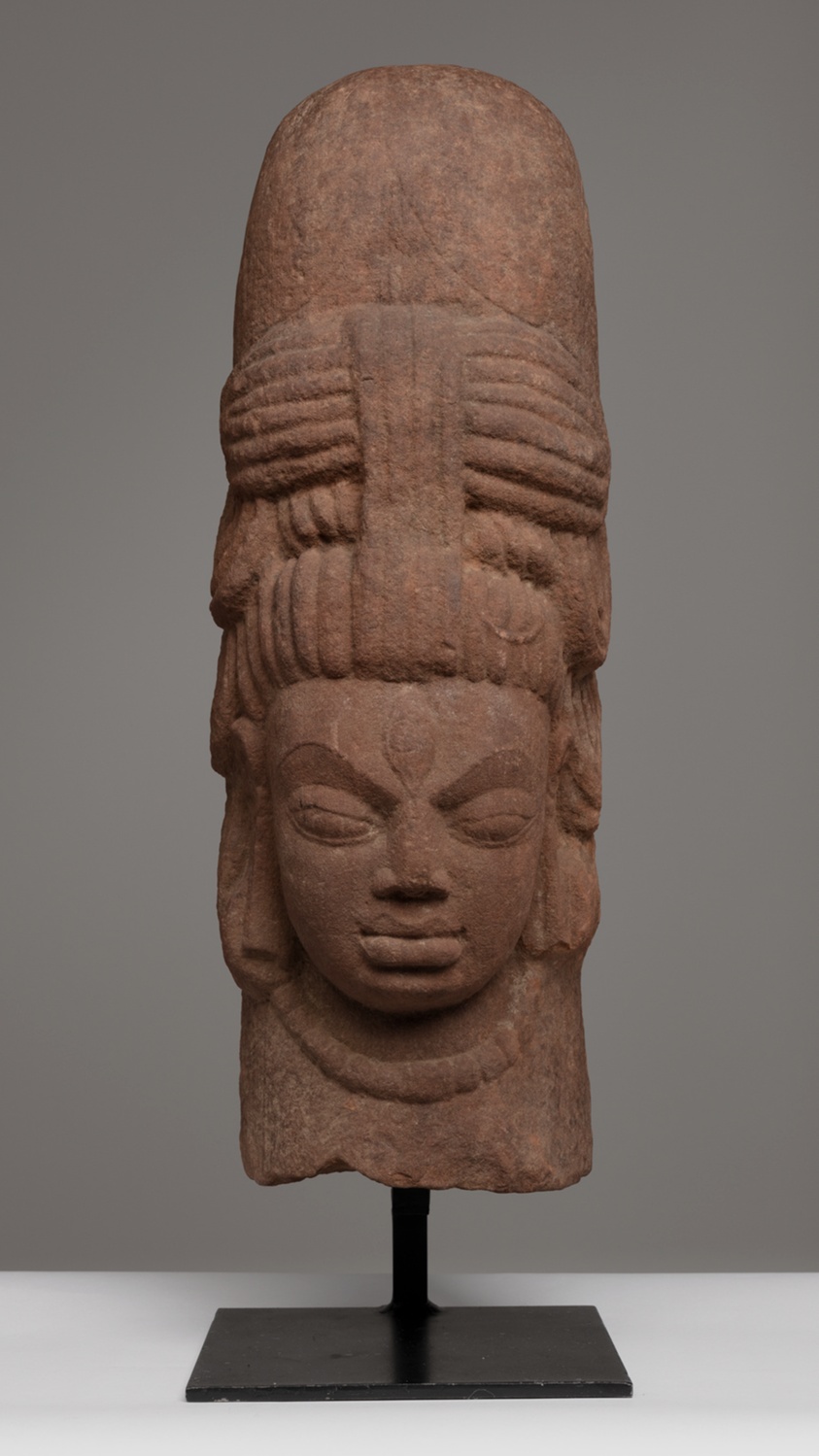
Emblem of the God Shiva with One Face (Ekamukhalinga)
Art Institute of Chicago
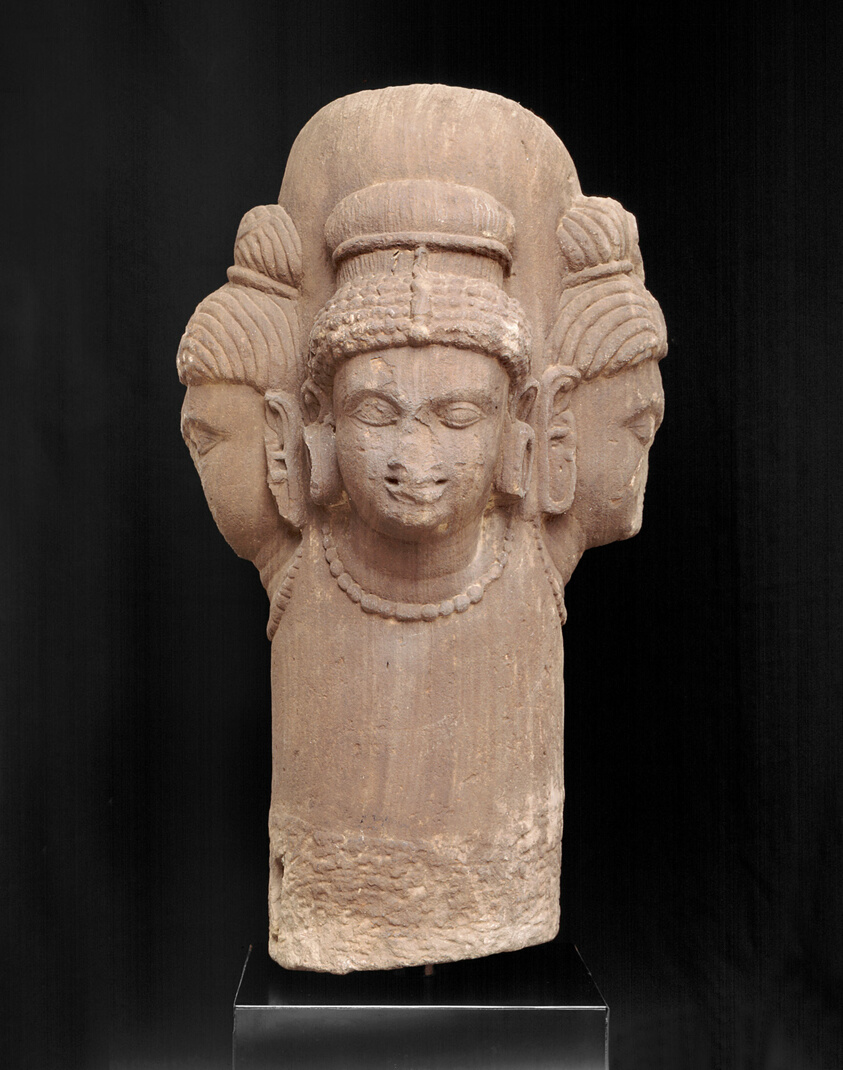
Emblem of God Shiva with Four Faces (Chaturmukhalinga)
Art Institute of Chicago
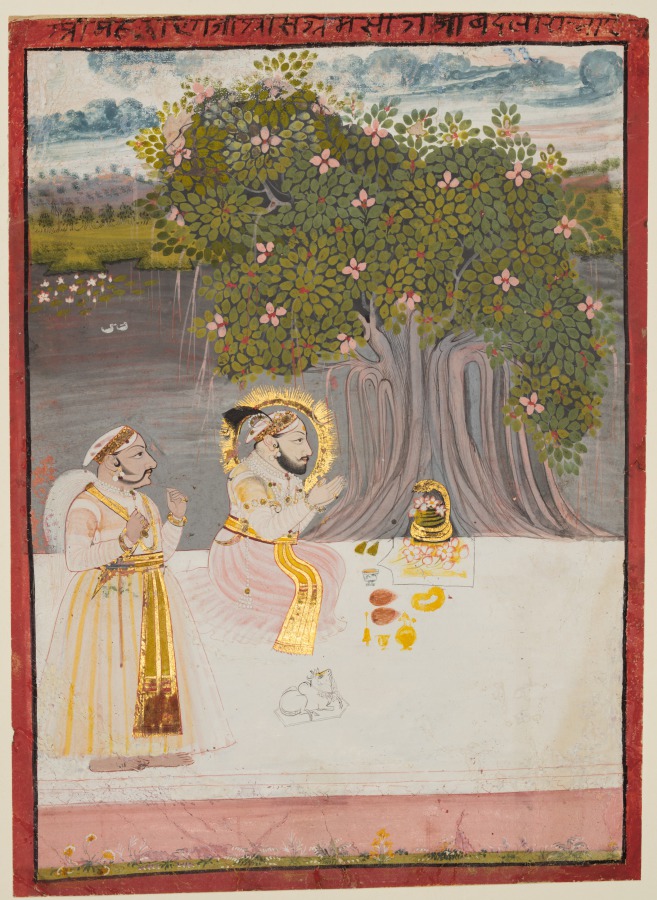
Maharana Sangram Singh II (r. 1710–34) Worshipping a Linga Under a Banyan Tree
Cleveland Museum of Art
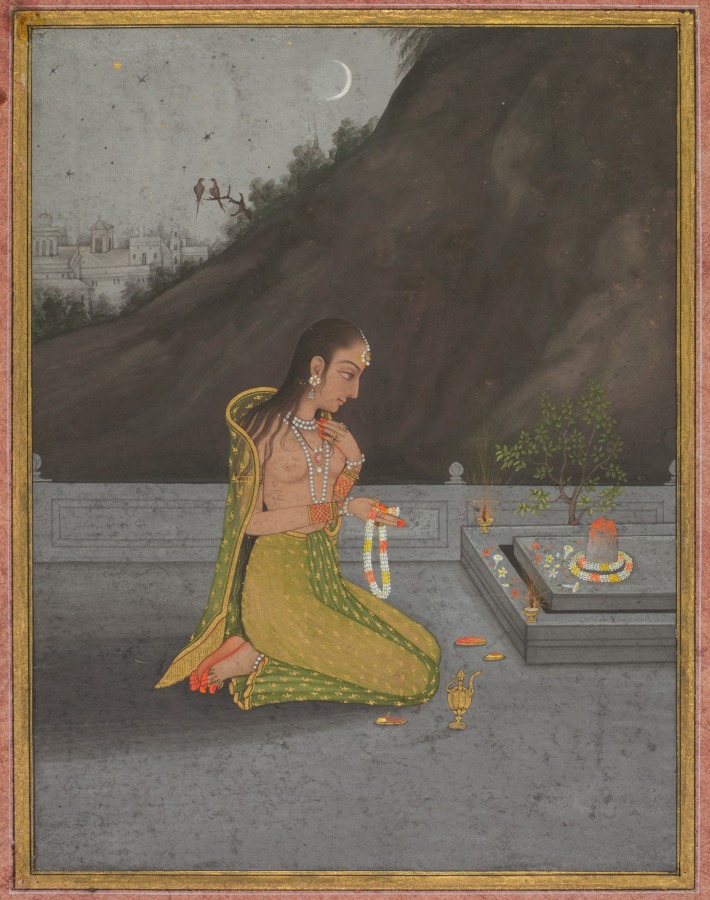
A Night Scene of Shiva Puja (recto)
Cleveland Museum of Art
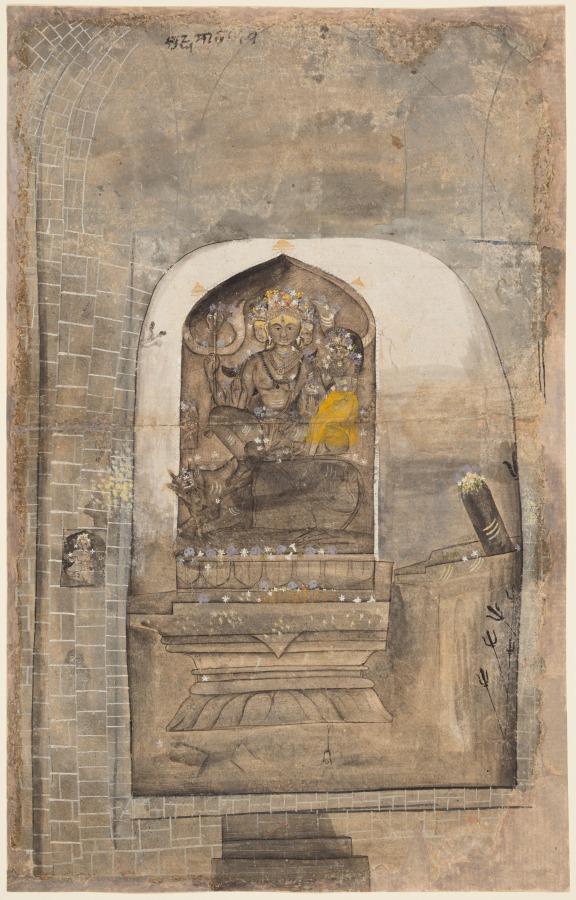
Stone sculptures in a Shiva temple
Cleveland Museum of Art
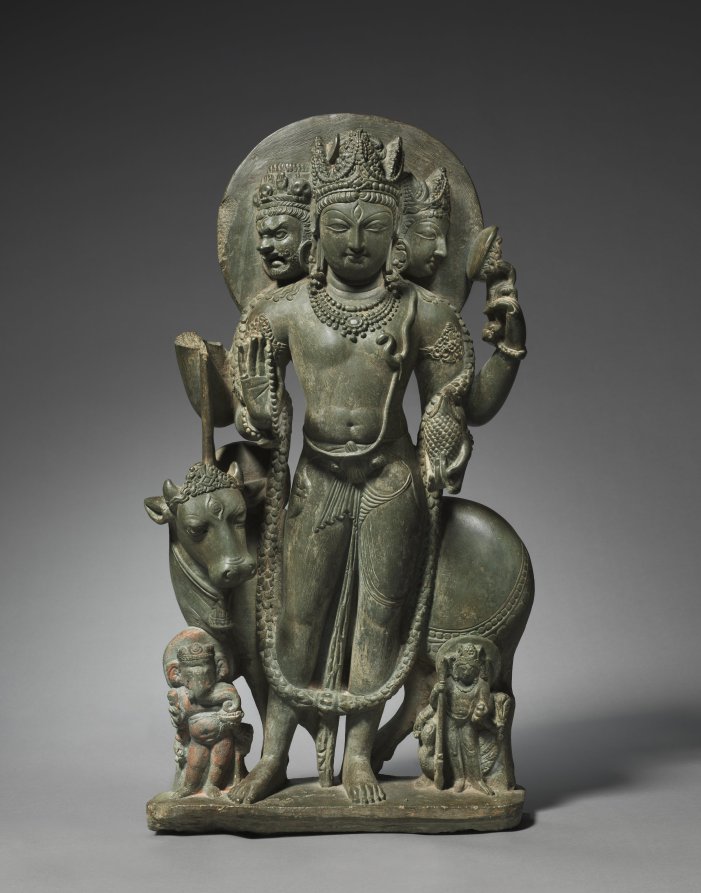
Standing Shiva Mahadeva
Cleveland Museum of Art
A night scene of Shiva puja (recto); Calligraphy (verso)
Cleveland Museum of Art
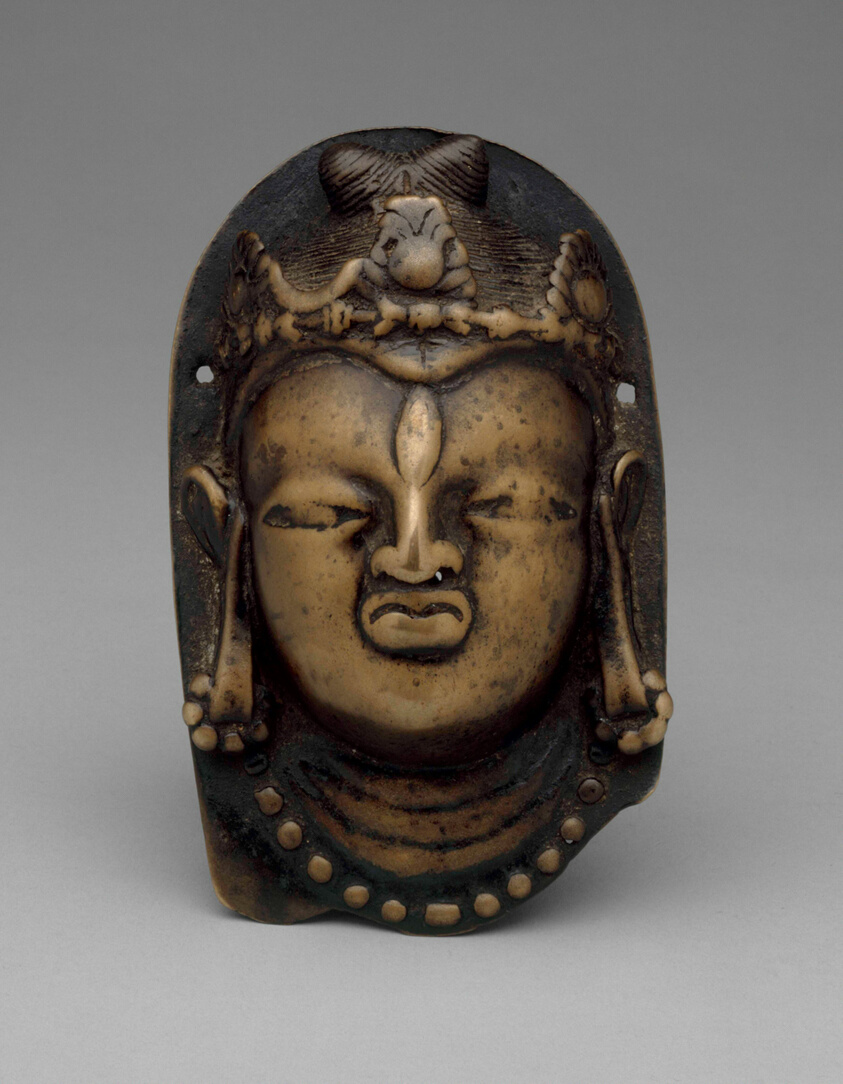
Linga Cover with Head of God Shiva
Art Institute of Chicago
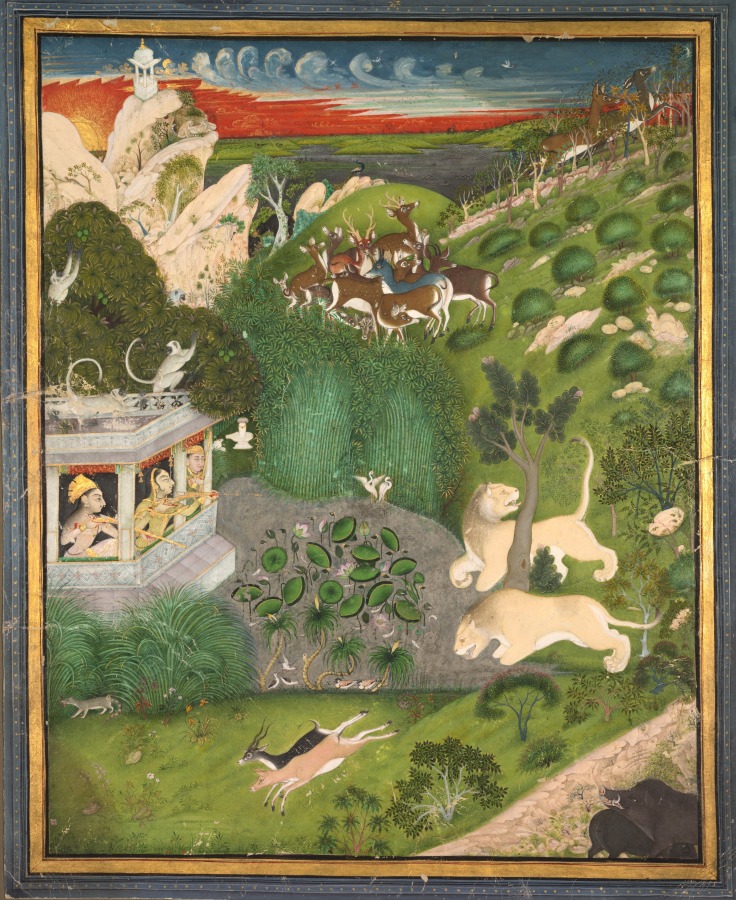
Royal women shooting from a pavilion
Cleveland Museum of Art
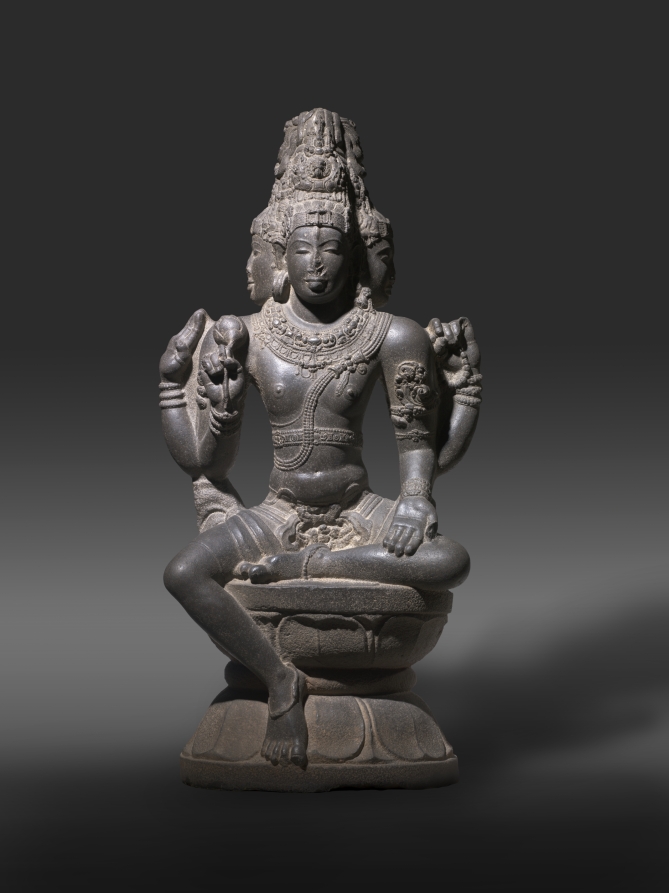
Brahma-Shiva
Cleveland Museum of Art
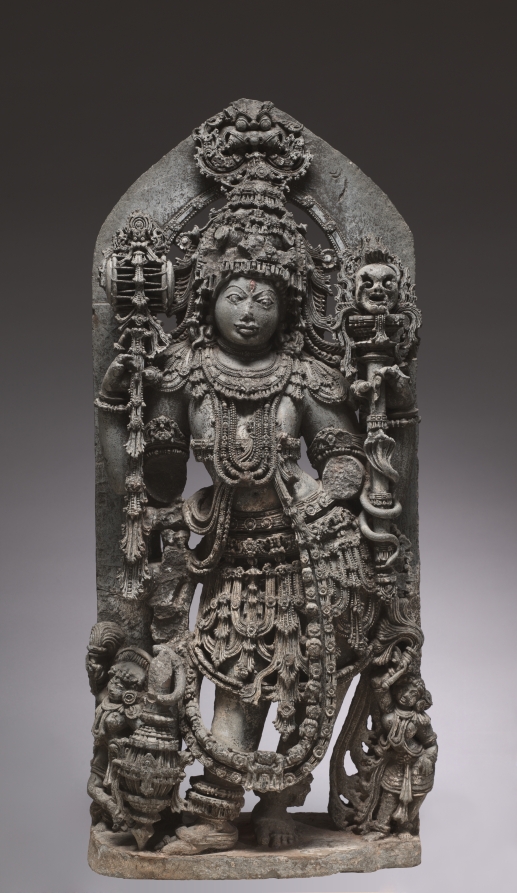
A Guardian of Shiva
Cleveland Museum of Art

Uma-Maheshvara
Minneapolis Institute of Art