Cleveland Museum of Art
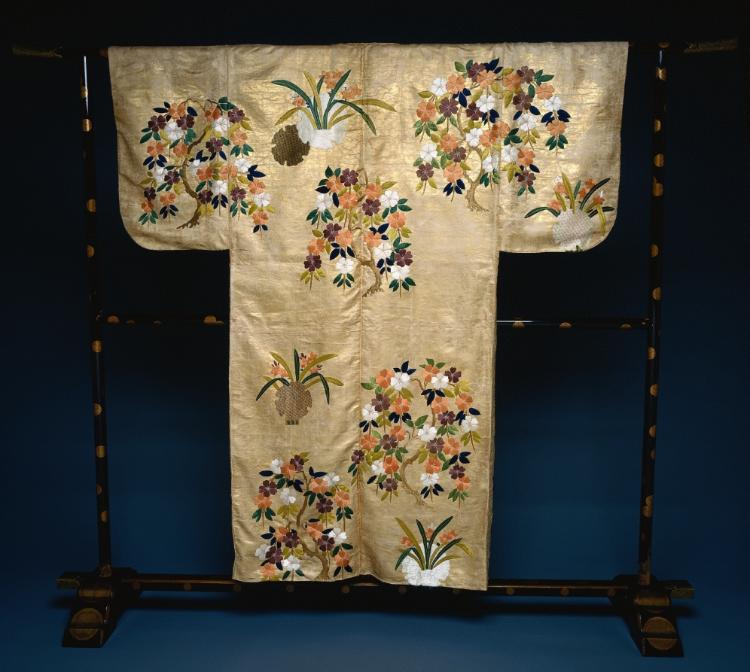
Nō Costume (Nuihaku) with Blossoming Trees and Flowers
- Date
- 1675–99
- Medium
- embroidery, silk and applied gold leaf on silk ground
- Culture
- Japan, Edo period (1615–1868)
- Department
- Textiles
- Institution
- Cleveland Museum of Art
- Object ID
- 147935
From the Cleveland Museum of Art record
This magnificent robe was a costume specifically designed for performances of Noh theater in Japan. Originating during the 1300s from simple folk plays, Noh drama evolved into formal presentations of ritual, theater, dance, and music performed in the courts and shrines of the nobility. Stories were derived from a variety of sources—myths, legends, poetry, and prose—many dating back to the medieval period. Because great importance was placed on subtlety and elegance, plots tended to be minimal. Whether male or female all roles were played by men. Central to these performances were the masks and costumes worn by the actors. The brilliance and elegance of this robe are characteristic of costumes made solely for Noh theater. Its date in the first half of the 1700s is indicated by the proportions of the robe, the choice of embroidery stitches (satin, couching, and outline), and the absence of decoration at the hips, a fashion also reflected in kimonos at that time. The design of weeping cherry trees and irises in the snow was very likely inspired by a medieval Japanese poem. Robes decorated with embroidery against a gold ground were reserved for female roles. These robes were worn under the external garment and were only partially visible.
The authoritative record is held by Cleveland Museum of Art. LinkedCulture surfaces this object and its connections; it does not alter institutional metadata.
Get printable QR codesHide QR codes
Open QR codes for this object page and the museum record. They stay collapsed until needed.
Provenance & credit
As published by the source institution. Coverage varies — not every institution's open-data feed includes ownership history.
- Credit line
- Purchase from the J. H. Wade Fund
- Provenance
- ?-1974: (Kochukyo Co., Inc., Tokyo, Japan, ?-1974, sold to the Cleveland Museum of Art) | 1974-: The Cleveland Museum of Art, Cleveland, OH, 1974-present
Part of a LinkedCulture topic
 Japanese Noh Theater Costumes
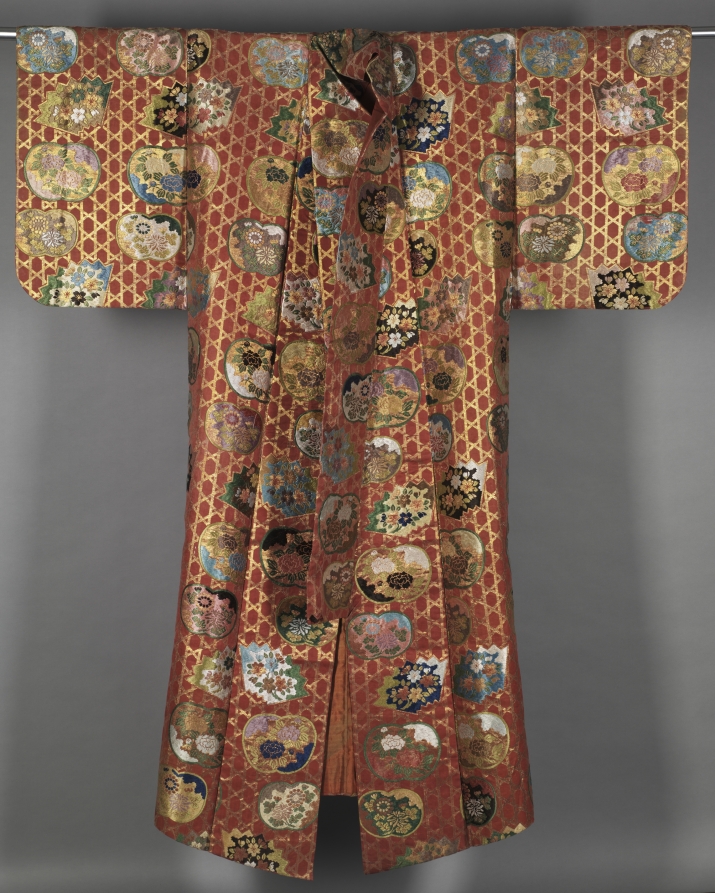
These objects are all elaborate silk costumes (including nuihaku, karaori, kariginu, and other types) used in traditional Japanese Noh theater performances, primarily from the Edo period.
22 objects from 3 institutions
Related across collections
Semantically similar works from Cleveland Museum of Art and other institutions.