Cleveland Museum of Art
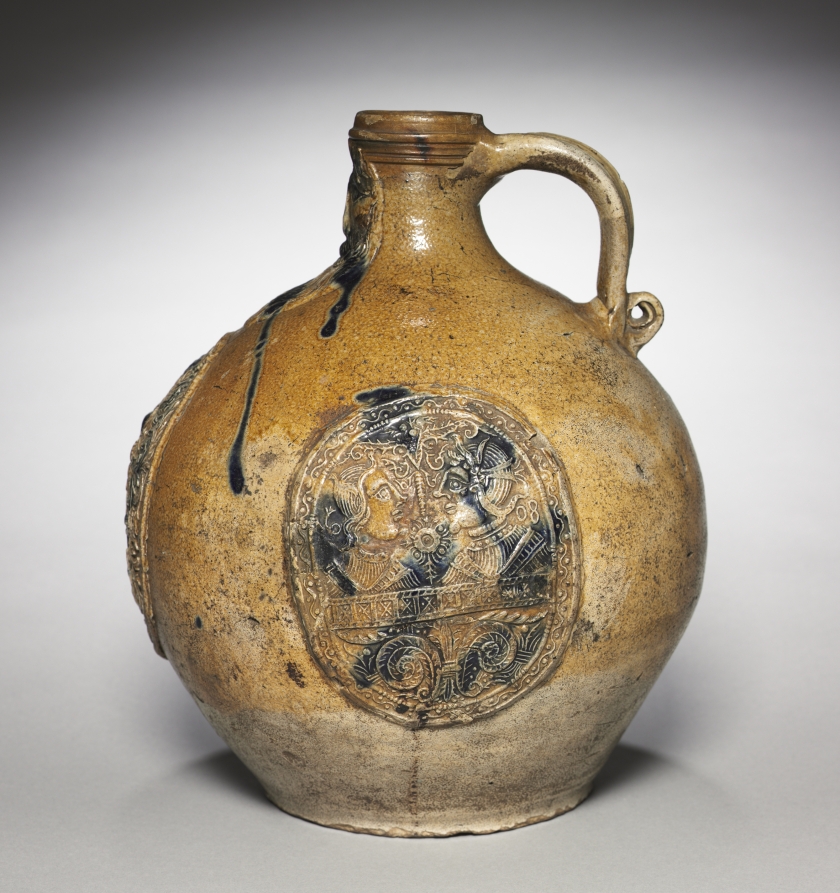
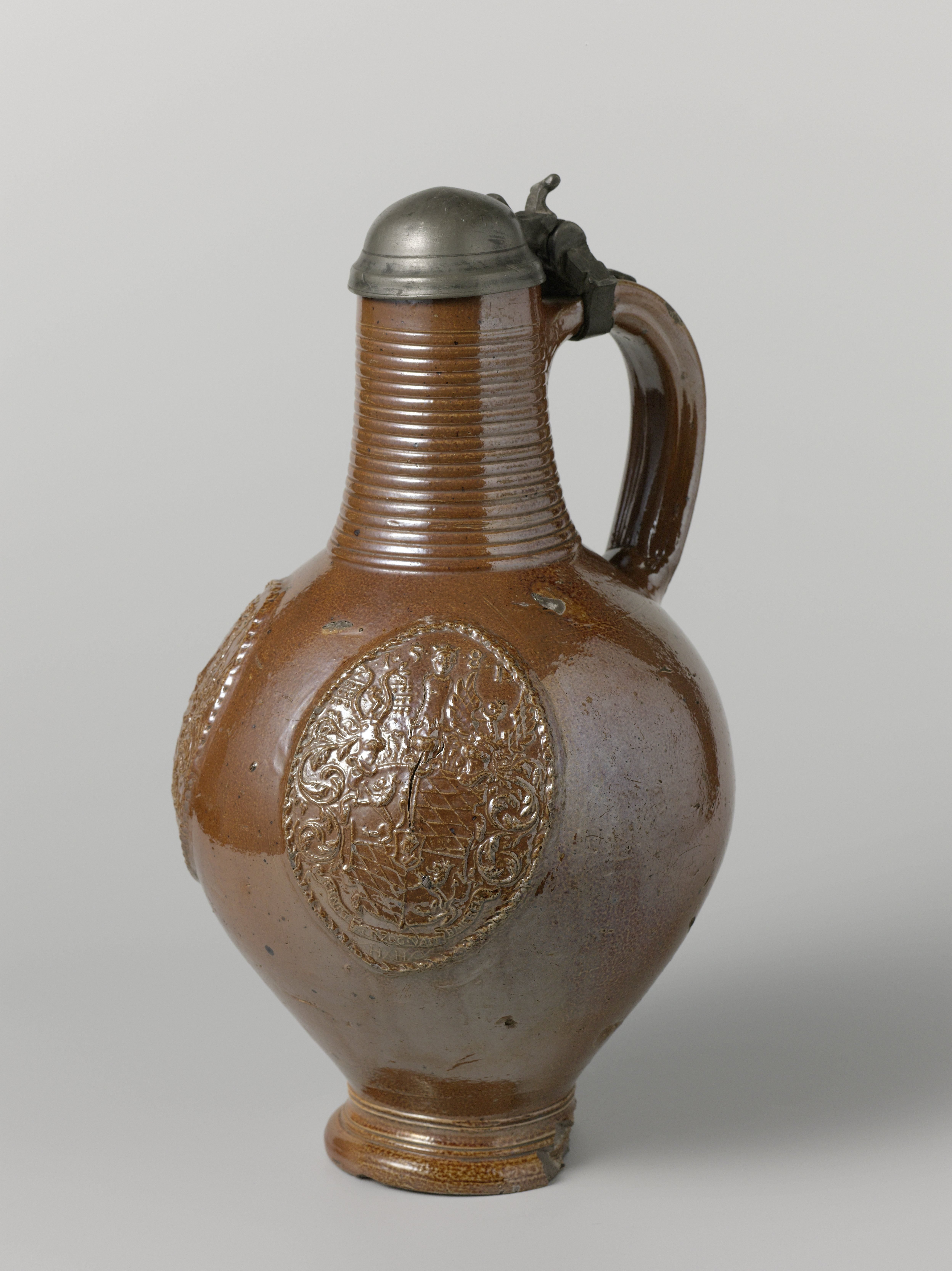
Jug
- Date
- 1608
- Medium
- salt-glazed stoneware with applied and impressed decoration
- Culture
- Germany, Frechen, 17th century
- Department
- Decorative Art and Design
- Institution
- Cleveland Museum of Art
These globular jugs decorated with bearded masks on their necks represent an important type of Rhenish stoneware made from the 1400s onward. They were named "Bartmann" (Bearded Man) or "Bellarmine" jugs. The latter was a reference to Cardinal Bellarmine (1542–1621)—hated in Germany for his Counter-Reformational zeal—because of his supposed resemblance to the bearded images on these vessels. This jug bears the arms of the Pallant van Culemborg family of Gelders. The production and export of German stoneware reached its peak in the late 1500s. Prized for its durability and stone-like appearance, German stoneware became one of the most widely traded forms of pottery, even finding popularity in early America. The distinctive pebbly glass surface, resembling an orange peel, was achieved by introducing salt into the hot kiln during the firing process. This glaze gave clear definition to the coats of arms or other emblems that often formed the surface decoration on large works, usually jugs.
The authoritative record is held by Cleveland Museum of Art. LinkedCulture surfaces this object and its connections; it does not alter institutional metadata.
Related across collections
Semantically similar works from Cleveland Museum of Art and other institutions.
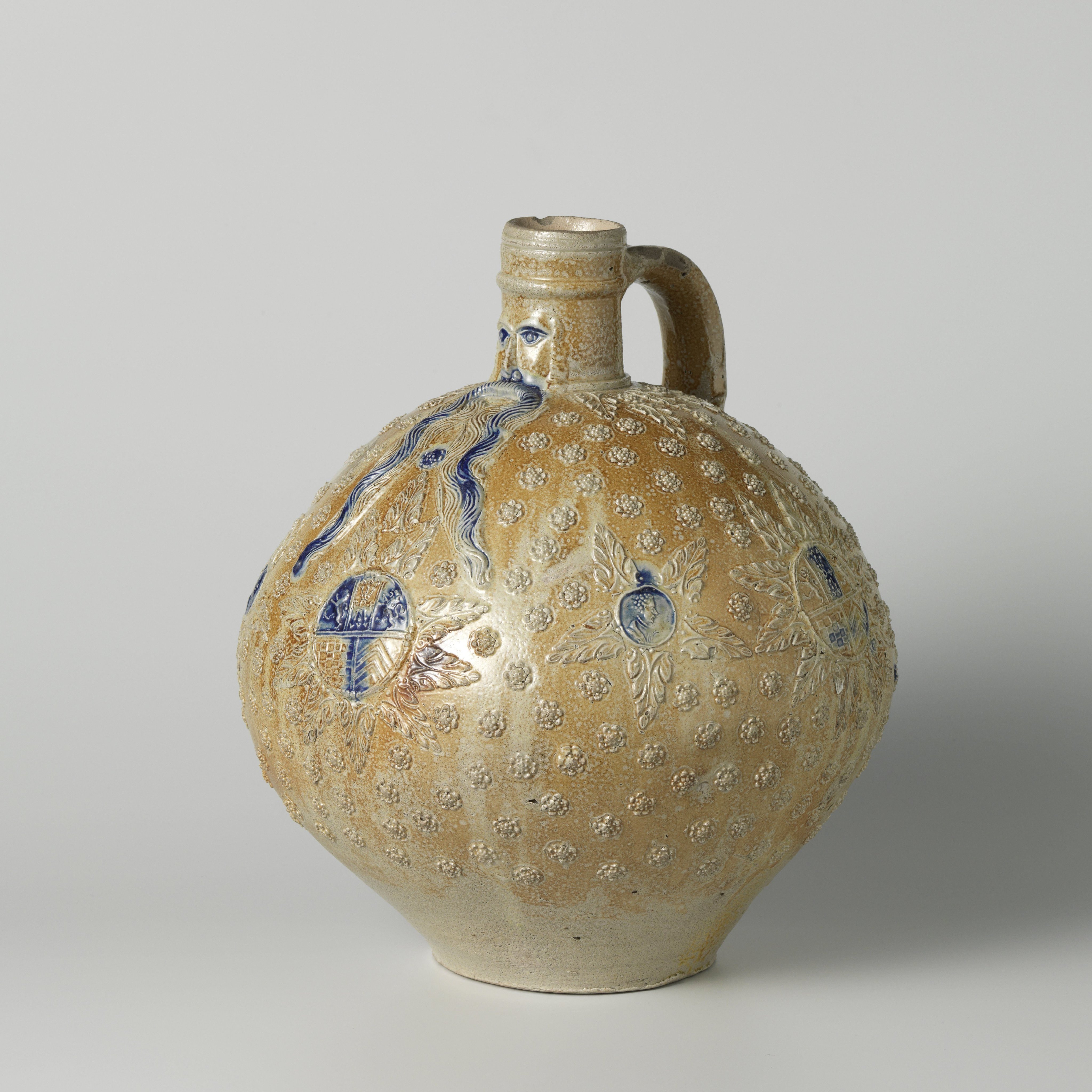
Baardmankruik met wapen van het hertogdom Gulik-Kleef-Berg
Rijksmuseum
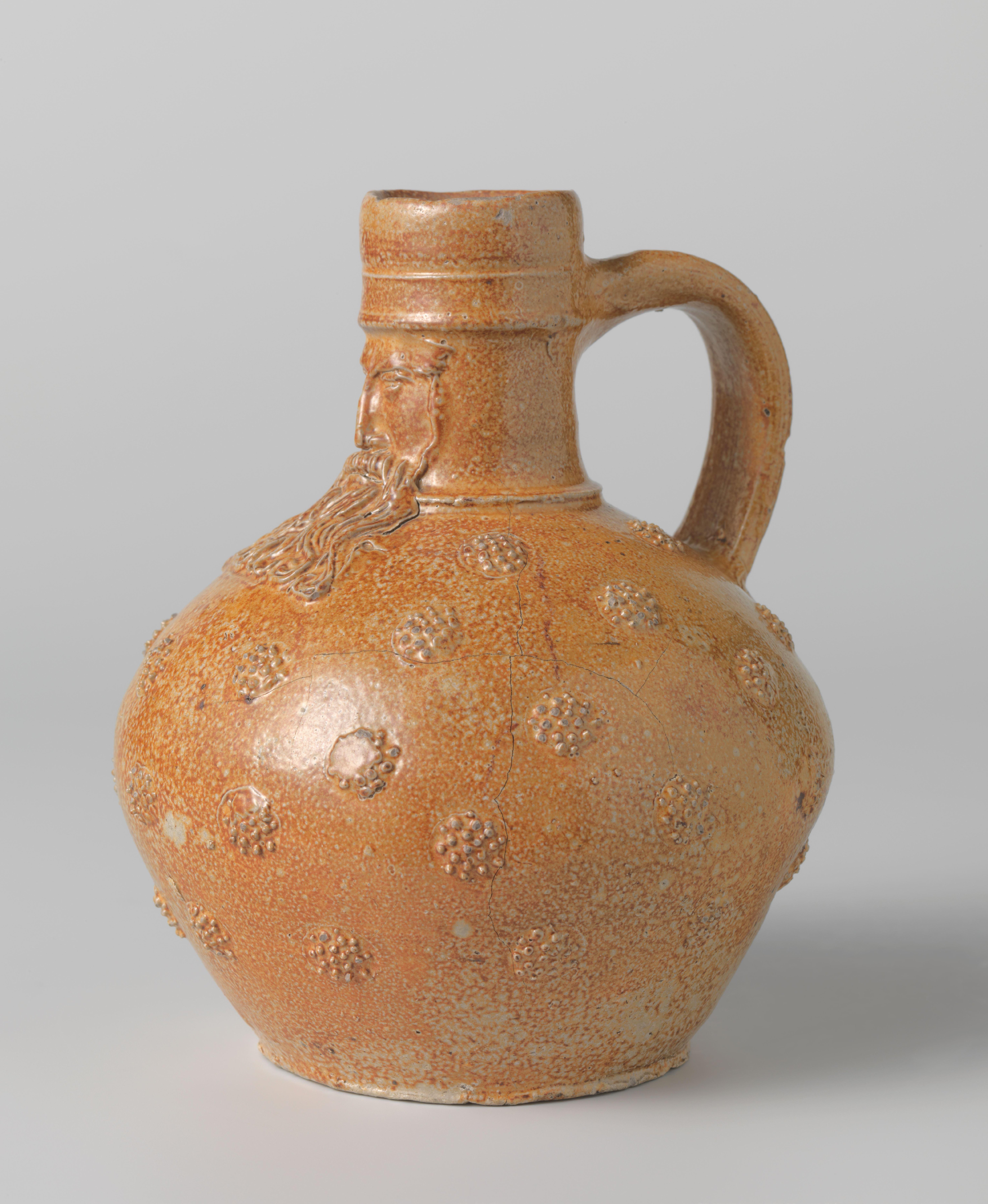
Jug (Bartmann jug) with speckled orbs
Rijksmuseum
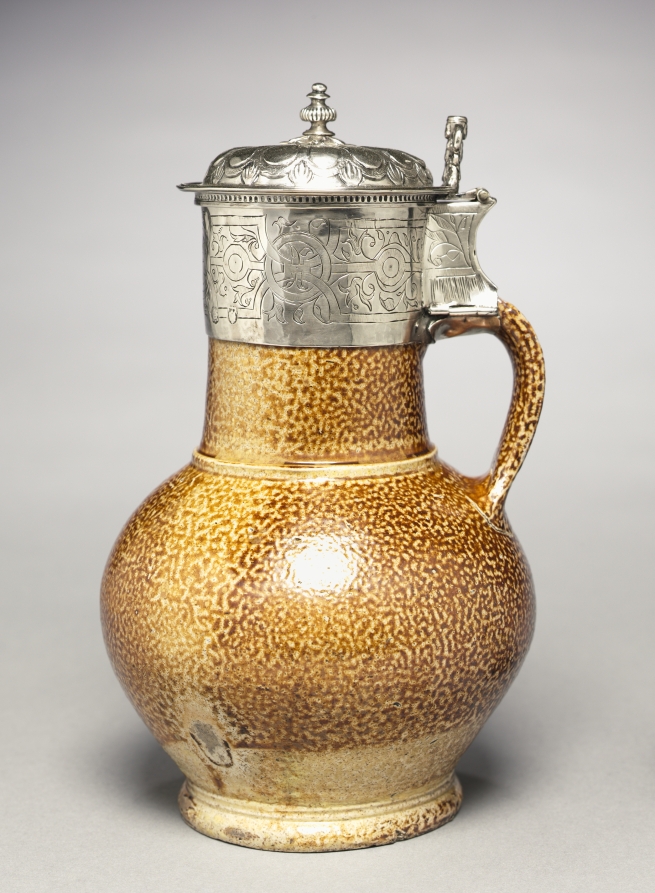
Covered Jug
Cleveland Museum of Art
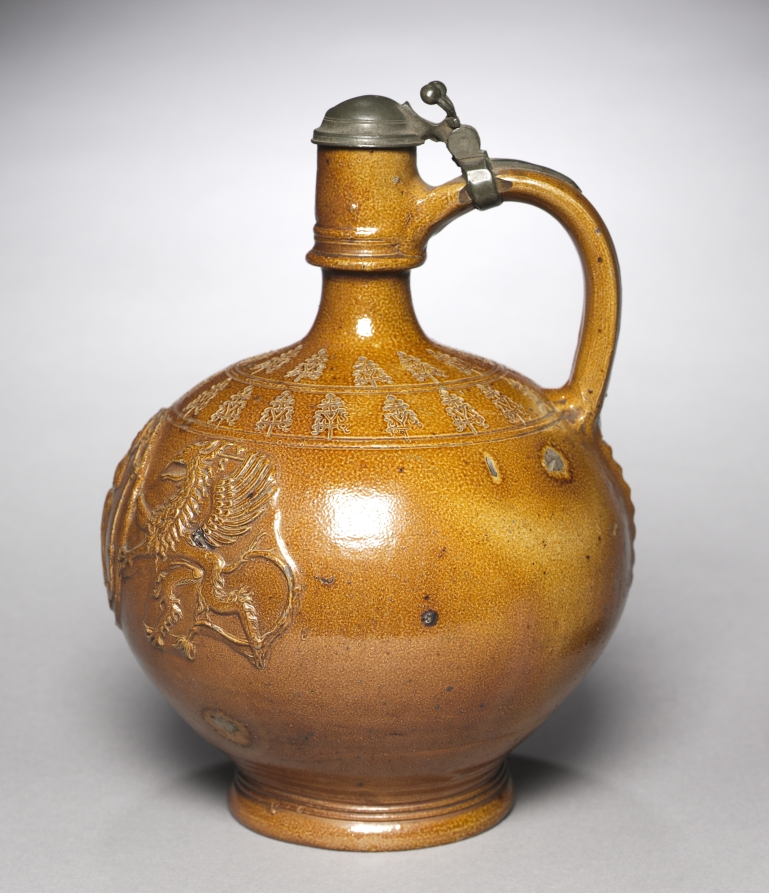
Jug with Pewter Lid
Cleveland Museum of Art
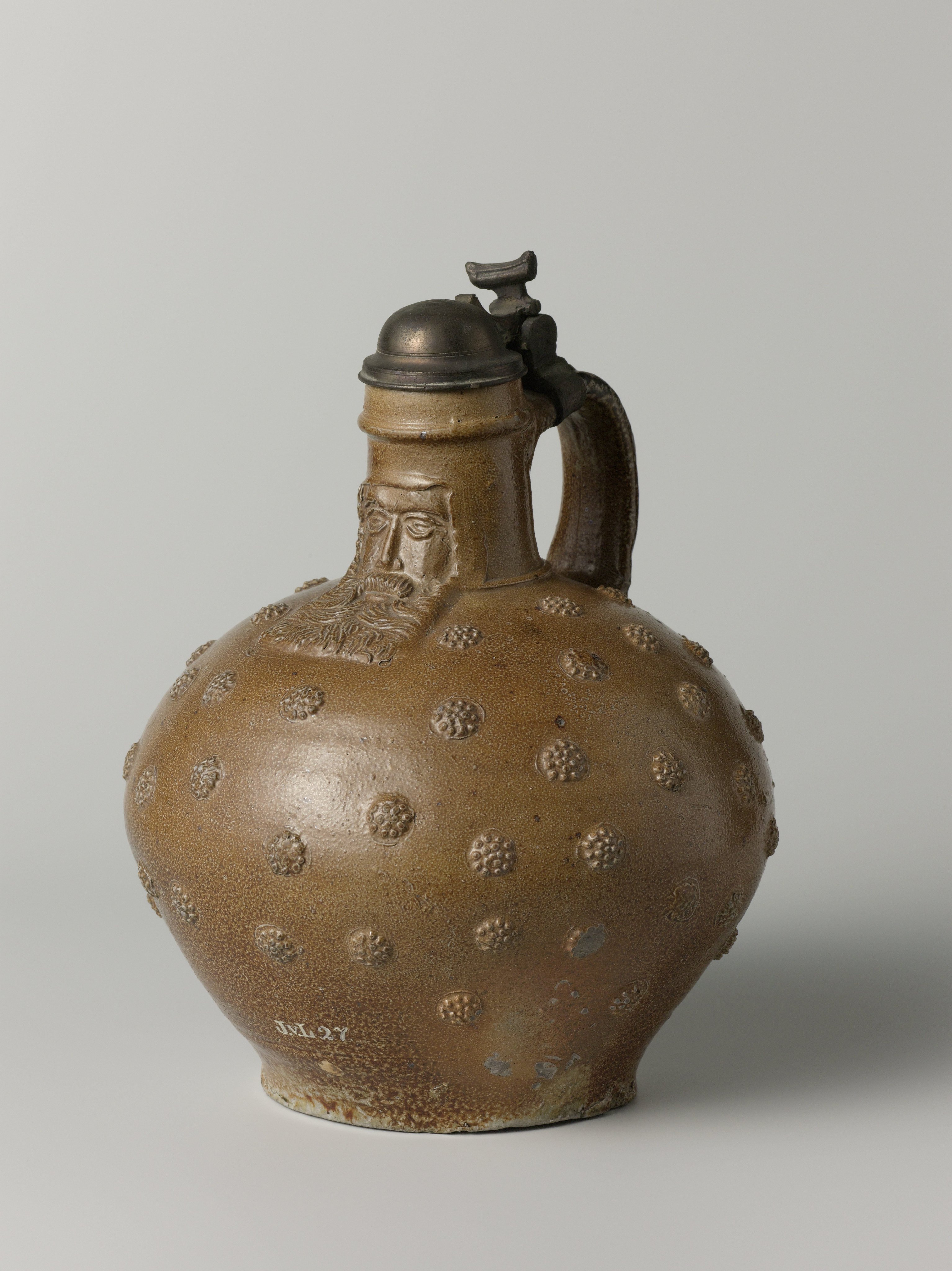
Baardmankruik
Rijksmuseum
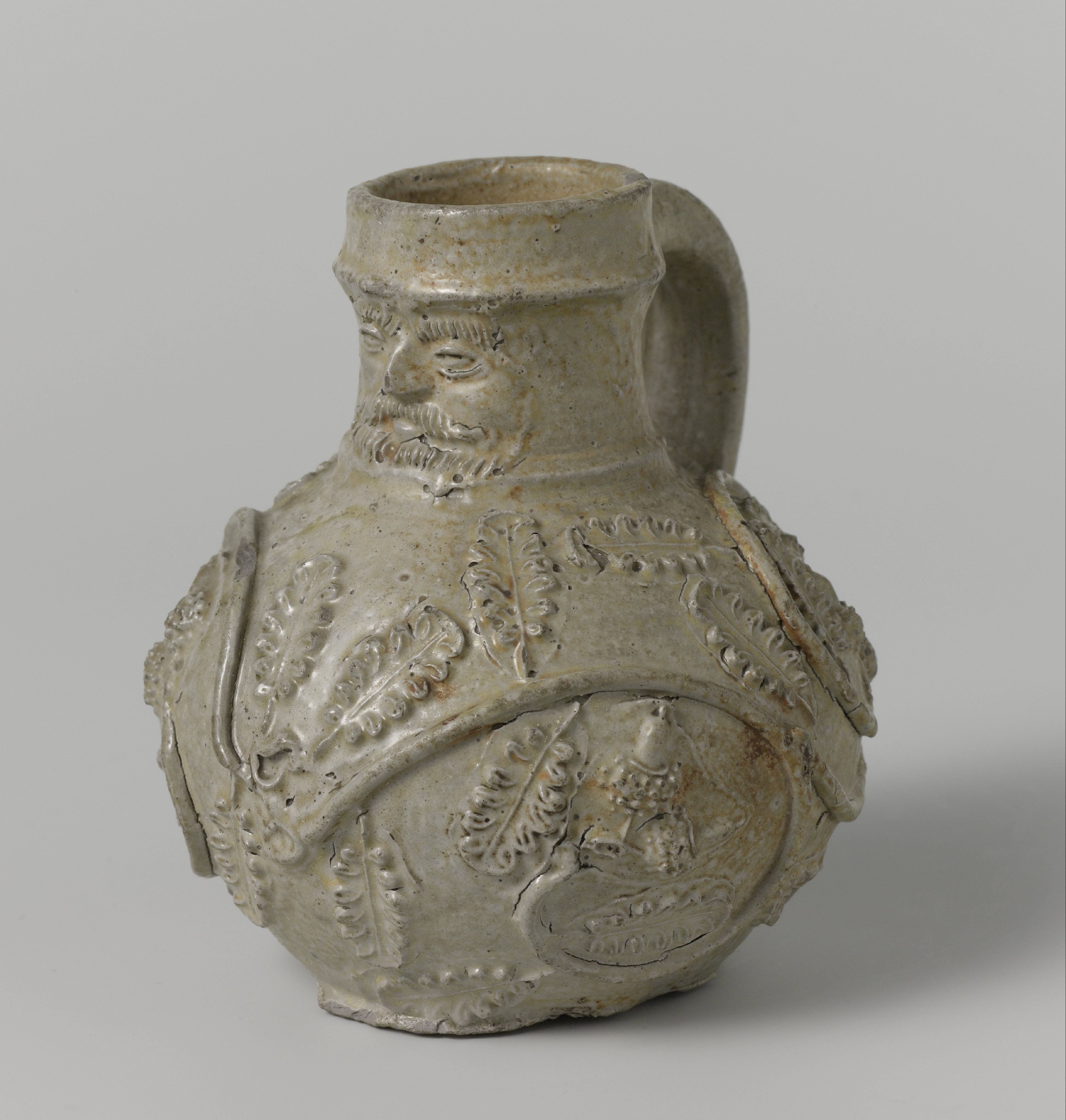
Baardmankruik
Rijksmuseum
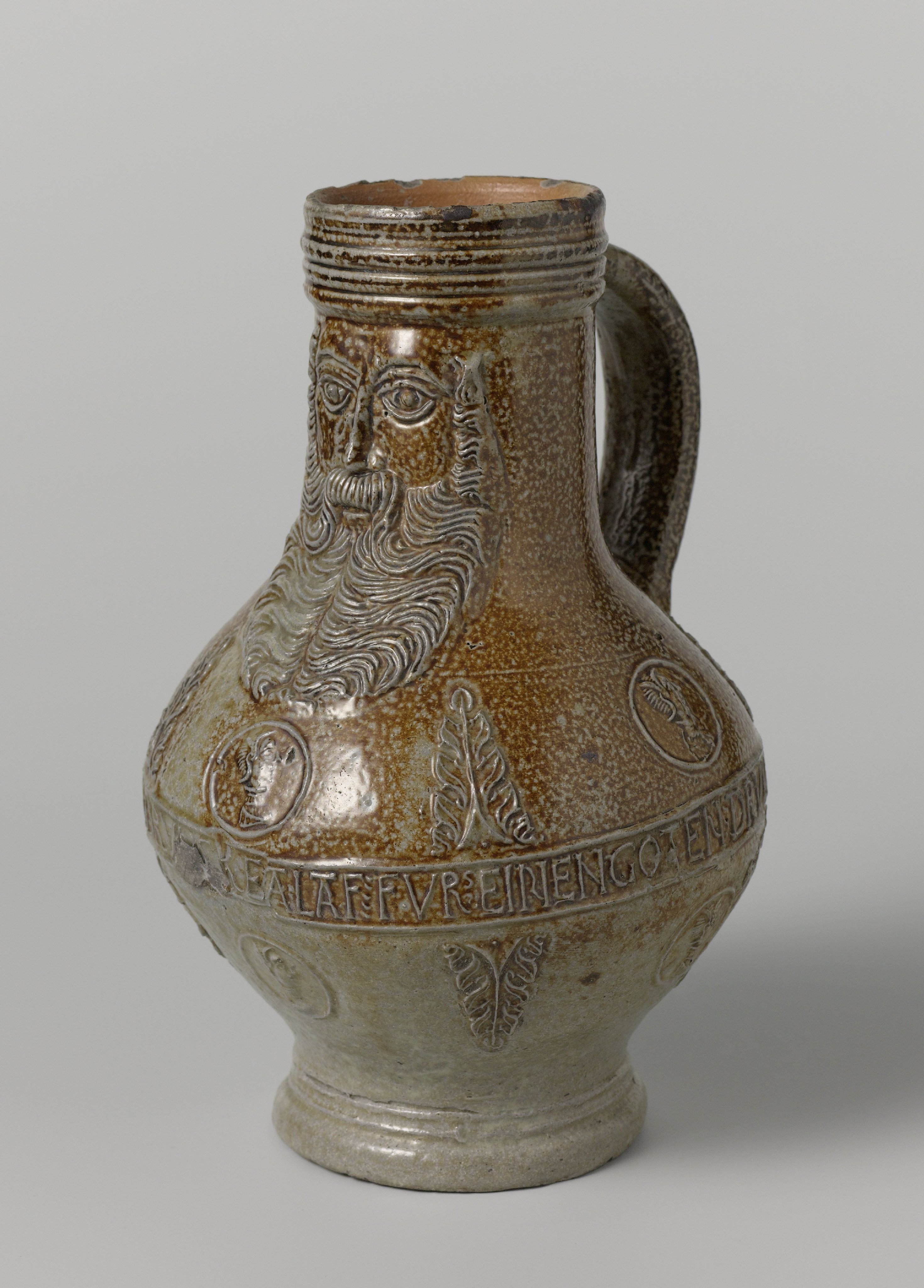
Baardmankruik met medaillons
Rijksmuseum
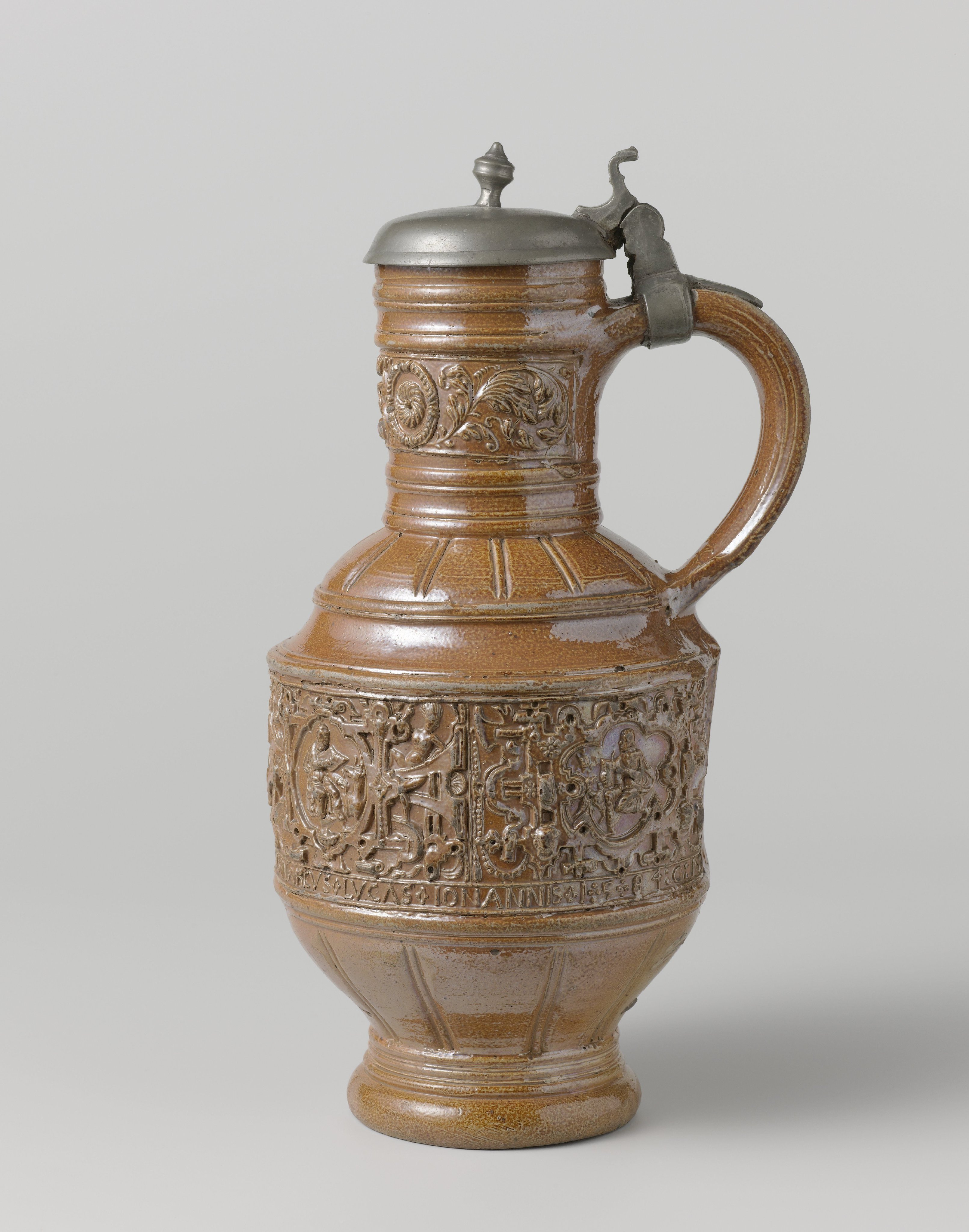
Jug with the Four Evangelists
Rijksmuseum
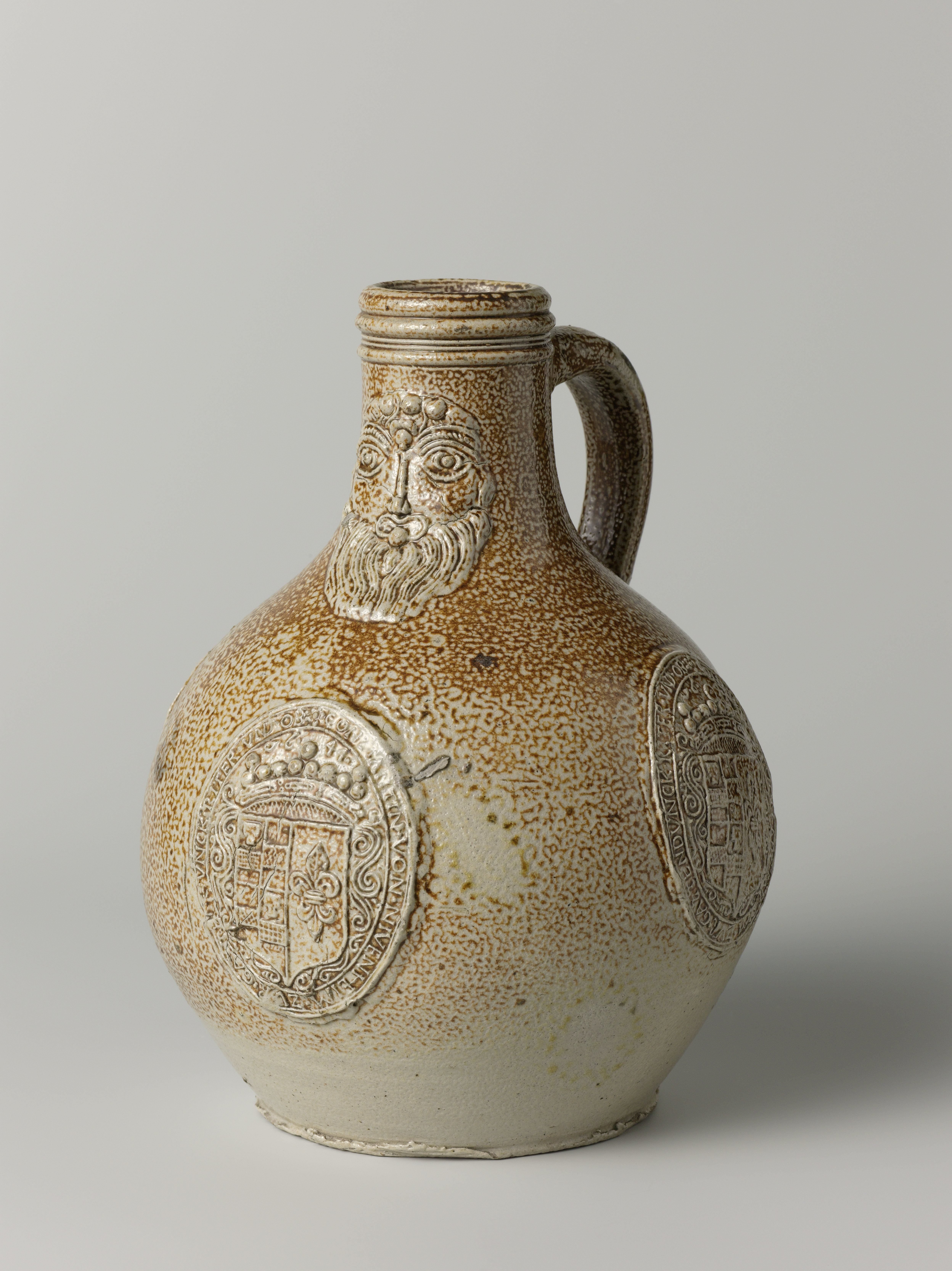
Baardmankruik met het wapen van Constantin von Nivenheim
Rijksmuseum
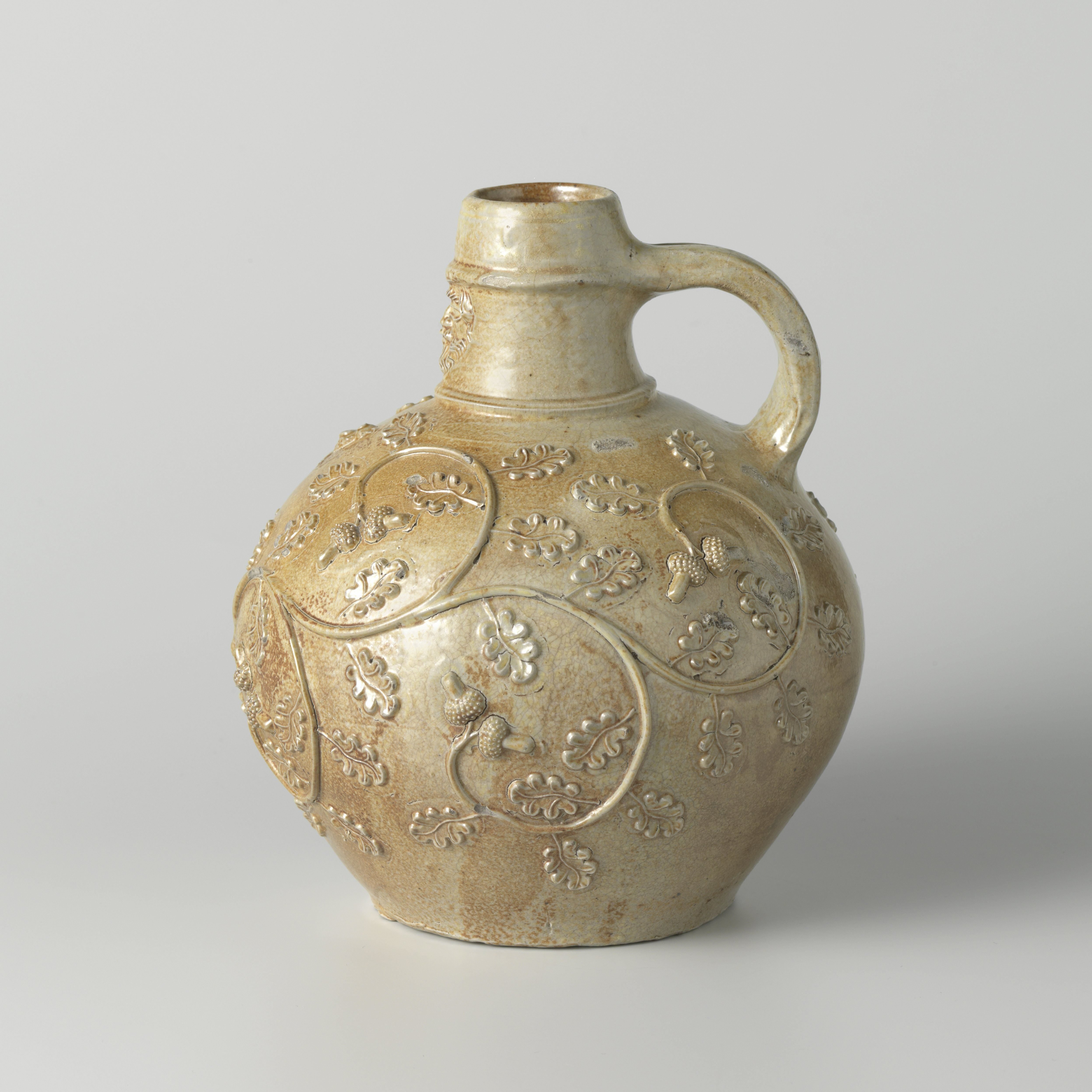
Baardmankruik met bloemendecor
Rijksmuseum
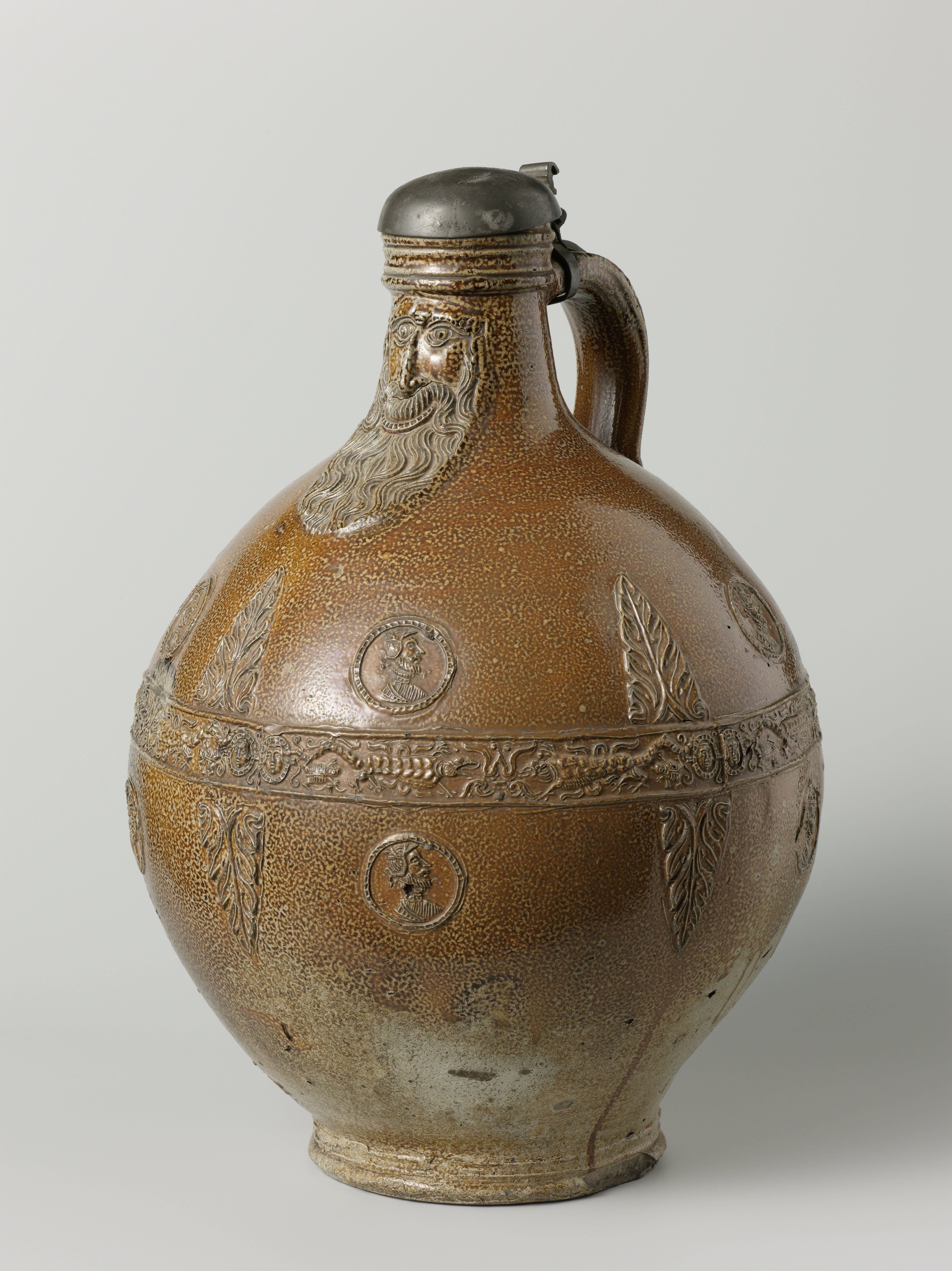
Baardmankruik
Rijksmuseum
Jug with the arms of Ernest of Bavaria, Archbishop and Elector of Cologne
Rijksmuseum