Cleveland Museum of Art
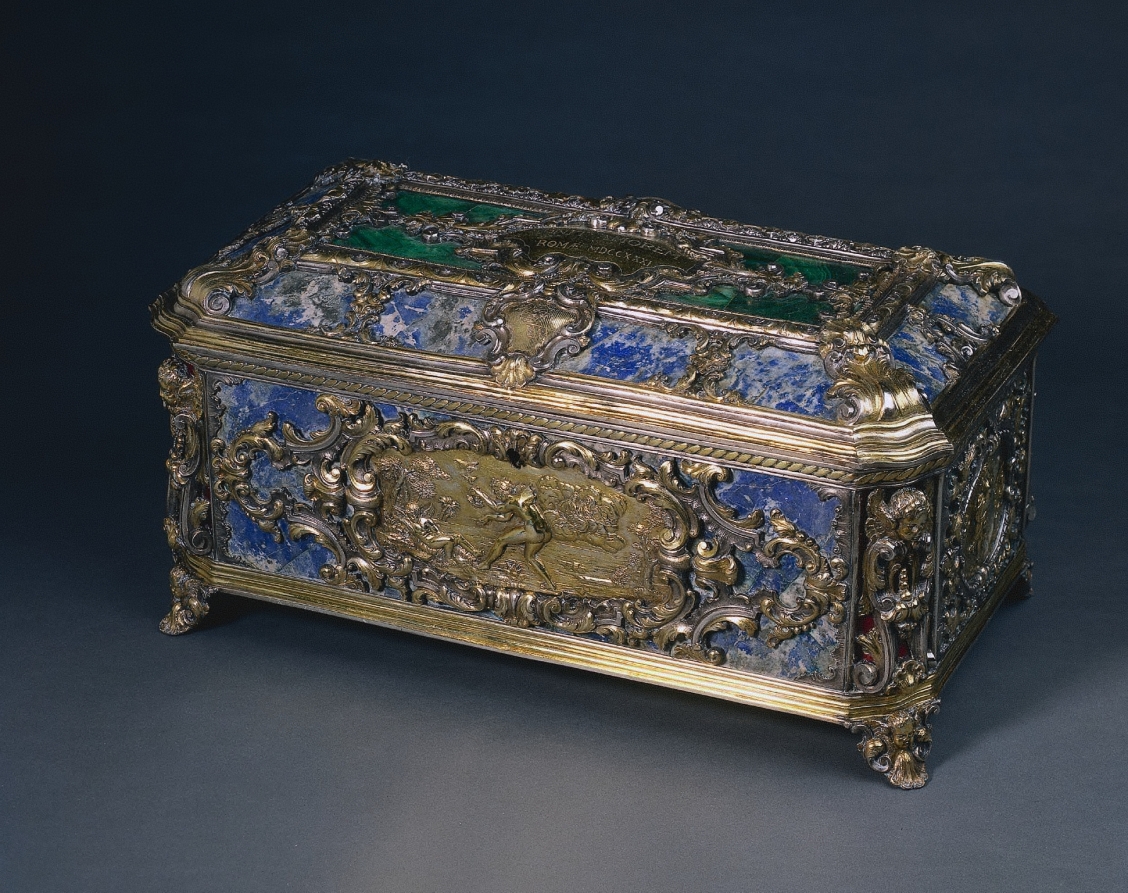
Boncompagni-Ludovisi-Ottoboni Marriage Casket
- Date
- 1731
- Medium
- silver, partially gilt, malachite, lapis lazuli, enamel
- Culture
- Italy, Rome
- Department
- Decorative Art and Design
- Institution
- Cleveland Museum of Art
- Object ID
- 147991
From the Cleveland Museum of Art record
The giving of coins or other valuable items was a powerful symbol of engagement and marriage in Europe in the 1600s and 1700s. Often these valuables were presented and kept in elaborate caskets that remained the property of the wife throughout the marriage, to be drawn upon in time of need, or as a symbol of their wealth and prosperity. This silver and hardstone casket was the gift of Pier Gregorio Boncompagni Ludovisi upon his marriage to Francesca Ottoboni in 1731. Their marriage represented the merger of two very powerful Italian noble families—the Boncompagni Ludovisi from Bologna and the Ottoboni from Venice. Both families had settled in Rome in the 17th century, and each were closely aligned with the papacy, having produced numerous cardinals and popes. Appropriately adorned with scenes from the myth of Cupid and Psyche, in which the two lovers work to overcome obstacles to their marriage, the casket is a masterwork of Roman silversmithing in the Baroque taste prevalent at that time throughout Europe. The Latin inscription on this marriage casket, "amor gignit amorem," means "love begets love," an appropriate prediction for an impending union.
The authoritative record is held by Cleveland Museum of Art. LinkedCulture surfaces this object and its connections; it does not alter institutional metadata.
Get printable QR codesHide QR codes
Open QR codes for this object page and the museum record. They stay collapsed until needed.
Provenance & credit
As published by the source institution. Coverage varies — not every institution's open-data feed includes ownership history.
- Credit line
- John L. Severance Fund
- Provenance
- Commissioned by Cardinal Pietro Ottoboni (1667-1740); his niece Maria Francesca Ottoboni and her husband, Pier Gregorio Boncompagni-Ludovisi, in 1731.
Related across collections
Semantically similar works from Cleveland Museum of Art and other institutions.