Cleveland Museum of Art
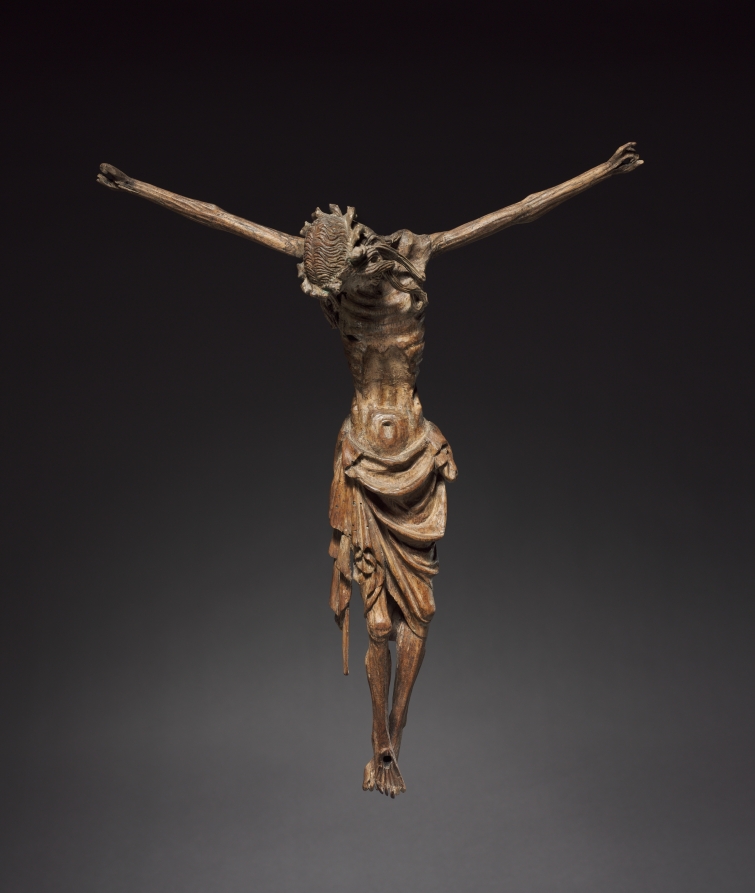
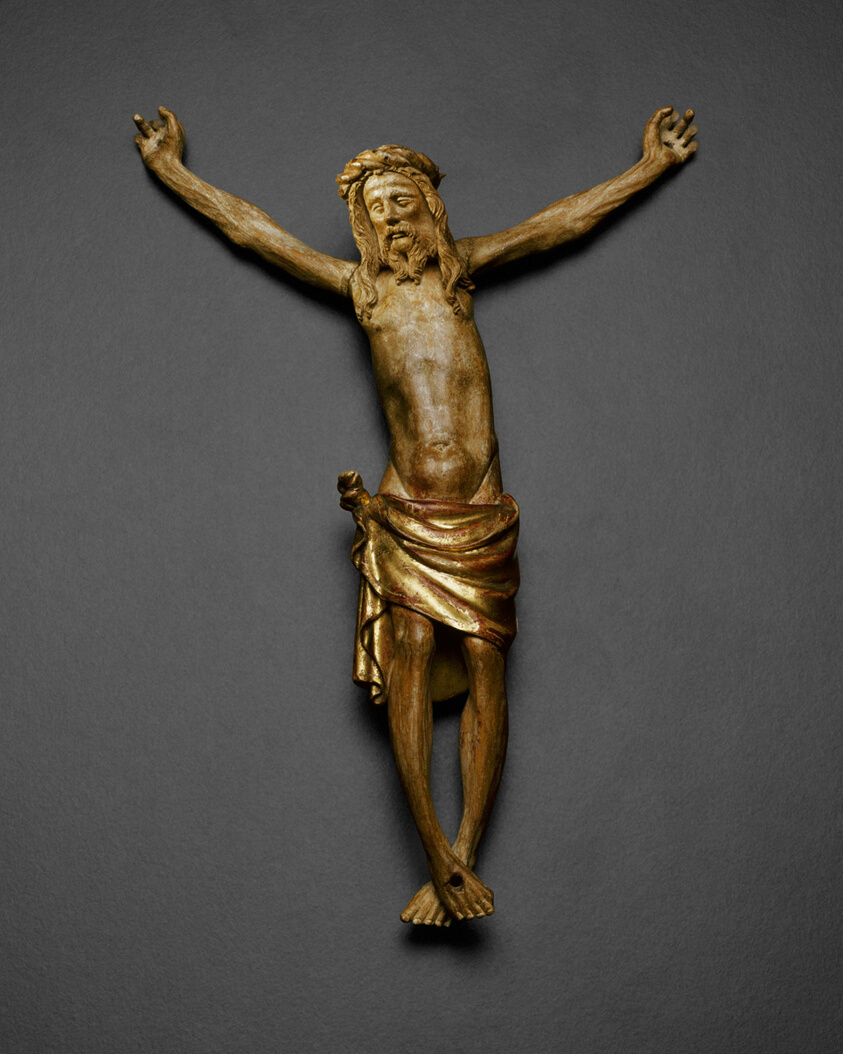
Crucified Christ
- Date
- c. 1340–1350
- Medium
- wood (walnut) once polychromed
- Culture
- Germany, Cologne, 14th century
- Department
- Medieval Art
- Institution
- Cleveland Museum of Art
The striking impression of this figure is the vivid representation of suffering. The sculpture captures the moment after Christ’s death: the drooping head on a frail neck is a mask of agony. The eyes are nearly shut, the mouth is ajar, and the forehead crowned by heavy, gouging thorns is drawn with pain. The elongation of the body is emphasized by the emaciated chest with protruding ribs and bony limbs. The resulting sense of frailty and pathos is augmented by the heavy strands of hair that uncurl alongside the tormented face and by the loincloth folds that break the downward drape of the body. The sculpture belongs to a group of emotional crucifixes and pietas carved in the Middle-Rhine region for over a century beginning around 1300, examples of which are principally found in the city of Cologne. Such sculptures appealed to the Rhenish mystics, who advocated meditation based on the Passion of Christ.
The authoritative record is held by Cleveland Museum of Art. LinkedCulture surfaces this object and its connections; it does not alter institutional metadata.
Related across collections
Semantically similar works from Cleveland Museum of Art and other institutions.
Corpus of Christ
Art Institute of Chicago

The Crucifixion
Getty Museum

Head of Christ
Getty Museum
Miniature, Possibly from a Manuscript
Getty Museum
Crucified Christ
Cleveland Museum of Art

The Crucifixion
Getty Museum

The Crucifixion
Getty Museum

The Crucifixion
Getty Museum
Crucifix
Rijksmuseum
Corpus of Christ, from the Altarpiece of the Crucifixion
Art Institute of Chicago

The Crucifixion
Minneapolis Institute of Art
The Passion: Christ on the Cross
Cleveland Museum of Art