Cleveland Museum of Art
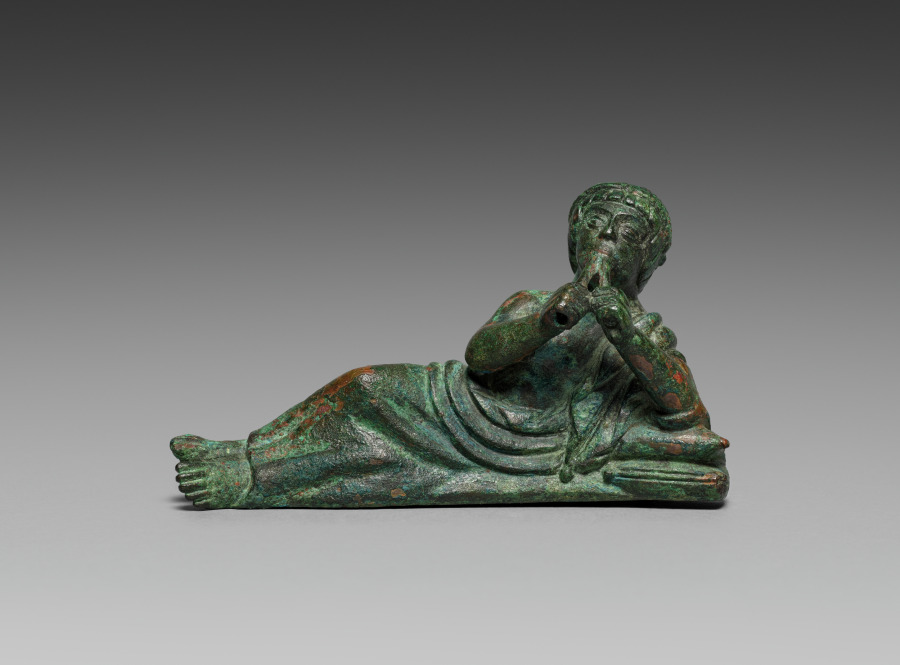
Vessel Ornament of Reclining Pipes Player
- Date
- probably 400–375 BCE
- Medium
- bronze
- Culture
- Etruscan
- Department
- Greek and Roman Art
- Institution
- Cleveland Museum of Art
This bronze banqueter figurine was one of six once adorning the rim of a large basin, now lost. Cast in molds with individualized details, most have grooves on their underside to attach to the basin. Minute traces of gilding remain on areas of clothing and skin (mostly visible only under magnification), suggesting that they may have been completely gilded. Two handles in the form of hippocampi, horses with serpentine tails, also belonged to the basin and are now displayed at the Michael C. Carlos Museum at Emory University. The basin may have been used to hold liquid for a banquet, or was perhaps funerary. This bronze reclining figurine raises his head and blows into a set of pipes. The tips of the pipes are broken off. Some gilding remains on the mouth and chin. The figurine wears a himation over his body and has a bare chest. Two pillows prop up his left elbow. His hair falls over his forehead in square bangs. Guests were often invited to play instruments and sing during symposia.
The authoritative record is held by Cleveland Museum of Art. LinkedCulture surfaces this object and its connections; it does not alter institutional metadata.
Related across collections
Semantically similar works from Cleveland Museum of Art and other institutions.
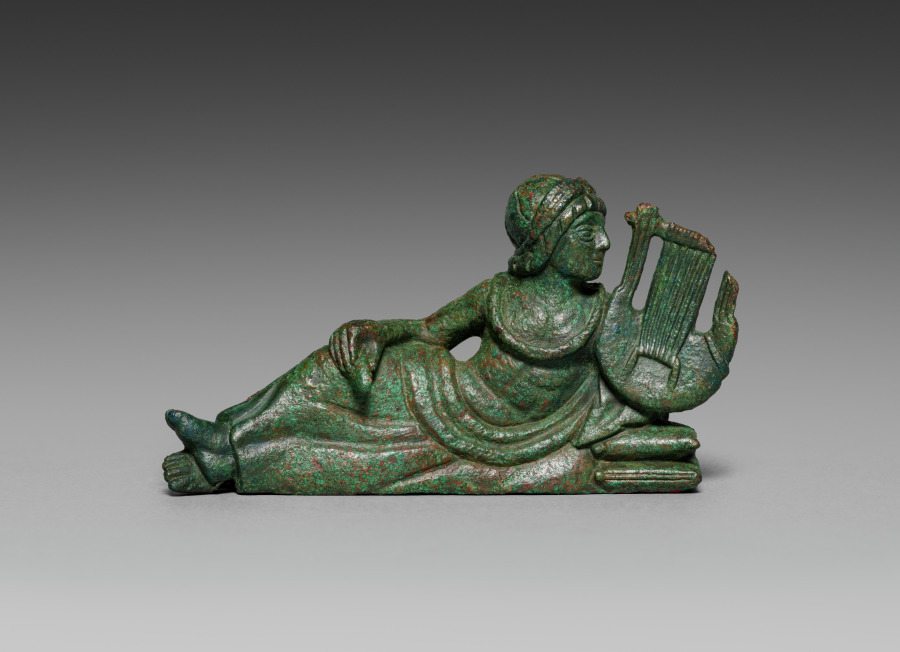
Vessel Ornament of Reclining Lyre-player
Cleveland Museum of Art
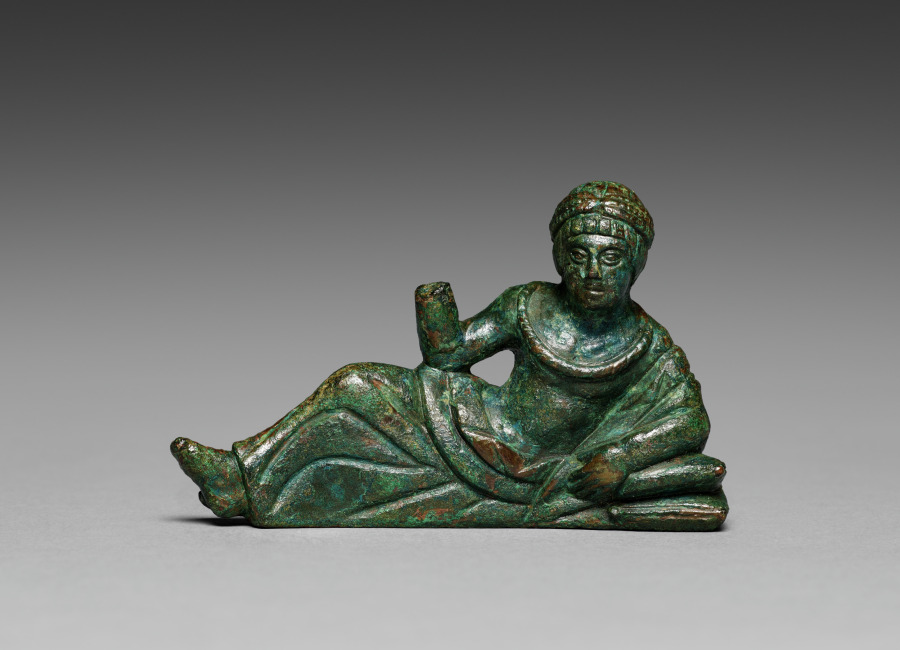
Vessel Ornament of Banqueter
Cleveland Museum of Art
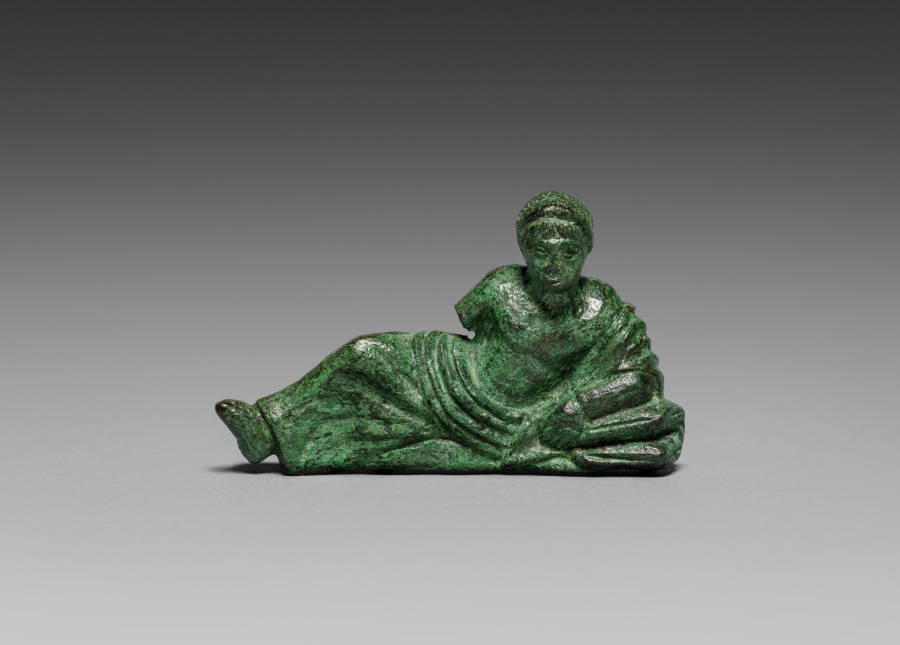
Vessel Ornament of Banqueter
Cleveland Museum of Art
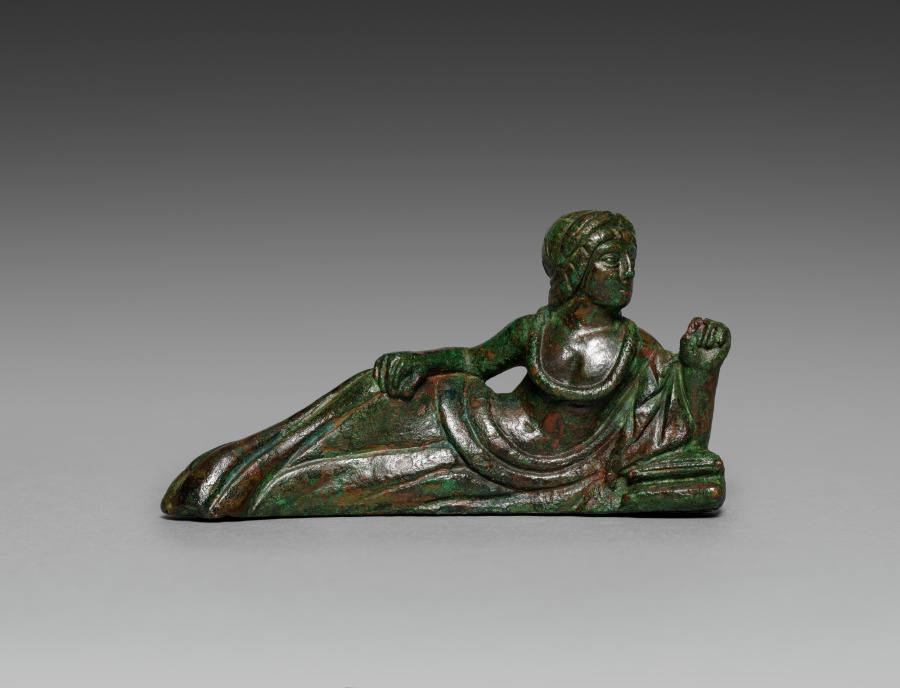
Vessel Ornament of Banqueter
Cleveland Museum of Art
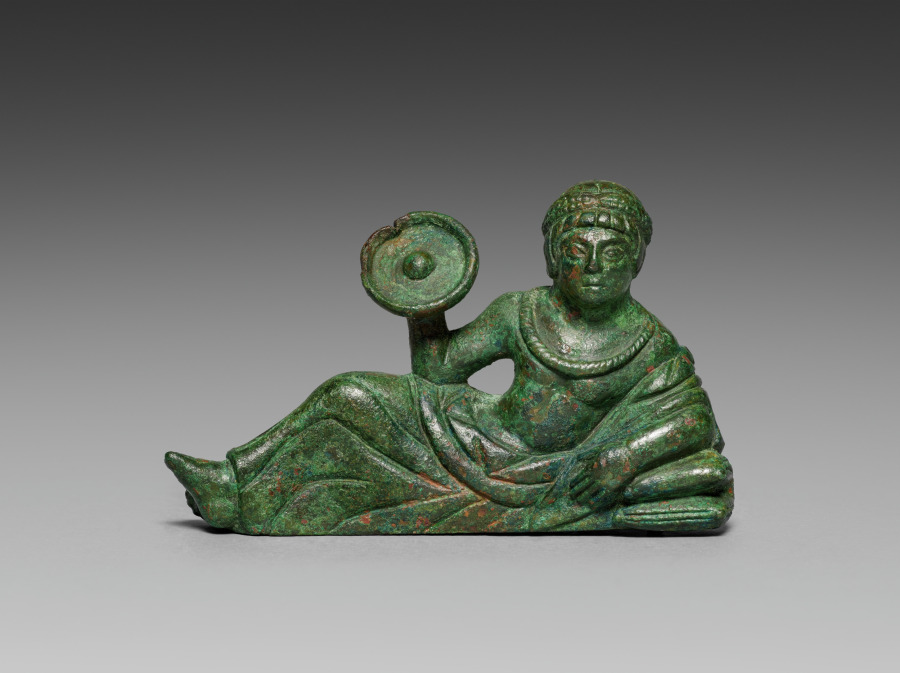
Vessel Ornament of Banqueter Holding an Omphalos
Cleveland Museum of Art

Statuette of a Banqueter
Getty Museum

Statuette of a Banqueter
Getty Museum

Statuette of a Banqueter
Getty Museum

Basin
Getty Museum
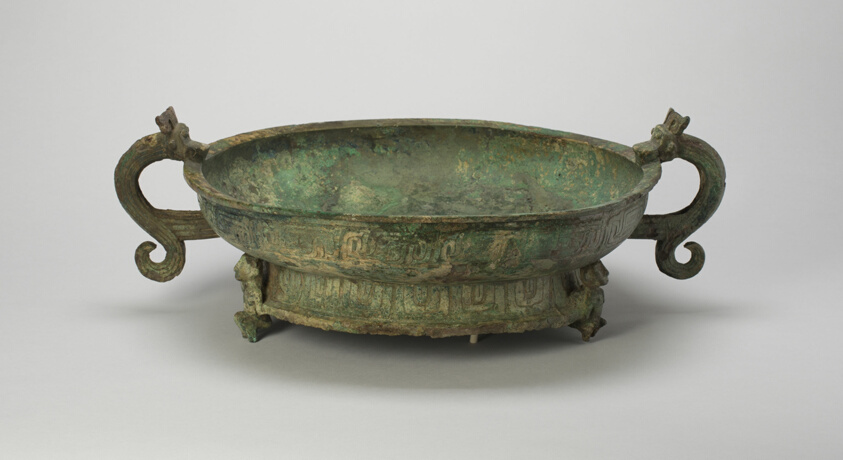
Basin
Art Institute of Chicago

Statuettes of Three Banqueters
Getty Museum
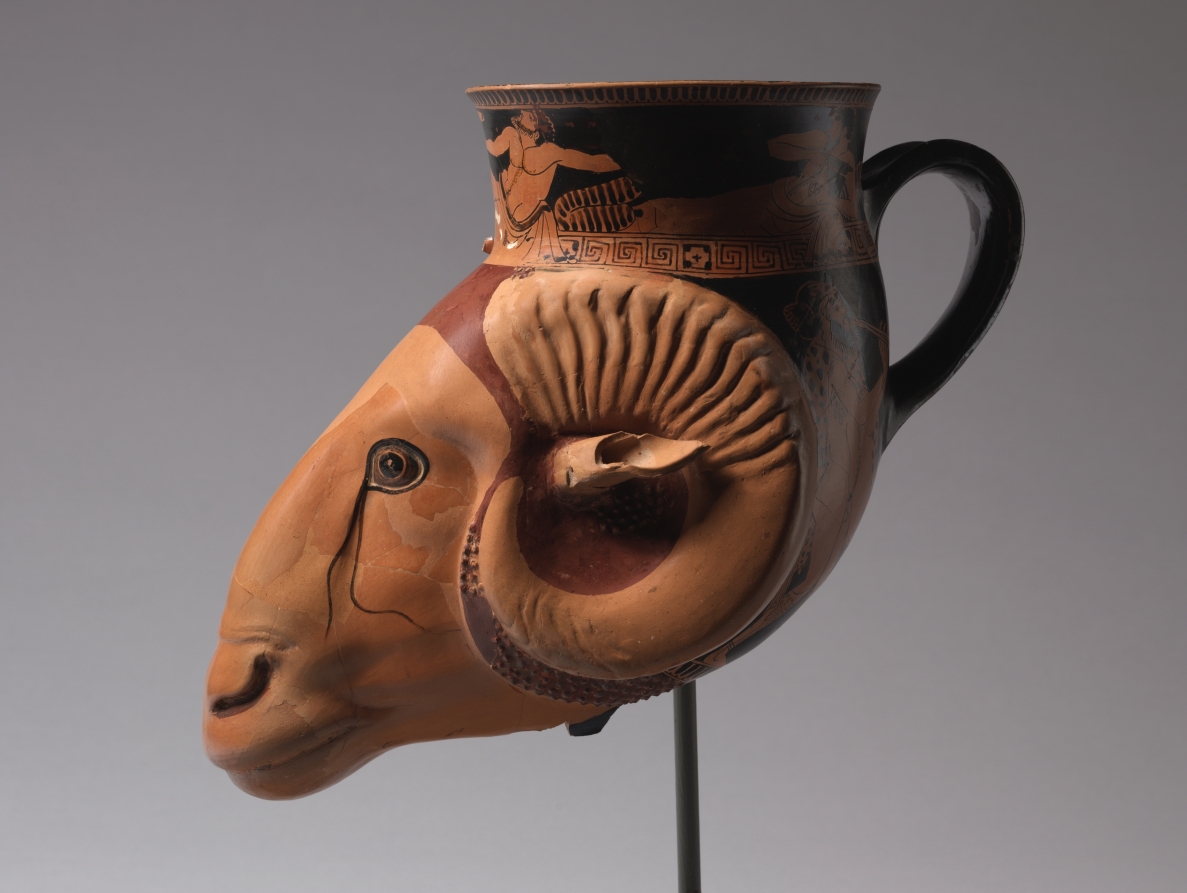
Red-Figure Ram-Head Rhyton (Drinking Vessel): Symposiasts; Satyr and Maenad
Cleveland Museum of Art