Cleveland Museum of Art
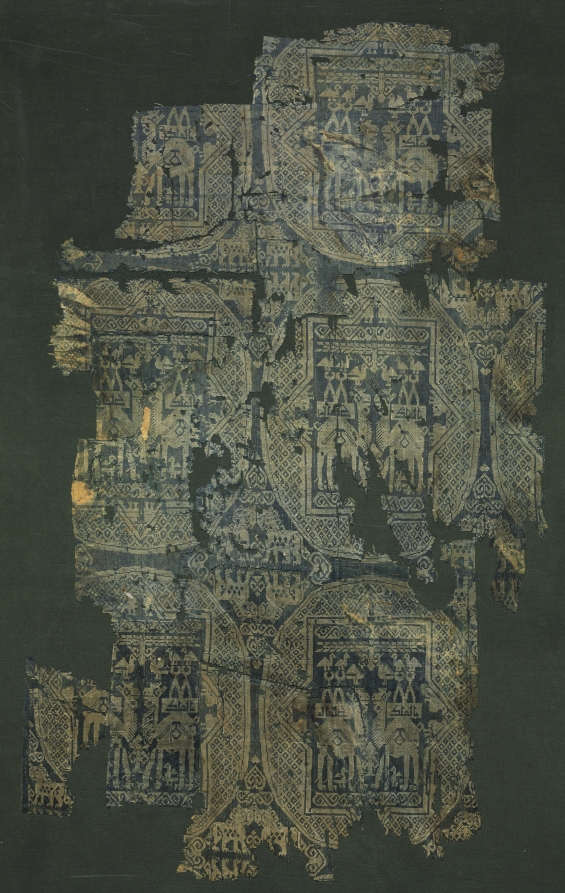
Roundels with camels bearing howdahs
- Date
- 900s–1000s
- Medium
- silk: plain weave variation with supplementary weft
- Culture
- Syria (?), 900s - 1000s
- Department
- Textiles
- Institution
- Cleveland Museum of Art
- Object ID
- 153407
From the Cleveland Museum of Art record
This unusually large fragment is part of a rare group of silks characterized by an unusal weave structure. The group is most important, however, because the Kufic inscriptions (here "mulk," or "Dominion," an abbreviation of "al-mulk lillah," meaning "Dominion belongs to God") demonstrates their Islamic origin. The Byzantine motifs found in some of them (for example, a second fragment in the museum collection), however, lead scholars to believe they may have been woven in Antioch, the scene of much fighting between Muslims and the Crusaders. These fragments become, therefore, fascinating evidence of two traditions occurring in one area.
The authoritative record is held by Cleveland Museum of Art. LinkedCulture surfaces this object and its connections; it does not alter institutional metadata.
Get printable QR codesHide QR codes
Open QR codes for this object page and the museum record. They stay collapsed until needed.
Provenance & credit
As published by the source institution. Coverage varies — not every institution's open-data feed includes ownership history.
- Credit line
- Purchase from the J. H. Wade Fund
- Provenance
- Mrs. Paul [Marguerite] Mallon [d. 1977], Paris, France | ?–1986: (Goumaronart, Inc. sold to the Cleveland Museum of Art). | 1986–: The Cleveland Museum of Art, Cleveland, OH
Related across collections
Semantically similar works from Cleveland Museum of Art and other institutions.