Cleveland Museum of Art
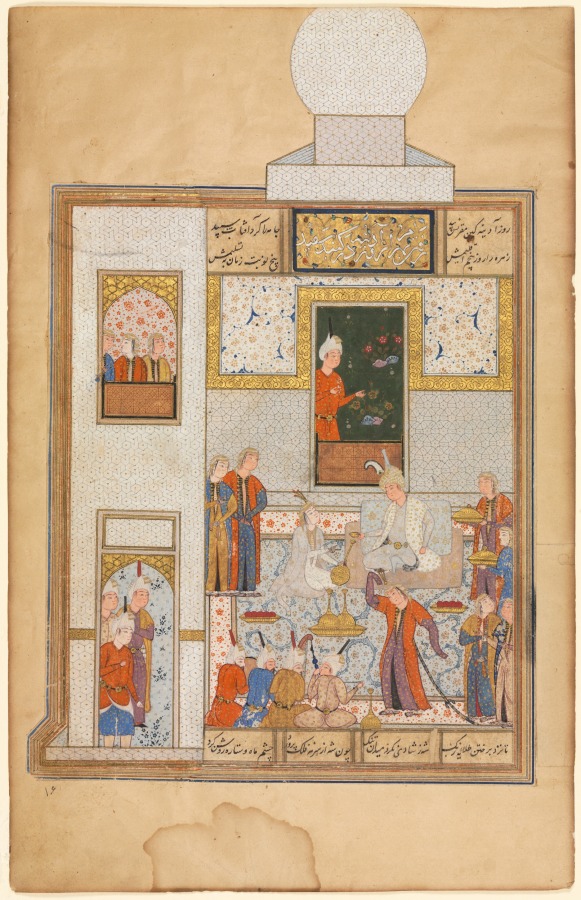
Bahram Visits the White Domed Pavilion on Friday, illustrated with text in Khamsa of Nizami (verso), from a Haft Paykar (Seven Portraits) of Nizami
- Date
- c. 1560–80
- Medium
- opaque watercolor, ink, and gold on paper
- Culture
- Iran, Shiraz, Safavid period (1501-1722)
- Department
- Islamic Art
- Institution
- Cleveland Museum of Art
The Haft Paykar is an epic romantic poem that tells the story of the Sasanian king, Bahram Gur (ruled AD 420–38). The story relates how the king had an architect construct seven domed pavilions with different colors for each of his seven beautiful brides who came from different parts of the world. On each day of the week, the king visited one princess and enjoyed her company. In the center of this scene, sits Bahram and his bride from Iran dressed in resplendent white garments. Attendants bring them food and drink, while a dancer and an ensemble of musicians entertains them. The wife recounts a tale with dancing fairies, suggested by the girl dancing to music in the foreground of the painting.
The authoritative record is held by Cleveland Museum of Art. LinkedCulture surfaces this object and its connections; it does not alter institutional metadata.
Related across collections
Semantically similar works from Cleveland Museum of Art and other institutions.
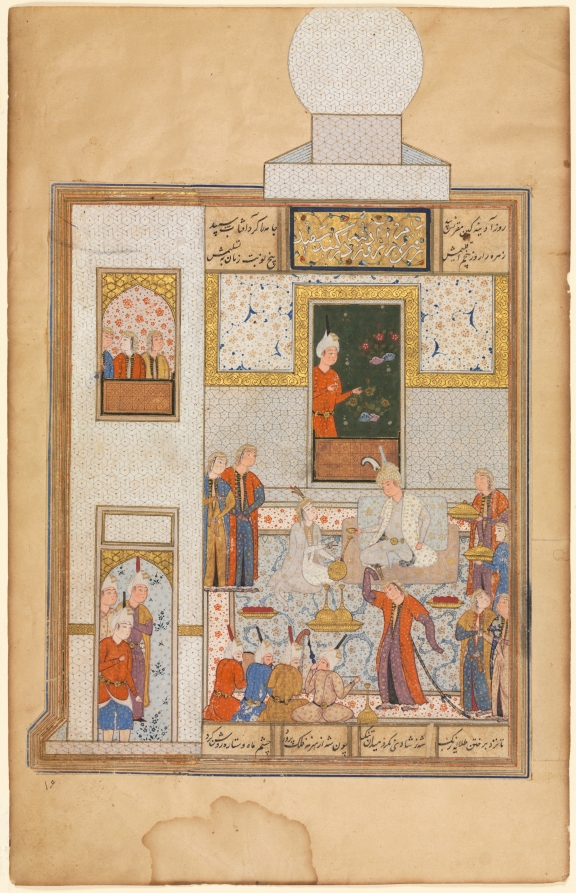
Bahram Visits the White Domed Pavilion on Friday (recto)
Cleveland Museum of Art
![Bahram Gur Visits the Princess of India in the Black Pavilion (recto): Illustration and Text, Persian Verses, from a manuscript of the Khamsa of Nizami, Haft Paykar [Seven Portraits]](https://openaccess-cdn.clevelandart.org/1944.486.a/1944.486.a_web.jpg)
Bahram Gur Visits the Princess of India in the Black Pavilion (recto): Illustration and Text, Persian Verses, from a manuscript of the Khamsa of Nizami, Haft Paykar [Seven Portraits]
Cleveland Museum of Art
![Text Page, Persian Verses (verso) Bahram Gur Visits the Princess of India: from a manuscript of the Khamsa of Nizami, Haft Paykar [Seven Portraits]](https://openaccess-cdn.clevelandart.org/1944.486.b/1944.486.b_web.jpg)
Text Page, Persian Verses (verso) Bahram Gur Visits the Princess of India: from a manuscript of the Khamsa of Nizami, Haft Paykar [Seven Portraits]
Cleveland Museum of Art
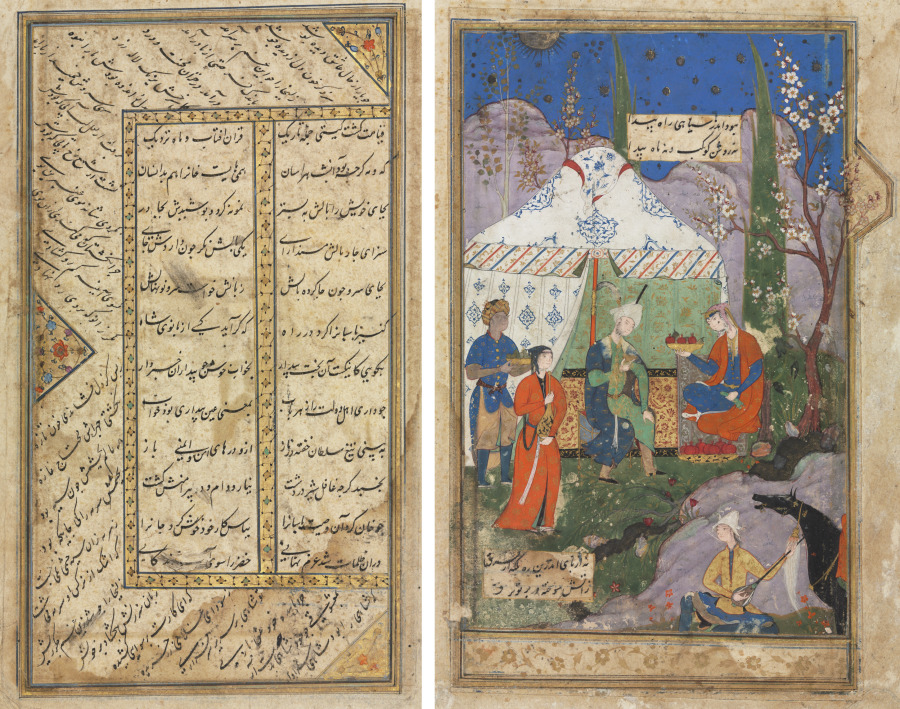
An Episode from the Story of the Sasanian King Khusrau and His Beloved Shirin, from a Khamsa (Quintet) of Nizami (1141–1209) (verso); Persian verses from a Haft Awrang (Seven Thrones) of Jami (d. 1492) (recto)
Cleveland Museum of Art
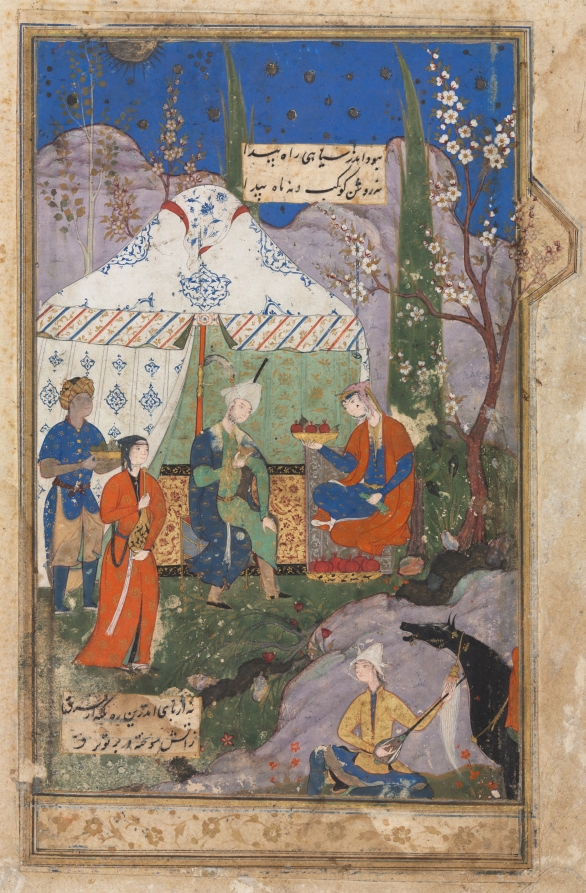
An Episode from the Story of the Sasanian King Khusrau and His Beloved Shirin, from a Khamsa (Quintet) of Nizami (1141–1209) (verso)
Cleveland Museum of Art
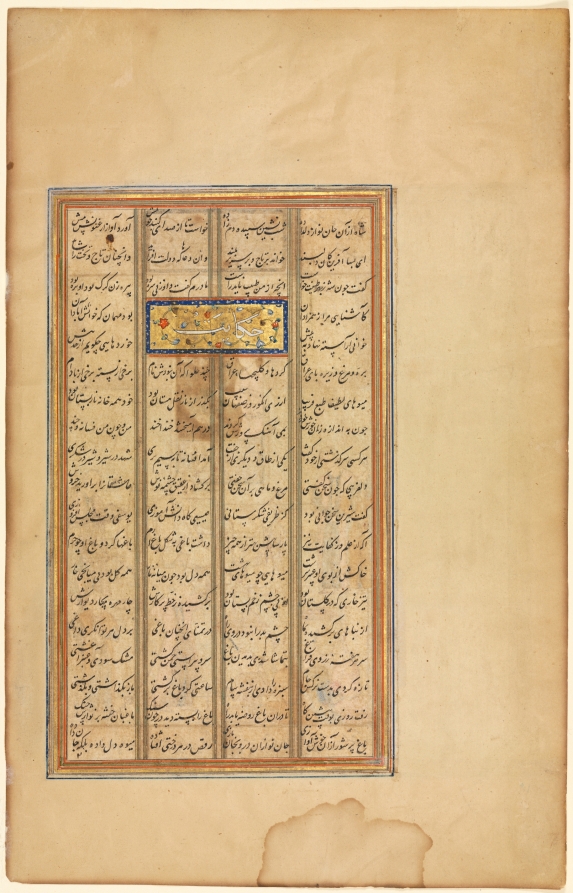
Text in Khamsa of Nizami (verso), from a Haft Paykar (Seven Portraits) of Nizami
Cleveland Museum of Art

Bahram Gur in the Black Palace
Minneapolis Institute of Art
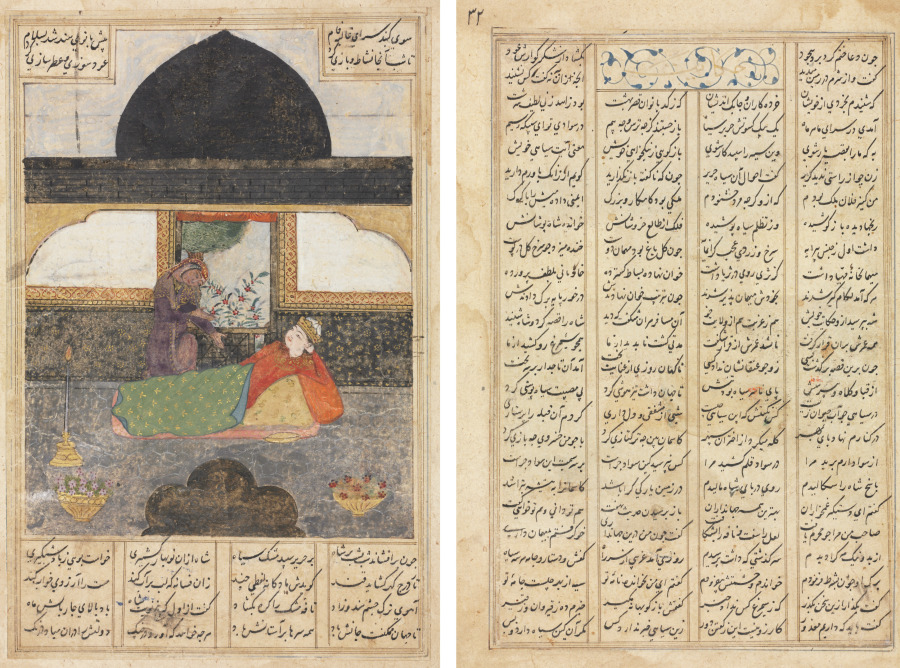
Bahram Gur Visits the Princess of India in the Black Pavilion, Illustration and Text, Persian Verses (recto); Bahram Gur Visits the Princess of India, Text Page, Persian Verses (verso)
Cleveland Museum of Art
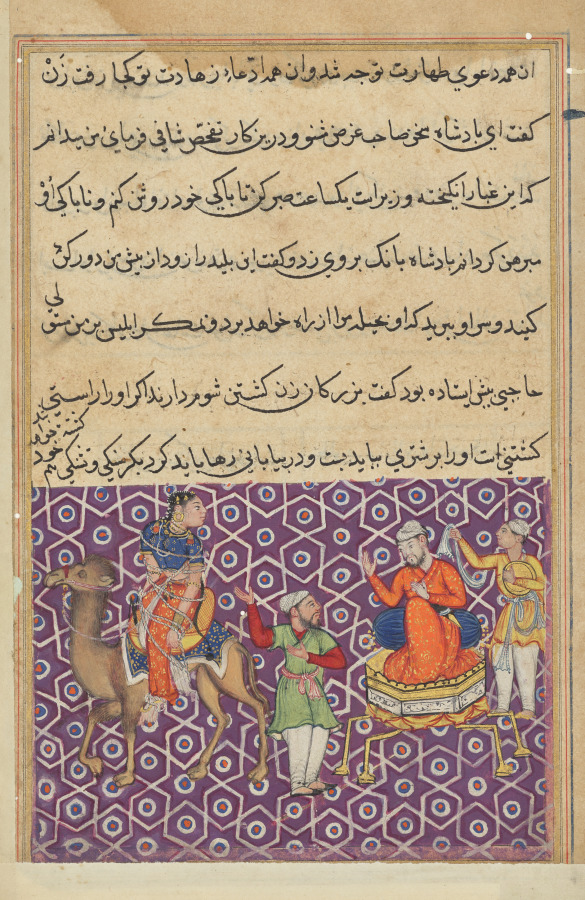
King Bahram, who has married Khassa’s daughter, has her tied to a camel to be abandoned in the desert as a result of false accusations made by Khulasa, from a Tuti-nama (Tales of a Parrot): Fifty-first Night
Cleveland Museum of Art
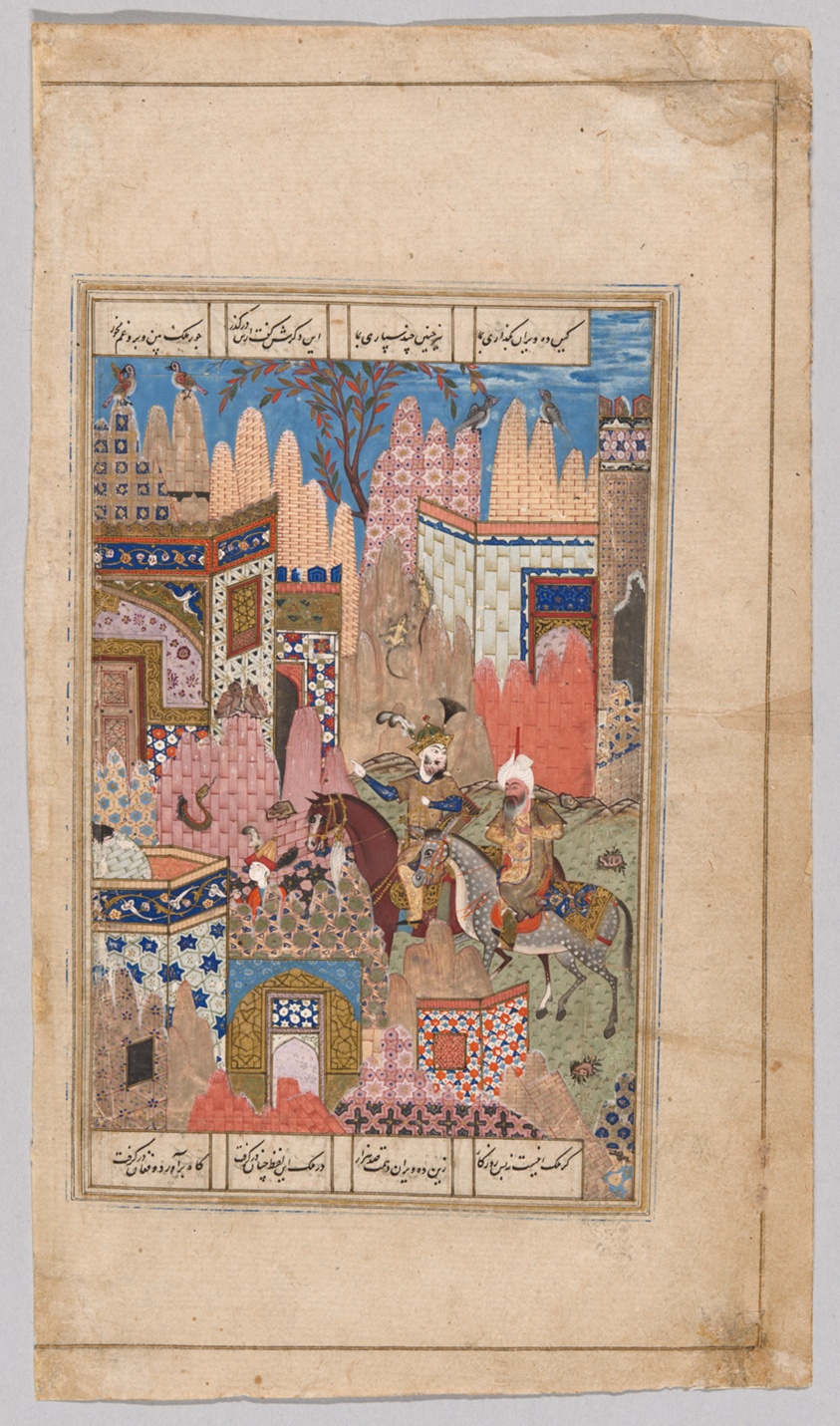
King Anushirwan and the Owls, from the Khamsa of Nizami
Art Institute of Chicago
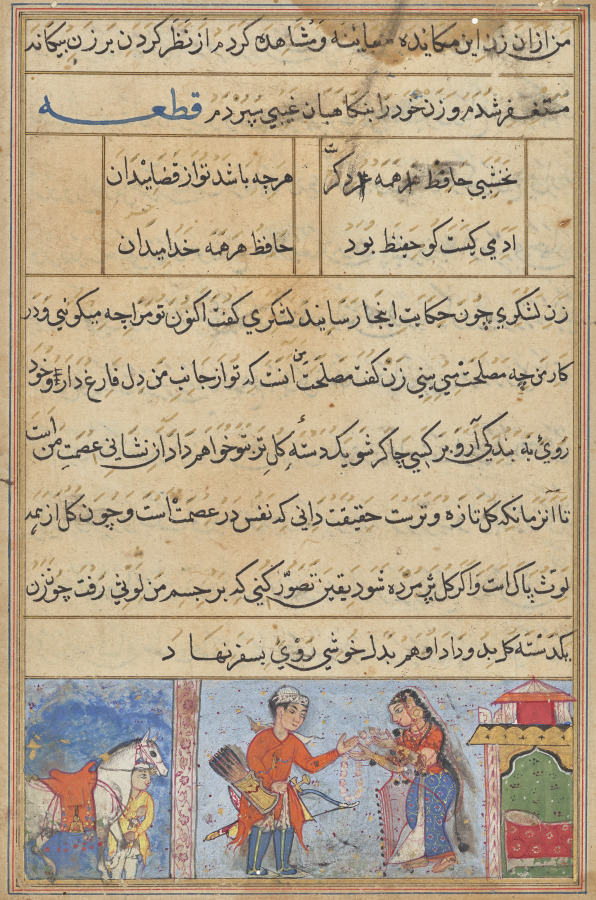
The soldier receives a garland of roses from his wife which will remain fresh as long as she is faithful, from a Tuti-nama (Tales of a Parrot): Fourth Night
Cleveland Museum of Art
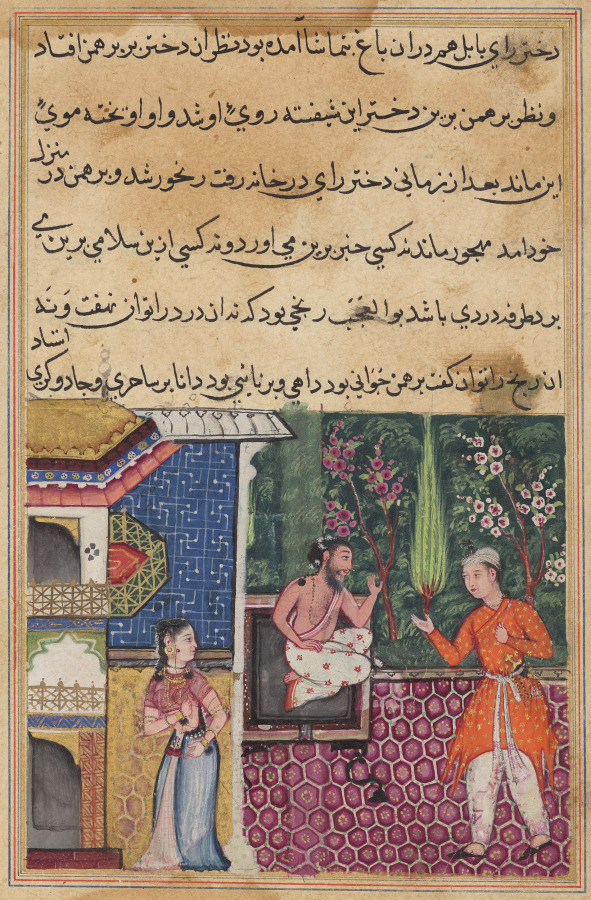
The Brahman gives an account of his falling in love with the king of Babylon’s daughter to his friend, the magician, from a Tuti-nama (Tales of a Parrot): Thirty-fifth Night
Cleveland Museum of Art