Cleveland Museum of Art
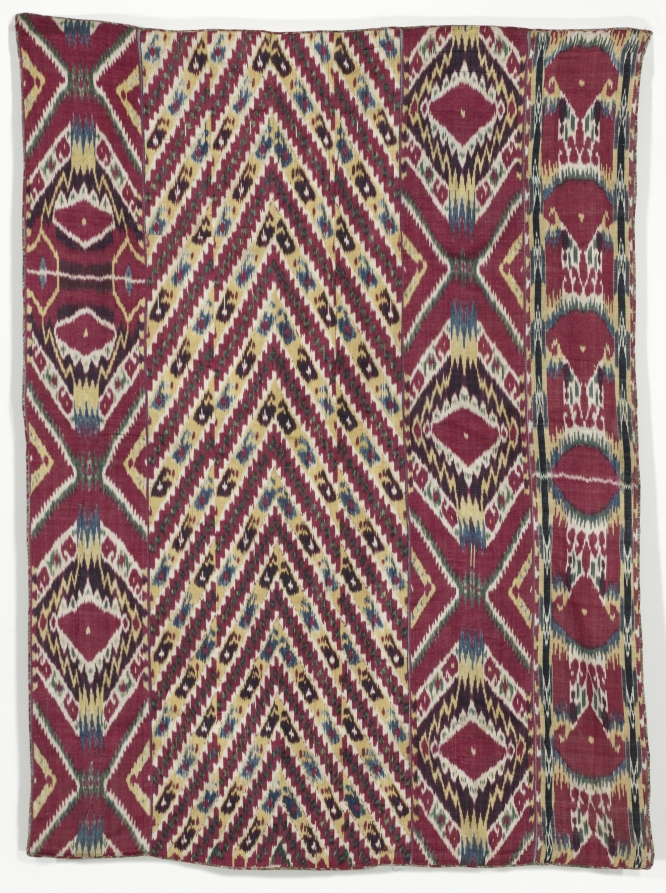
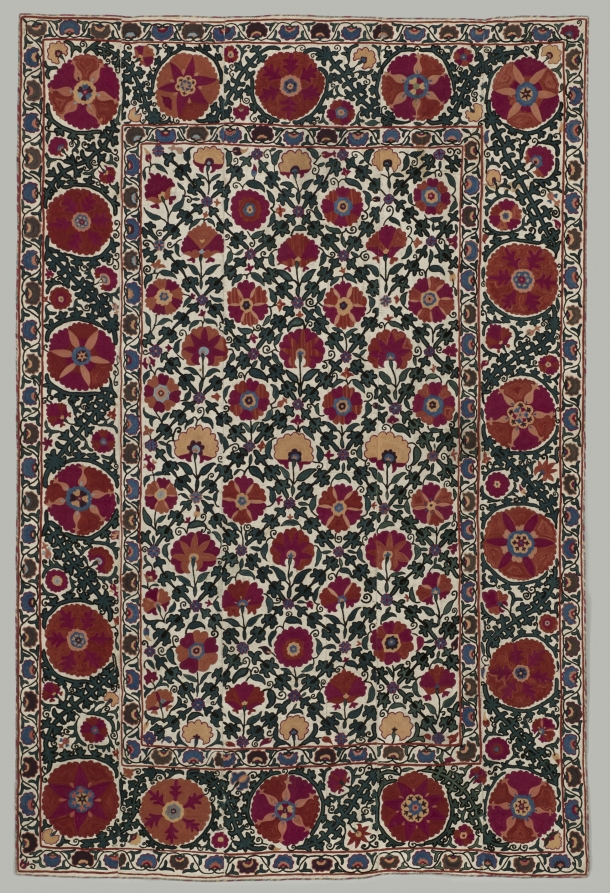
Wall hanging (pardah)
- Date
- 1850–75
- Medium
- warp ikat, warp-faced plain weave; silk warp; cotton weft; 5 panels./ lining: printed cotton, plain weave; 2 panels
- Culture
- Uzbekistan, Bukhara
- Department
- Textiles
- Institution
- Cleveland Museum of Art
Eye-dazzling patterns with saturated colors demonstrating the ikat technique provided vibrant wall hangings for the reception rooms of the urban elite in Central Asia. In this splendid example comprising five loom widths, three lengths display popular amulet designs while the two inner lengths are precursors to the bold chevron designs of the late 19th century. The irregular contours—telltale indicators of ikat—are masterfully controlled with five rich colors. In the ikat technique, designs are dyed on the warp (vertical thread) in a resist-dye process before being woven. Thread is tightly wrapped around the warp to prevent dye penetration in each area of color, beginning with the lightest shades to the darkest. This labor-intensive process produces vivid colors and fuzzy contours.
The authoritative record is held by Cleveland Museum of Art. LinkedCulture surfaces this object and its connections; it does not alter institutional metadata.
Related across collections
Semantically similar works from Cleveland Museum of Art and other institutions.
Wall Hanging (pardah)
Cleveland Museum of Art
Wall Hanging Composed of Five Panels
Art Institute of Chicago
Wall Hanging
Art Institute of Chicago
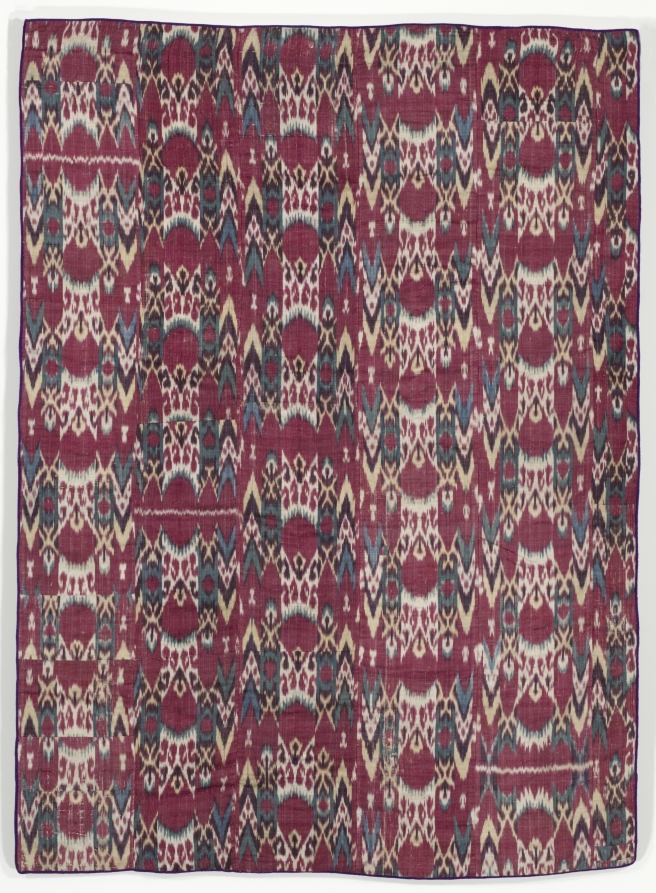
Wall hanging (pardah)
Cleveland Museum of Art
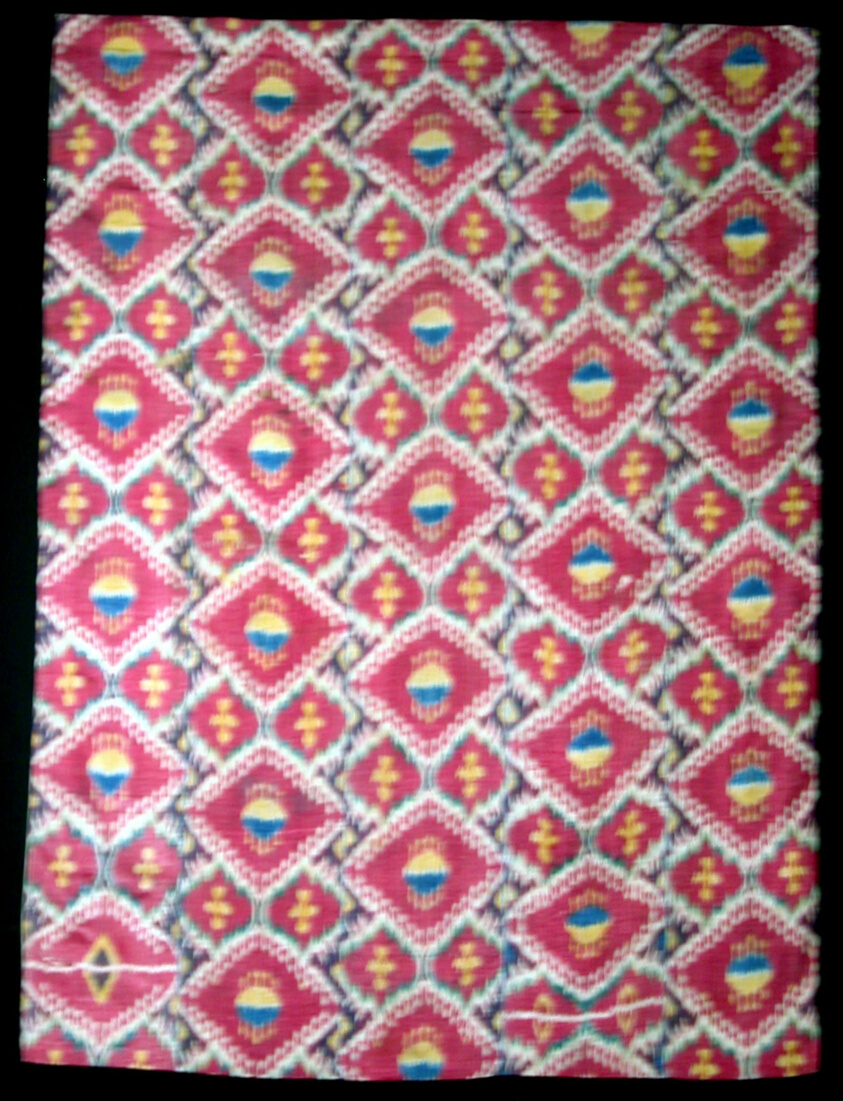
Wall Hanging Composed of Five Panels
Art Institute of Chicago
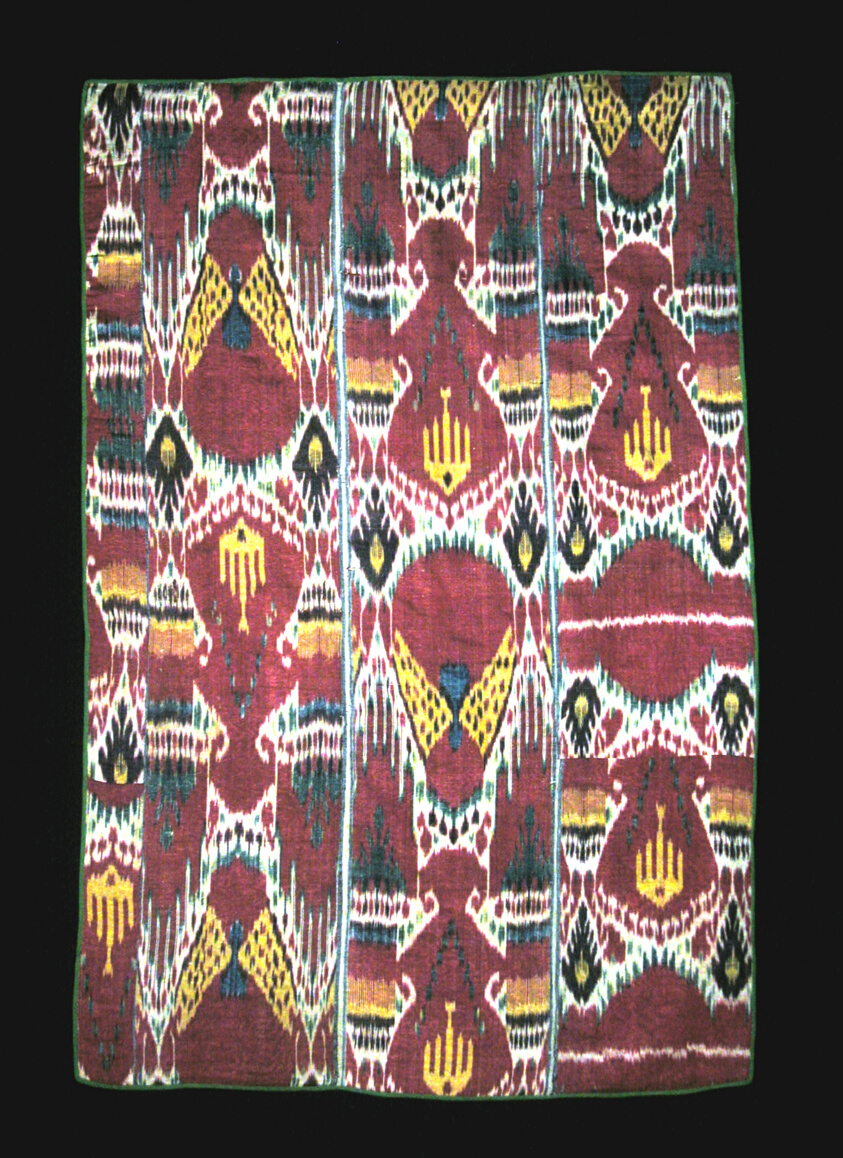
Wall Hanging Composed of Three Panels
Art Institute of Chicago
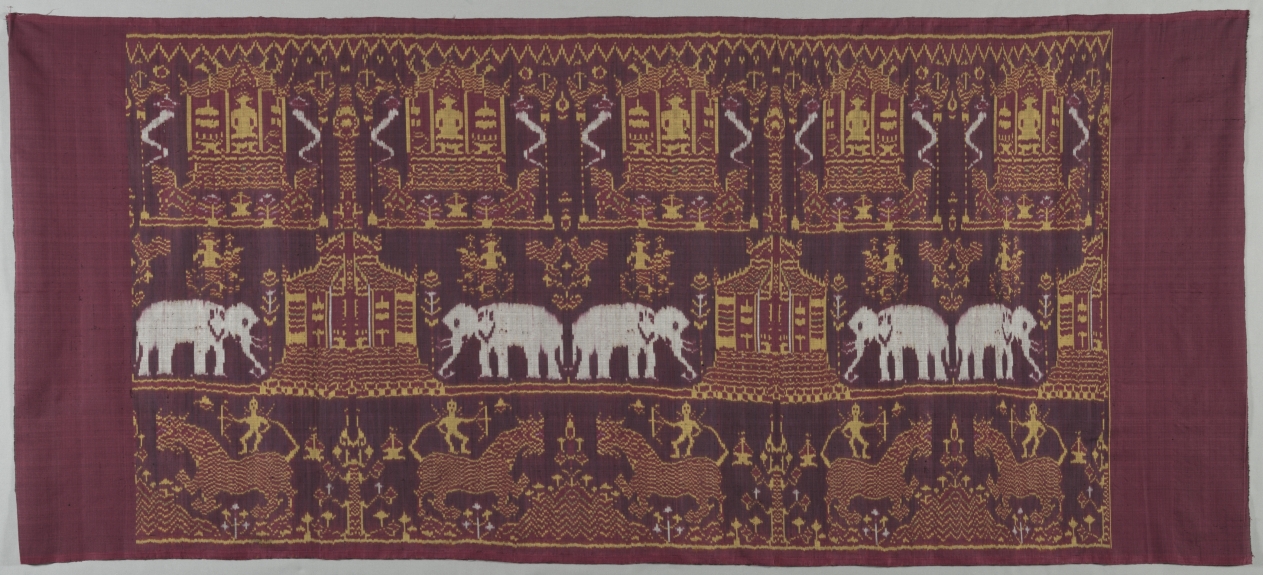
Wall Hanging or Ceiling Canopy
Cleveland Museum of Art
Wall Hanging
Cleveland Museum of Art

Ikat wall hanging
Minneapolis Institute of Art

Ikat wall hanging
Minneapolis Institute of Art

Ikat wall hanging
Minneapolis Institute of Art

Portion of a Loom Length
Art Institute of Chicago