Art Institute of Chicago
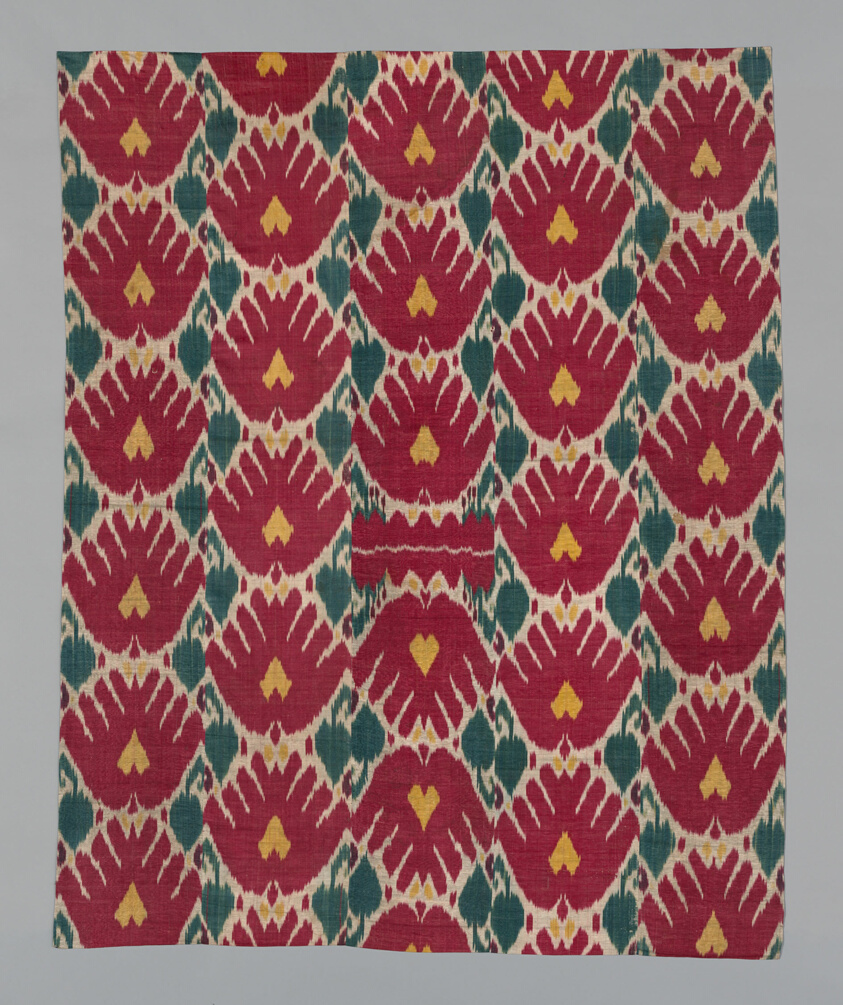
Wall Hanging Composed of Five Panels
Uzbekistan, Samarkand or Bukhara
- Date
- 1850/75
- Medium
- Silk, warp-faced plain weave; warp-dyed (ikat)
- Culture
- Uzbekistan
- Department
- Textiles
- Institution
- Art Institute of Chicago
The ikat dyeing technique was brought to a high level of accomplishment in the 19th century in Central Asia, particularly in the area around the Fergana Valley, in modern-day Uzbekistan. The time-consuming process involves sequentially dyeing bundles of warps and wefts in multiple colors, each time with particular areas tightly wrapped to resist dye penetration, all before they are woven. Warps are then stretched on the loom and wefts are passed so as to create the intended pattern. While the patterns on these objects can be difficult to decipher, many appear to derive from floral motifs, talismanic forms, and Persian patterns. the chief design element here could have been based on a serrated leaf, a flower, or even a peacock.
The authoritative record is held by Art Institute of Chicago. LinkedCulture surfaces this object and its connections; it does not alter institutional metadata.
Linked open data
Authority identifiers that link this record into the wider web of cultural data — stable references you can follow to the source.
- Object type
- AAT300435669
Related across collections
Semantically similar works from Art Institute of Chicago and other institutions.
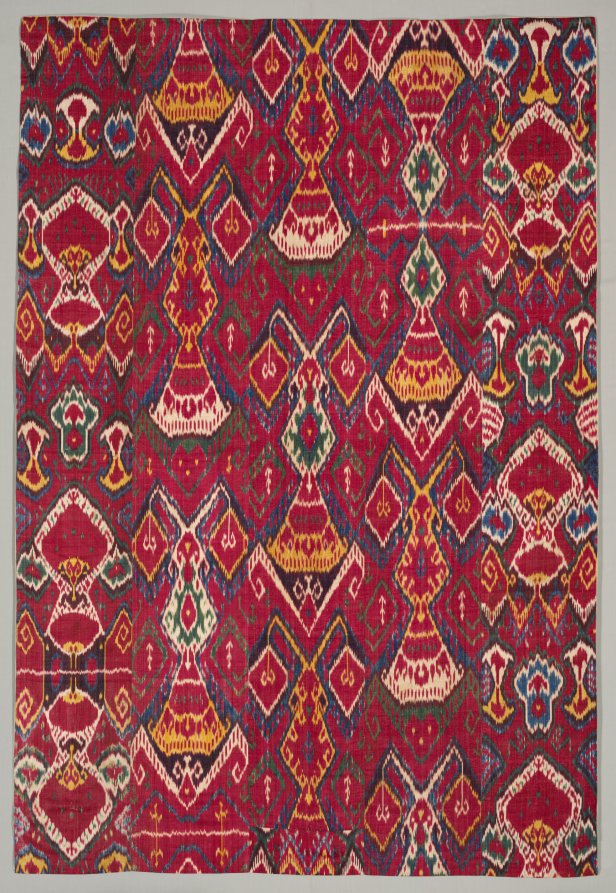
Wall Hanging (pardah)
Cleveland Museum of Art
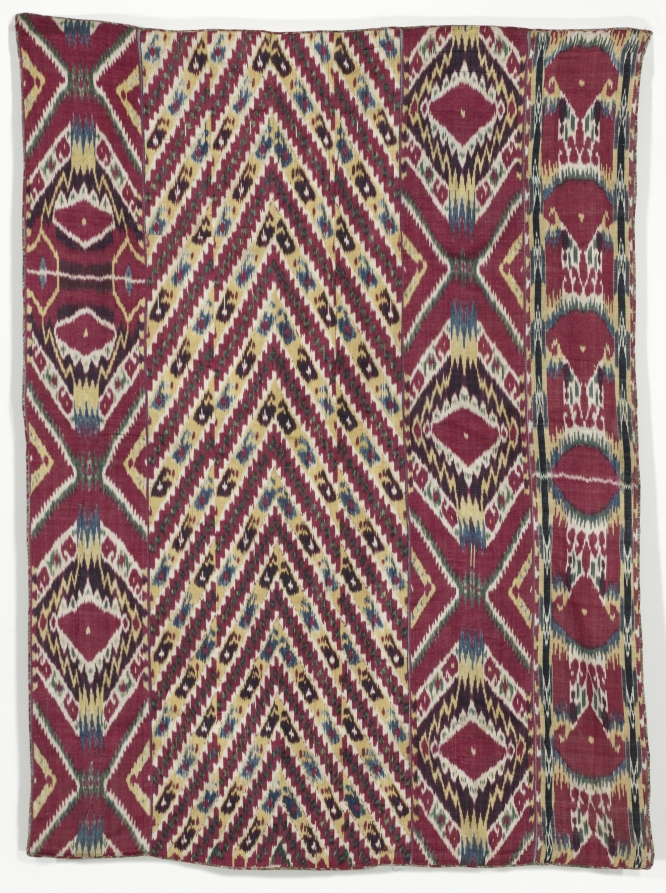
Wall hanging (pardah)
Cleveland Museum of Art
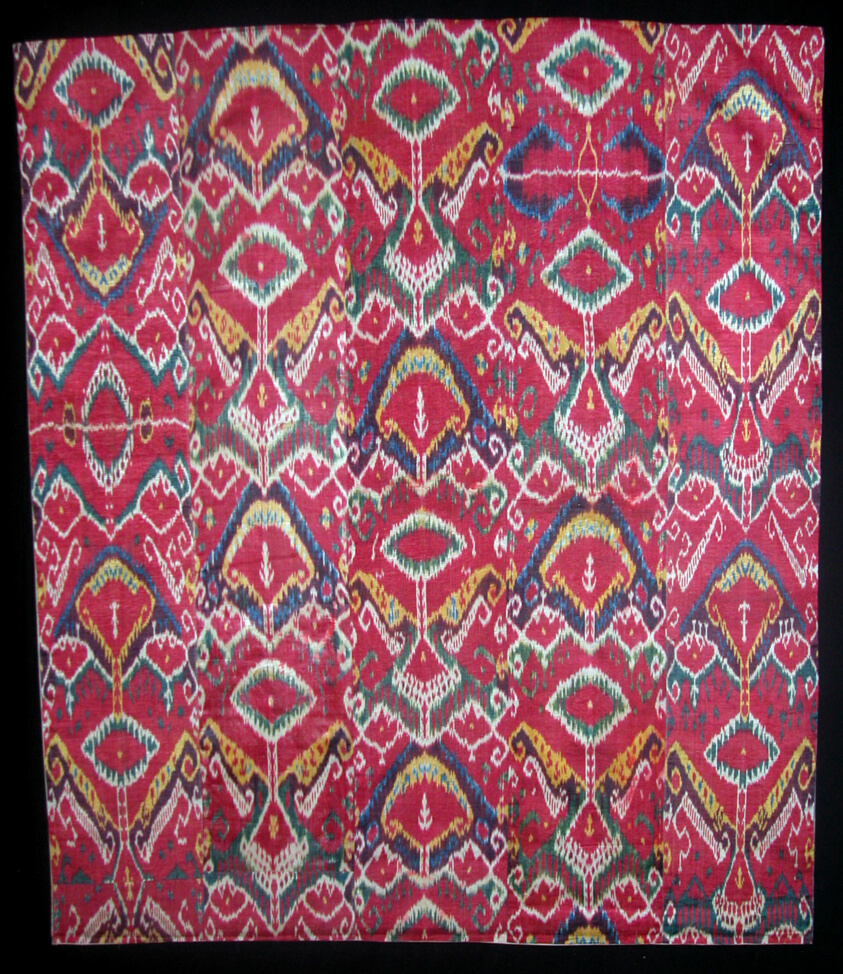
Wall Hanging
Art Institute of Chicago
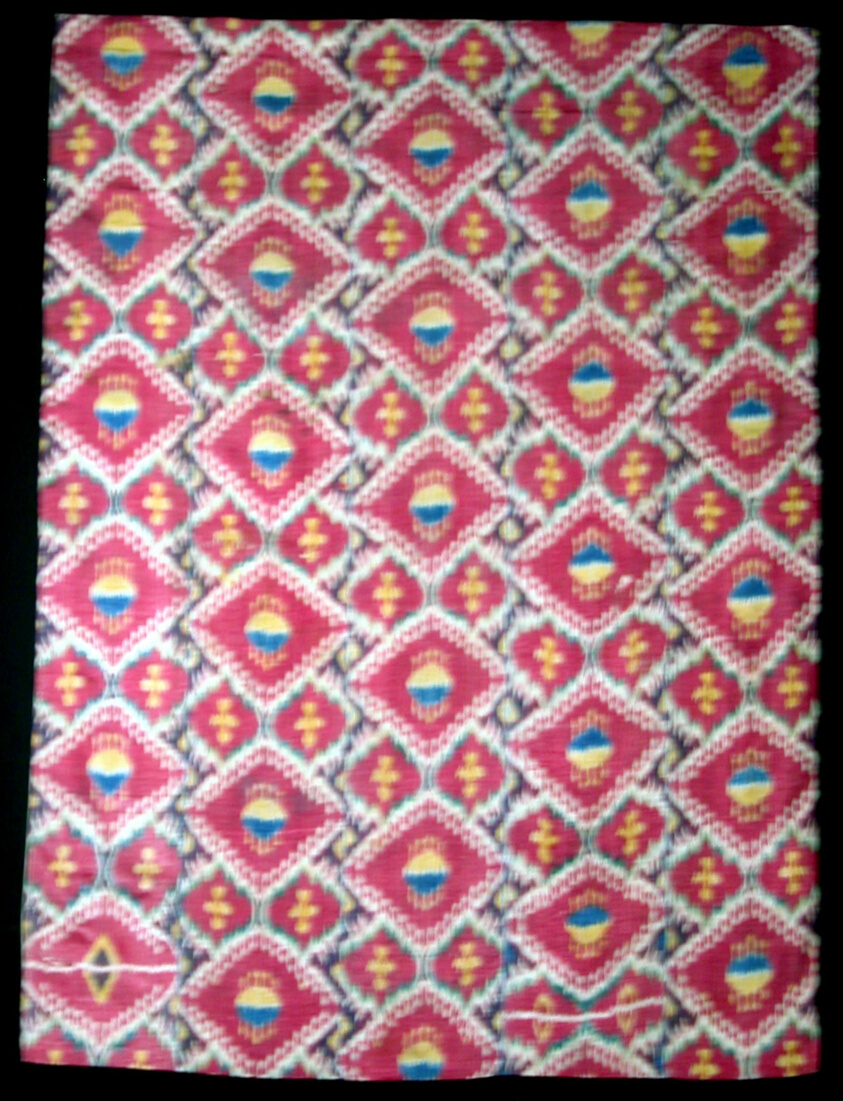
Wall Hanging Composed of Five Panels
Art Institute of Chicago
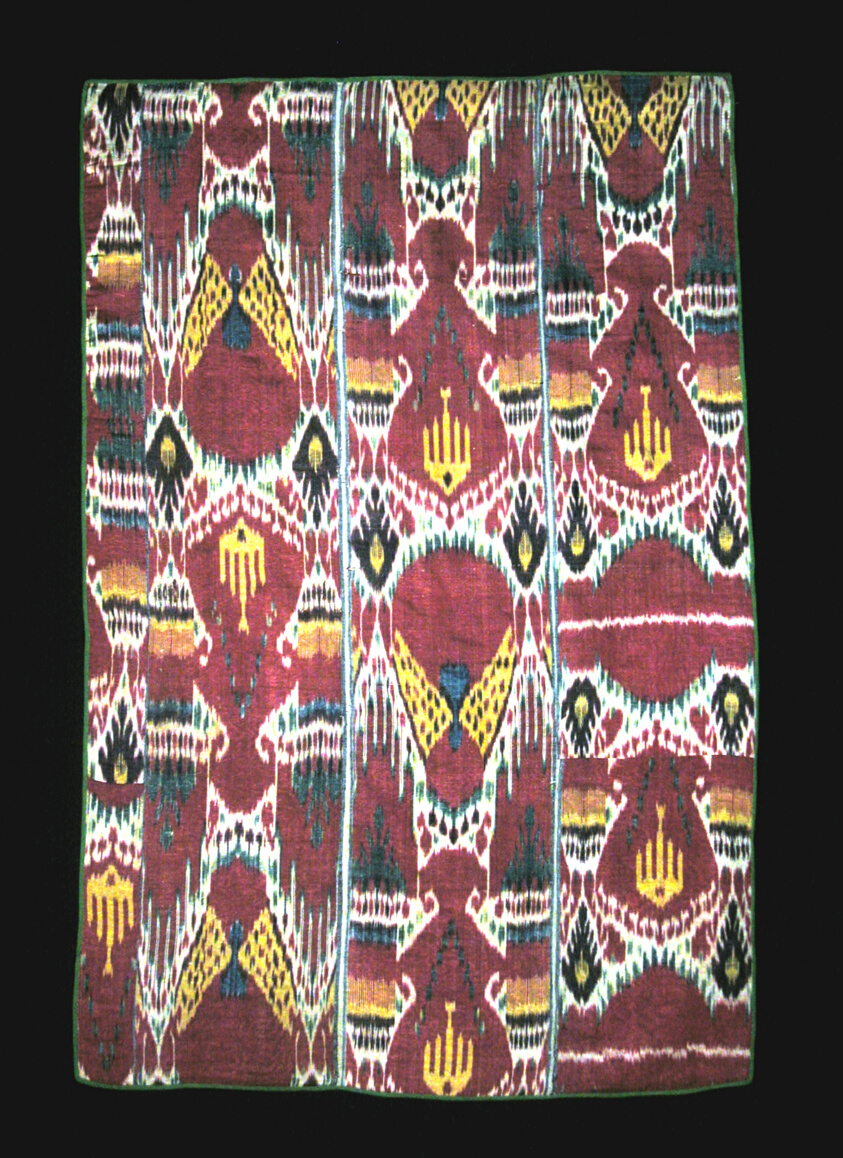
Wall Hanging Composed of Three Panels
Art Institute of Chicago
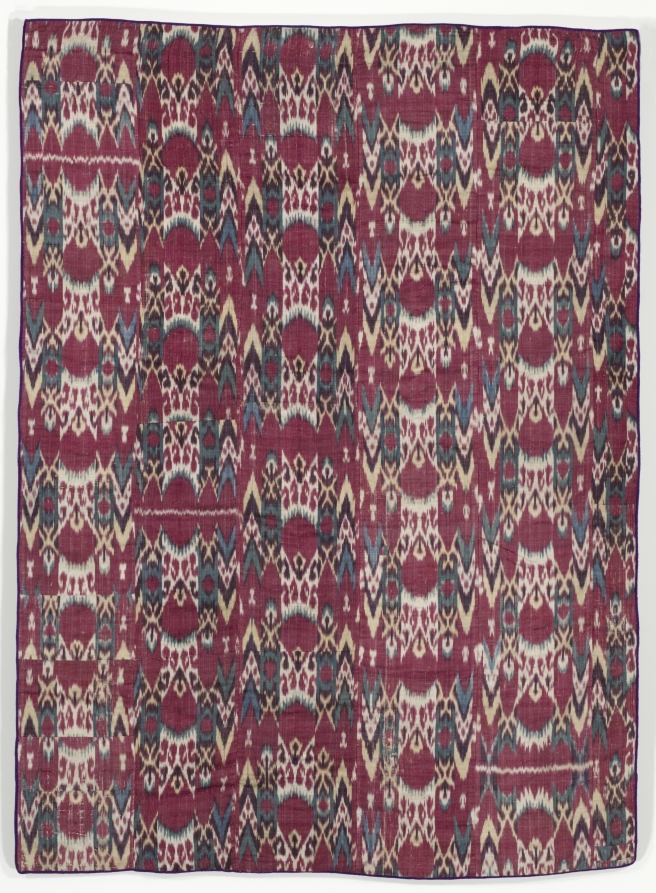
Wall hanging (pardah)
Cleveland Museum of Art

Length of Velvet
Art Institute of Chicago

Portion of a Loom Length
Art Institute of Chicago

Ikat wall hanging
Minneapolis Institute of Art

Ikat wall hanging
Minneapolis Institute of Art

Ikat wall hanging
Minneapolis Institute of Art

Ikat wall hanging
Minneapolis Institute of Art