Cleveland Museum of Art
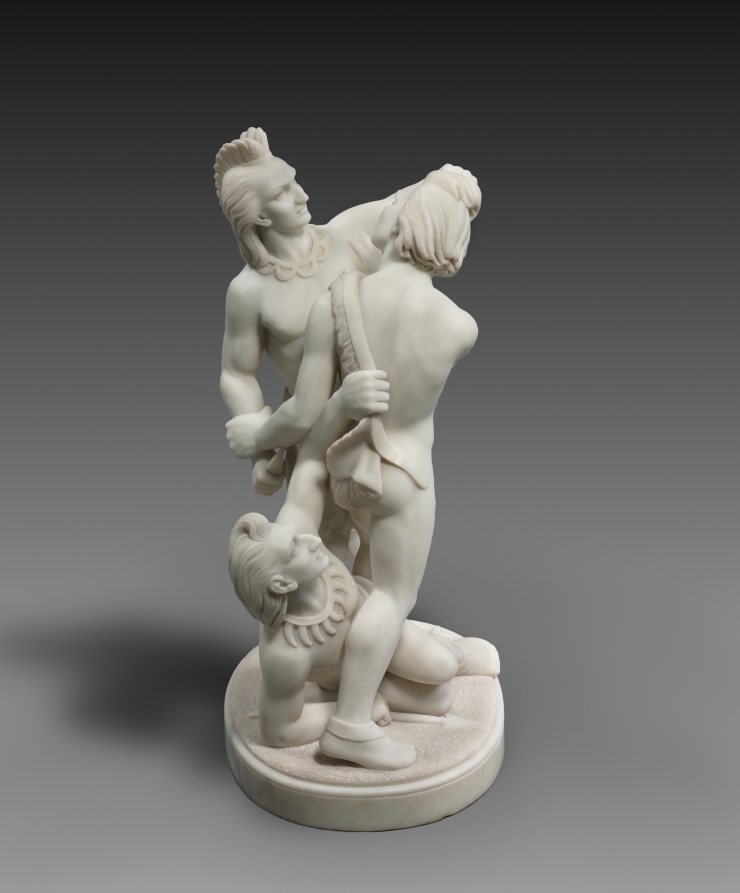
Indian Combat
Edmonia Lewis
- Date
- 1868
- Medium
- marble
- Culture
- America
- Department
- American Painting and Sculpture
- Institution
- Cleveland Museum of Art
A spiraling composition with three intertwined figures, Indian Combat ranks as Edmonia Lewis’s most dynamic and complex creation. Although her Native American subjects typically exist in multiple versions, this example appears to be unique. Of Indigenous (Ojibwe) and African American ancestry, Edmonia Lewis studied at Oberlin College and apprenticed with a sculptor in Boston before moving to Rome in 1866. Her sculptures were readily purchased by patrons on both sides of the Atlantic. Growing up in her Ojibwe community, Lewis went by a name that translates as "Wildfire."
The authoritative record is held by Cleveland Museum of Art. LinkedCulture surfaces this object and its connections; it does not alter institutional metadata.
Related across collections
Semantically similar works from Cleveland Museum of Art and other institutions.
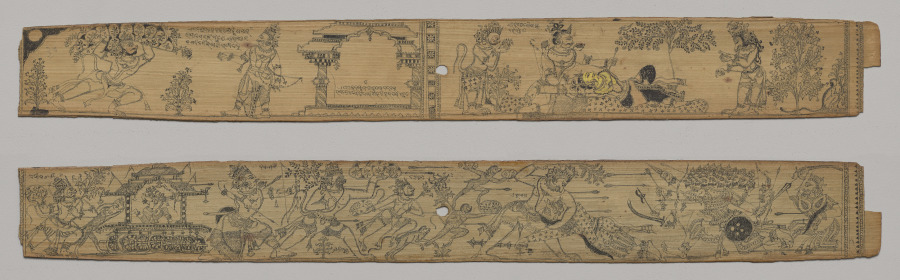
Leaf from a Romance of Chandrabhanu and Lavanyavati of Upendra Bhanja (Indian, died 1740)
Cleveland Museum of Art

The Monkeys and Bears Fight Ravana and His Demons (verso), from a Romance of Chandrabhanu and Lavanyavati of Upendra Bhanja (Indian, died 1740)
Cleveland Museum of Art

Brahminy Starling with Two Antheraea Moths, Caterpillar, and Cocoon on Indian Jujube Tree
Minneapolis Institute of Art

Map Showing the Present Boundaries of the Ojibwa, Menomonee, Winnebago, and Dakotah Tribes of Indians 1851
Minneapolis Institute of Art

Hwamei on Terminalia Branch
Minneapolis Institute of Art

Indian Medas Secretly Showing the Contents of their Medicine Sacks to Each Other
Minneapolis Institute of Art

Brahminy Starling on Neem Tree Branch
Minneapolis Institute of Art

Indian Courting
Minneapolis Institute of Art

Oriental Magpie Robin with Katydid and Leaf Hopper on Monkey Jack Branch
Minneapolis Institute of Art

Sounding Wind, The Chippewa Brave
Minneapolis Institute of Art
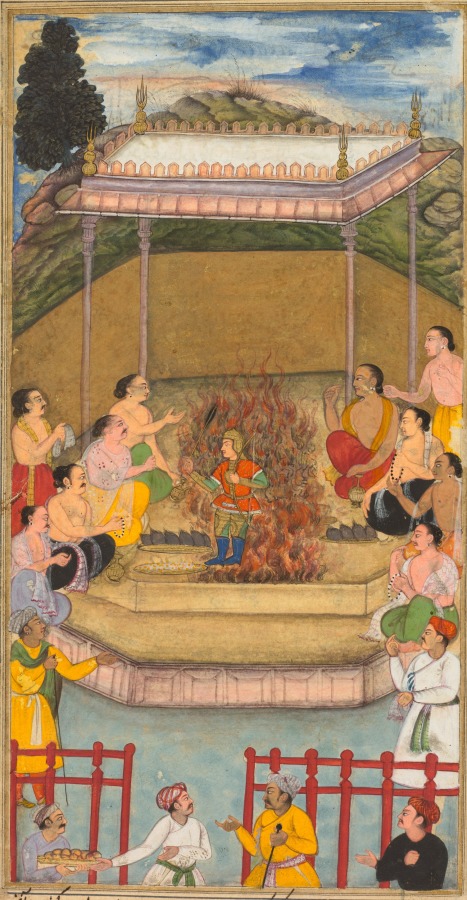
Yaja and Upayaja perform a sacrifice for the emergence of Dhrishtadyumna from the fire, from Adi-parva (volume one) of the Razm-nama (Book of Wars) adapted and translated into Persian by Mir Ghiyath al-Din Ali Qazvini, known as Naqib Khan (Persian, d. 1614) from the Sanskrit Mahabharata
Cleveland Museum of Art

Black-hooded Oriole and Insect on Jackfruit Stump
Minneapolis Institute of Art