Cleveland Museum of Art
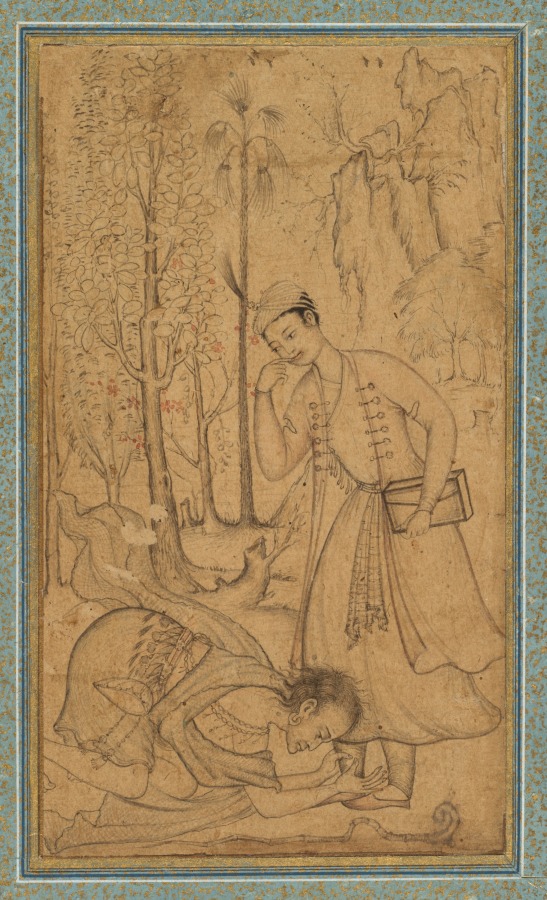
A holy man prostrating himself before a learned prince
Manohar
- Date
- c. 1585; border added probably 1700s
- Medium
- ink on paper, laid down with borders of gold-decorated blue paper
- Culture
- Mughal India, court of Akbar (reigned 1556–1605)
- Department
- Indian and Southeast Asian Art
- Institution
- Cleveland Museum of Art
Manohar riffs on the work of his father, Basavana, by showing a holy man bowing at the feet of a prince, instead of another holy man. Those who could recognize the relationship between this work and that of his father ( CMA 2013.296 ) would impress gatherings of courtly connoisseurs, who prided themselves on being able to identify the hand of individual artists just by looking at the paintings. Recitation of poetry would accompany the viewing of paintings and drawings. Virtuoso artists reflected glory on their patrons. As an Islamic ruler, Akbar and his court participated in these activities—a new purpose for art that Indian artists had to learn.
The authoritative record is held by Cleveland Museum of Art. LinkedCulture surfaces this object and its connections; it does not alter institutional metadata.
Related across collections
Semantically similar works from Cleveland Museum of Art and other institutions.
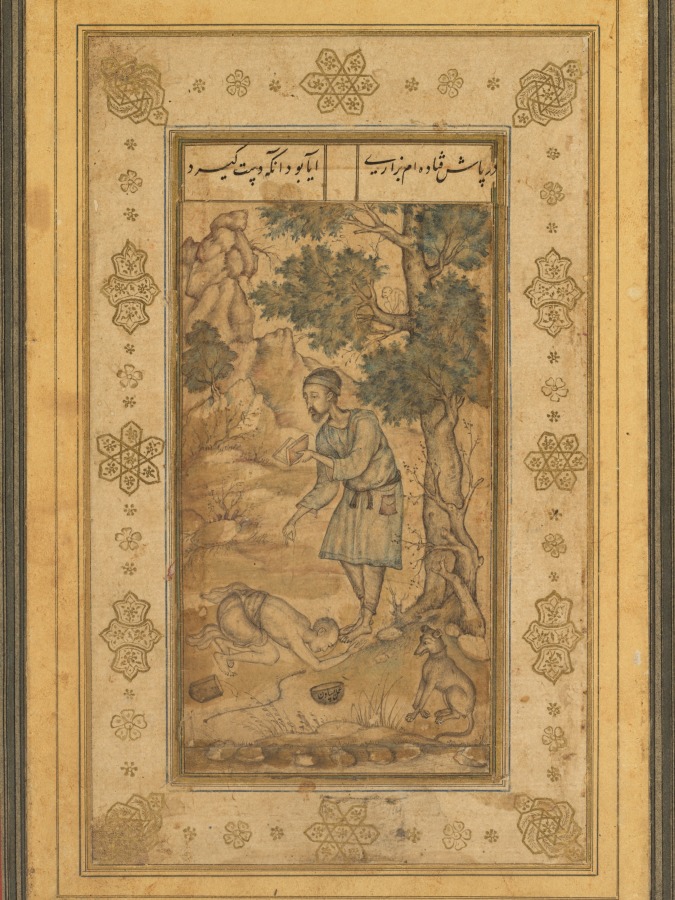
A mendicant bowing before a holy man, from the Prince Salim Album
Cleveland Museum of Art
Page from the Mirror of Holiness (Mir’at al-quds)
Cleveland Museum of Art
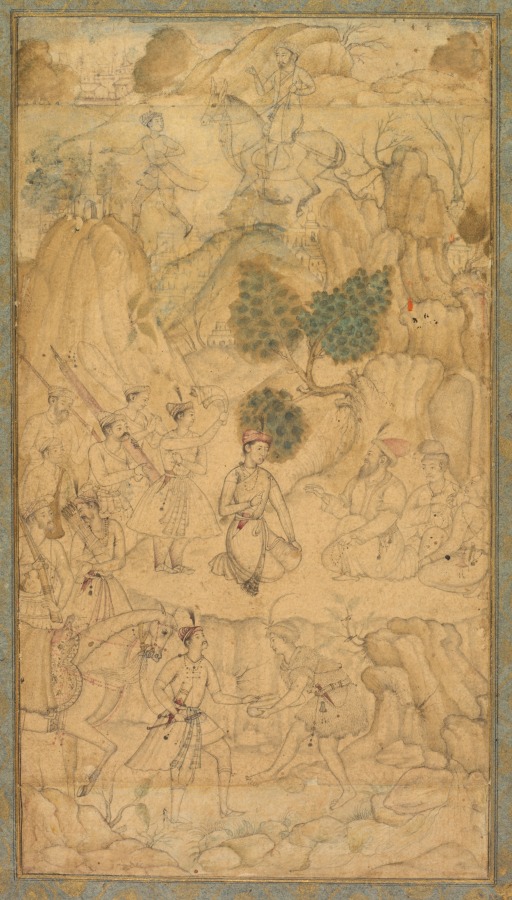
A prince visiting a holy man in a rocky landscape
Cleveland Museum of Art
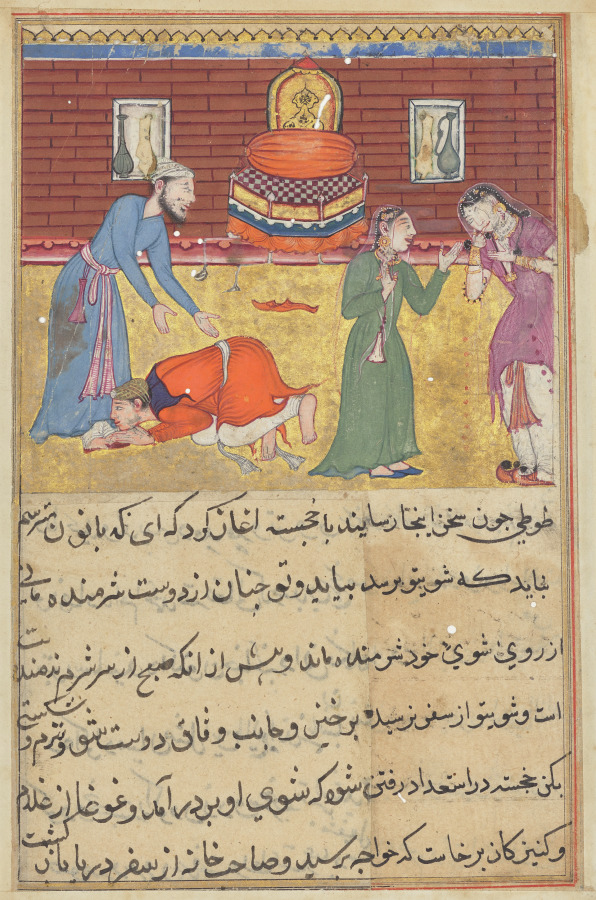
The pious man’s son, now a king, reveals himself to his father; his nurse upbraids his unfaithful mother, from a Tuti-nama (Tales of a Parrot): Fifty-second Night
Cleveland Museum of Art
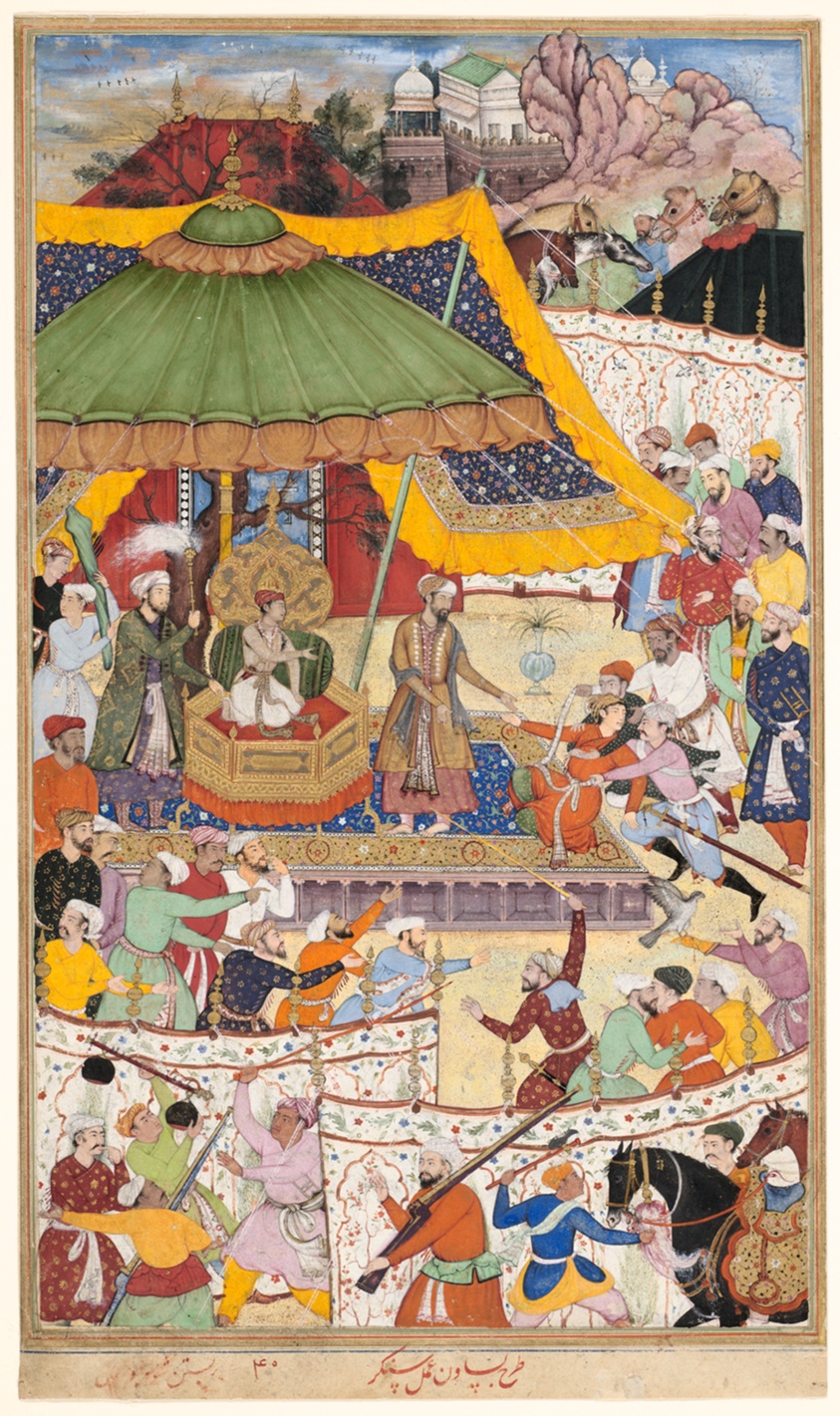
The Young Emperor Akbar Arrests the Insolent Shah Abu’l-Maali, Page from a Manuscript of the Akbarnama
Art Institute of Chicago
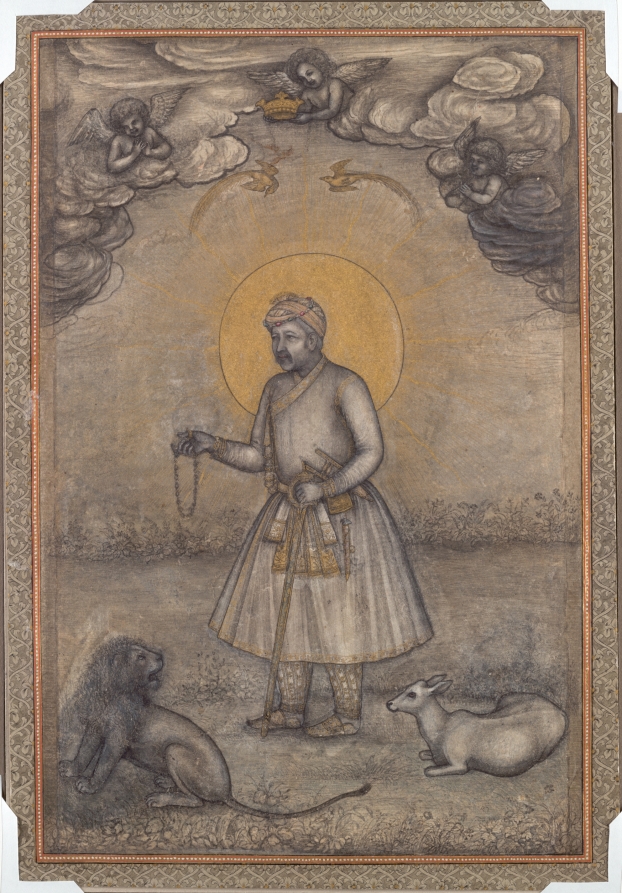
Portrait of the Aged Akbar
Cleveland Museum of Art
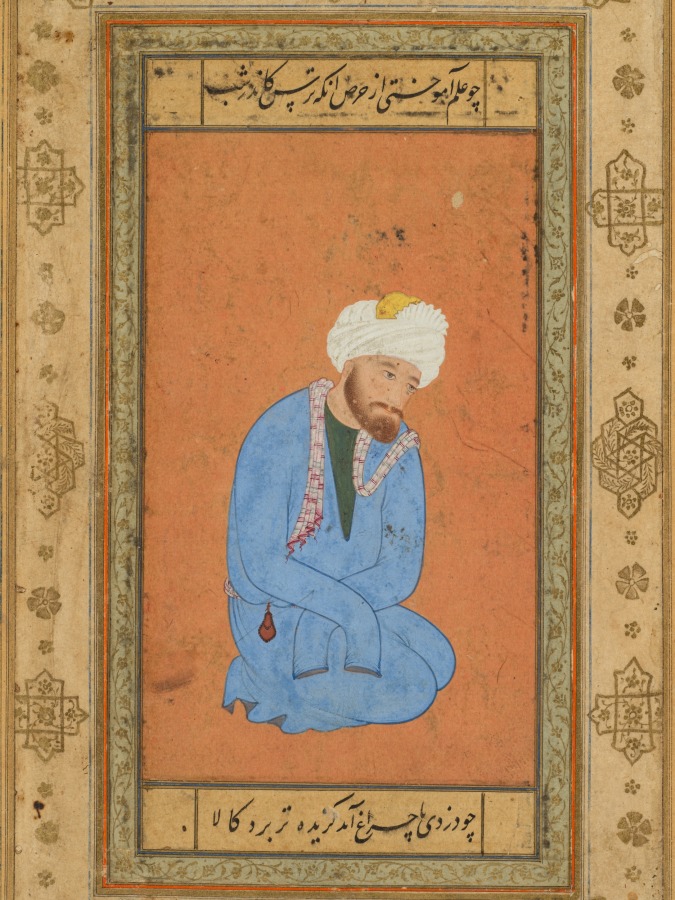
Portrait of a kneeling holy man, from the Prince Salim Album
Cleveland Museum of Art
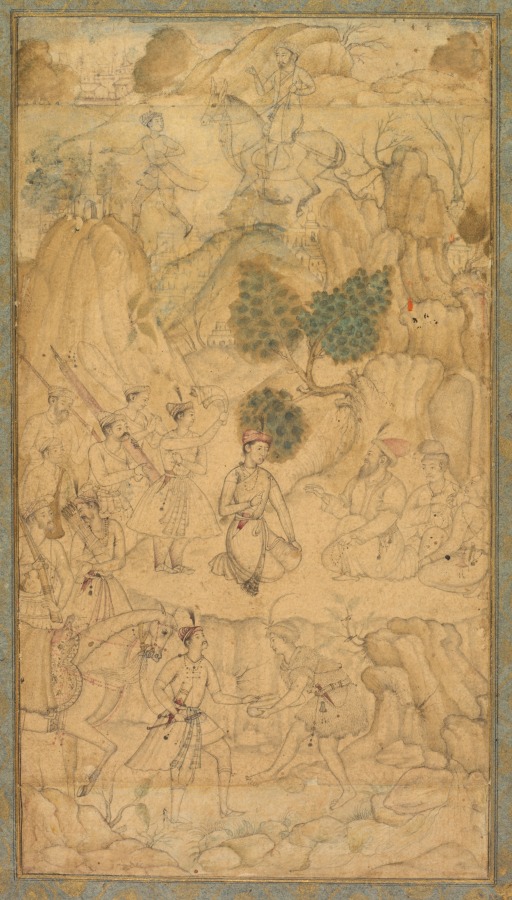
A Prince Visiting a Holy Man in a Rocky Landscape (recto)
Cleveland Museum of Art
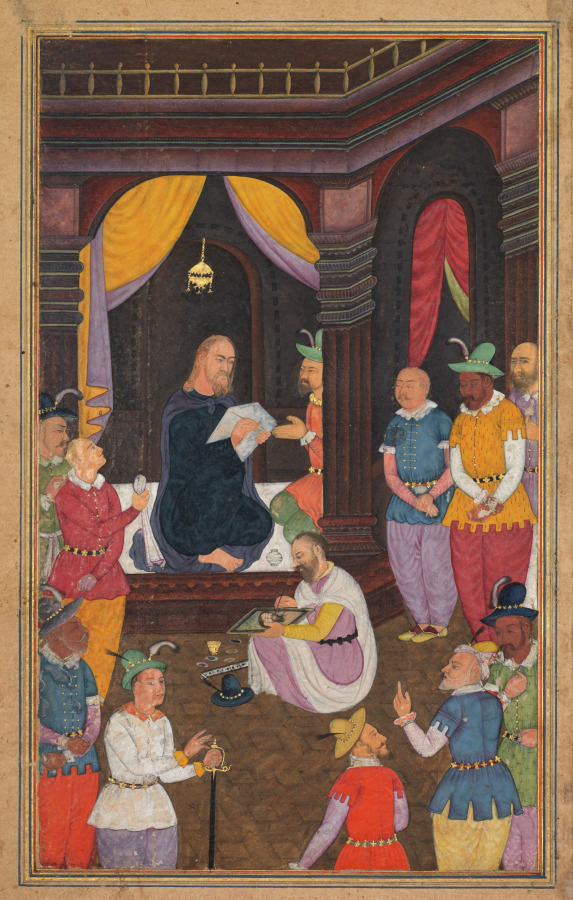
Jesus being portrayed by King Abgar’s painter (folio 143 recto), from a Mirror of Holiness (Mir’at al-quds) of Father Jerome Xavier
Cleveland Museum of Art
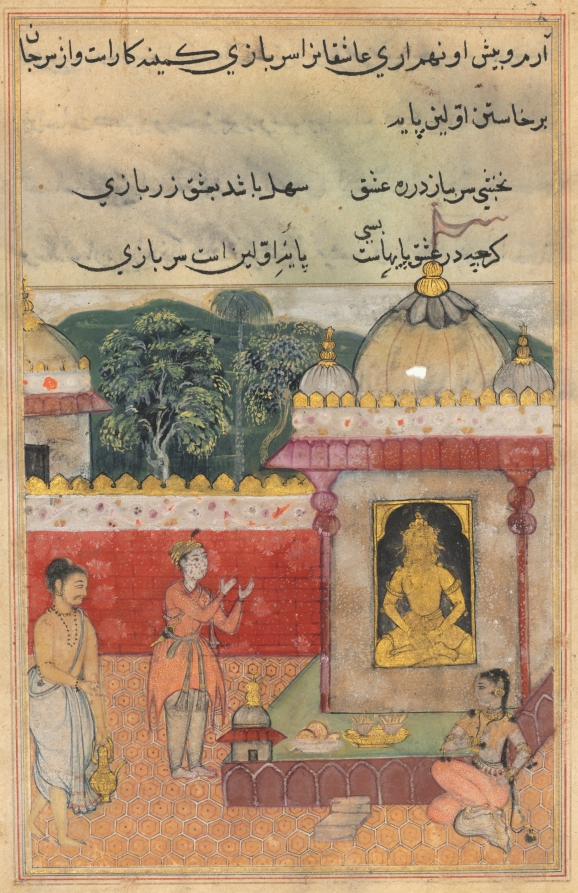
The Raja’s son vows to sever his head and offer it to the image if he is united with the princess he has seen in the temple, from a Tuti-nama (Tales of a Parrot): Thirty-fourth Night
Cleveland Museum of Art
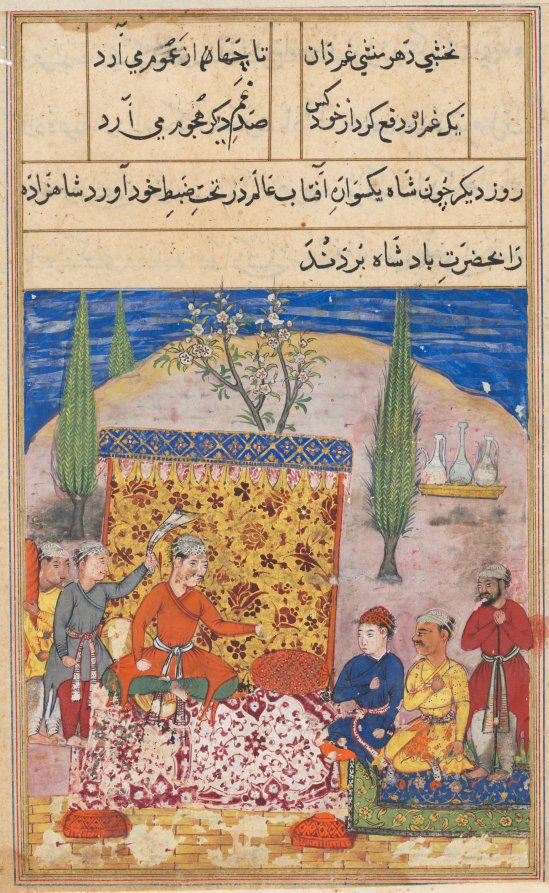
The young prince is presented to the king, his father, by his teacher, but refuses to speak, from a Tuti-nama (Tales of a Parrot): Eighth Night
Cleveland Museum of Art
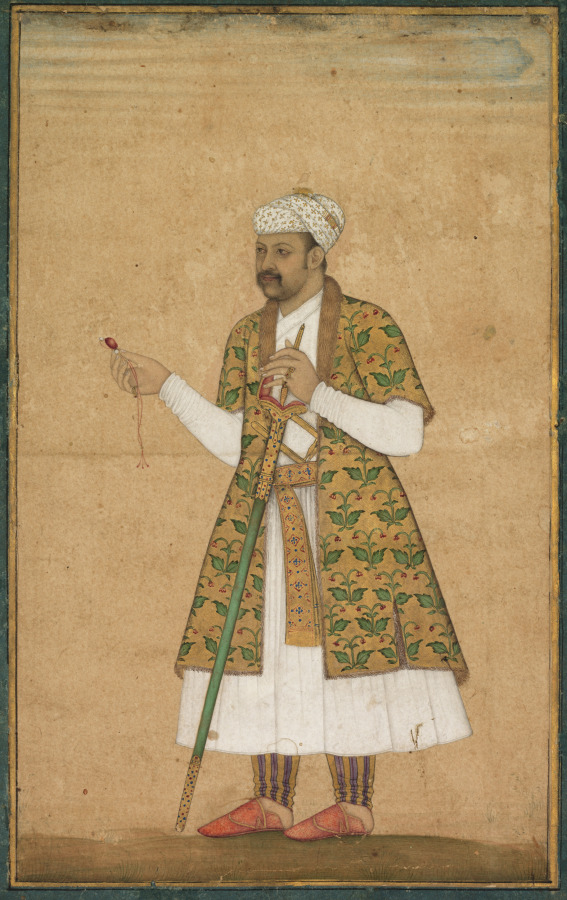
A Courtier, Possibly Khan Alam, Holding a Spinel and a Deccan Sword
Cleveland Museum of Art