Cleveland Museum of Art
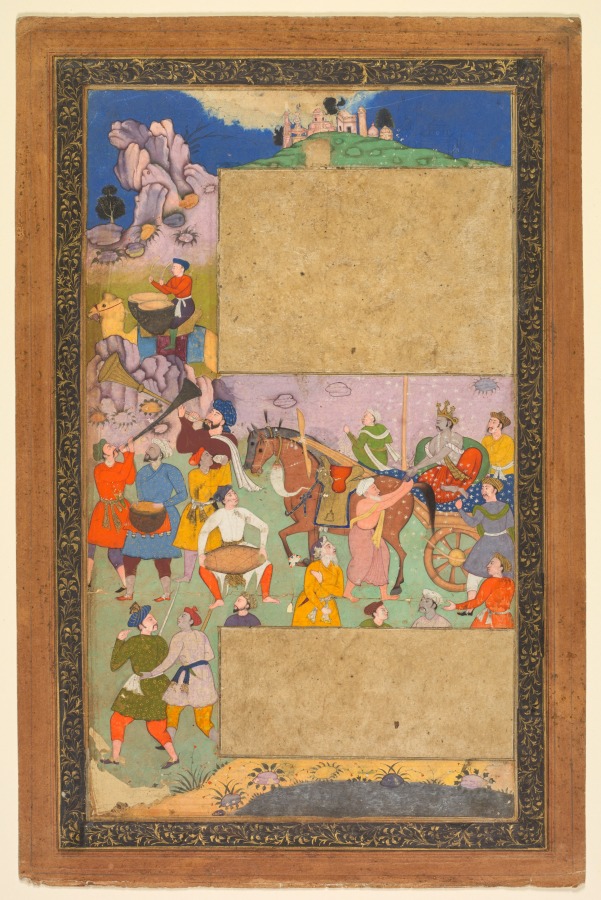
A charioteer riding through a rocky landscape with an entourage of footmen and musicians, page from a Razm-nama (Book of Wars) adapted from the Sanskrit Mahabharata and translated into Persian by Mir Ghiyath al-Din Ali Qazvini, known as Naqib Khan (Persian, d. 1614)
Yusuf Ali
- Date
- 1616–17
- Medium
- Gum tempera, ink, and gold on paper
- Culture
- India, Mughal, 17th century
- Department
- Indian and Southeast Asian Art
- Institution
- Cleveland Museum of Art
The authoritative record is held by Cleveland Museum of Art. LinkedCulture surfaces this object and its connections; it does not alter institutional metadata.
Related across collections
Semantically similar works from Cleveland Museum of Art and other institutions.
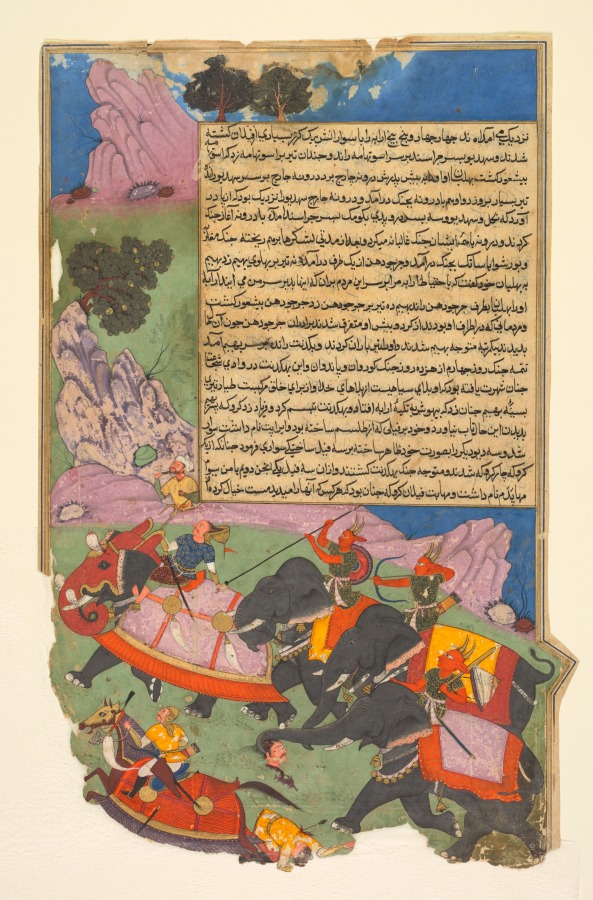
Ghatotkacha and three demons in his company chase Bhagadatta, from Bhishma-parva (volume six) of a Razm-nama (Book of Wars) adapted from the Sanskrit Mahabharata and translated into Persian by Mir Ghiyath al-Din Ali Qazvini, known as Naqib Khan (Persian, d. 1614)
Cleveland Museum of Art
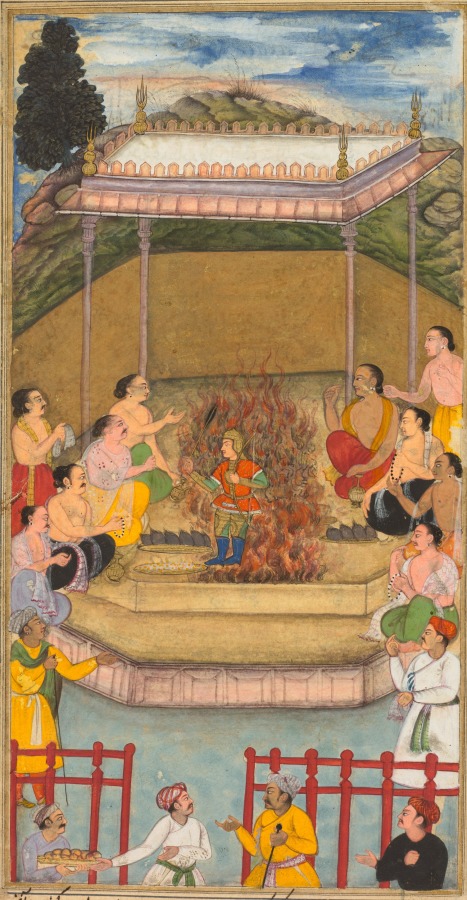
Yaja and Upayaja perform a sacrifice for the emergence of Dhrishtadyumna from the fire, from Adi-parva (volume one) of the Razm-nama (Book of Wars) adapted and translated into Persian by Mir Ghiyath al-Din Ali Qazvini, known as Naqib Khan (Persian, d. 1614) from the Sanskrit Mahabharata
Cleveland Museum of Art
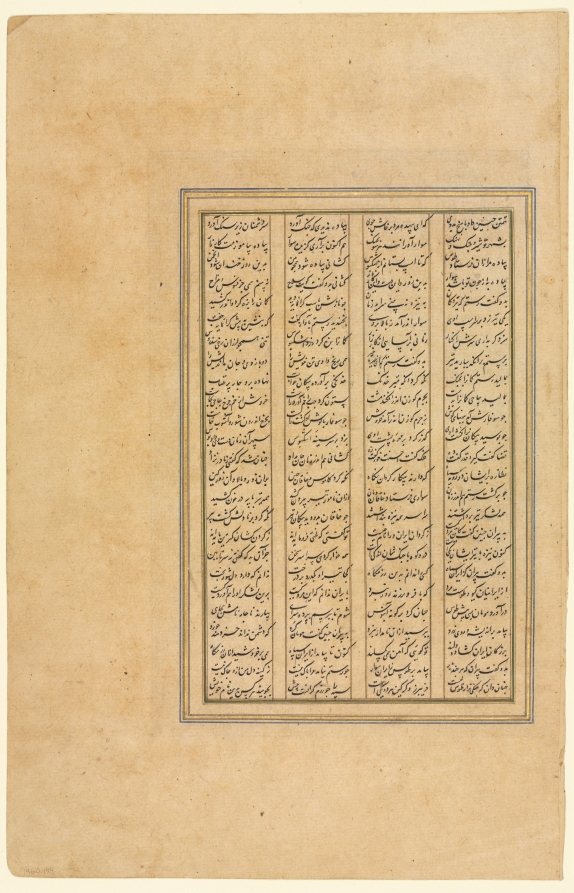
Page from a Shah-nama (Book of Kings) of Firdausi (Persian, about 934–1020)
Cleveland Museum of Art
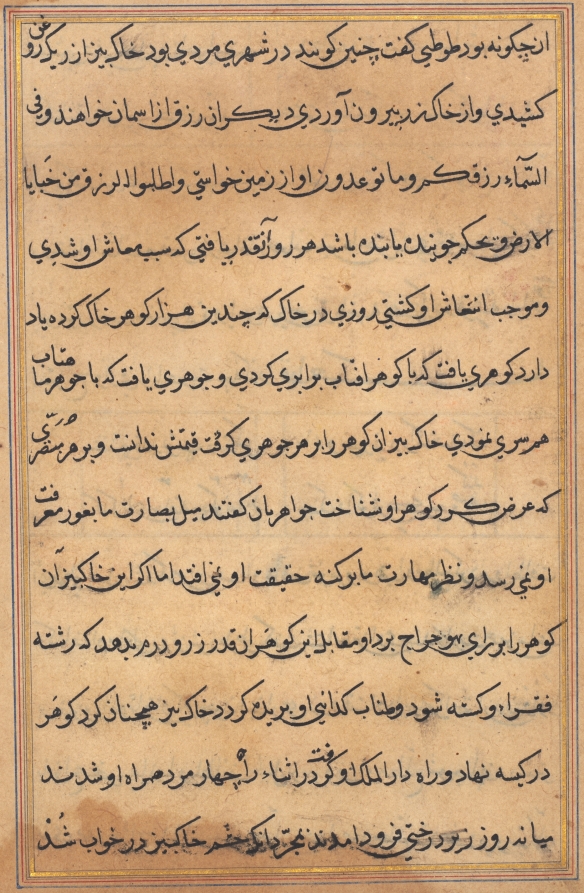
Page from Tales of a Parrot (Tuti-nama): text page
Cleveland Museum of Art
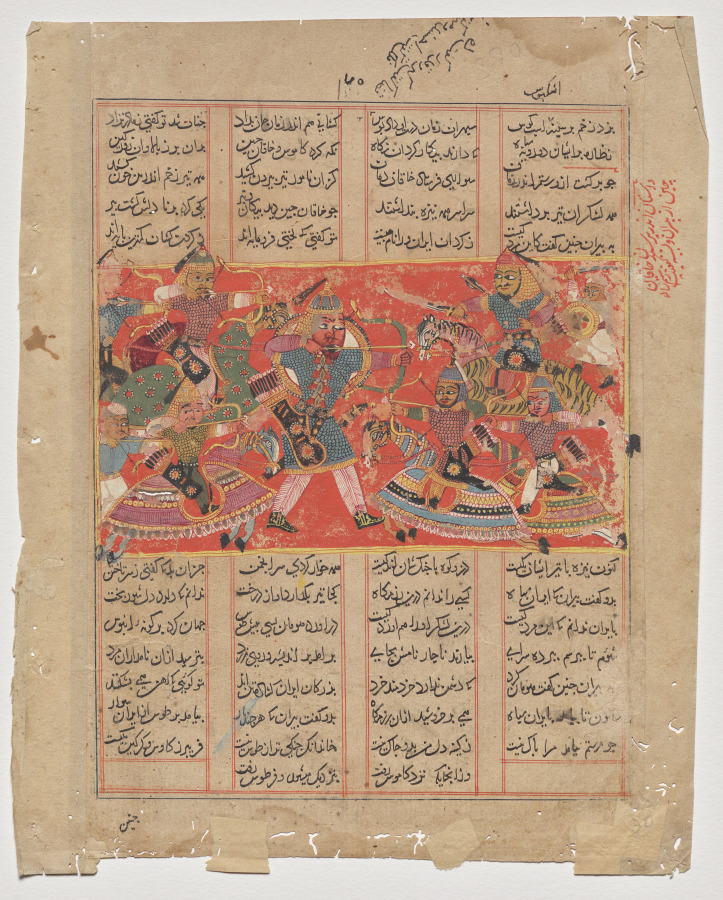
Rustam Takes Aim at Ashkabus, from a Shah-nama (Book of Kings)
Cleveland Museum of Art
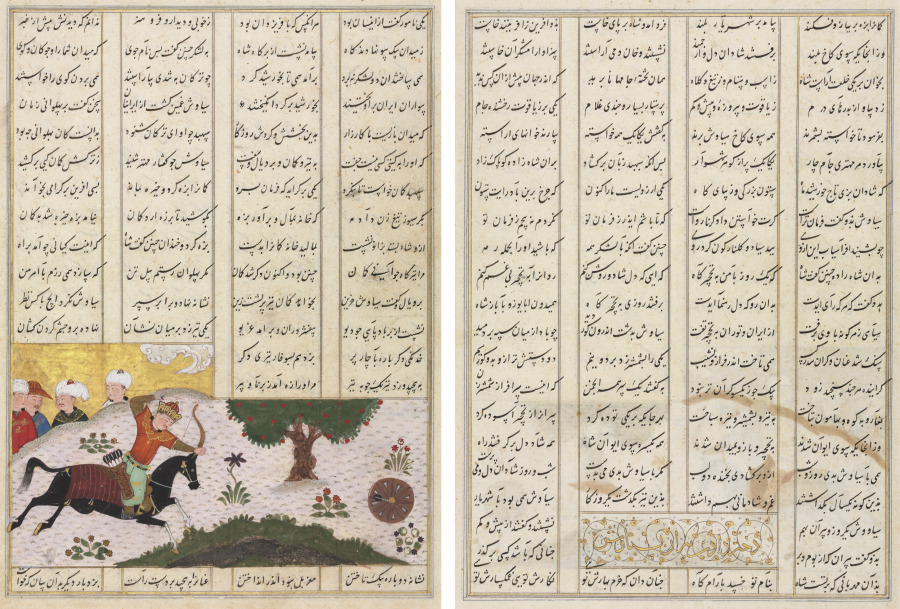
Siyavush on His Horse Hitting a Rolling Target (recto) and Persian verses (verso), from a Shahnama (Book of Kings) of Firdausi (940–1019 or 1025)
Cleveland Museum of Art
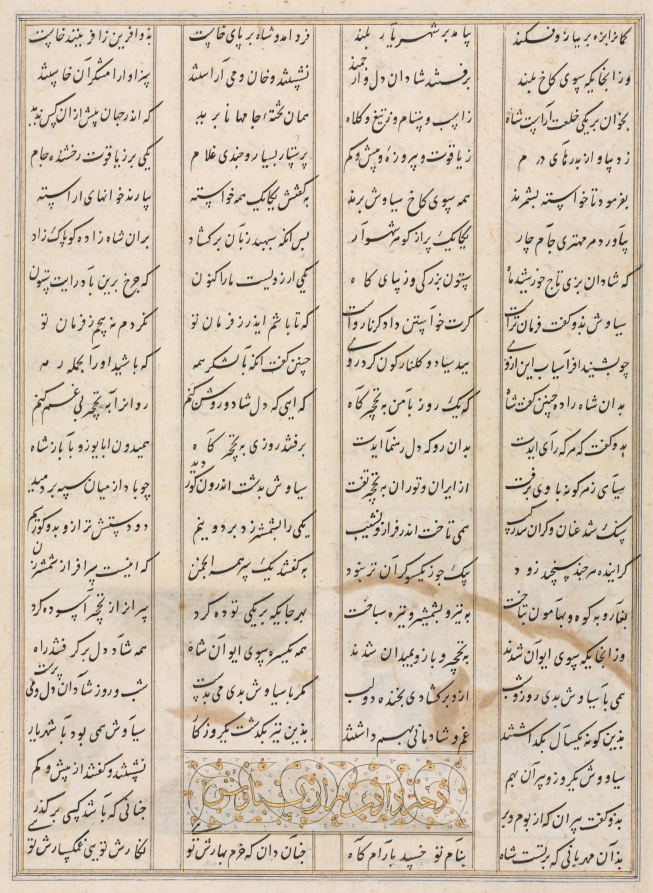
Persian verses (verso) from a Shahnama (Book of Kings) of Firdausi (940-1019 or 1025)
Cleveland Museum of Art
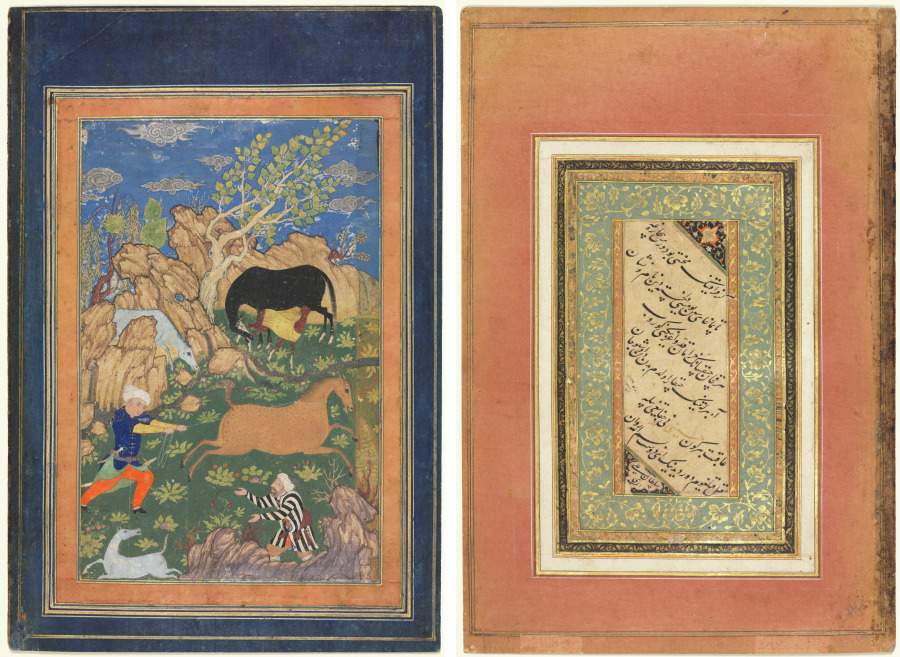
Rustam Lassoing his Horse, Rakhsh, in a Landscape (recto); Calligraphy, Persian Verses (verso)
Cleveland Museum of Art
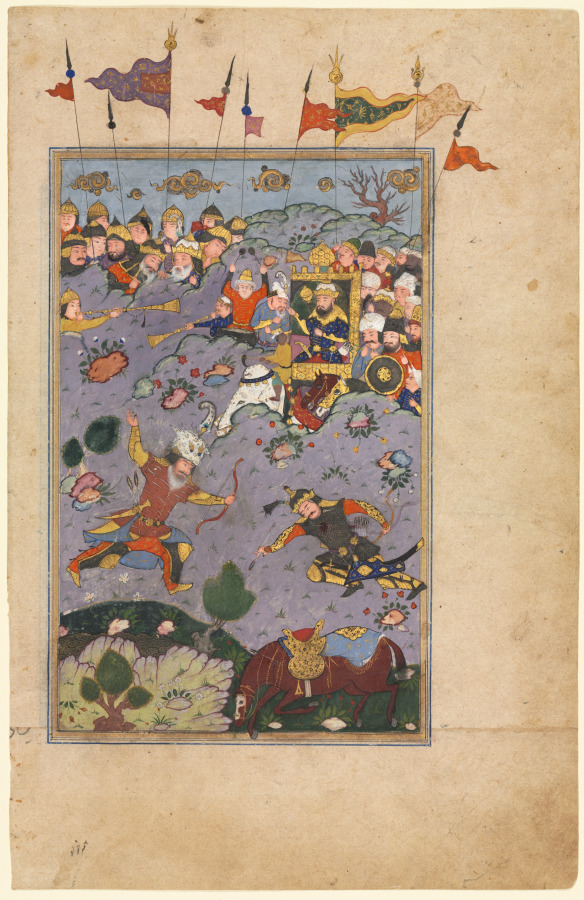
Rustam meets the challenge of Ashkabus, from a Shah-nama (Book of Kings) of Firdausi (Persian, about 934–1020)
Cleveland Museum of Art
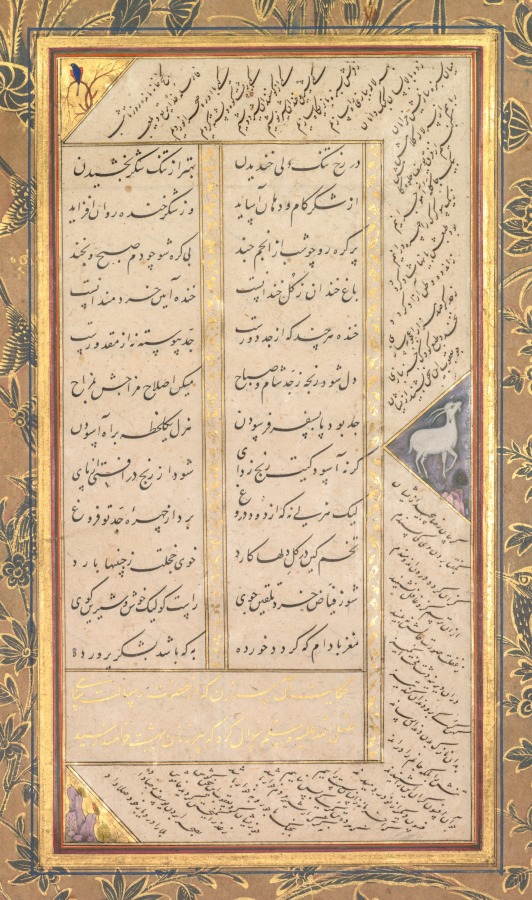
Page from a Panj Ganj (Five Treasures) of Abd al-Rahman Jami (Persian, 1414–1492), with two Persian masnavis: Yusuf va Zulaykha (Joseph and Zulaykha) and Subhat al-abrar (Rosary of the Righteous) (verso)
Cleveland Museum of Art
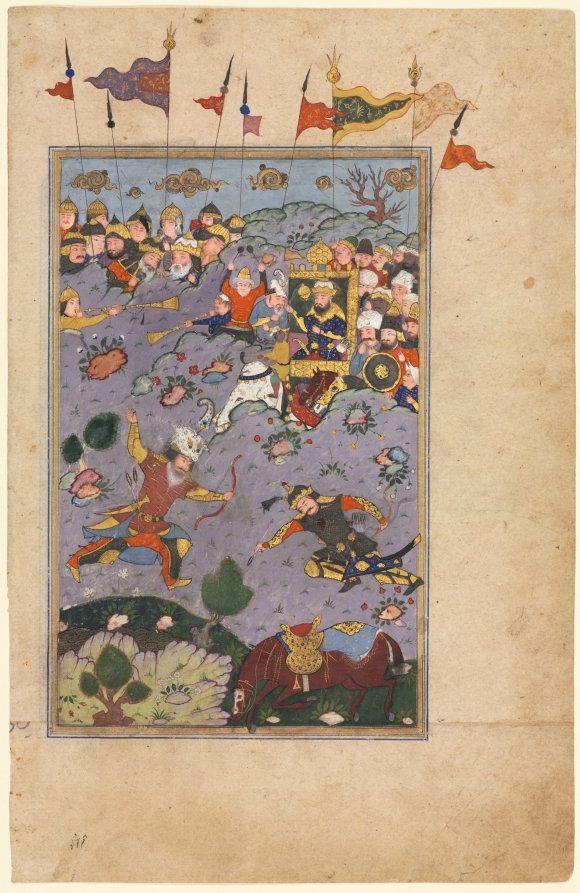
Rustam meets the challenge of Ashkabus, from a Shah-nama (Book of Kings) of Firdausi (Persian, about 934–1020)
Cleveland Museum of Art
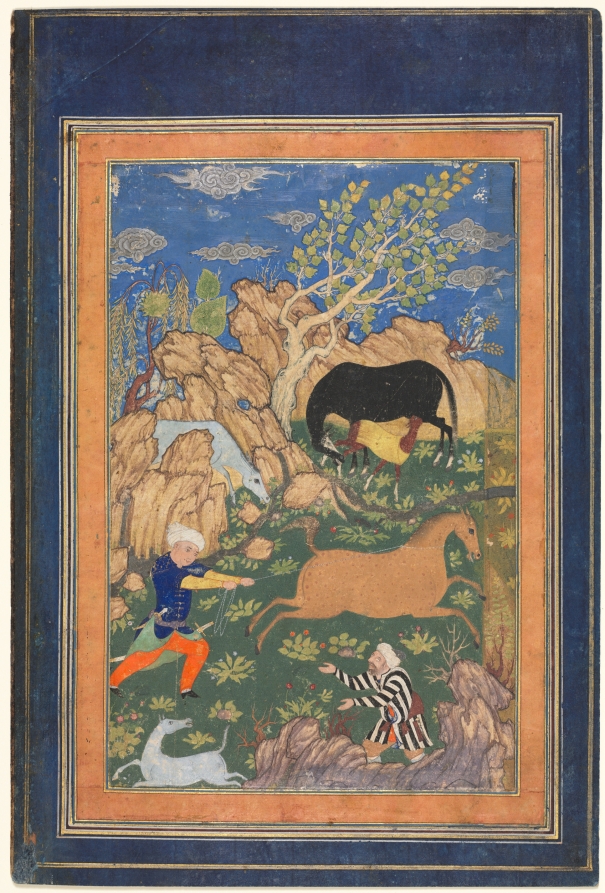
Rustam Lassoing his Horse, Rakhsh, in a Landscape (recto)
Cleveland Museum of Art