Cleveland Museum of Art
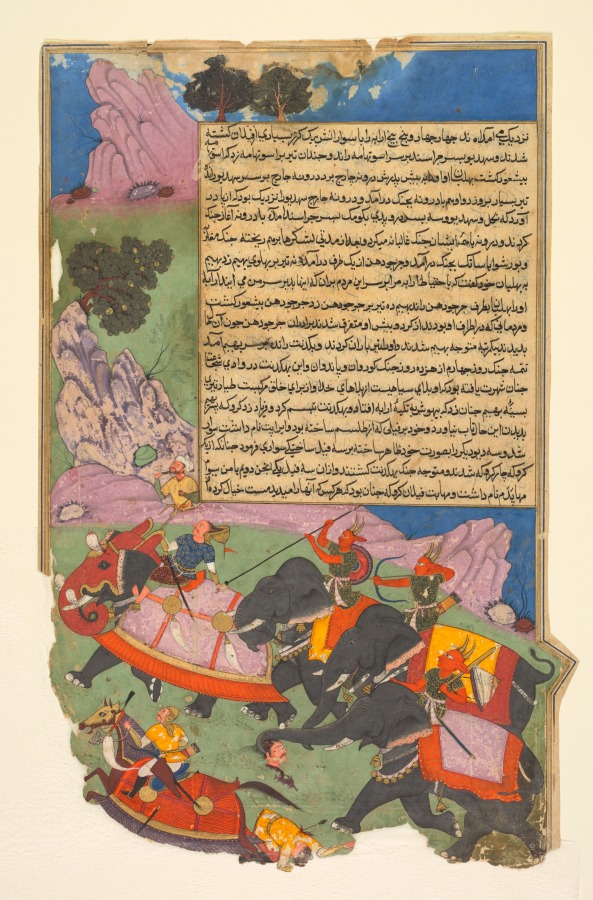
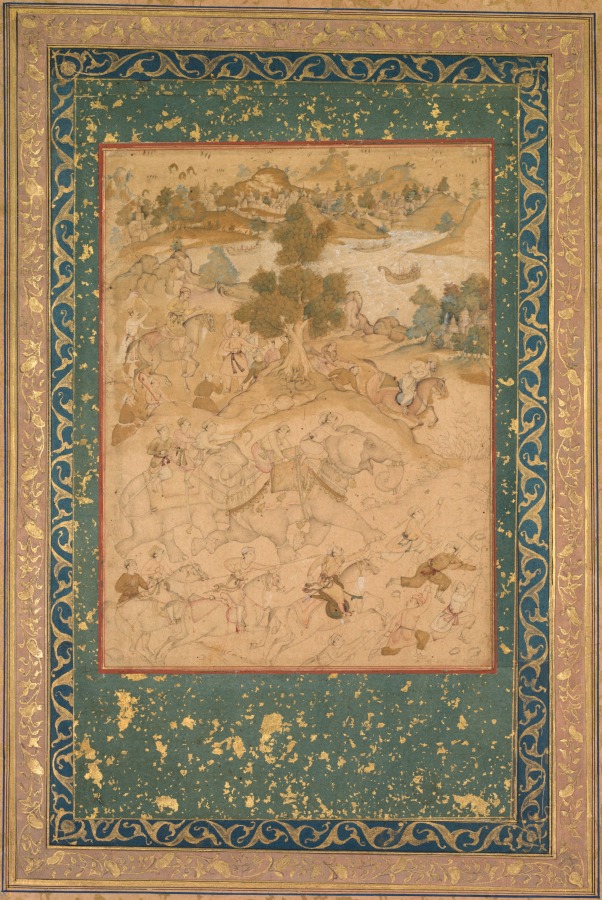
Ghatotkacha and three demons in his company chase Bhagadatta, from Bhishma-parva (volume six) of a Razm-nama (Book of Wars) adapted from the Sanskrit Mahabharata and translated into Persian by Mir Ghiyath al-Din Ali Qazvini, known as Naqib Khan (Persian, d. 1614)
Fazl
- Date
- 1616–17
- Medium
- Gum tempera, ink, and gold on paper
- Culture
- Mughal India, court of Jahangir (reigned 1605–27)
- Department
- Indian and Southeast Asian Art
- Institution
- Cleveland Museum of Art
The red demons riding elephants were magically generated in multiples by Ghatotkacha, the son of one of the protagonists of Book of Wars . Though created by magic, the elephant-riding demons still caused problems for their adversaries and forced them to retreat. This scene took place on the fourth of 18 days of heated battle. The Mughal emperor Akbar (reigned 1556–1605) commissioned a translation of the ancient Sanskrit epic Mahabharata into the Mughal court language of Persian and distributed copies to members of his court. He believed that the epic provided insight into how to rule the people of India. The chief minister to both Akbar and his successor, Jahangir, commissioned his own lavishly illustrated copy, from which this page has come.
The authoritative record is held by Cleveland Museum of Art. LinkedCulture surfaces this object and its connections; it does not alter institutional metadata.
Related across collections
Semantically similar works from Cleveland Museum of Art and other institutions.
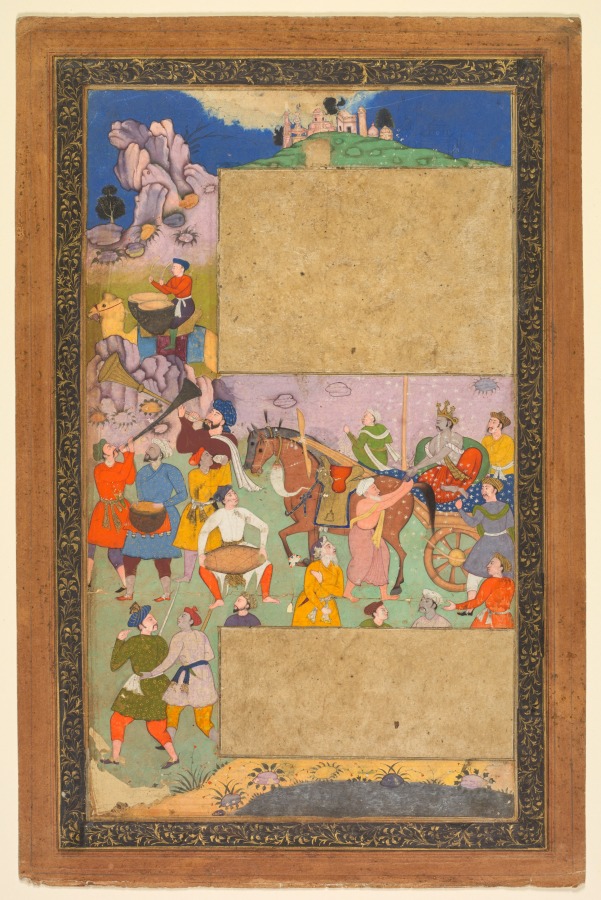
A charioteer riding through a rocky landscape with an entourage of footmen and musicians, page from a Razm-nama (Book of Wars) adapted from the Sanskrit Mahabharata and translated into Persian by Mir Ghiyath al-Din Ali Qazvini, known as Naqib Khan (Persian, d. 1614)
Cleveland Museum of Art
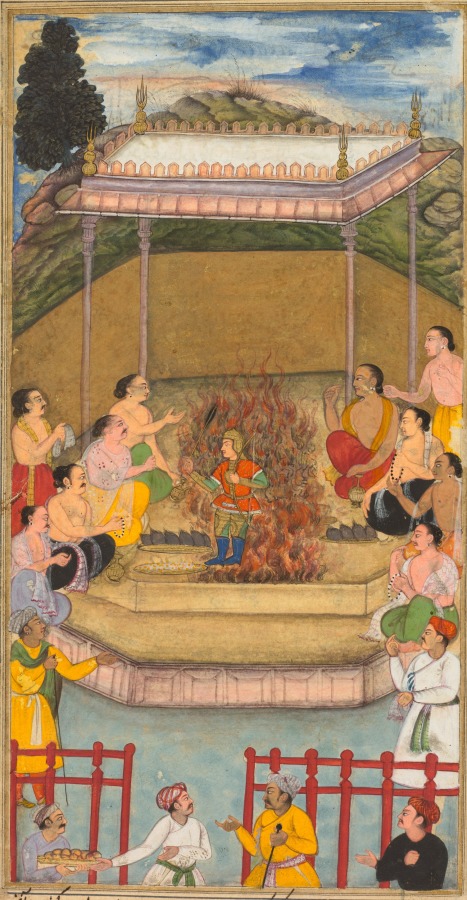
Yaja and Upayaja perform a sacrifice for the emergence of Dhrishtadyumna from the fire, from Adi-parva (volume one) of the Razm-nama (Book of Wars) adapted and translated into Persian by Mir Ghiyath al-Din Ali Qazvini, known as Naqib Khan (Persian, d. 1614) from the Sanskrit Mahabharata
Cleveland Museum of Art
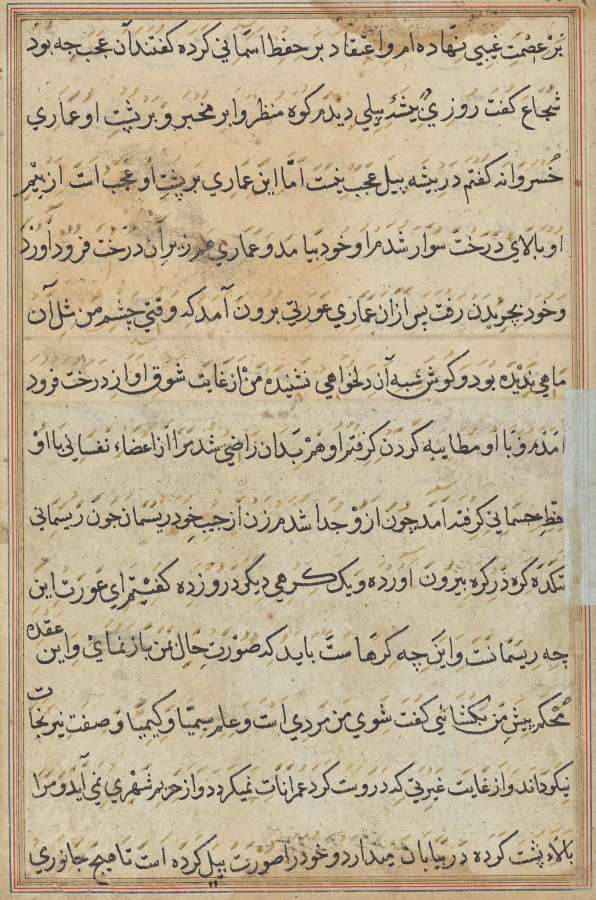
The mendicant’s wife deceives him with a soldier, from a Tuti-nama (Tales of a Parrot): Fourth Night
Cleveland Museum of Art
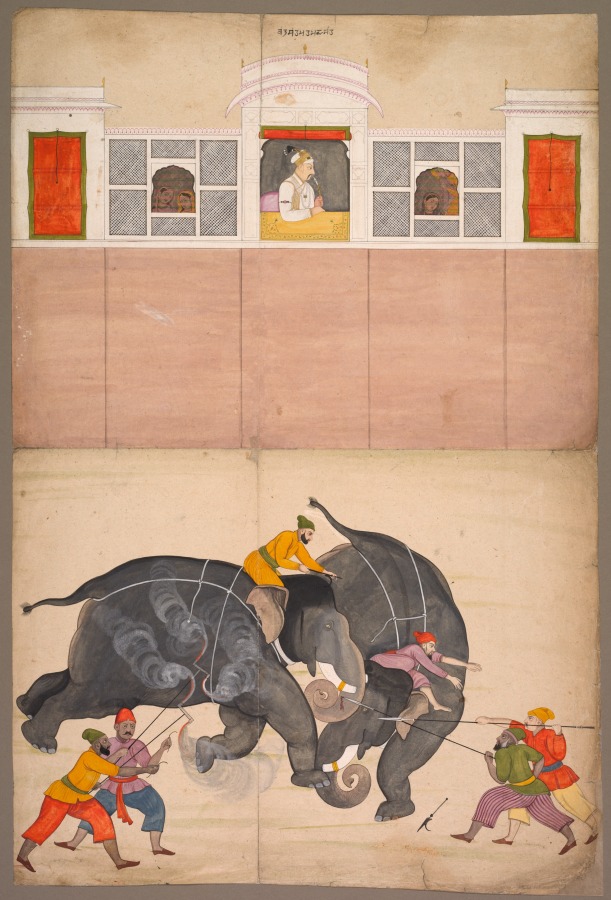
Two Elephants Fighting in a Courtyard Before Muhammad Shah
Cleveland Museum of Art
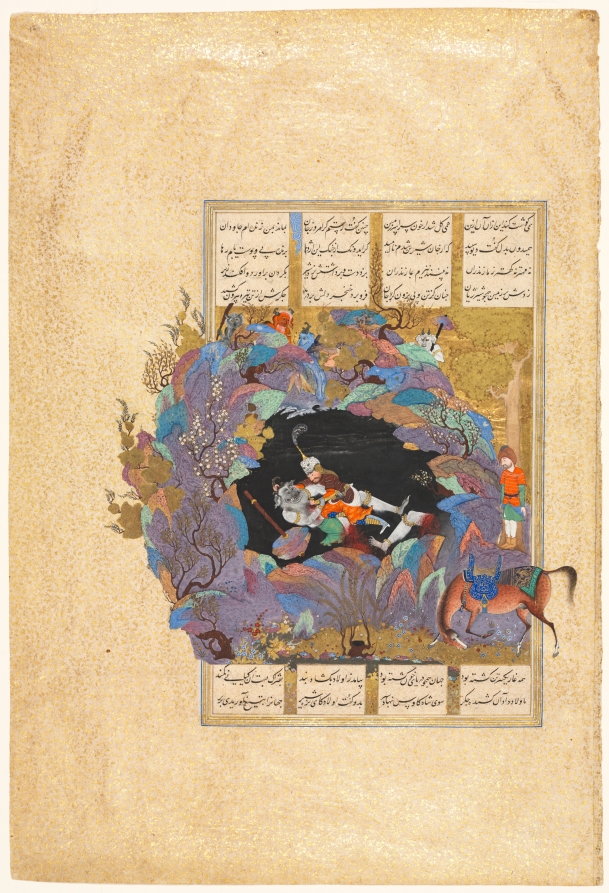
Rustam's seventh course: He kills the White Div, folio 124 from a Shah-nama (Book of Kings) of Firdausi (Persian, about 934–1020)
Cleveland Museum of Art
Two Elephants Fighting in a Courtyard Before Muhammad Shah
Cleveland Museum of Art
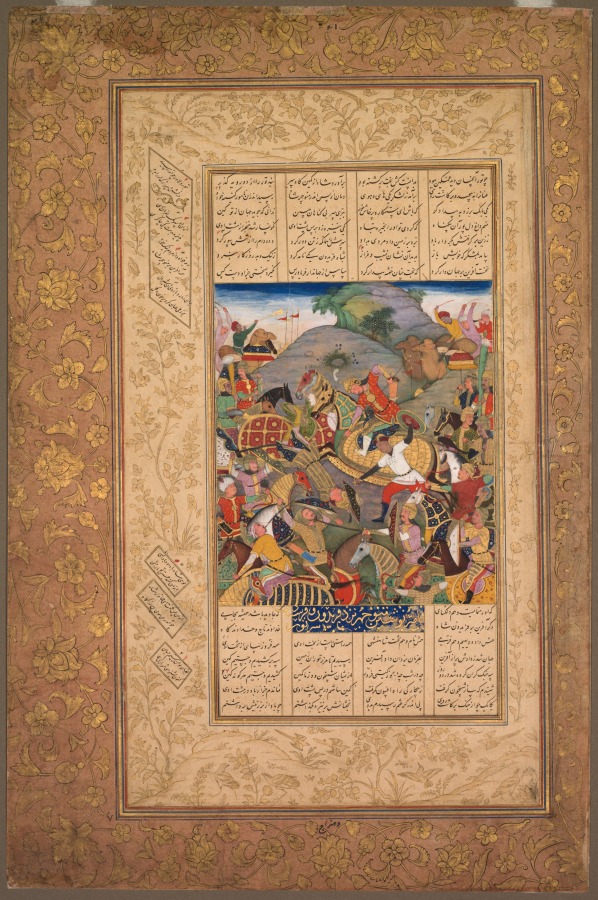
Battle between Manuchihr and Tur, from a Shah-nama (Book of Kings) of Firdausi (Persian, c. 934–1020)
Cleveland Museum of Art
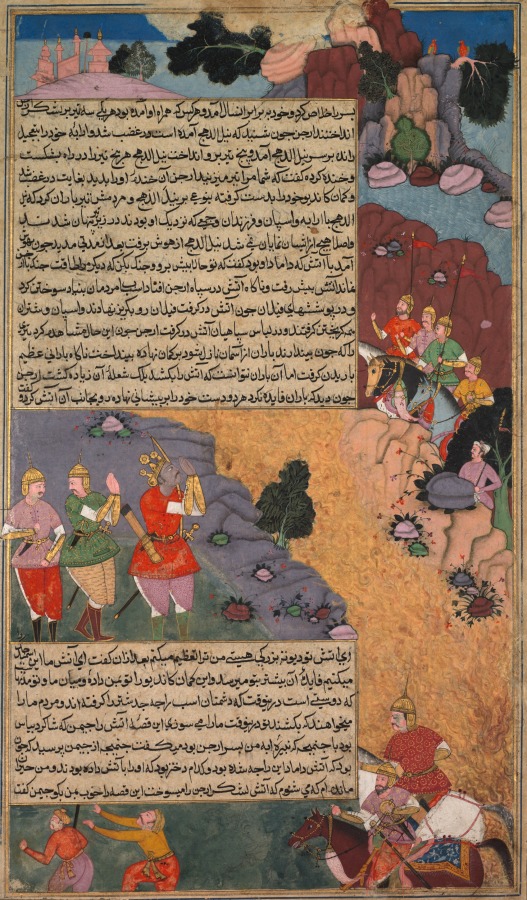
The First Adventure of the White Horse, Page from the Khan Khanan's Razm Nama (Book of Wars)
Cleveland Museum of Art
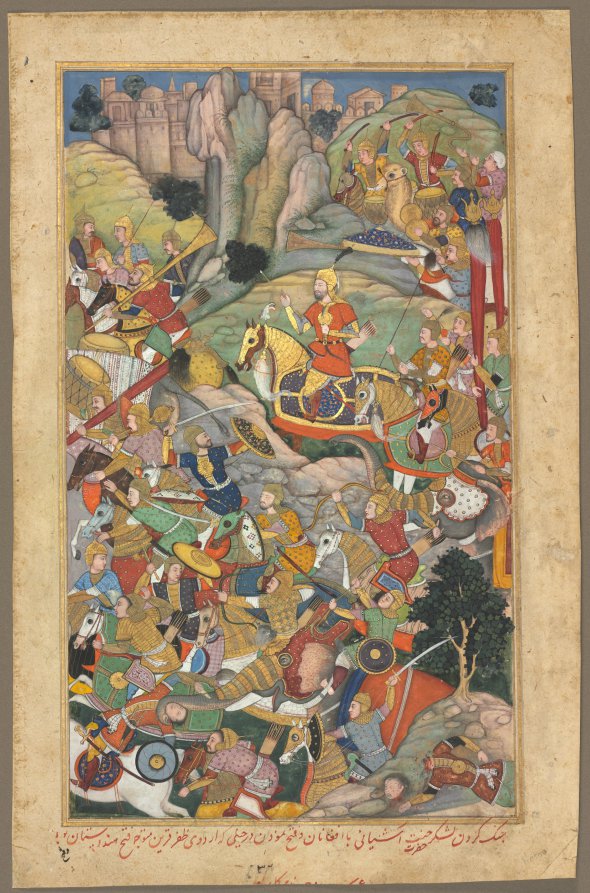
Mughal ruler Humayun defeating the Afghans before reconquering India, folio from an Akbar-nama (Book of Akbar) of Abu’l Fazl (Indian, 1551–1602)
Cleveland Museum of Art
Page from Tales of a Parrot (Tuti-nama): text page
Cleveland Museum of Art
Page from Tales of a Parrot (Tuti-nama): text page
Cleveland Museum of Art
Akbar supervising the capture of wild elephants at Malwa in 1564, painting 90 from an Akbar-nama (Book of Akbar) of Abu’l Fazl (Indian 1551–1602)
Cleveland Museum of Art