Cleveland Museum of Art
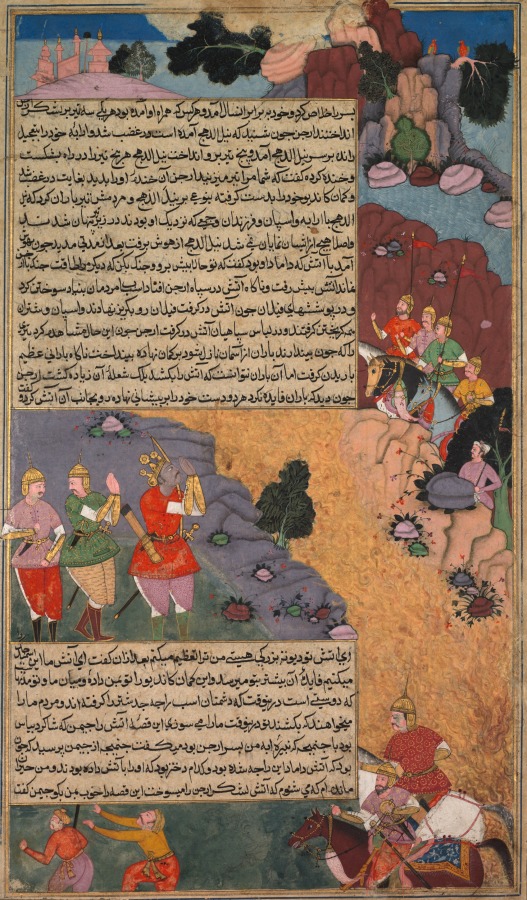
The First Adventure of the White Horse, Page from the Khan Khanan's Razm Nama (Book of Wars)
- Date
- c. 1610–17
- Medium
- Gum tempera, ink, and gold on paper
- Culture
- India, Subimperial Mughal school, 17th century
- Department
- Indian and Southeast Asian Art
- Institution
- Cleveland Museum of Art
After the five Pandava brothers defeated their cousins, the oldest, who became king, performed an ancient Vedic ritual known as the horse sacrifice in order to determine the physical extent of his rule. For one year a horse wanders freely around the country, attended by warriors, and every land through which the horse passes becomes part of the king’s territory. The warriors go to battle with any local resistance. In this case, the warrior following the horse is Arjuna, one of the five Pandava brothers. He has encountered the son-in-law of the god of fire, Agni, who creates a river of fire to block the warriors. In a dramatic composition set on the banks of the swirling golden river of fire, running diagonally down the page between multicolored rocky outcrops, Arjuna, dark-skinned and crowned, pleads with Agni, the god of fire. He prays that the horse be allowed to pass, saying that the horse sacrifice is in accordance with sacred Vedic injunctions, and that at the end of the year, the horse will be sacrificed to him, the god of fire himself.
The authoritative record is held by Cleveland Museum of Art. LinkedCulture surfaces this object and its connections; it does not alter institutional metadata.
Related across collections
Semantically similar works from Cleveland Museum of Art and other institutions.
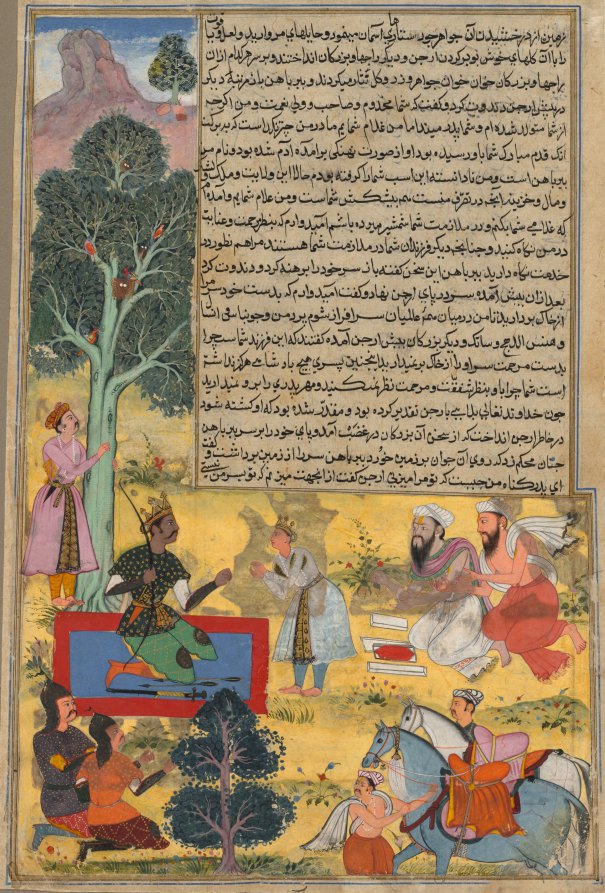
Vabhruvahana Approaches Arjuna, page from the Khan Khanan's Razm-nama
Cleveland Museum of Art
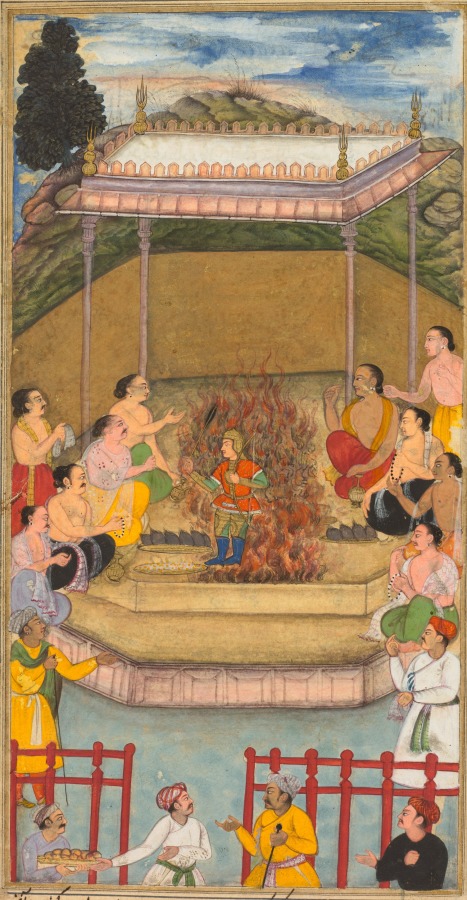
Yaja and Upayaja perform a sacrifice for the emergence of Dhrishtadyumna from the fire, from Adi-parva (volume one) of the Razm-nama (Book of Wars) adapted and translated into Persian by Mir Ghiyath al-Din Ali Qazvini, known as Naqib Khan (Persian, d. 1614) from the Sanskrit Mahabharata
Cleveland Museum of Art
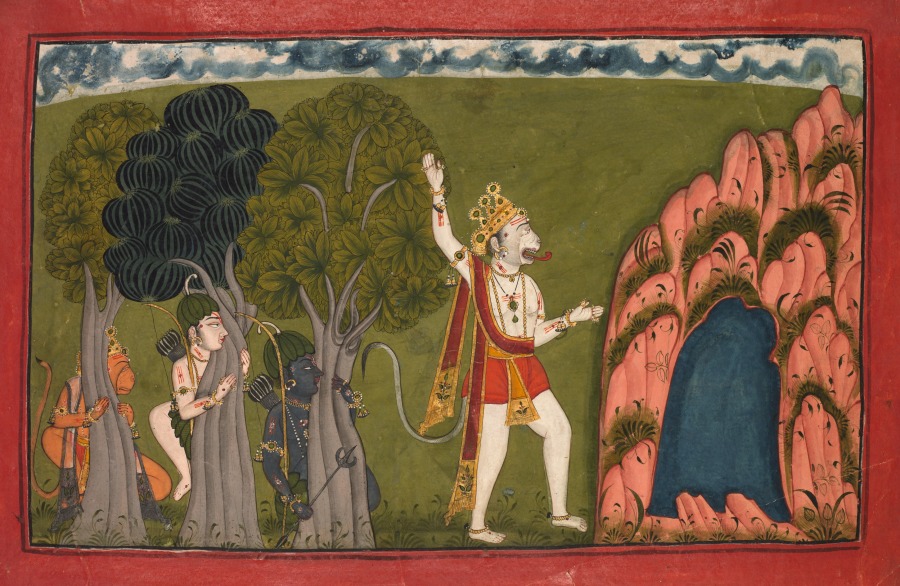
Sugriva challenges his brother Vali, King of the Forest Dwellers, to a duel, folio 10 from the Kishkindha Kanda (Book of Kishkindha) of a Ramayana (Rama’s Journey)
Cleveland Museum of Art
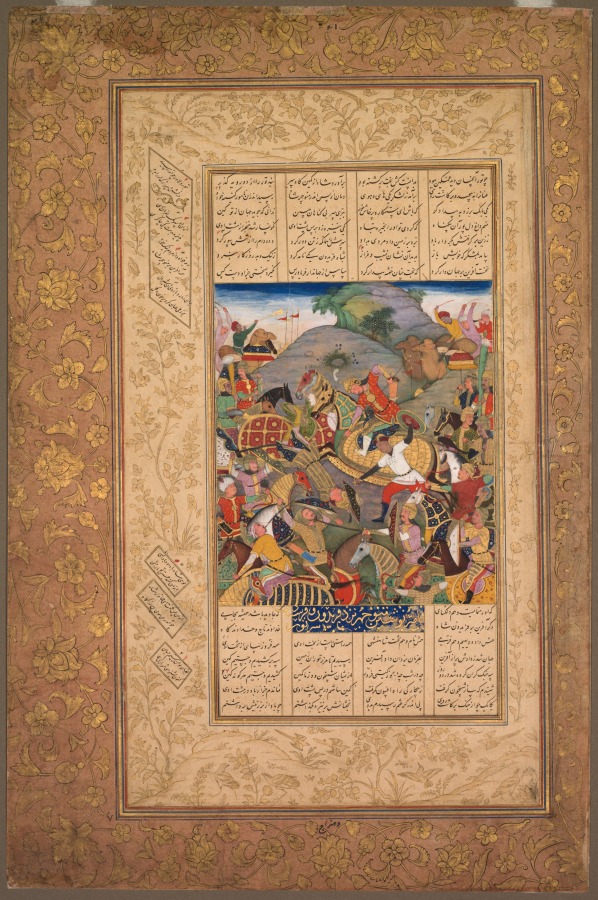
Battle between Manuchihr and Tur, from a Shah-nama (Book of Kings) of Firdausi (Persian, c. 934–1020)
Cleveland Museum of Art
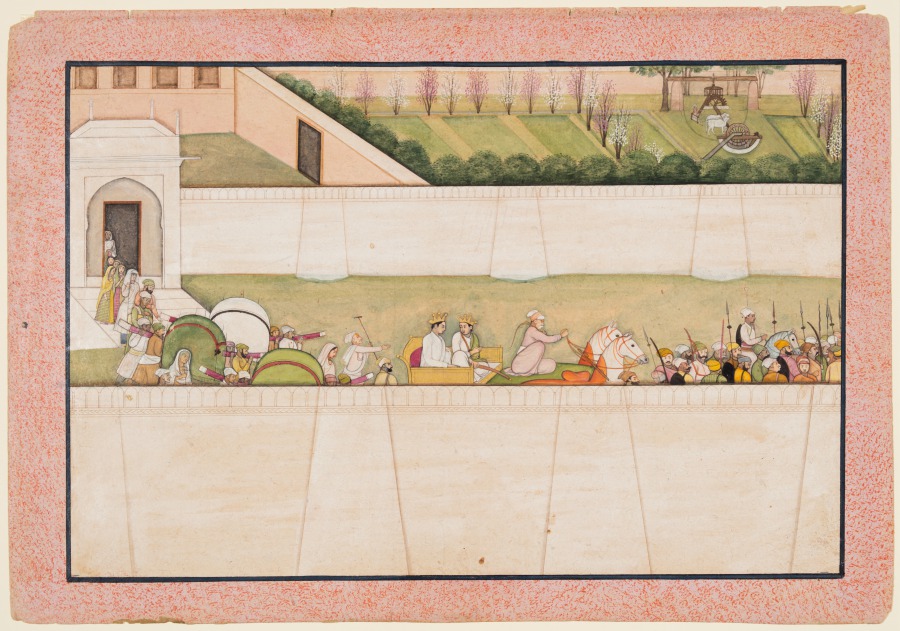
Rama’s brothers Bharata and Shatrughna set out from Ayodhya to find Rama and Lakshmana in the forest to inform them of the death of their father Dasharatha, from Chapter 77 of the Ayodhya Kanda (Book of Ayodhya) of a Ramayana (Rama’s Journey)
Cleveland Museum of Art
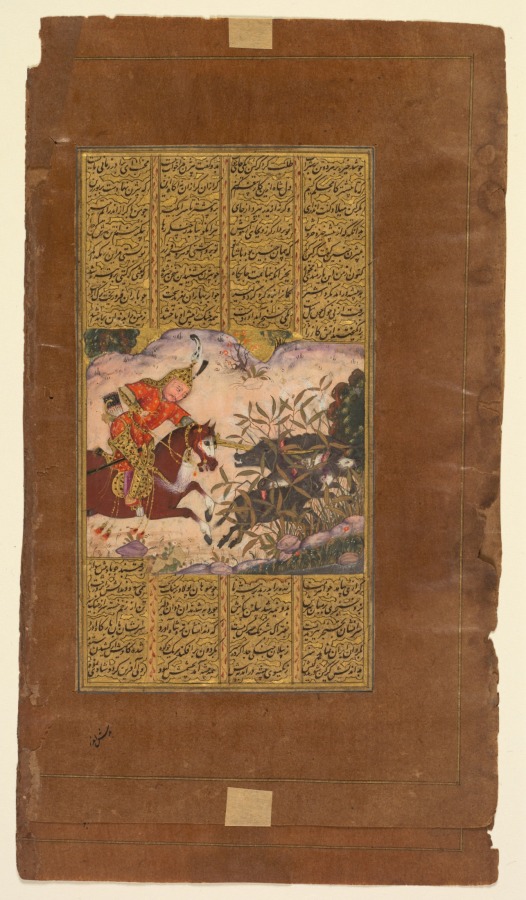
Bijan killing the wild boars of Irman, from a Shah-nama (Book of Kings) of Firdausi (Persian, about 934–1020) (verso)
Cleveland Museum of Art
Bijan killing the wild boars of Irman, from a Shah-nama (Book of Kings) of Firdausi (Persian, about 934–1020), (recto)
Cleveland Museum of Art
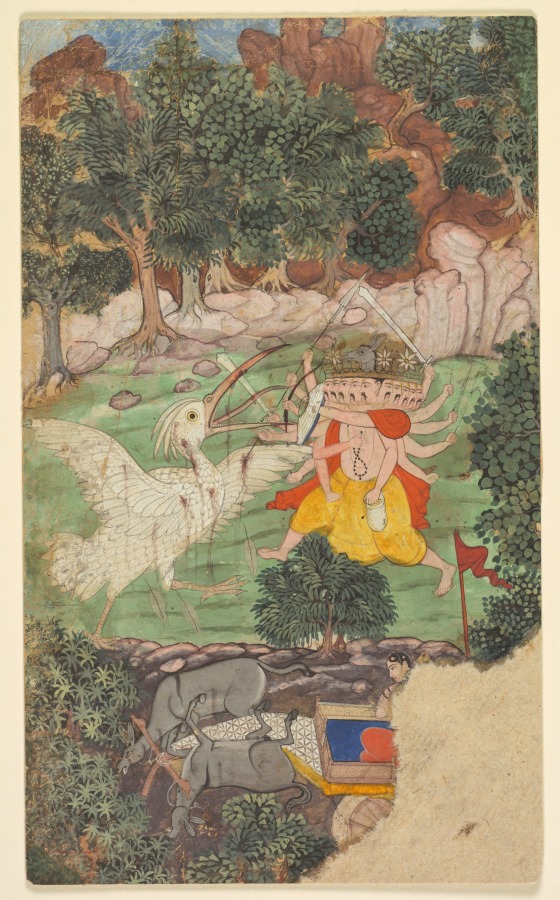
Battle of Ravana and Jatayu, from Chapters 50 and 51 of the Aranya Kanda (Book of the Forest) of Valmiki's Ramayana (Rama’s Journey); folio from the "Burnt" Ramayana
Cleveland Museum of Art
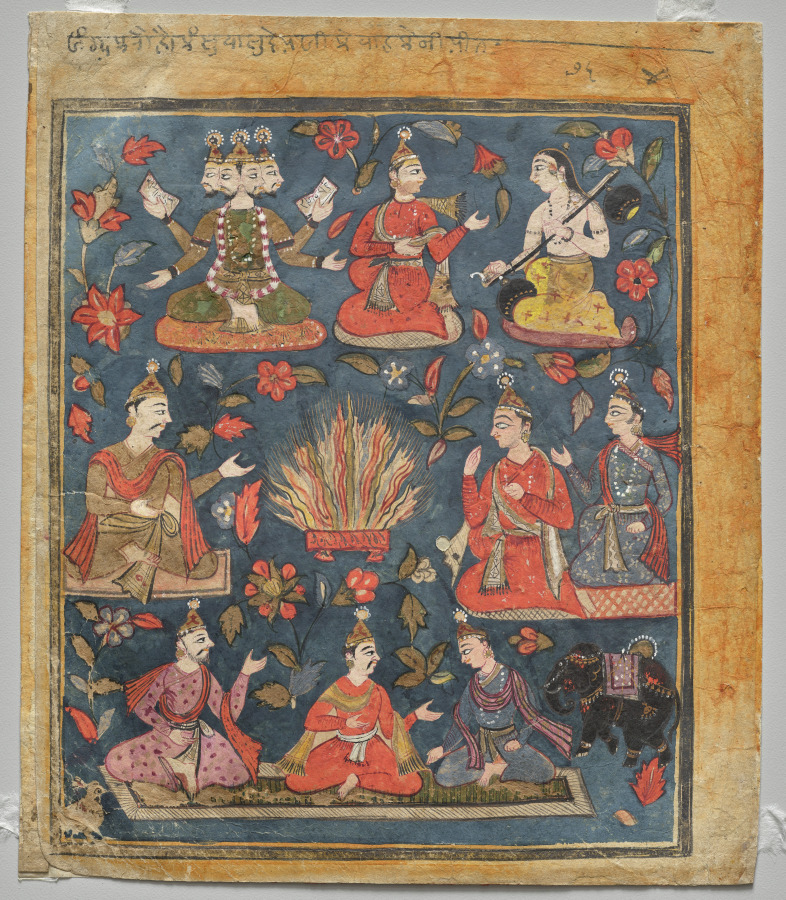
Sacrificial Fire, from the "Tula Ram" Bhagavata Purana
Cleveland Museum of Art
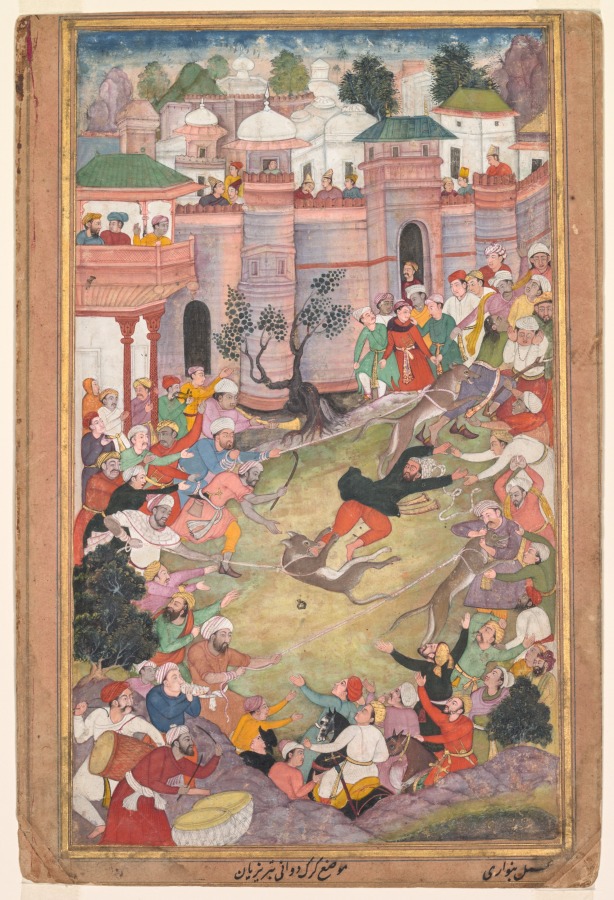
The game of wolf-running in Tabriz, from an Akbar-nama (Book of Akbar)
Cleveland Museum of Art
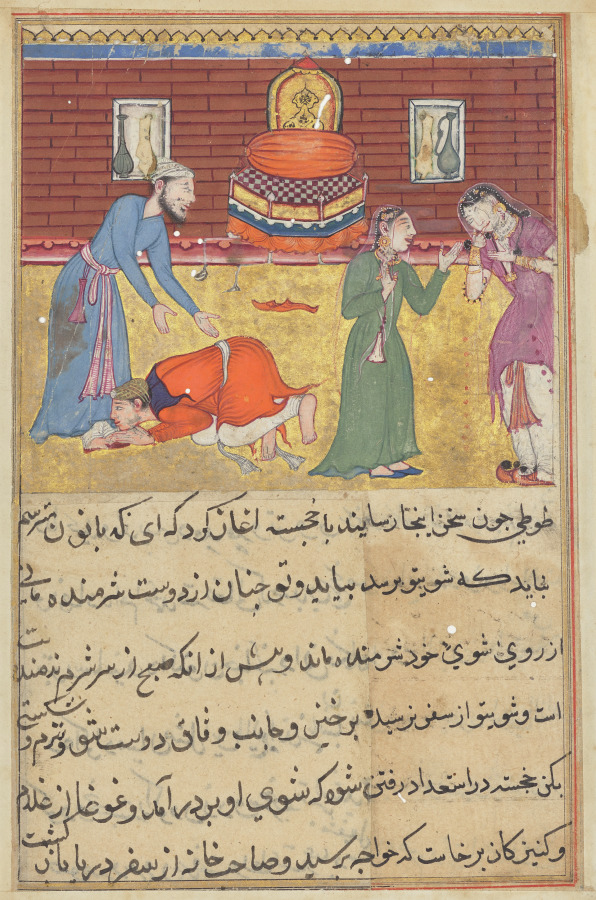
The pious man’s son, now a king, reveals himself to his father; his nurse upbraids his unfaithful mother, from a Tuti-nama (Tales of a Parrot): Fifty-second Night
Cleveland Museum of Art
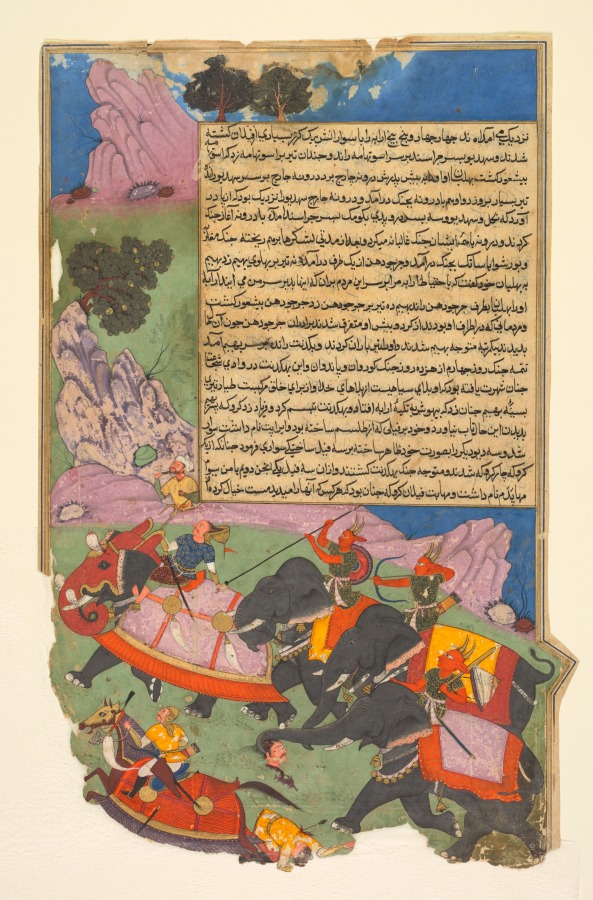
Ghatotkacha and three demons in his company chase Bhagadatta, from Bhishma-parva (volume six) of a Razm-nama (Book of Wars) adapted from the Sanskrit Mahabharata and translated into Persian by Mir Ghiyath al-Din Ali Qazvini, known as Naqib Khan (Persian, d. 1614)
Cleveland Museum of Art