Cleveland Museum of Art
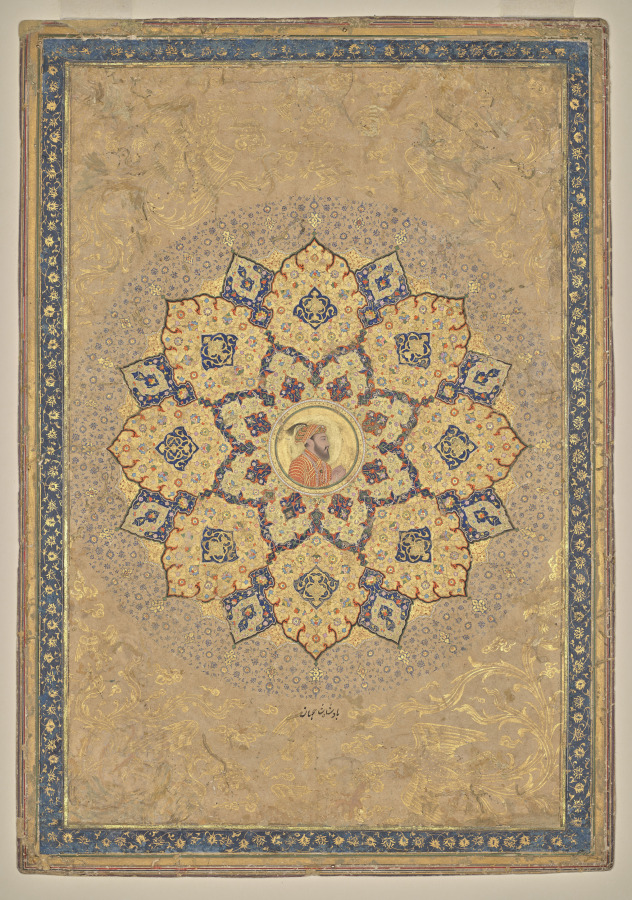
Shamsa (sunburst) with portrait of Aurangzeb (1618–1707), from the Emperor's Album (the Kevorkian Album)
Bichitr
- Date
- illumination 1640–55; original portrait c. 1640–50; altered after 1658
- Medium
- Gum tempera and gold on paper
- Culture
- India, Mughal court, made for Shah Jahan
- Department
- Indian and Southeast Asian Art
- Institution
- Cleveland Museum of Art
This closing page of an imperial Mughal album originally had the shamsa , or sunburst, with a plain gold disc in the center, referencing the light of God as divine sanction for Emperor Shah Jahan’s rule. The depiction of divine light by means of floral and geometric patterns was painted by hand with mathematical precision in gold and lapis lazuli. The portrait of Aurangzeb was probably added when he took over the imperial library after seizing the throne from his father, Shah Jahan, in 1658 and adopting the name Alamgir, which means “Seizer of the Universe.” The string of prayer beads in his right hand points to his extreme religious orthodoxy, which dramatically altered the culture of the Mughal court from what had previously been an openly ecumenical center. Tooling the gold cloud motif with pinpricks makes it catch more light and shimmer.
The authoritative record is held by Cleveland Museum of Art. LinkedCulture surfaces this object and its connections; it does not alter institutional metadata.
Related across collections
Semantically similar works from Cleveland Museum of Art and other institutions.
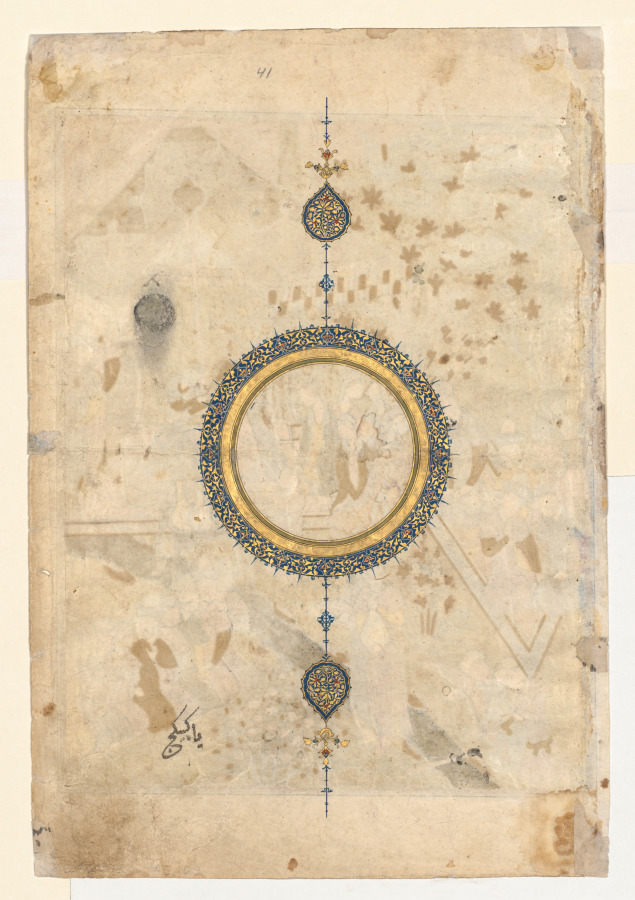
Shamsa (recto) from right folio from a double-page frontispiece of a Shahnama (Book of Kings) of Firdausi (940–1019 or 1025)
Cleveland Museum of Art
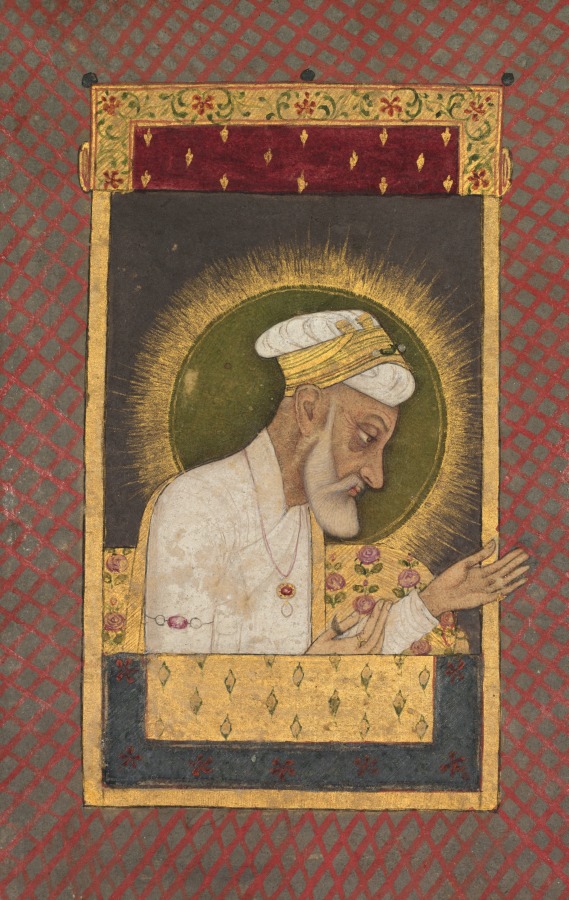
Portrait of Emperor Alamgir (Aurangzeb)
Cleveland Museum of Art
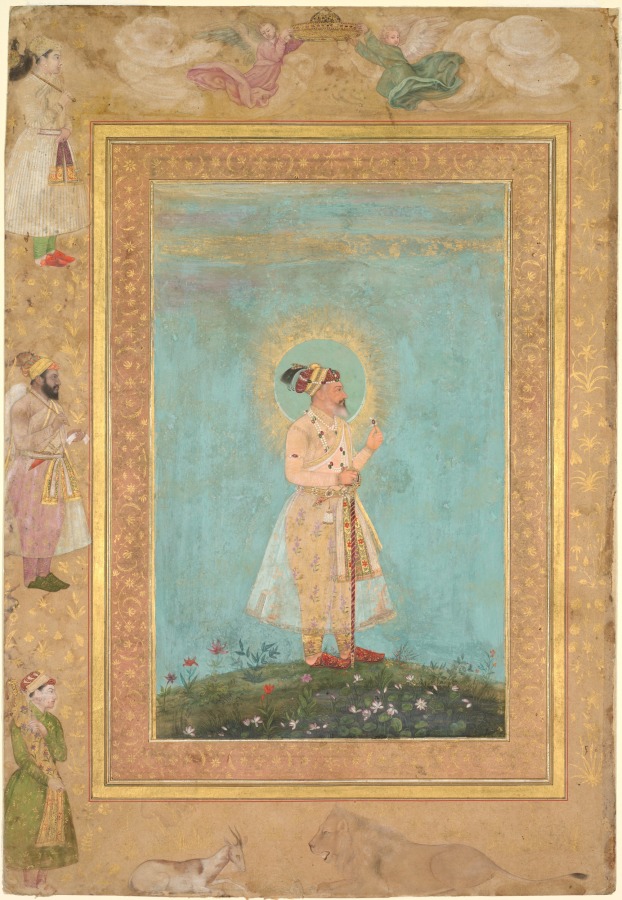
Shah Jahan holding a spinel and a long Deccan sword, from the Late Shah Jahan Album
Cleveland Museum of Art
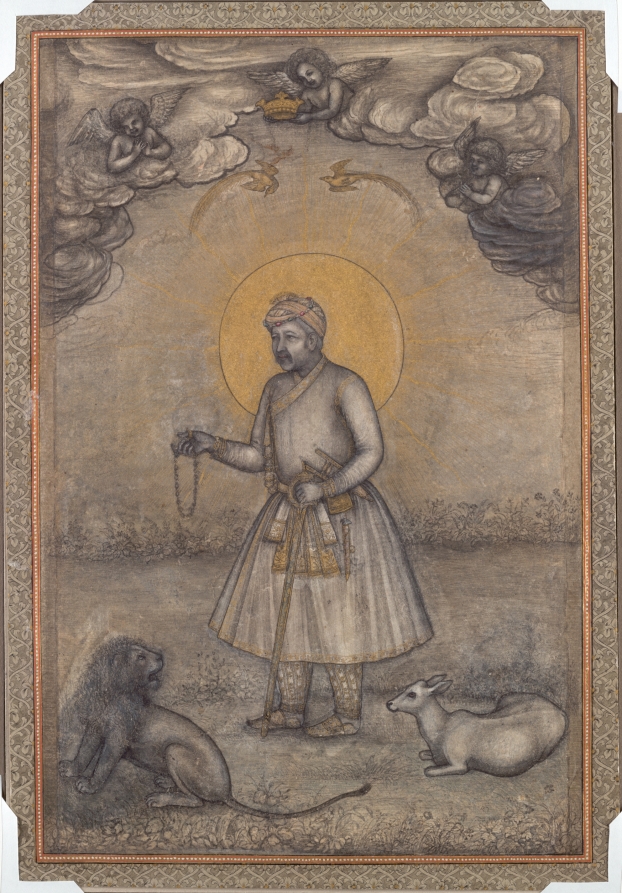
Portrait of the Aged Akbar
Cleveland Museum of Art
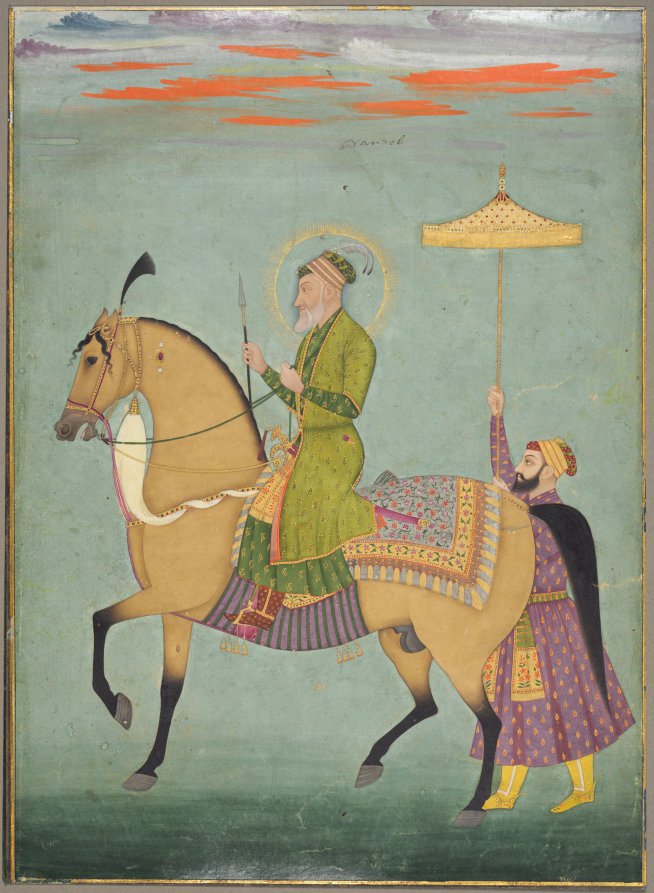
The Emperor Alamgir (reigned 1658–1707) on Horseback
Cleveland Museum of Art
Page from the Mirror of Holiness (Mir’at al-quds)
Cleveland Museum of Art
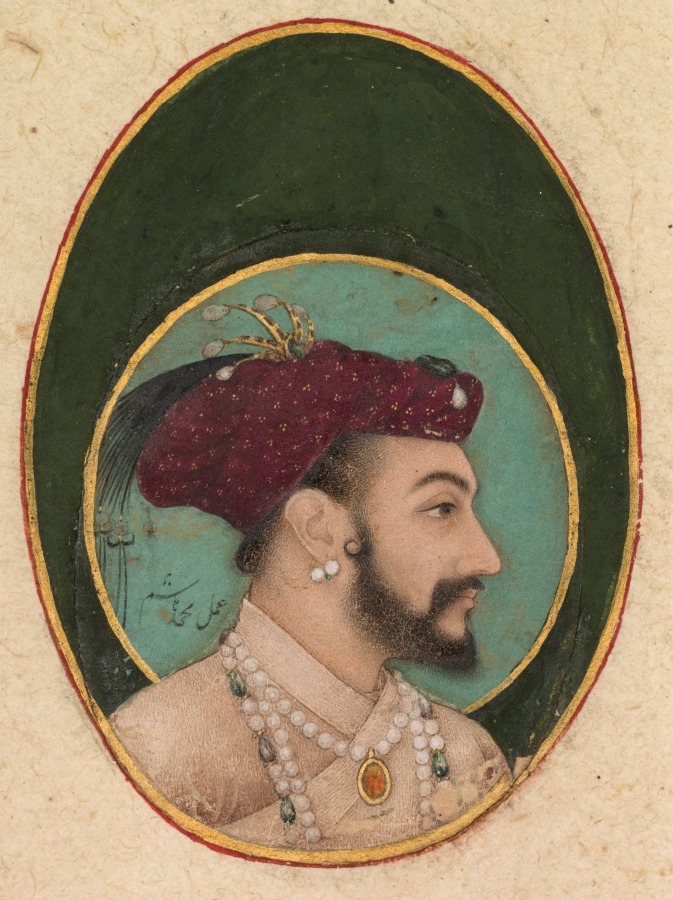
Shah Jahan
Cleveland Museum of Art
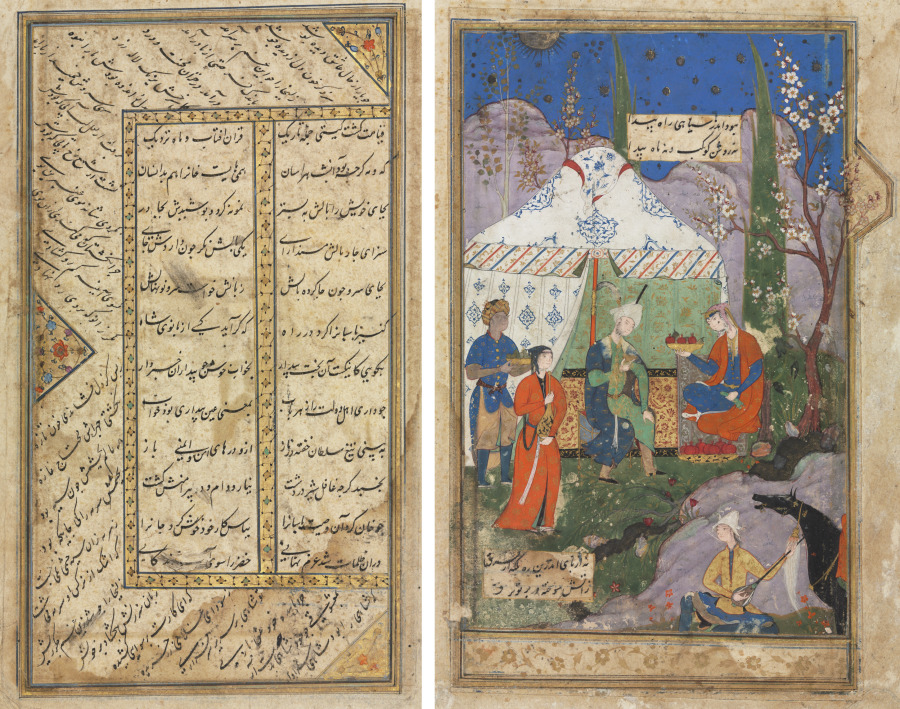
An Episode from the Story of the Sasanian King Khusrau and His Beloved Shirin, from a Khamsa (Quintet) of Nizami (1141–1209) (verso); Persian verses from a Haft Awrang (Seven Thrones) of Jami (d. 1492) (recto)
Cleveland Museum of Art
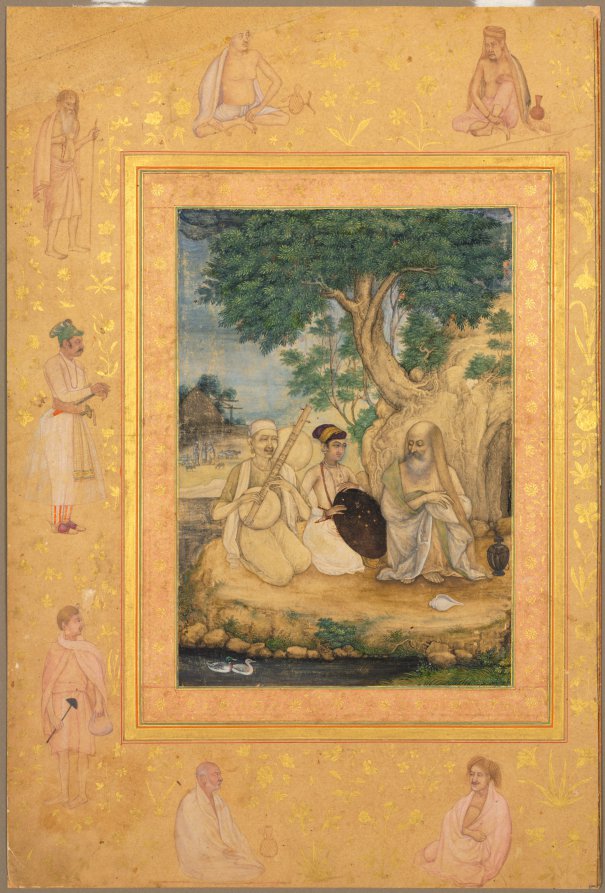
Prince and ascetics, from the Late Shah Jahan Album
Cleveland Museum of Art
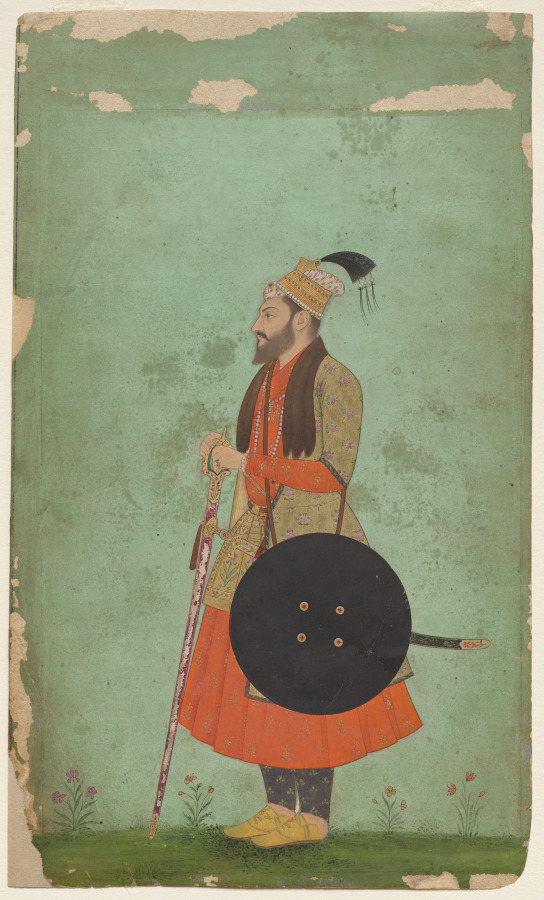
Portrait of Prince Murad Baksh (1624–1661)
Cleveland Museum of Art
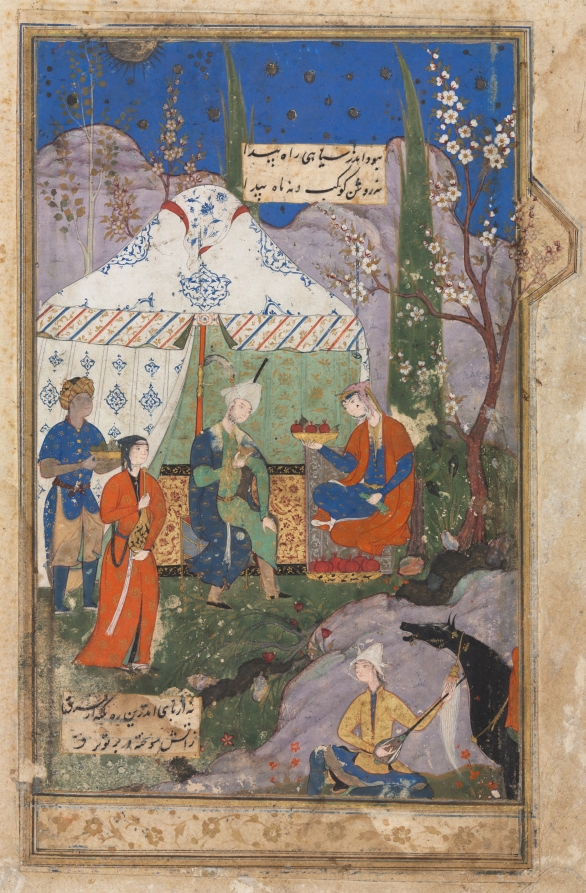
An Episode from the Story of the Sasanian King Khusrau and His Beloved Shirin, from a Khamsa (Quintet) of Nizami (1141–1209) (verso)
Cleveland Museum of Art
Portrait of Raja Ram Singh of Amber (r. 1667-1688) with a Deccan Sword (recto); Calligraphy (verso)
Cleveland Museum of Art