Cleveland Museum of Art
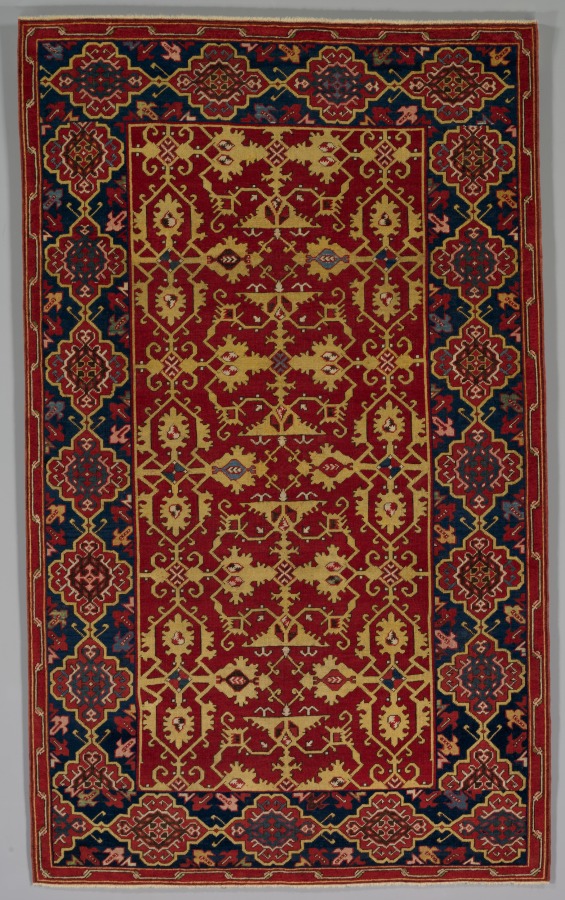
Classical Turkish Carpet with the Lotto Pattern
- Date
- 1600–1650
- Medium
- wool: symmetrical rug knot
- Culture
- Turkey, Ushak, Ottoman period
- Department
- Textiles
- Institution
- Cleveland Museum of Art
Lotto carpets have consistent color combinations and striking designs traceable to sources in Central Asia. In the central field, stylized yellow leaf patterns stand out against a red ground. The border is filled with cartouches on a dark blue background, and a simplified vine meanders along the outermost edge. In Islamic contexts, these vegetal patterns evoke paradise. Made primarily for export in the western Turkish center of Ushak between the 1400s and 1600s, Lotto carpets were named after the Venetian painter Lorenzo Lotto (1480–1556), who amply documented in oil paintings the way Europeans displayed this type of Turkish carpet as a sign of wealth and prestige. To preserve them, Europeans displayed Lotto carpets on tables, though they were originally made for use on the floor. Lotto carpets were depicted in some 200 paintings during the 16th century in the Netherlands.
The authoritative record is held by Cleveland Museum of Art. LinkedCulture surfaces this object and its connections; it does not alter institutional metadata.
Related across collections
Semantically similar works from Cleveland Museum of Art and other institutions.
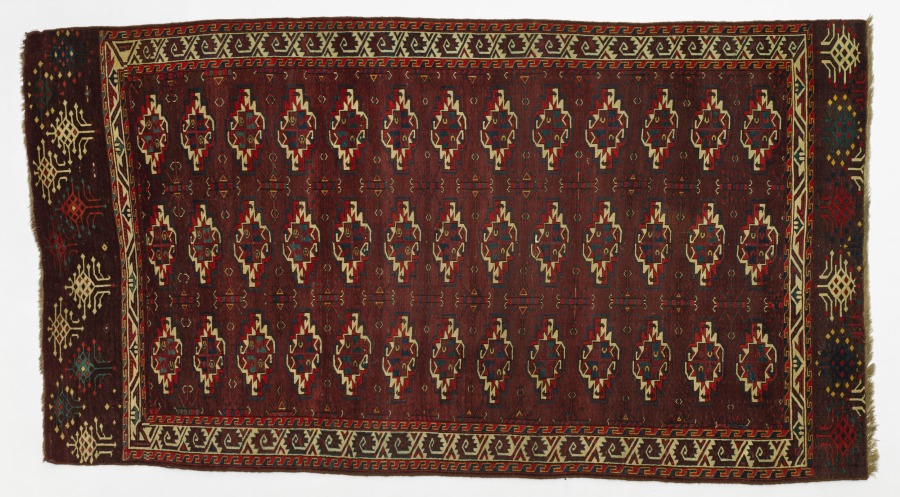
Turkmen Main Carpet
Cleveland Museum of Art
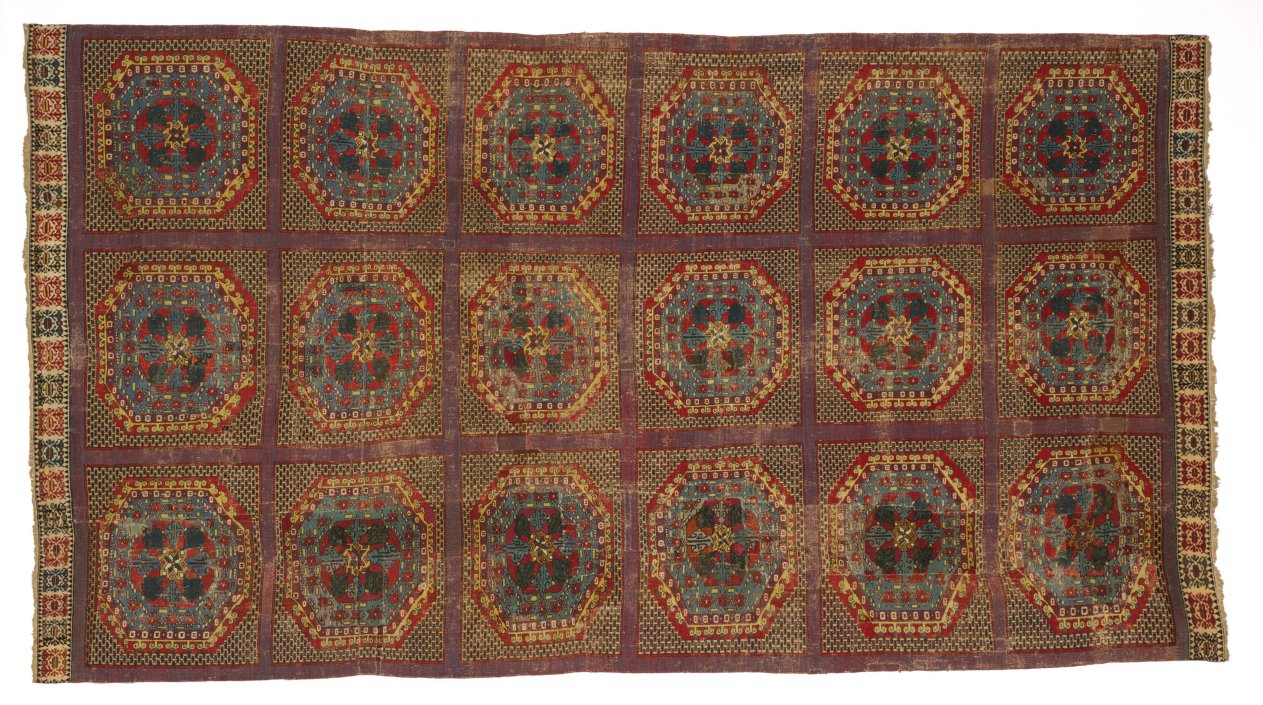
Spanish Carpet with a Turkish Pattern
Cleveland Museum of Art
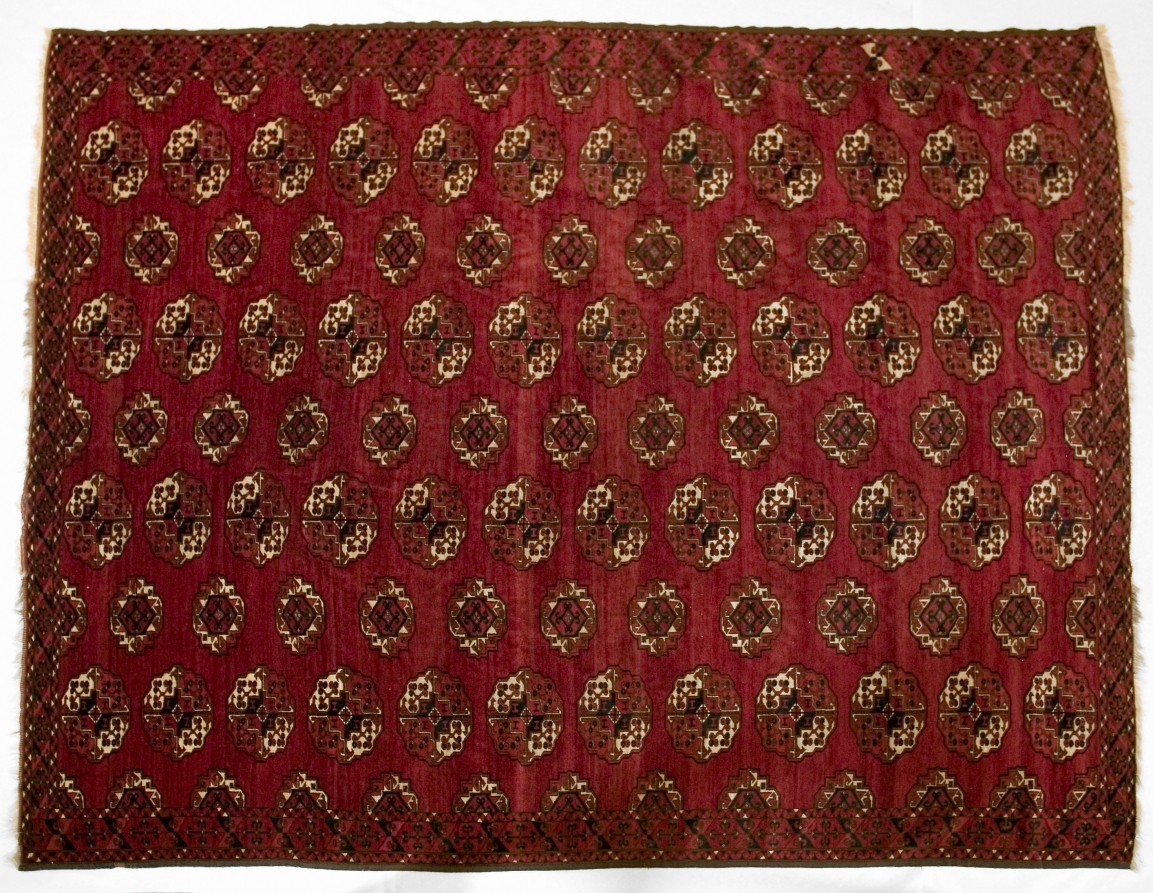
Turkmen Main Carpet
Cleveland Museum of Art
Carpet
Cleveland Museum of Art
Carpet
Art Institute of Chicago
Carpet
Art Institute of Chicago
Pair of Tiles with Floral Design
Art Institute of Chicago
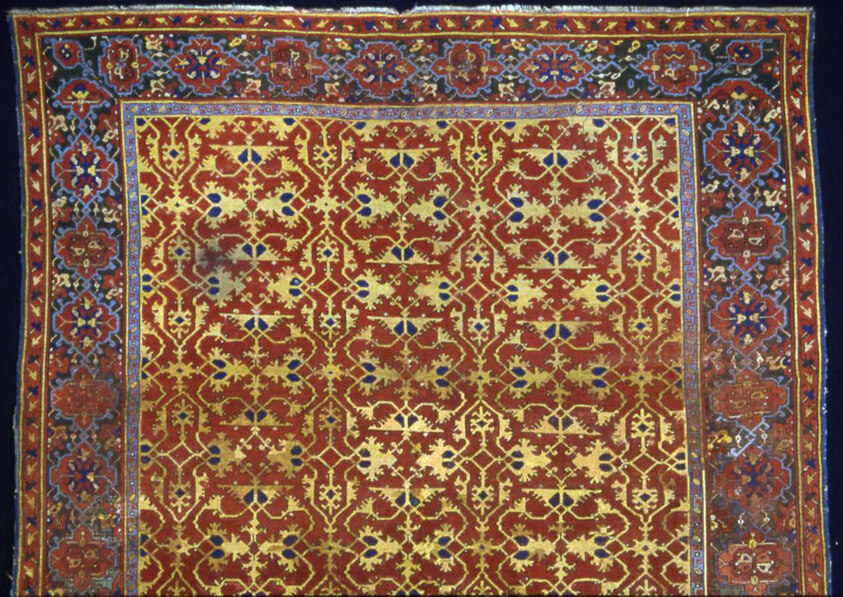
Carpet
Art Institute of Chicago
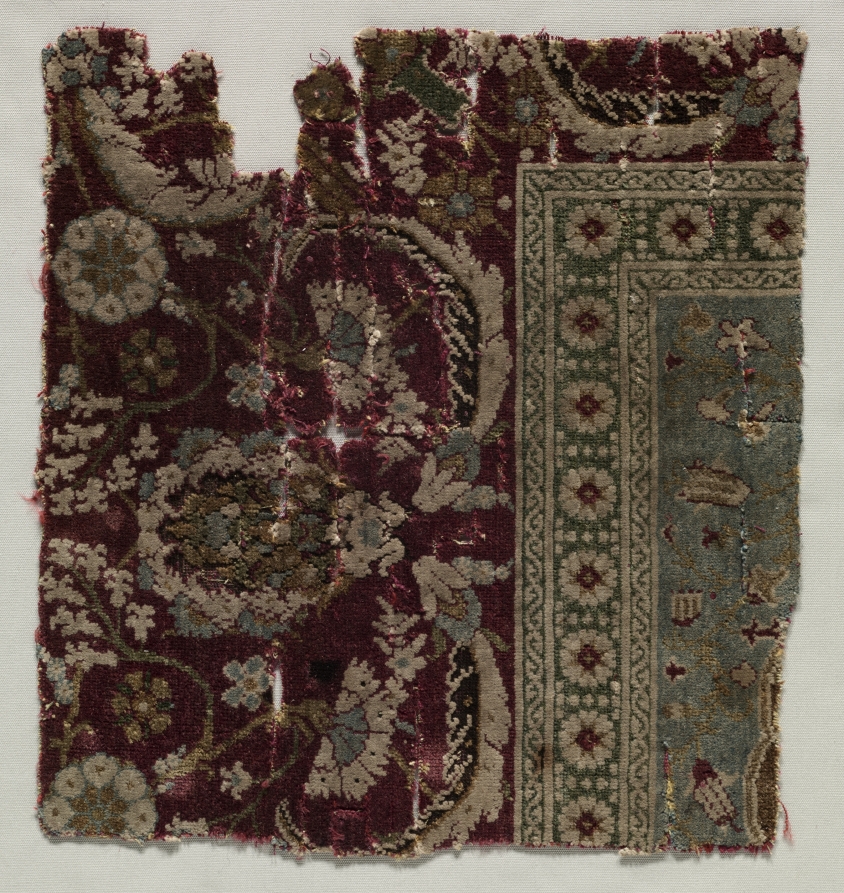
Fragment of a Carpet
Cleveland Museum of Art
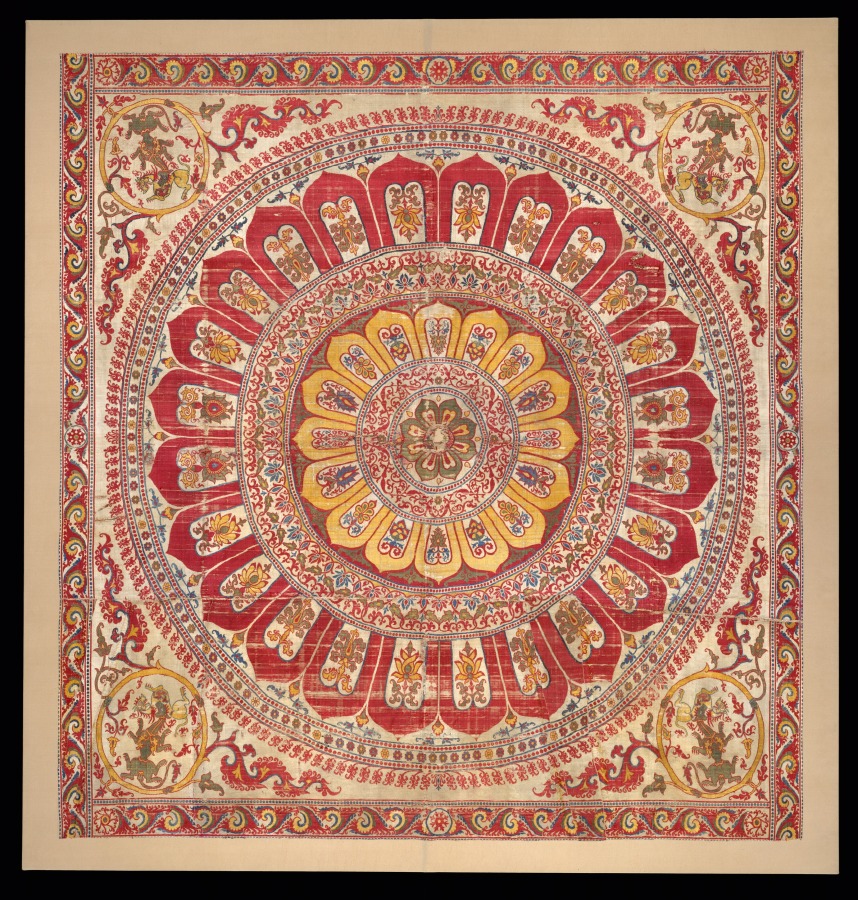
Lotus-blossom petal canopy
Cleveland Museum of Art
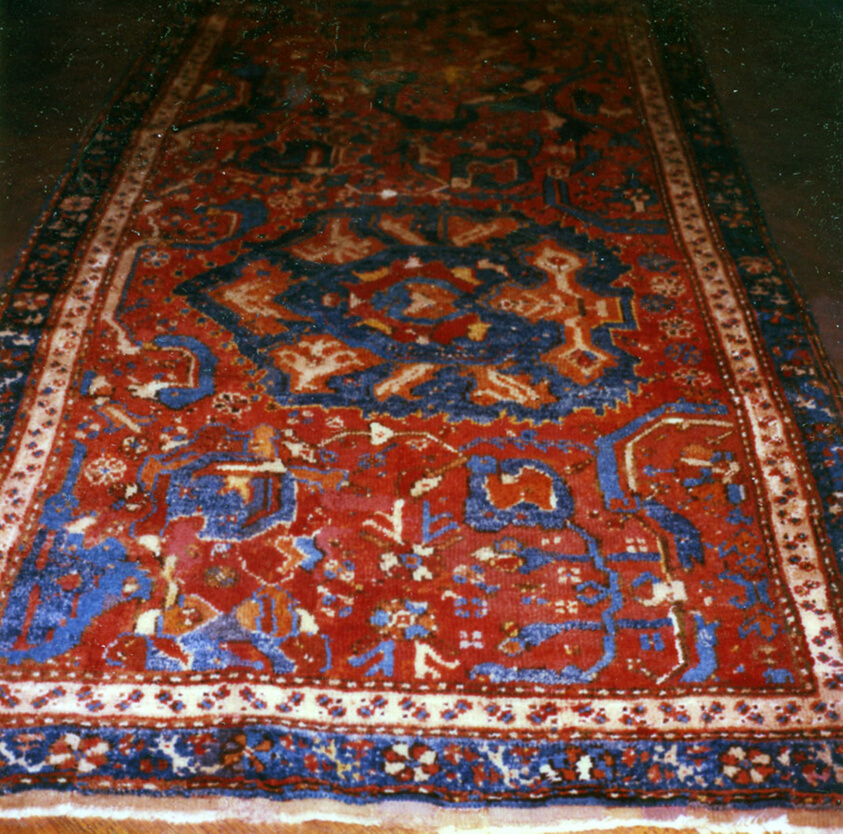
Ushak Carpet
Art Institute of Chicago

Carpet
Art Institute of Chicago