Cleveland Museum of Art
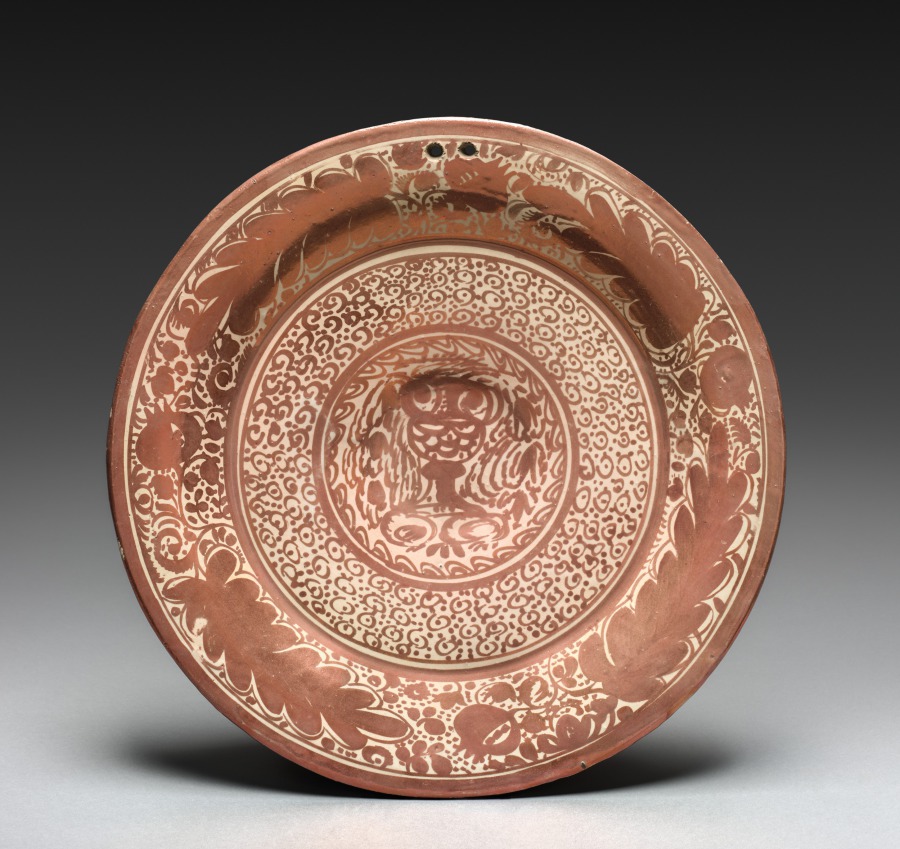
Dish
- Date
- c. 1475–1500
- Medium
- Tin-glazed earthenware with luster-painted design
- Culture
- Spain, probably Valencia
- Department
- Decorative Art and Design
- Institution
- Cleveland Museum of Art
Alternating leaves and pomegranates circle the rim of this dish, emerging from the swirling vegetal motif in the background. The pomegranate is a common decorative element in Islamic art. It is mentioned in the Qur’an as one of the fruits of paradise and is prized for its beauty and nutritional benefits. The use of the pomegranate on this luminous dish may indicate that it was produced for the court of the Nasrid dynasty (1232–1492) in Spain. The palace of Alhambra, the seat of power for the emirs, dynastic Muslim rulers, from the early 1300s, is in Granada, which translates to pomegranate. A wine cup in the center of the dish evokes the pleasures of a feast.
The authoritative record is held by Cleveland Museum of Art. LinkedCulture surfaces this object and its connections; it does not alter institutional metadata.
Related across collections
Semantically similar works from Cleveland Museum of Art and other institutions.
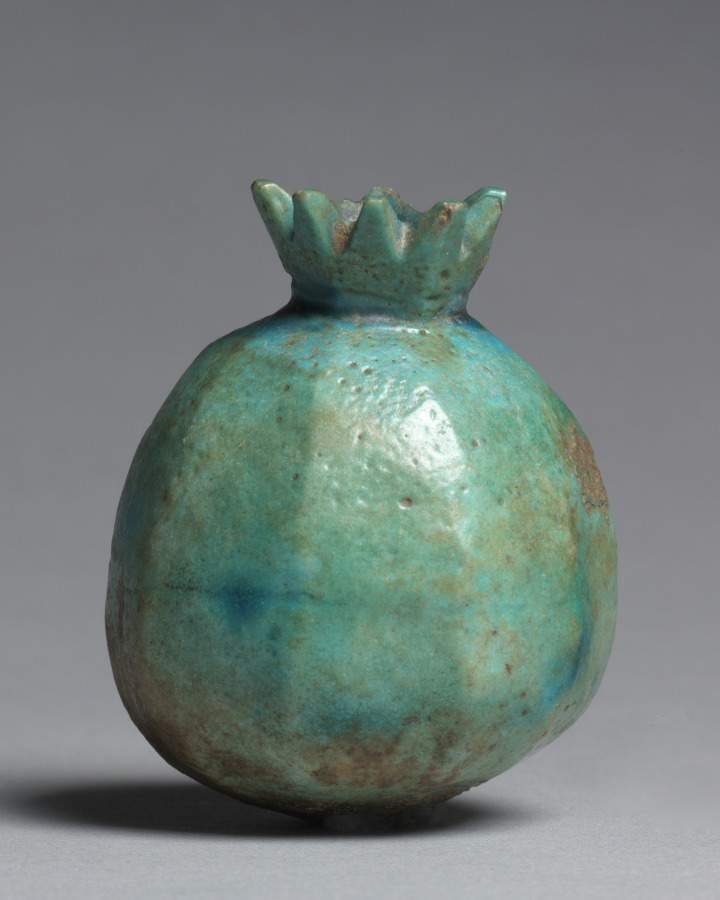
Pomegranate Vase
Cleveland Museum of Art
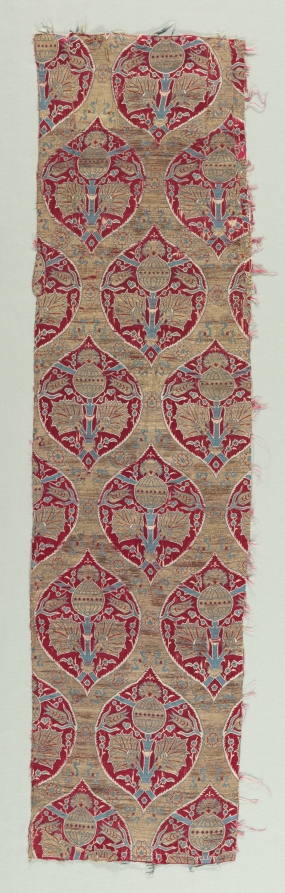
Ogival Lattice with Horizontal Design
Cleveland Museum of Art
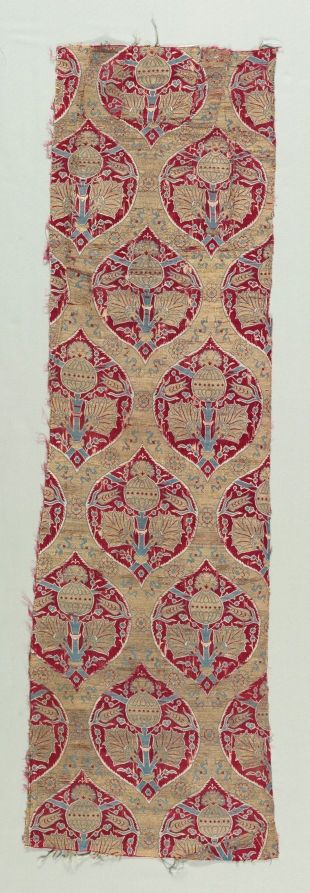
Ogival Lattice with Horizontal Design
Cleveland Museum of Art
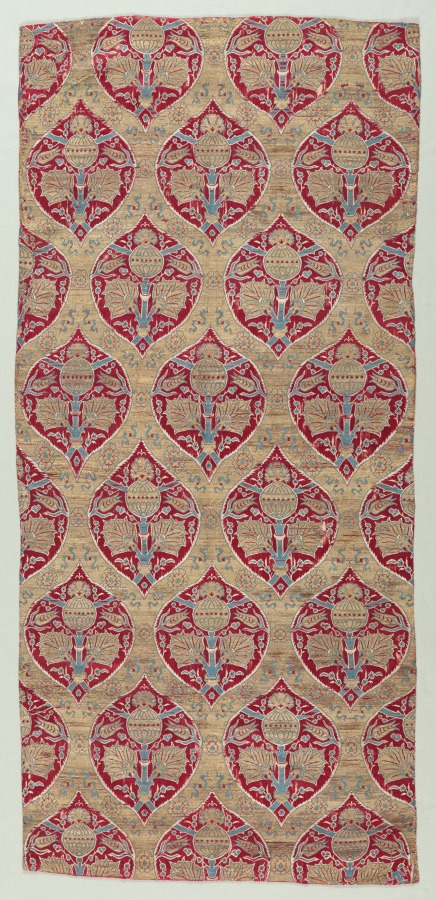
Ogival lattice with horizontal design
Cleveland Museum of Art
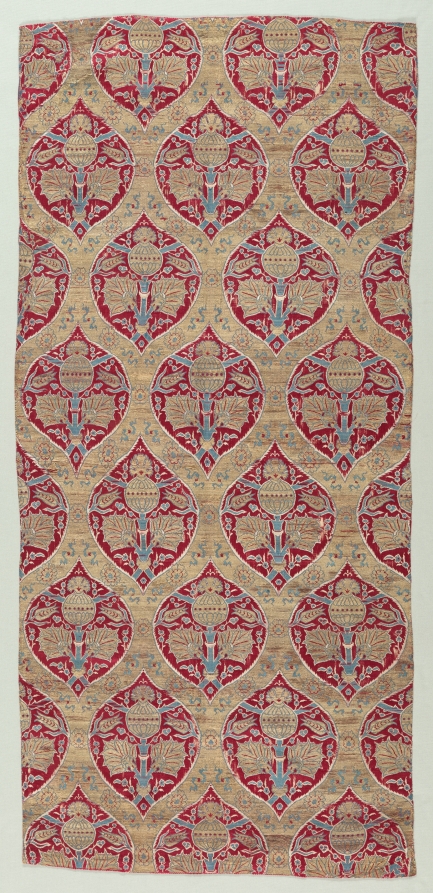
Ogival Lattice with Horizontal Design
Cleveland Museum of Art
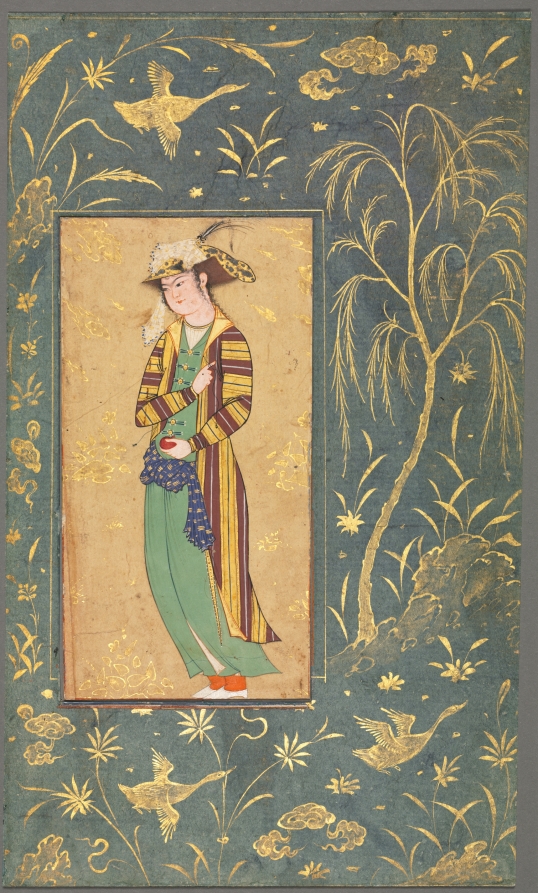
Youth Holding a Pomegranate; Illustration from a Single Page Manuscript
Cleveland Museum of Art
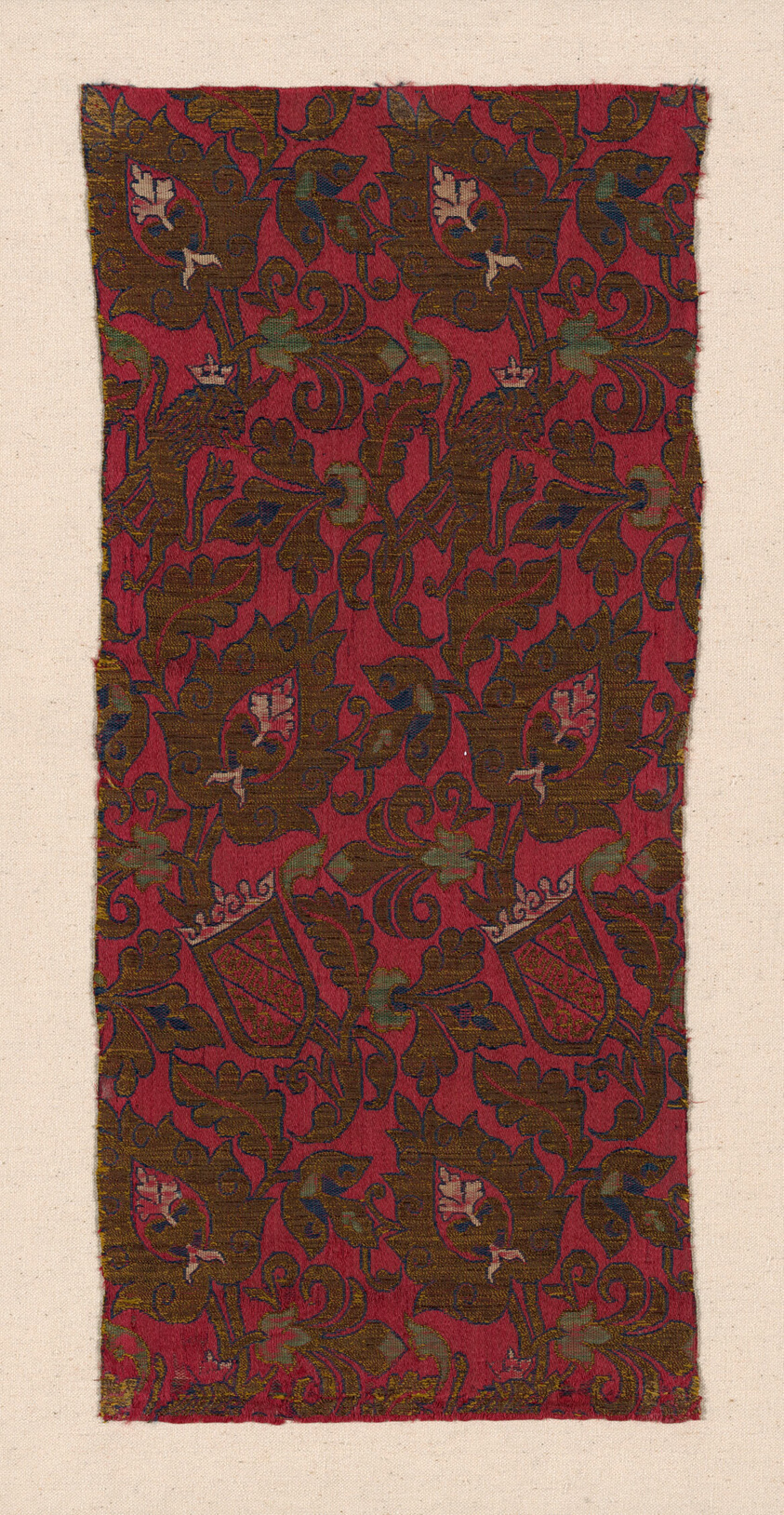
Fragment with Nasrid Coat of Arms
Art Institute of Chicago

Pomegranate vase
Getty Museum
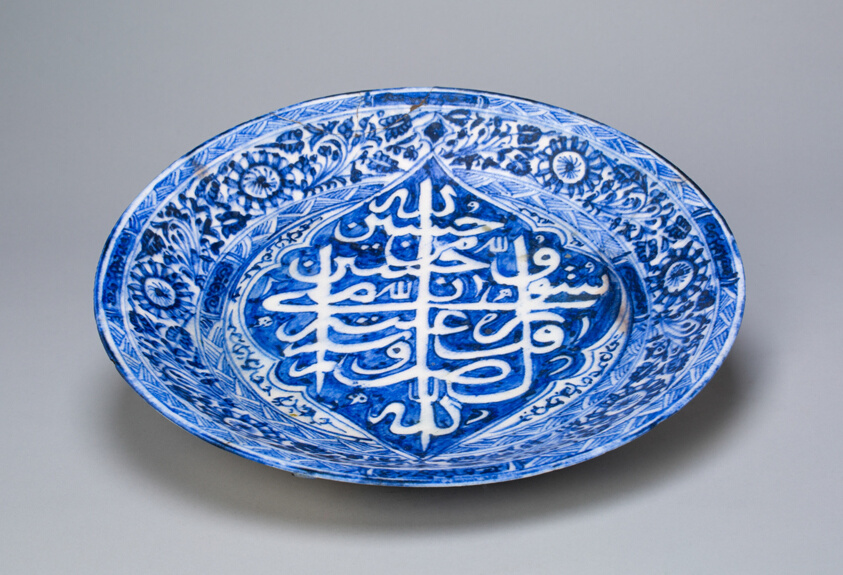
Dish with a Prophetic Hadith
Art Institute of Chicago
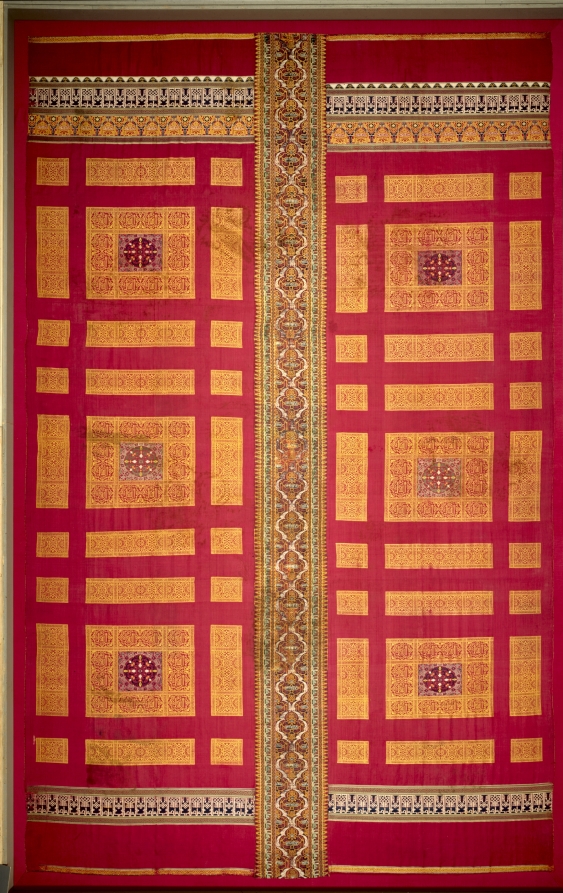
Alhambra Palace Silk Curtain
Cleveland Museum of Art
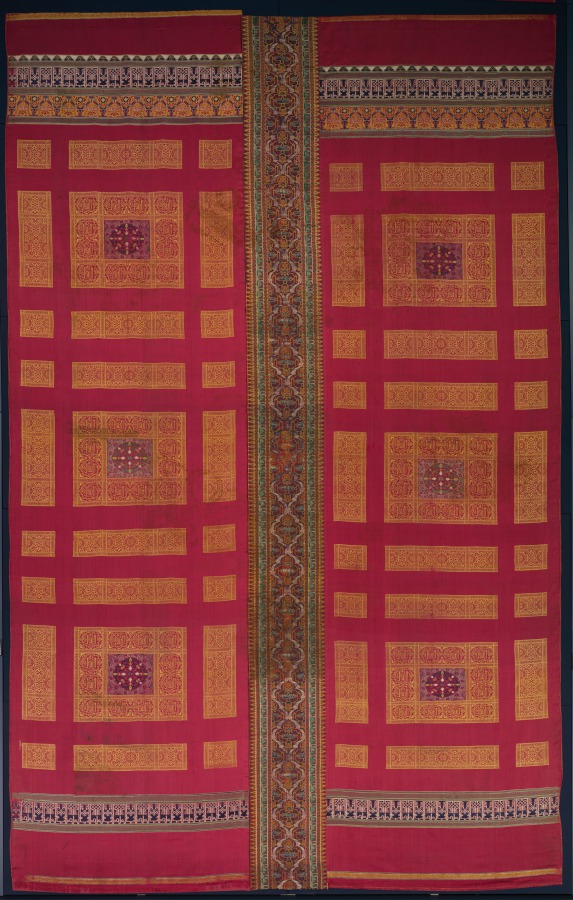
Alhambra Palace Silk Curtain
Cleveland Museum of Art
Silk curtain from the Alhambra palace
Cleveland Museum of Art