Cleveland Museum of Art
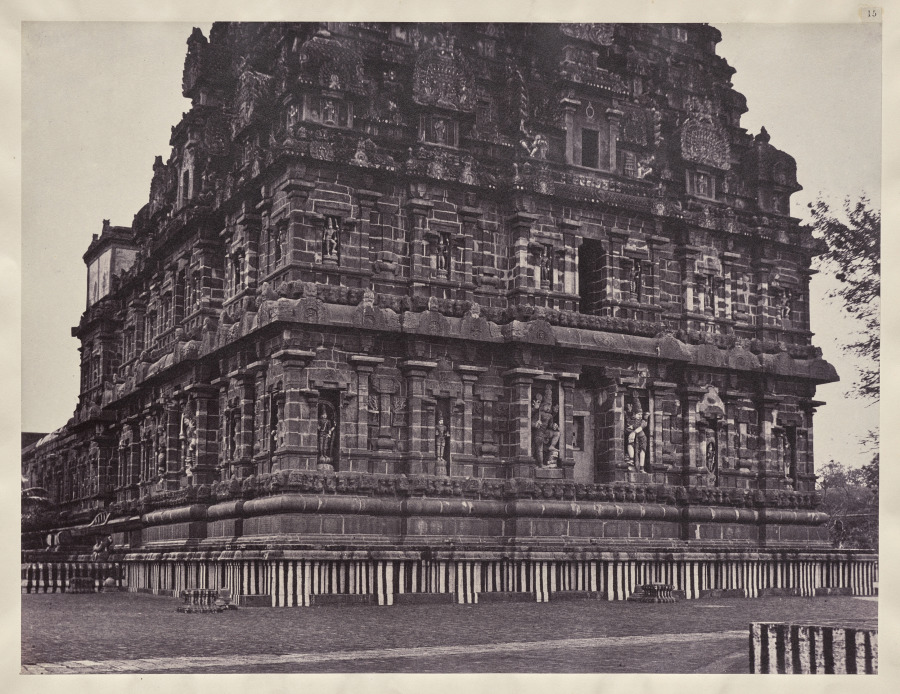
West and South Sides of the Vimana Walls, Great Temple (Brihadeshvara) at Tanjore (Thanjavur)
Captain Linnaeus TripeLinkedCulture matchlcp-5cad35cce517
- Date
- 1858
- Medium
- albumenized salt print from a waxed paper negative
- Culture
- England, 19th century
- Department
- Photography
- Institution
- Cleveland Museum of Art
- Object ID
- 384221
From the Cleveland Museum of Art record
The double-storied exterior base of one of the largest temples constructed and still standing on the Indian subcontinent is articulated with niches containing images of Hindu gods. Within these walls is an inner sanctum containing a monolithic linga (the phallic emblem marking the sacred presence of the god Shiva). Tripe used waxed paper instead of glass negatives, possibly because he was concerned about breakage and weight. When printing the photograph, he laid the negative on a paper treated with a light-sensitive emulsion of sodium chloride (table salt) and silver nitrate and exposed it to light, to create a “salt print.” This is thought to have been the tallest structure in the world when it was constructed around 1000.
The authoritative record is held by Cleveland Museum of Art. LinkedCulture surfaces this object and its connections; it does not alter institutional metadata.
Get printable QR codesHide QR codes
Open QR codes for this object page and the museum record. They stay collapsed until needed.
Provenance & credit
As published by the source institution. Coverage varies — not every institution's open-data feed includes ownership history.
- Credit line
- Purchase from the J. H. Wade Fund
- Provenance
- Newberry Library Collection, Chicago, IL | October 31, 1989: (Sotheby's, New York, NY, October 31, 1989 sale) | (Weston Gallery, Carmel, CA) | Private Collection, United Kingdom | 2020: (Prahlad Bubbar Indian and Islamic Art, London, United Kingdom, sold to the Cleveland Museum of Art) | September 14, 2020–: The Cleveland Museum of Art, Cleveland, OH
Related across collections
Semantically similar works from Cleveland Museum of Art and other institutions.