Cleveland Museum of Art
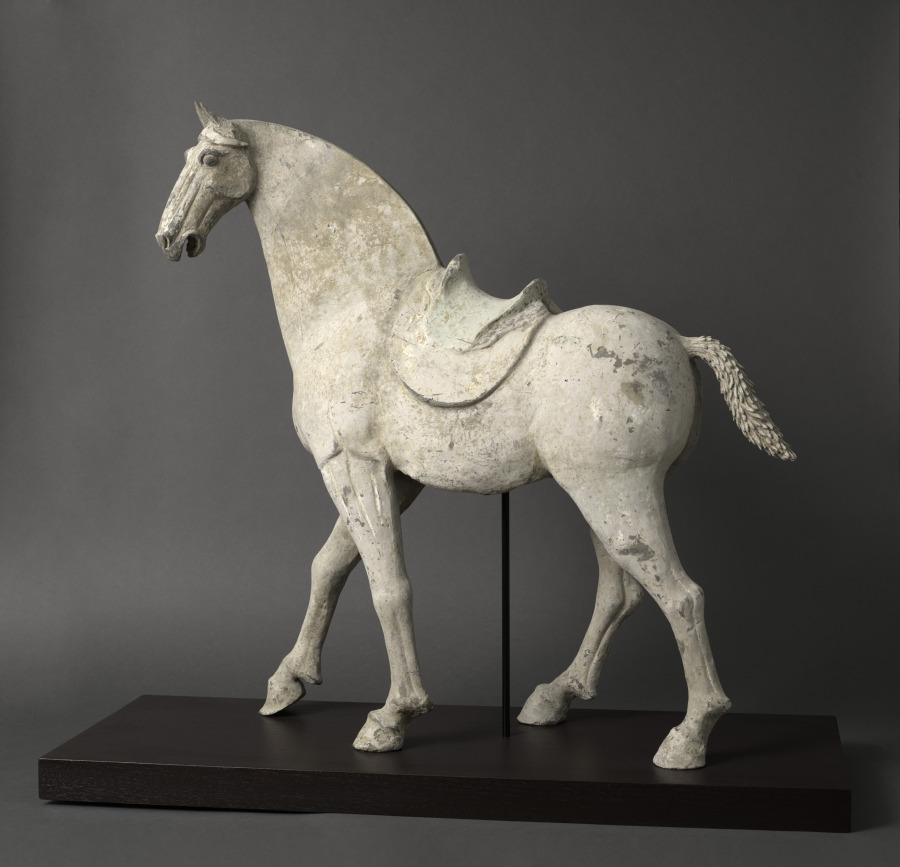
A Large Painted Striding Horse
- Date
- 700–800s
- Medium
- Pottery with white slip and mineral colors
- Culture
- China, Tang dynasty (618–907)
- Department
- Chinese Art
- Institution
- Cleveland Museum of Art
- Object ID
- 84457
From the Cleveland Museum of Art record
Horses were symbols of status and power in ancient China, used for military operations, mobility, and entertainment for the elite. Around the second century BCE onward, pottery horses began to be placed in tombs as status symbols and companions of the deceased in the afterworld. This horse is harnessed with a saddle and is exceptionally large. It presents a well-bred specimen that strides forcefully ahead. A groove runs over the horse’s neck from its ears to the saddle, indicating that its mane and tail were once filled with real horsehair to render the sculpture more realistic.
The authoritative record is held by Cleveland Museum of Art. LinkedCulture surfaces this object and its connections; it does not alter institutional metadata.
Get printable QR codesHide QR codes
Open QR codes for this object page and the museum record. They stay collapsed until needed.
Provenance & credit
As published by the source institution. Coverage varies — not every institution's open-data feed includes ownership history.
- Credit line
- Nancy F. and Joseph P. Keithley Collection Gift
- Provenance
- ?–2004: (K.Y. Fine Art, Hong Kong, sold to Mr. and Mrs. Joseph P. Keithley) | 2004–2024: Nancy F. and Joseph P. Keithley, Cleveland, OH, given to the Cleveland Museum of Art | 2024–: The Cleveland Museum of Art, Cleveland, OH
Related across collections
Semantically similar works from Cleveland Museum of Art and other institutions.