Cleveland Museum of Art
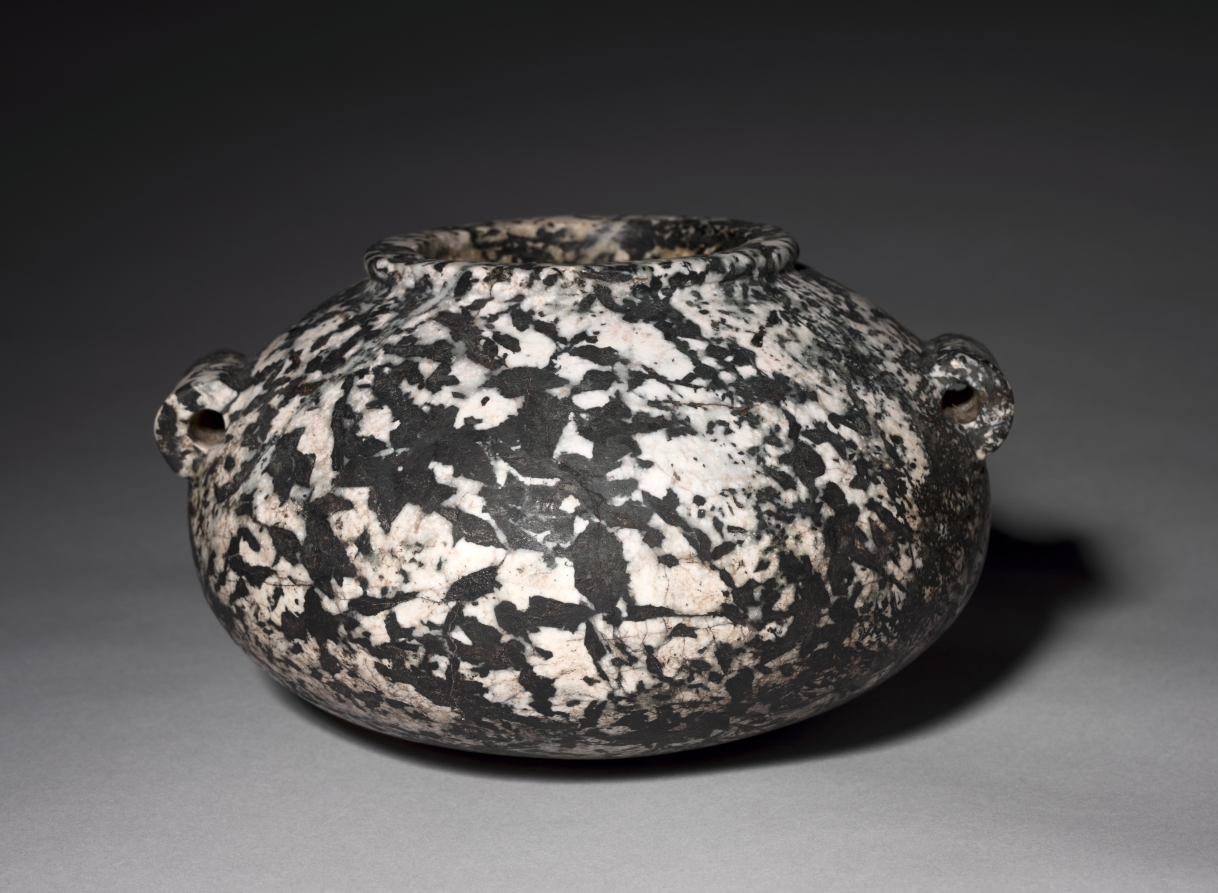
Squat Jar with Lug Handles
- Date
- 2950–2573 BCE
- Medium
- pegmatitic hornblende diorite
- Culture
- Egypt, Early Dynastic (2950–2647 BCE), Dynasties 1–3
- Department
- Egyptian and Ancient Near Eastern Art
- Institution
- Cleveland Museum of Art
- Object ID
- 94098
From the Cleveland Museum of Art record
A single tomb might contain hundreds of stone vessels replicating the shapes of pottery vessels used in everyday life. The most popular material for stone vessels was white or banded travertine (Egyptian alabaster), found close to the Nile, but prospectors and quarrymen often traveled far in search of the desired materials. The hard stone hornblende diorite, notable for its mottled texture, was quarried in the desert along the route to the Red Sea. The stone used for this vessel, a pegmatitic hornblende diorite whose white crystals contain a faint tint of pink, indicates it must have been considered a luxury item.
The authoritative record is held by Cleveland Museum of Art. LinkedCulture surfaces this object and its connections; it does not alter institutional metadata.
Get printable QR codesHide QR codes
Open QR codes for this object page and the museum record. They stay collapsed until needed.
Provenance & credit
As published by the source institution. Coverage varies — not every institution's open-data feed includes ownership history.
- Credit line
- Gift of the John Huntington Art and Polytechnic Trust
- Provenance
- Purchased in Egypt by Lucy Olcott Perkins through Henry W. Kent
Related across collections
Semantically similar works from Cleveland Museum of Art and other institutions.