Cleveland Museum of Art
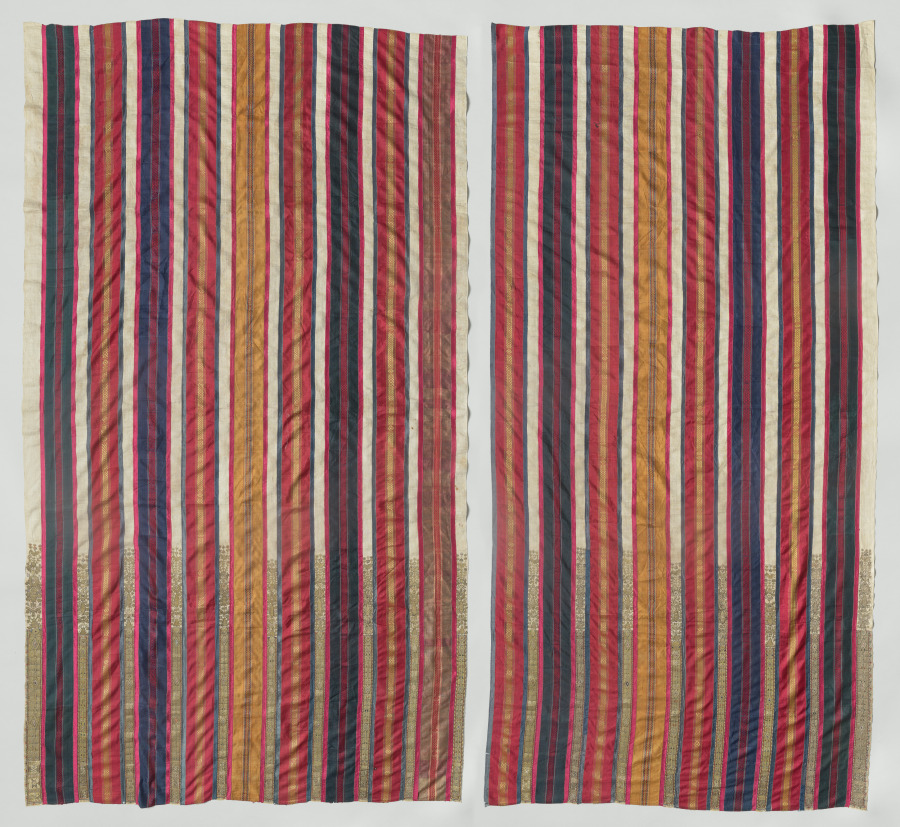
Curtain
- Date
- 1600s–1700s
- Medium
- Silk, linen, metal, and dye
- Culture
- Africa, North Africa, Tunisia, Djerba, Tunisian weaver(s) and embroiderer(s)
- Department
- Textiles
- Institution
- Cleveland Museum of Art
This pair of curtains displays colorful silk bands with woven geometric motifs, and cream bands with gold-embroidered plants, birds, six-pointed stars, and the khamsah (خمسة), an open five-fingered hand. Birds and the tree of life were popular good luck or fertility symbols linked to marriage. The cosmopolitan motifs would have resonated with Jews, Muslims, and Christians alike, reflecting its creation on multiethnic and multireligious Djerba, an island off the Tunisian coast. There, both goldsmithing and gold thread embroidery were done by Jewish artisans (male and female, respectively). The fine materials suggest they once hung in a wealthy home or for special occasions; interior wall hangings were typically made from rough wool. When first acquired over a century ago, these curtains had fringe at their lower ends.
The authoritative record is held by Cleveland Museum of Art. LinkedCulture surfaces this object and its connections; it does not alter institutional metadata.
Related across collections
Semantically similar works from Cleveland Museum of Art and other institutions.
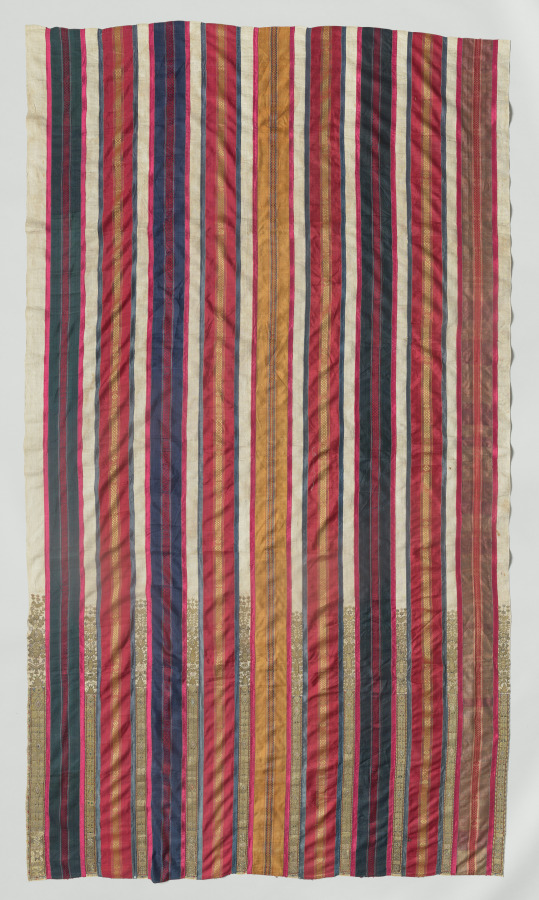
Curtain (one of a pair)
Cleveland Museum of Art
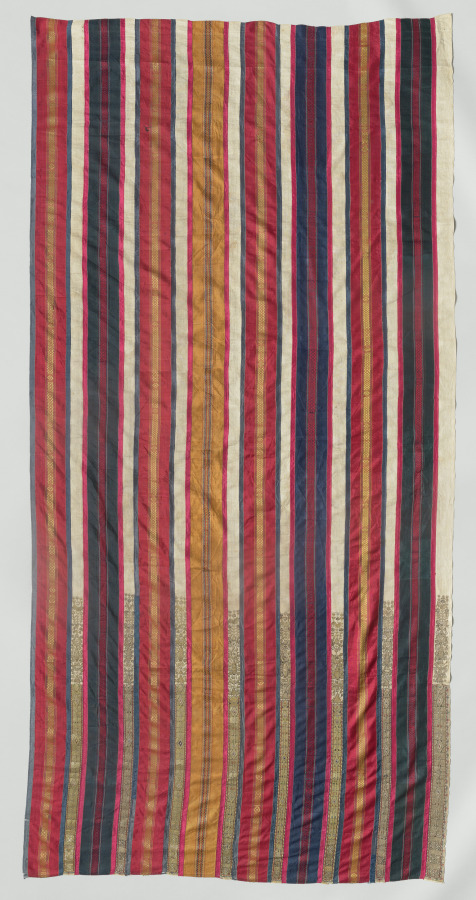
Curtain (one of a pair)
Cleveland Museum of Art
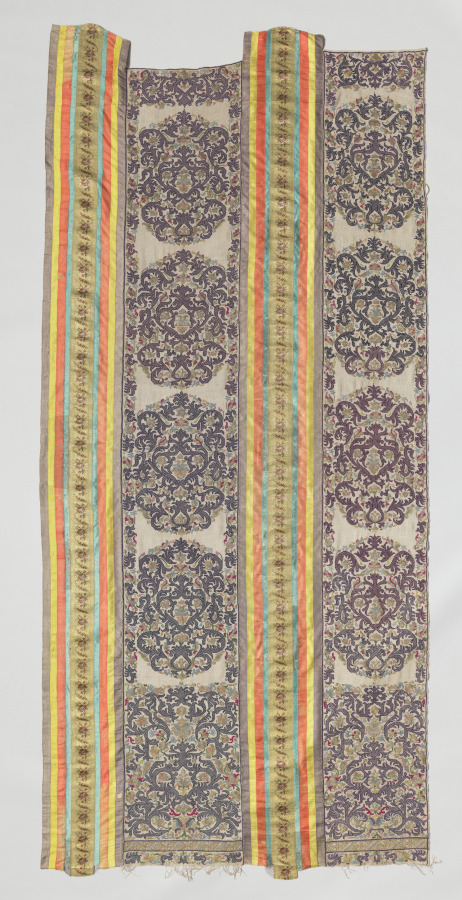
Curtain panel (sitara)
Cleveland Museum of Art
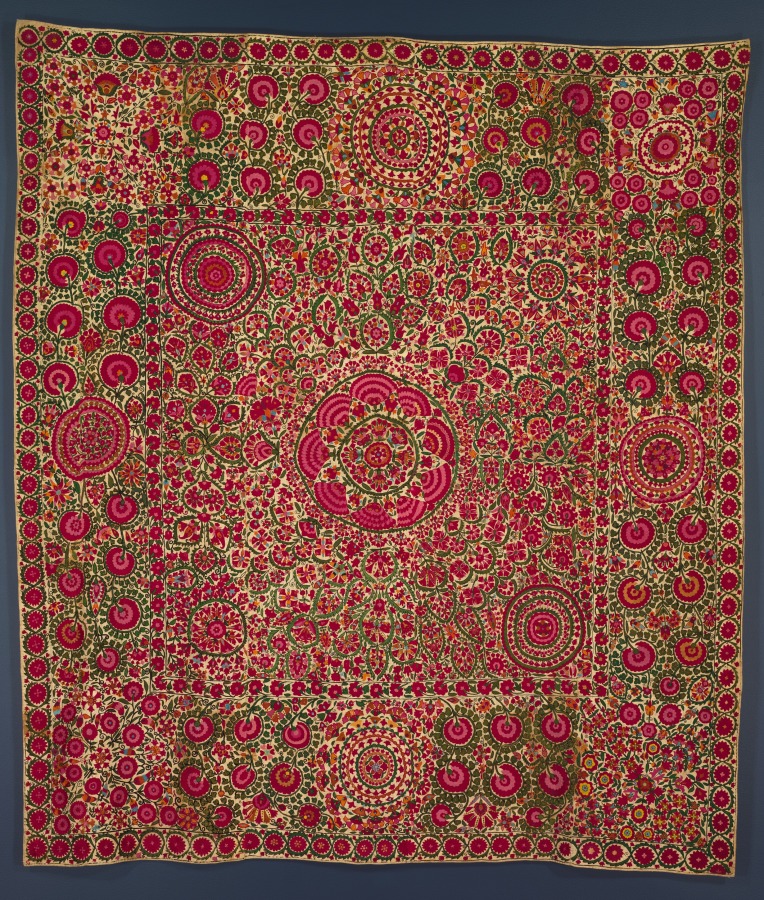
Curtain or bedcover
Cleveland Museum of Art
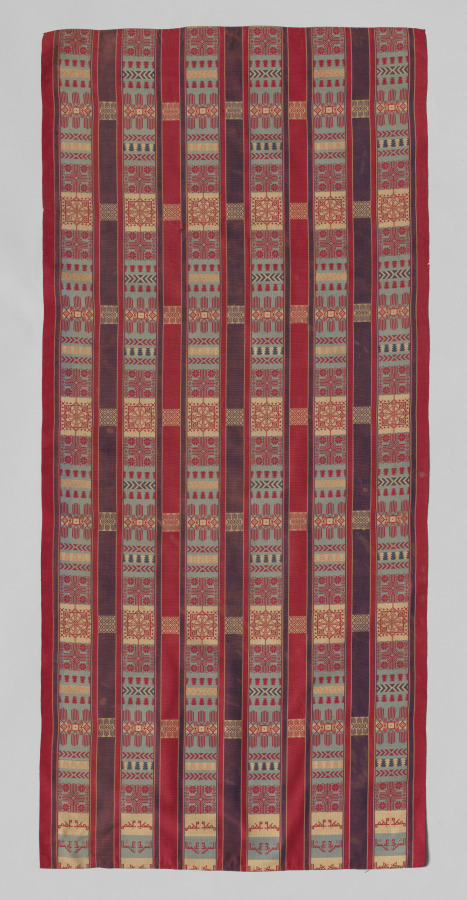
Panel from a Head Covering (‘Ajar)
Cleveland Museum of Art
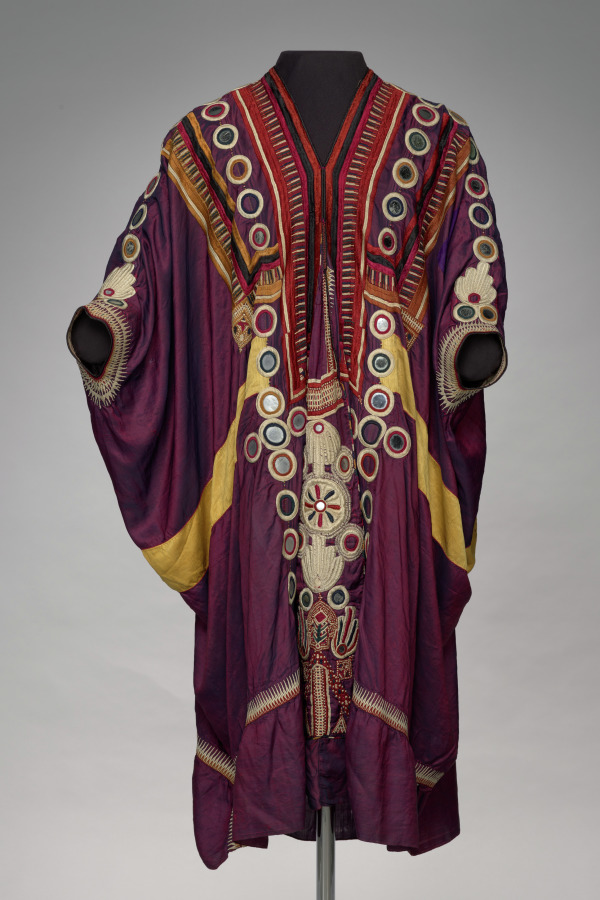
Garment
Cleveland Museum of Art
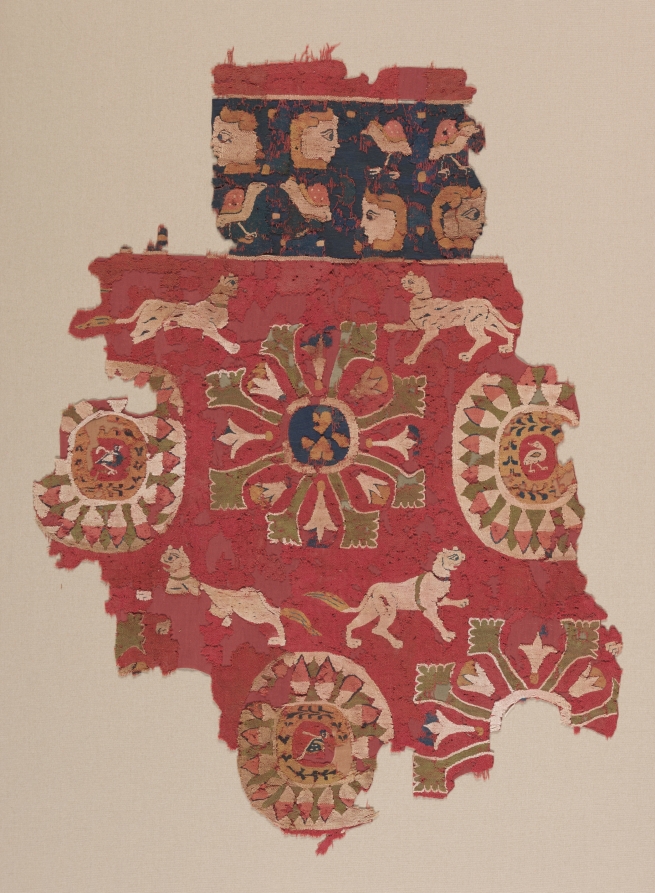
Curtain Fragment with Panthers
Cleveland Museum of Art
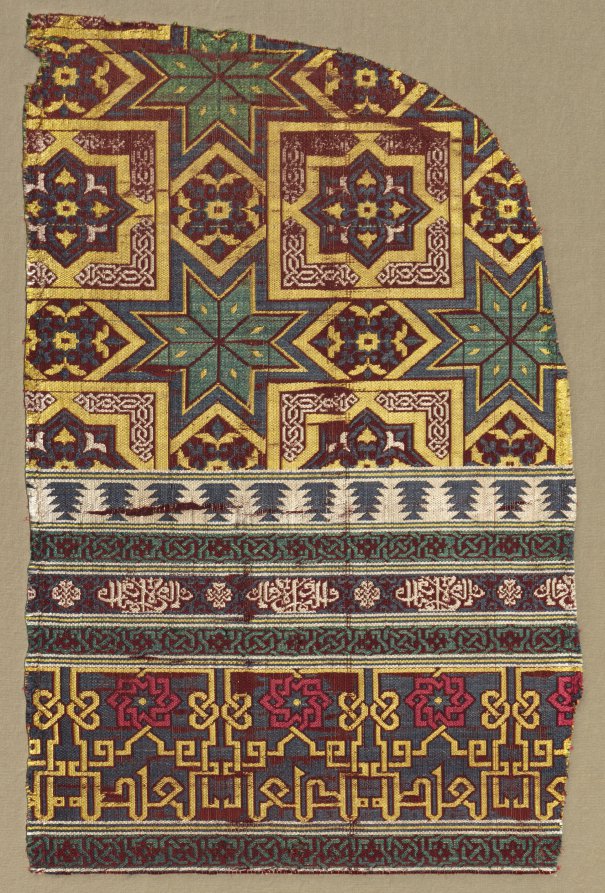
Alhambra hanging fragment with decorated bands
Cleveland Museum of Art

Curtain
Minneapolis Institute of Art

Panel
Minneapolis Institute of Art
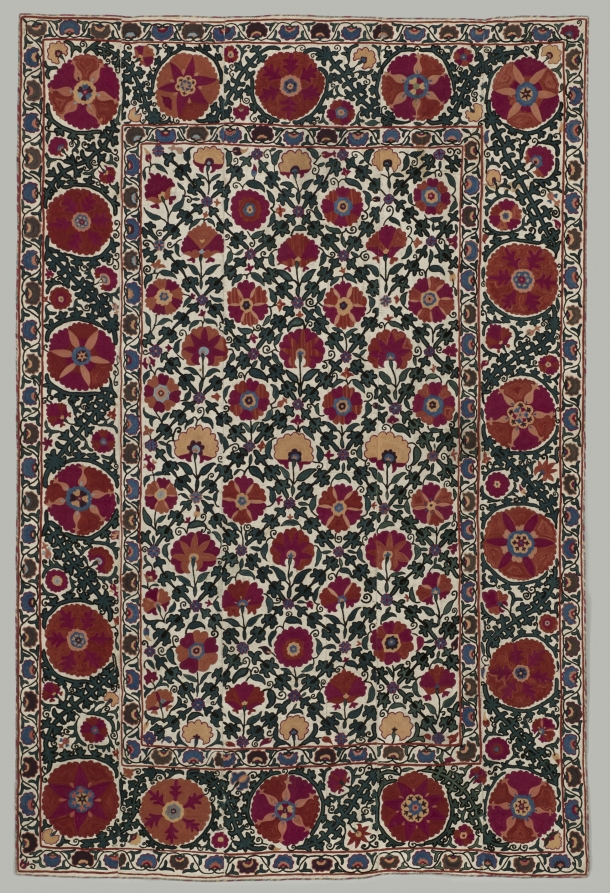
Wall Hanging
Cleveland Museum of Art
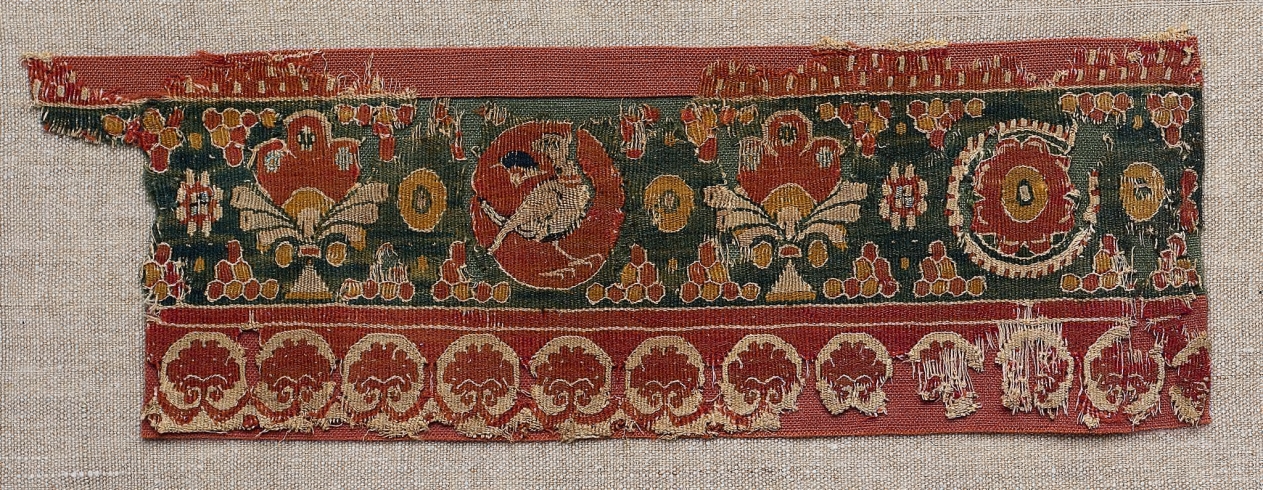
Decorated Band from a Tunic or Curtain
Cleveland Museum of Art