
Minneapolis Institute of Art
Curtain
Coptic artist
- Date
- 5th-6th century
- Medium
- Linen, wool, tapestry weave
- Culture
- Coptic
- Department
- Arts of Global Africa
- Institution
- Minneapolis Institute of Art
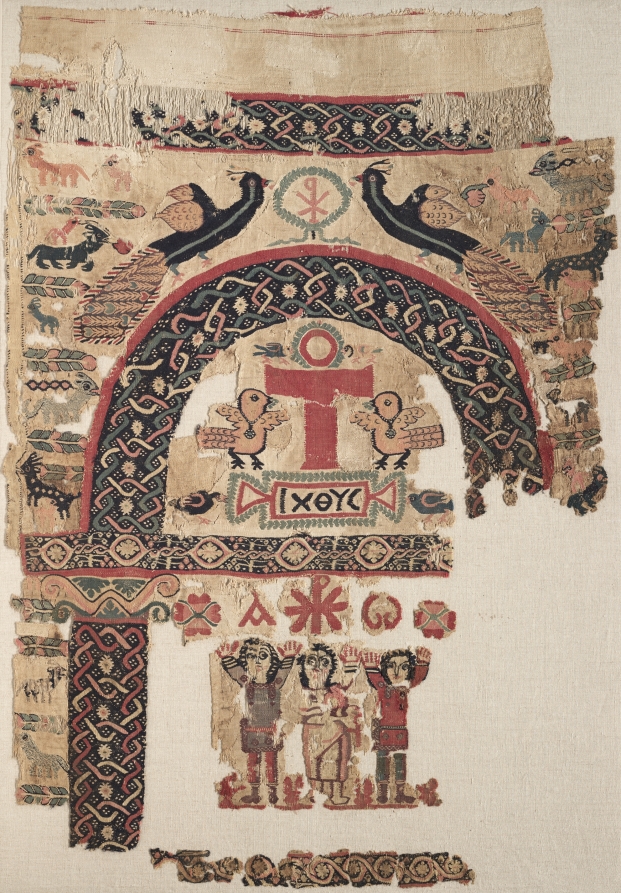
This 1, 500-year-old cloth was made by a Christian Egyptian weaver to be used as a sanctuary curtain in a Coptic church or monastery. It probably served later as a burial pall to cover the coffin of an important person. Because Egypt’s climate is conducive to textile preservation, the fabric was still in good condition when it was unearthed. With its many symbolic images, this curtain is among the most important early Christian fabrics that survive today. The combination of a wreath, traditionally awarded to winners of competitions, and the Latin cross, which refers to Christ’s crucifixion, was meant to symbolize victory over death and the joy of everlasting life. The twelve fruits on the wreath may be a reference to the twelve kinds of fruit on the Tree of Life, as found in the Christian Bible’s book of Revelation, suggesting that the Cross itself is equated with the Tree of Life. Africa
The authoritative record is held by Minneapolis Institute of Art. LinkedCulture surfaces this object and its connections; it does not alter institutional metadata.
Related across collections
Semantically similar works from Minneapolis Institute of Art and other institutions.
Curtain (one of a pair)
Cleveland Museum of Art
Curtain (one of a pair)
Cleveland Museum of Art
Curtain
Cleveland Museum of Art
Hanging with Christian Images
Cleveland Museum of Art
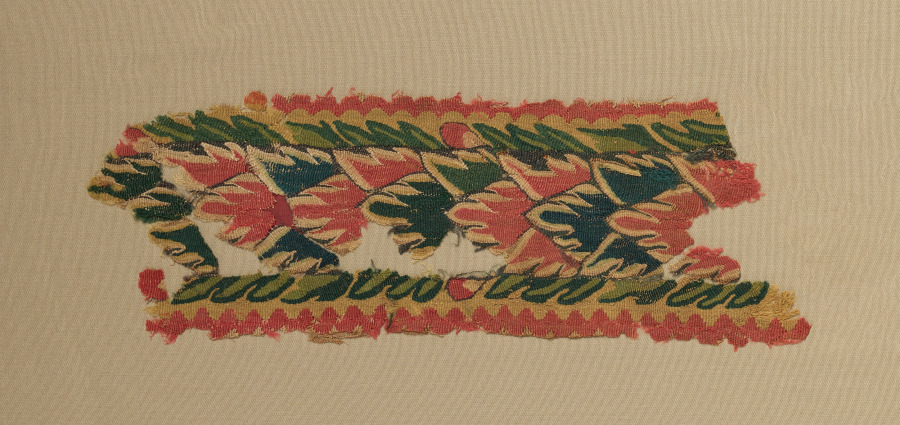
Panel from a Large Curtain, Overlapping Leaves
Cleveland Museum of Art

Panel from a Large Curtain, Overlapping Leaves
Cleveland Museum of Art
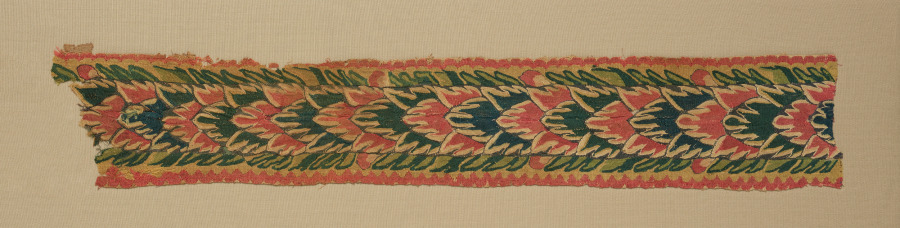
Panel from a Large Curtain, Overlapping Leaves
Cleveland Museum of Art
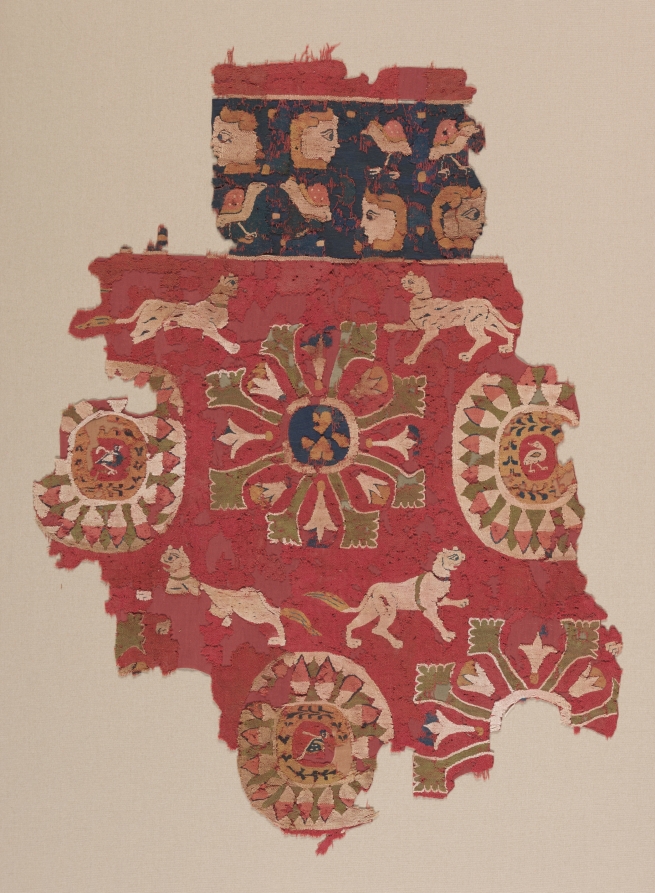
Curtain Fragment with Panthers
Cleveland Museum of Art
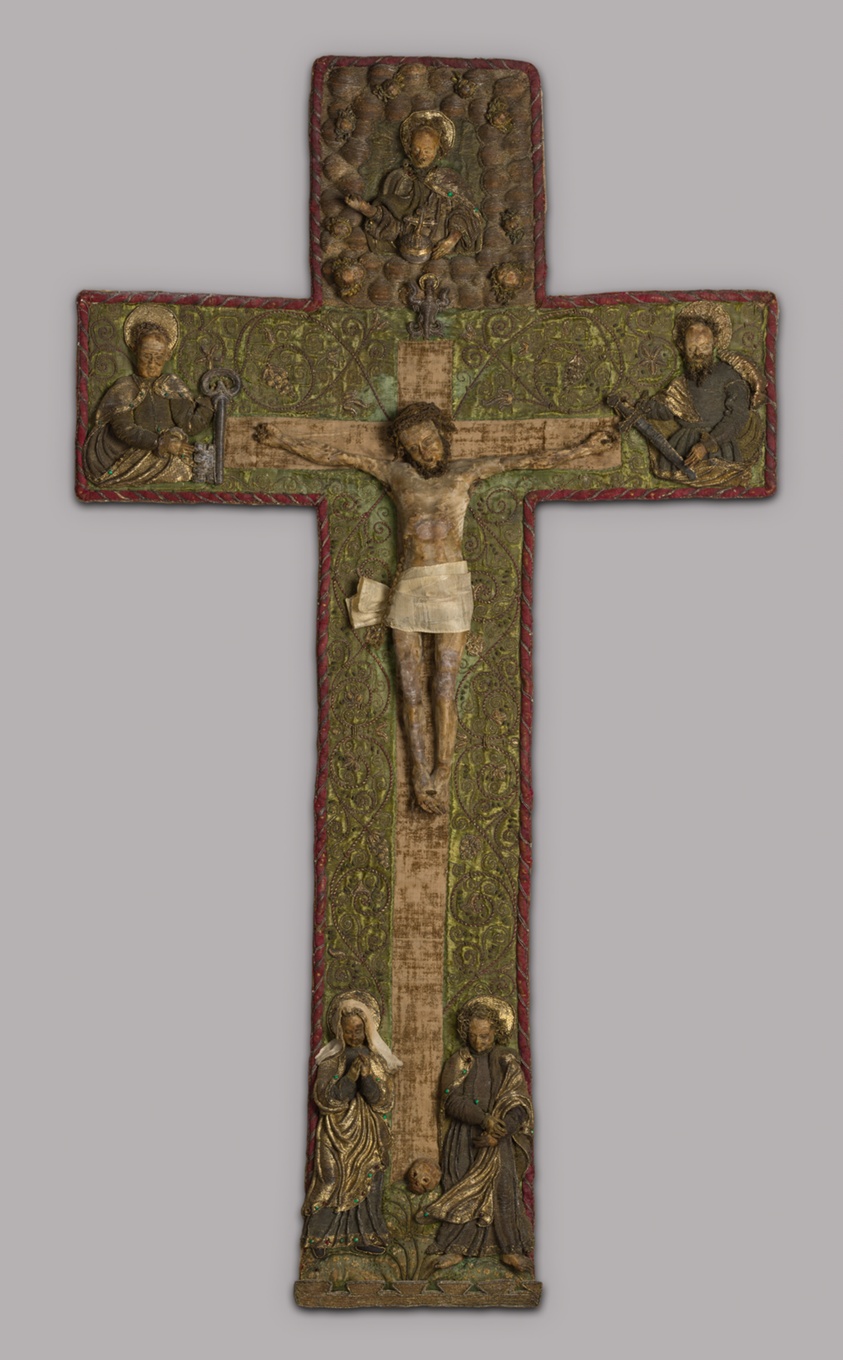
Orphrey Cross
Art Institute of Chicago
Curtain Panel with Scenes of Merrymaking
Cleveland Museum of Art
Roundel from a Curtain
Cleveland Museum of Art
Funerary Shroud Fragment
Art Institute of Chicago