Cleveland Museum of Art
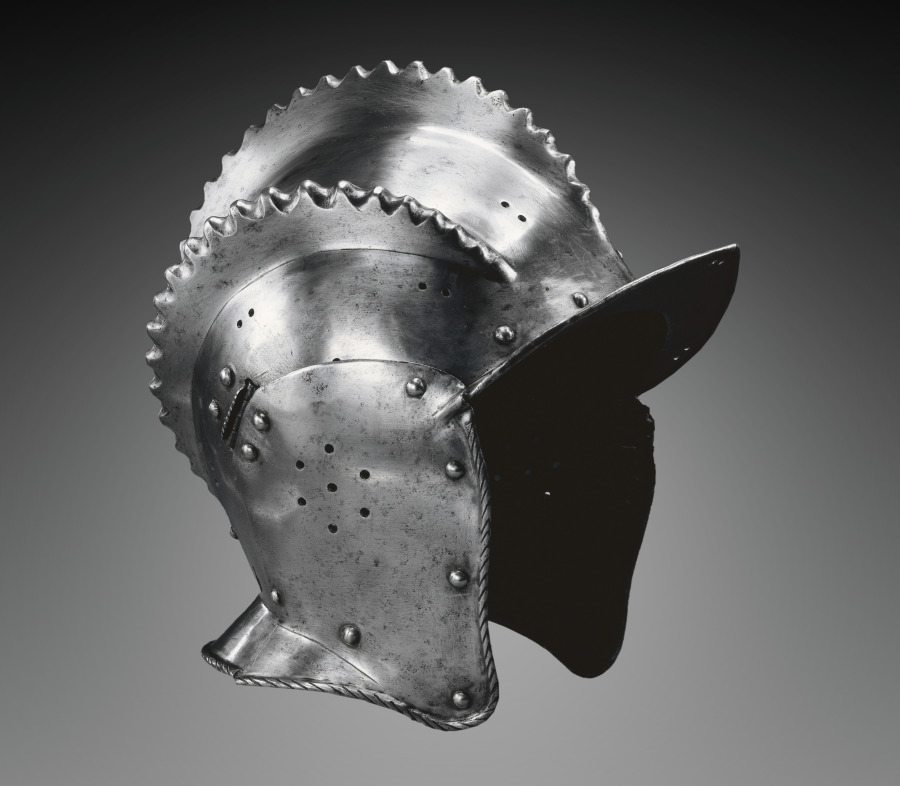
Triple-Crested Burgonet
- Date
- c. 1560–70
- Medium
- steel, leather bands
- Culture
- Germany, possibly Augsburg
- Department
- Medieval Art
- Institution
- Cleveland Museum of Art
- Object ID
- 96063
From the Cleveland Museum of Art record
Popular throughout the 1500s and 1600s, the burgonet was a light, open headpiece favored by cavalry and infantry alike. Its main features are a peak over the eyes and hinged cheekpieces that fasten with a strap or lace under the chin. The basic helmet lent itself to variations of design or ornamentation. This version, with its triple crests, is known to have been produced in Augsburg. The style was worn by the bodyguard of Emperor Charles V (ruled 1519-56). The open face of the burgonet meant it was a lighter and cheaper to manufacture than closed face helmets, it also allowed the wearer to see more freely, the trade off was less protection for the face.
The authoritative record is held by Cleveland Museum of Art. LinkedCulture surfaces this object and its connections; it does not alter institutional metadata.
Get printable QR codesHide QR codes
Open QR codes for this object page and the museum record. They stay collapsed until needed.
Provenance & credit
As published by the source institution. Coverage varies — not every institution's open-data feed includes ownership history.
- Credit line
- Gift of Mr. and Mrs. John L. Severance
- Provenance
- ?-1916: Frank Gair Macomber (1849-1941), Boston, MA, sold to the Cleveland Museum of Art | 1916-: The Cleveland Museum of Art, Cleveland, OH
Part of a LinkedCulture topic
 European Renaissance Armor Components
These objects are all pieces of defensive armor and military equipment from 15th-17th century Europe, primarily from major armoring centers like Italy, Germany, and France.
500 objects from 4 institutions
Related across collections
Semantically similar works from Cleveland Museum of Art and other institutions.