Cleveland Museum of Art
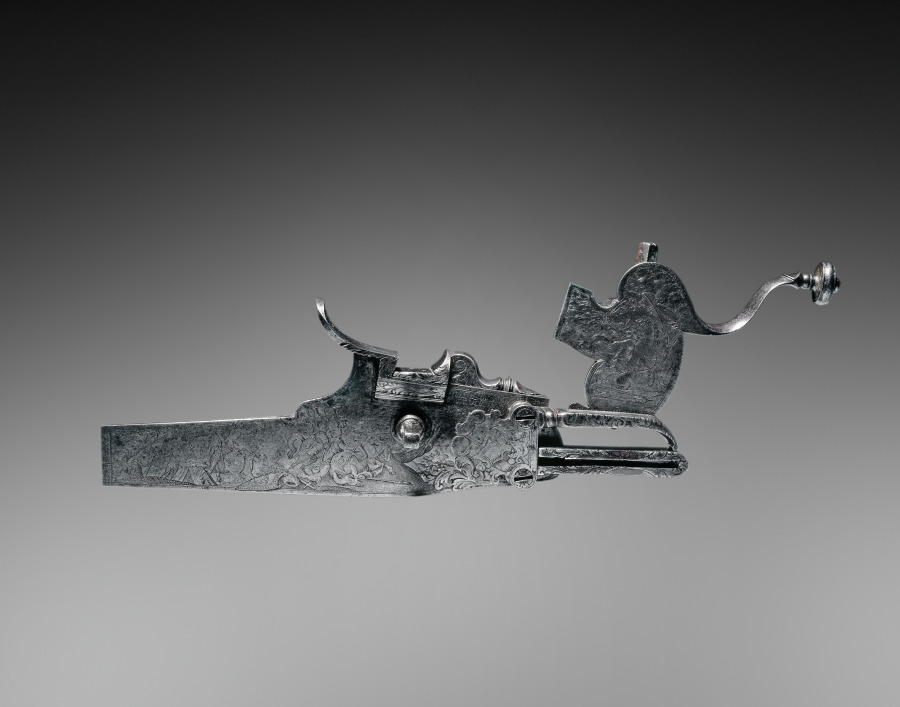
Wheel-Lock from a Hunting Rifle
- Date
- c. 1720–40
- Medium
- steel, engraved
- Culture
- Germany, Munich, 18th century
- Department
- Medieval Art
- Institution
- Cleveland Museum of Art
At the beginning of the 1500s a new type of ignition system was invented: the wheel-lock, the first self-igniting mechanism for guns. This type of ignition involved a piece of iron pyrites held in the jaws of a cock. When the trigger was pulled the pyrites pressed against the serrated edge of a prewound revolving wheel, creating a shower of sparks that ignited priming powder in a pan on top of the lock. This action sent a flash of flame through the vent hole to explode the main charge in the breech of the barrel. Originally part of a deluxe hunting rifle, the lock plate's entire surface is engraved in a chaotic scene. Combating cavaliers, Turks, acanthus leaves, and trophies cover every bit of space. The engraver's signature, I.C. Stenglin Sr., can be seen on the edge running vertically.
The authoritative record is held by Cleveland Museum of Art. LinkedCulture surfaces this object and its connections; it does not alter institutional metadata.
Related across collections
Semantically similar works from Cleveland Museum of Art and other institutions.
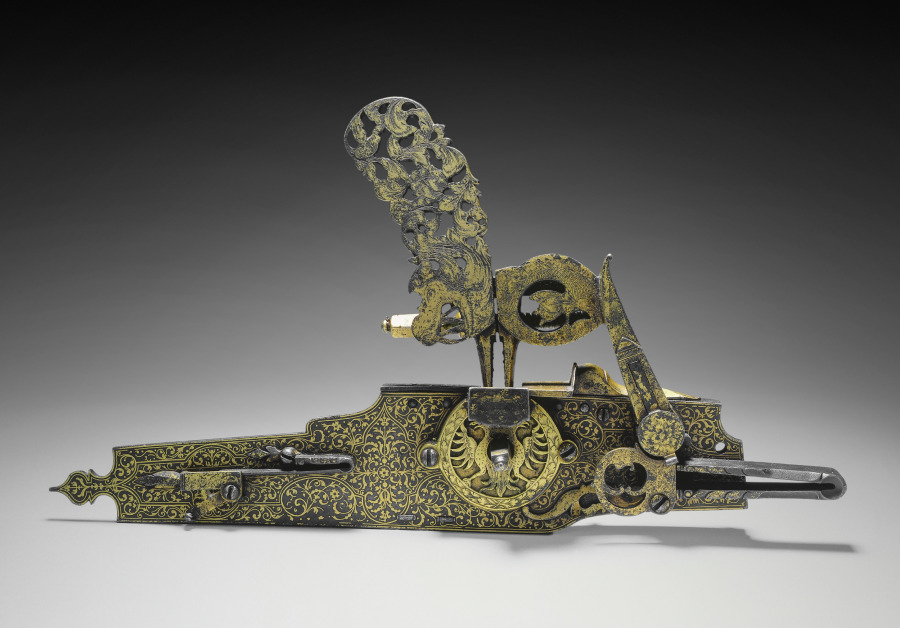
Wheel-Lock from a Hunting Rifle
Cleveland Museum of Art
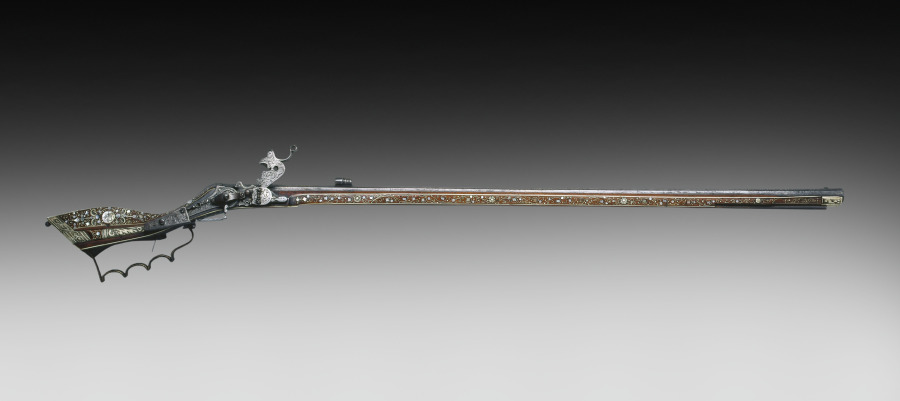
Tschinki (Wheel-Lock Hunting Rifle)
Cleveland Museum of Art
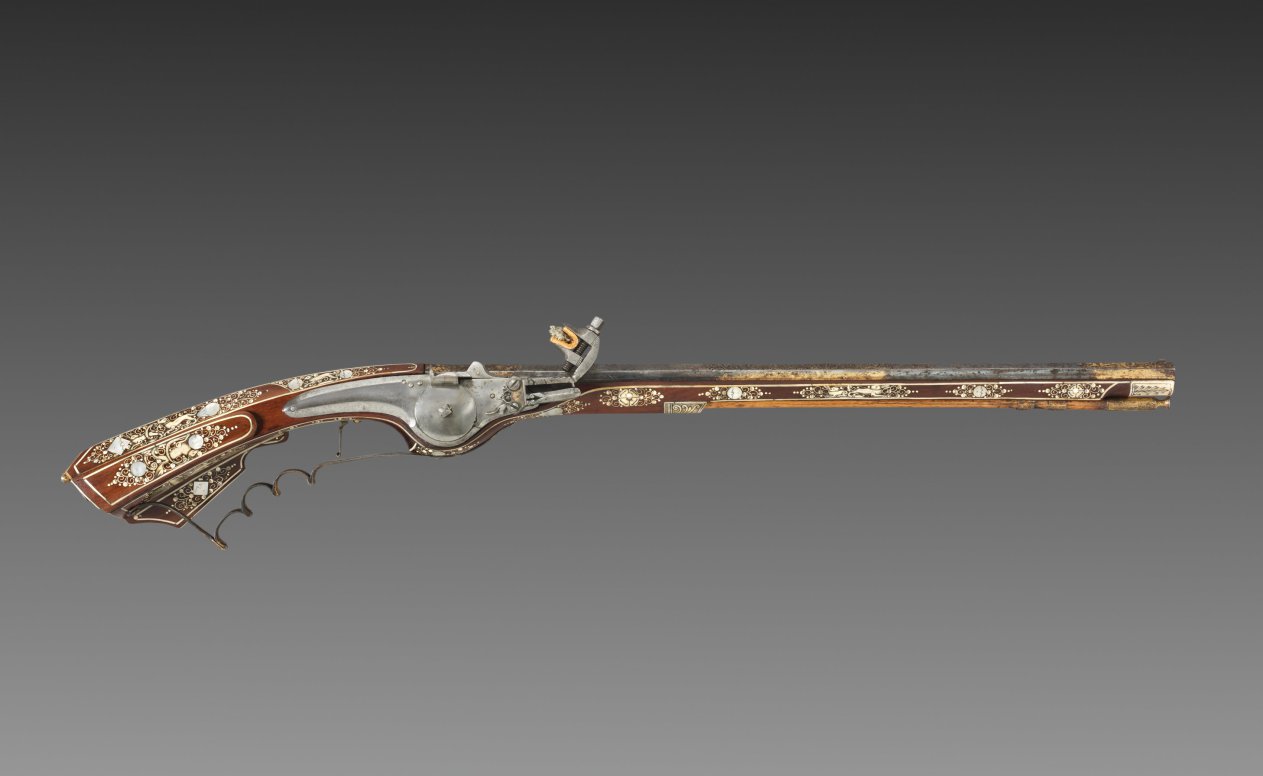
Wheel-lock Petronel
Cleveland Museum of Art
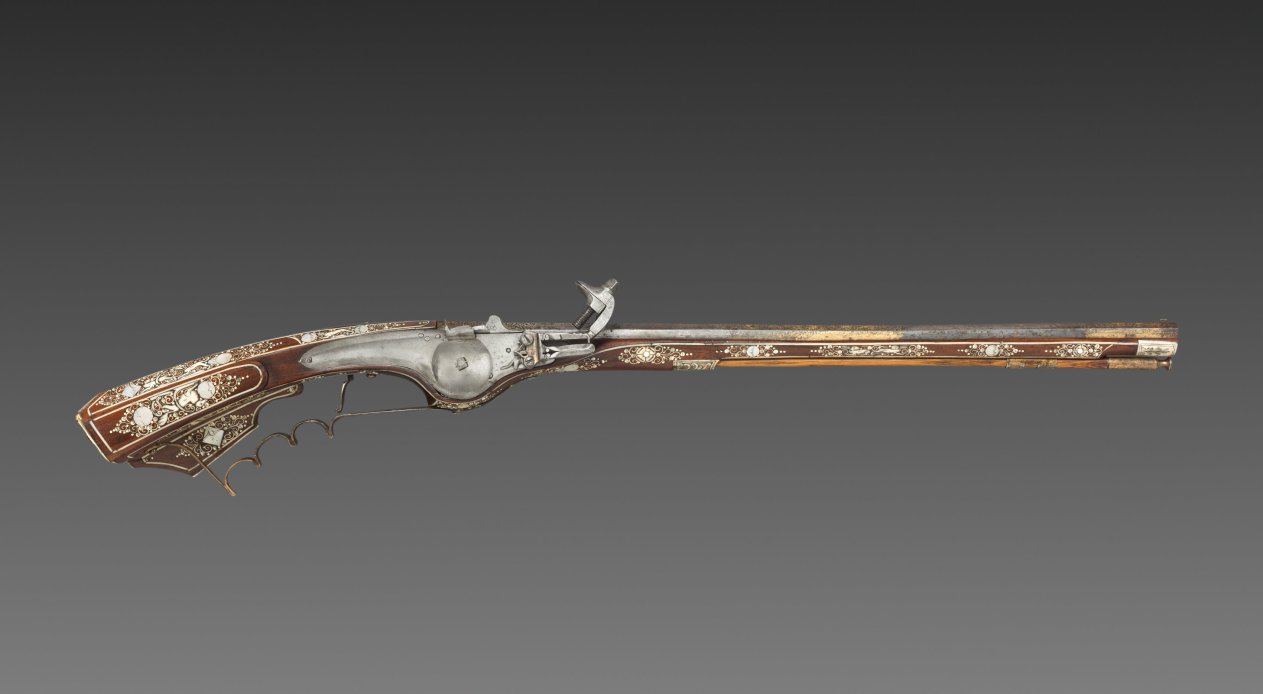
Wheel-lock Petronel
Cleveland Museum of Art
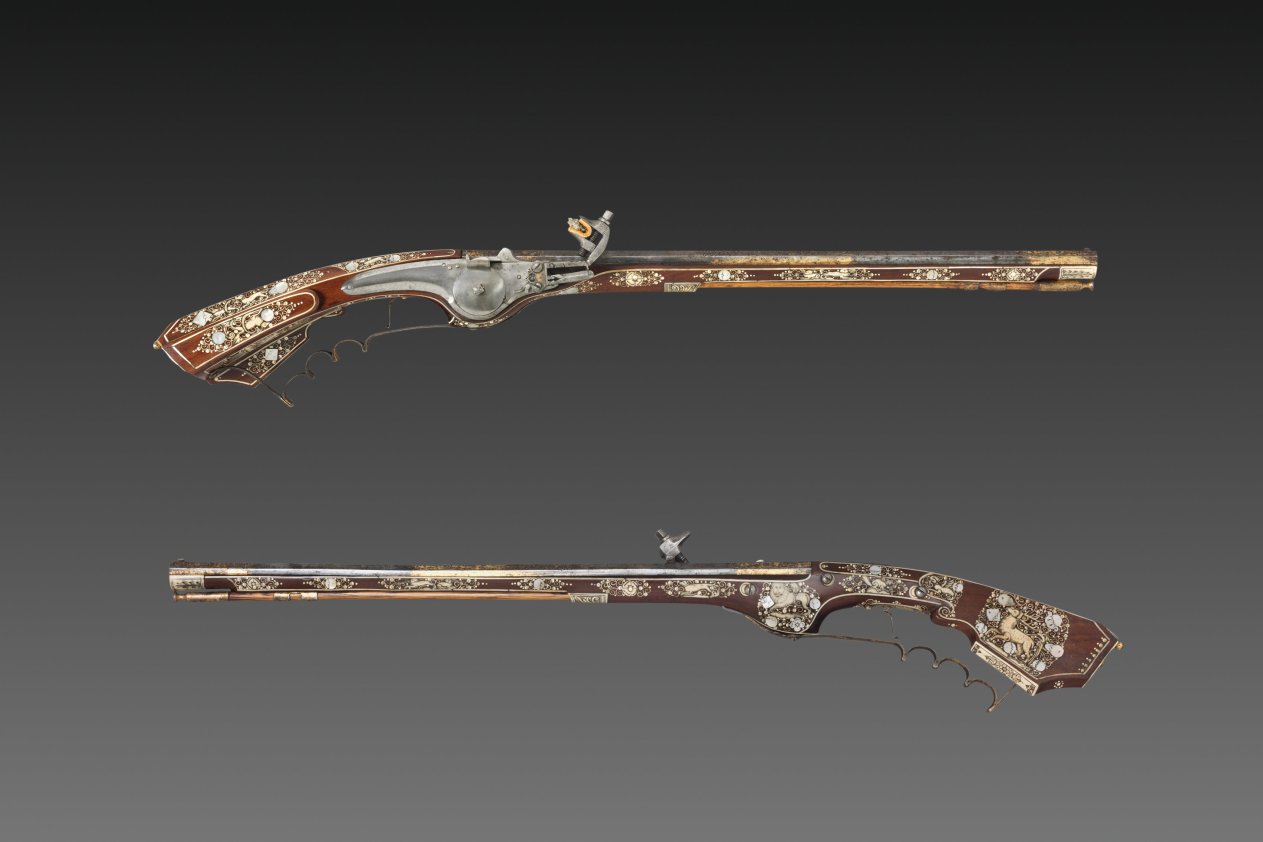
Pair of Wheel-lock Petronels
Cleveland Museum of Art
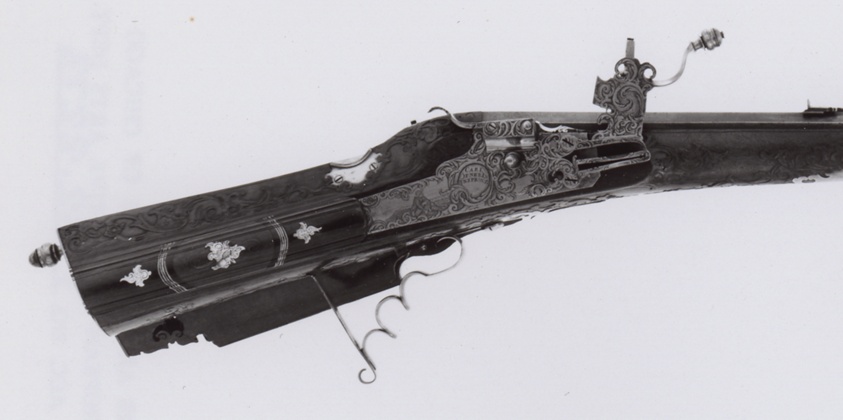
Wheellock Rifle
Art Institute of Chicago
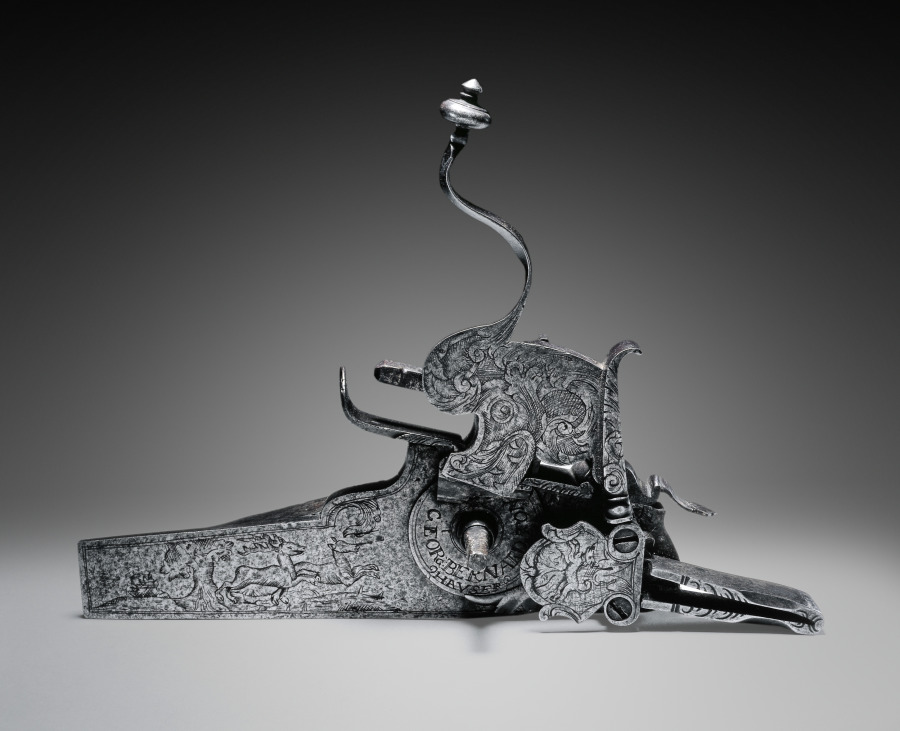
Wheel-Lock from a Hunting Gun
Cleveland Museum of Art
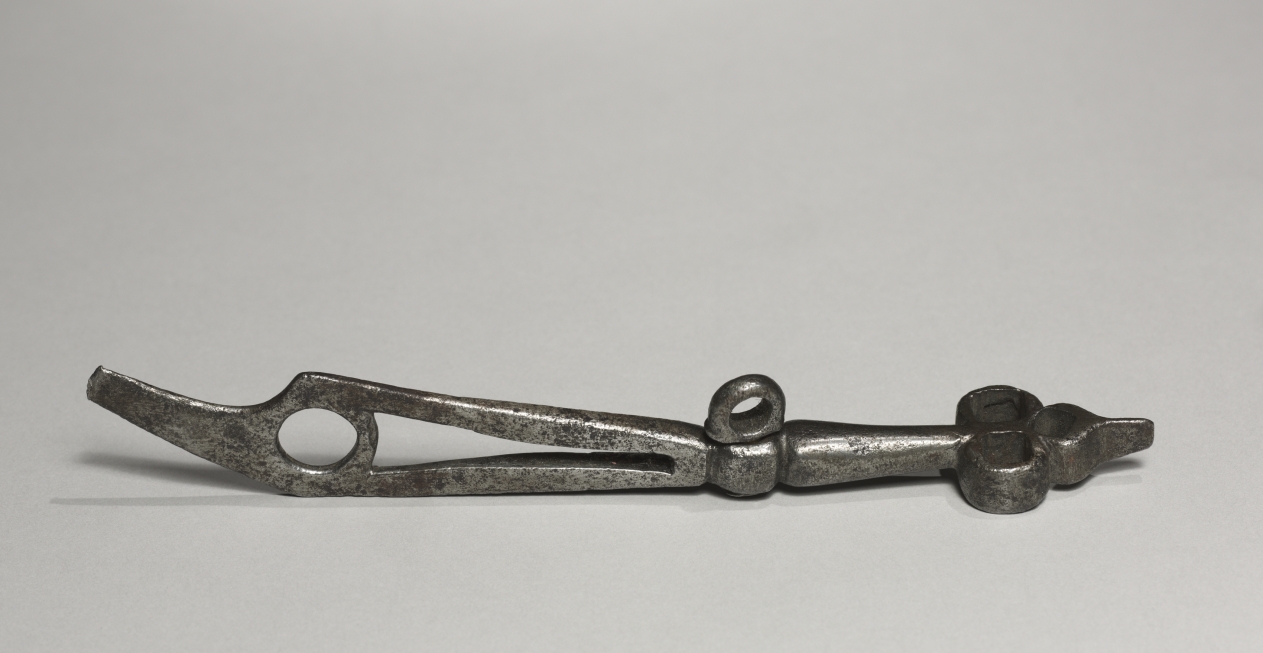
Spanner for a Wheel Lock Gun
Cleveland Museum of Art
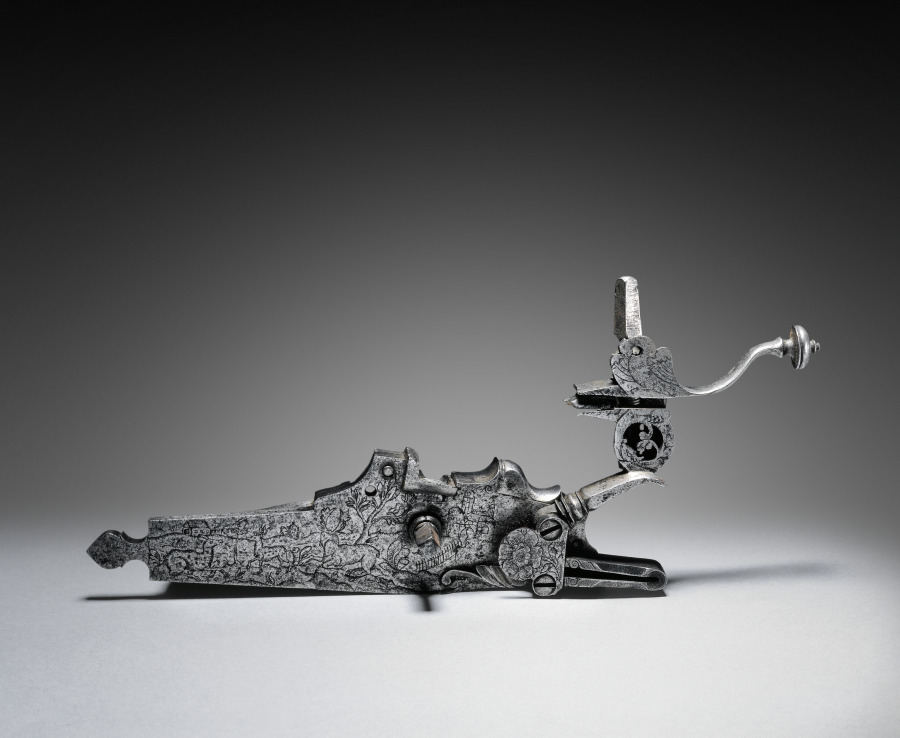
Wheel-Lock from a Hunting Rifle
Cleveland Museum of Art
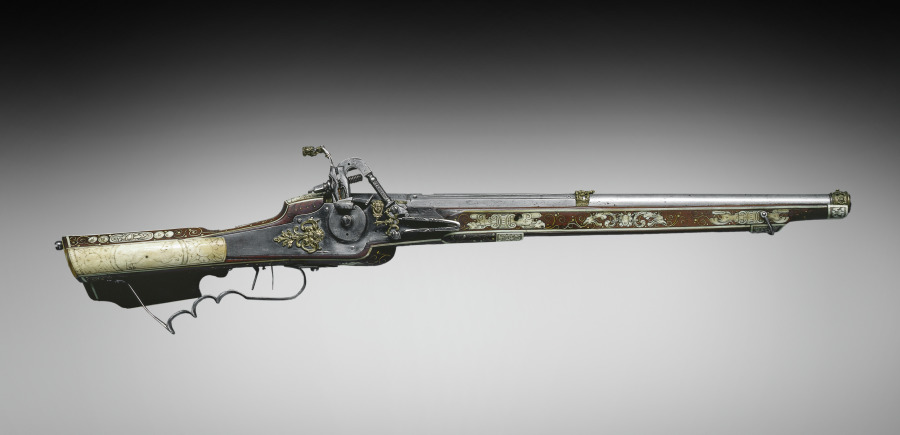
Wheel-Lock Rifle
Cleveland Museum of Art
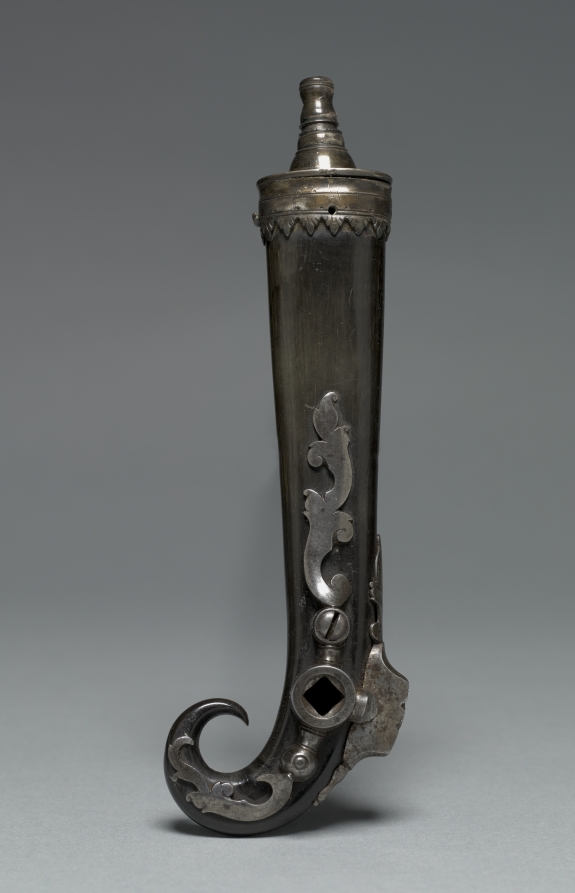
Combined Priming Flask and Wheel-Lock Spanner
Cleveland Museum of Art
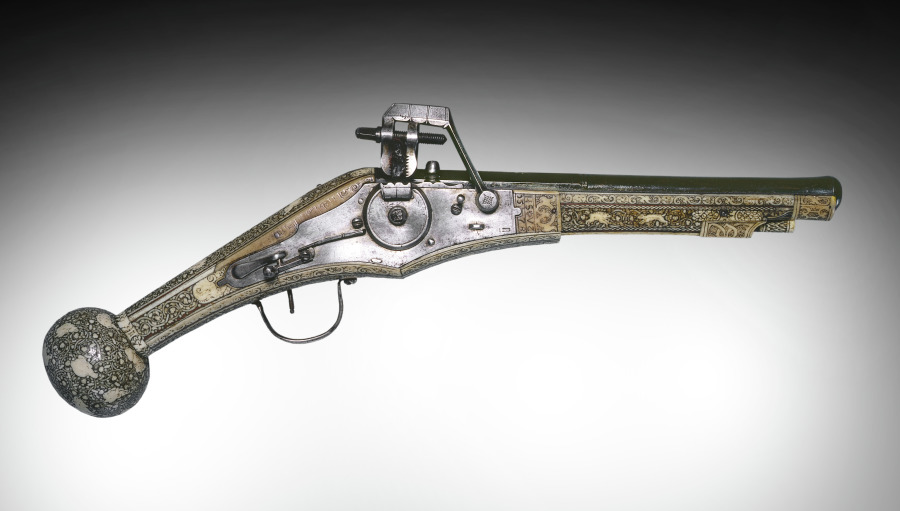
Wheel-Lock Hunting Pistol
Cleveland Museum of Art