Cleveland Museum of Art
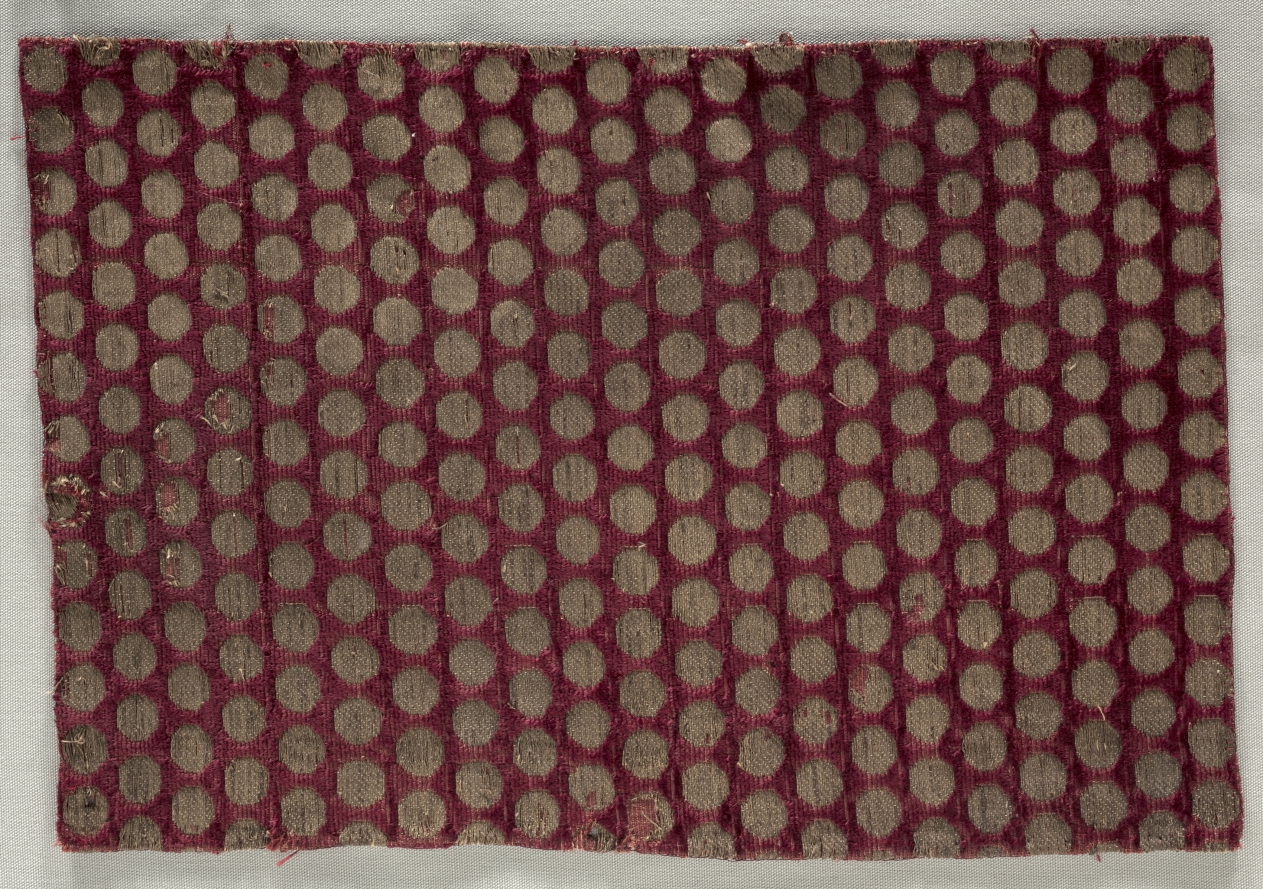
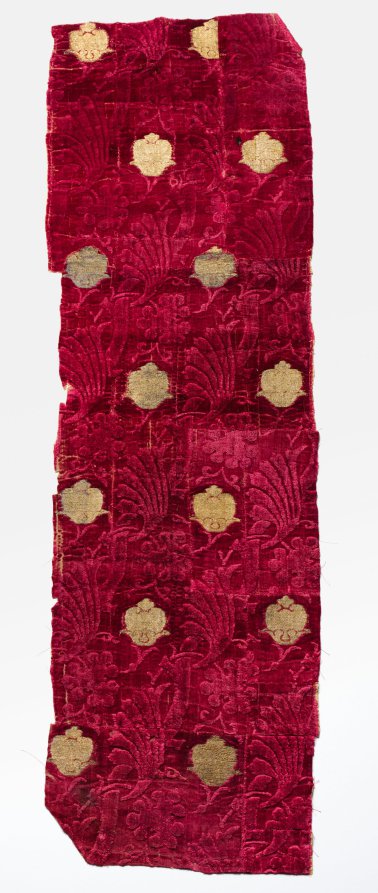
Velvet with gold discs
- Date
- late 1200s or earlier
- Medium
- silk, gilt-metal thread; brocaded velvet
- Culture
- Iran, probably Tabriz, Ilkhanid period
- Department
- Textiles
- Institution
- Cleveland Museum of Art
Silk velvet with rich pile is one of the most opulent and prestigious fabrics, especially when embellished with gold thread. This is one of the earliest known velvets. A 1295 inventory of Pope Boniface VIII includes "a piece of red Tartar velvet with gold discs," which probably refers to this velvet pattern. It is attributed to Iran, possibly in Tabriz where Italian agents resided and could have provided the transfer of silk-velvet technology to Italy. Although the origin of velvet is uncertain, silk velvet with an extra silk pile warp was probably developed in a silk weaving country such as Iran. Inventive Iranian weavers may have developed it during the 1200s or earlier; they are acclaimed for producing the most colorful velvets ever during the 1500s and 1600s.
The authoritative record is held by Cleveland Museum of Art. LinkedCulture surfaces this object and its connections; it does not alter institutional metadata.
Related across collections
Semantically similar works from Cleveland Museum of Art and other institutions.
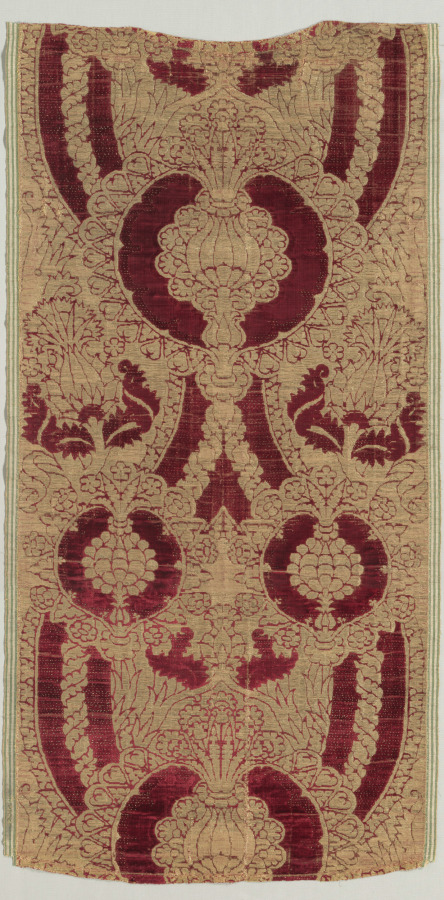
Silk Velvet with Gold in Pomegranate Pattern
Cleveland Museum of Art
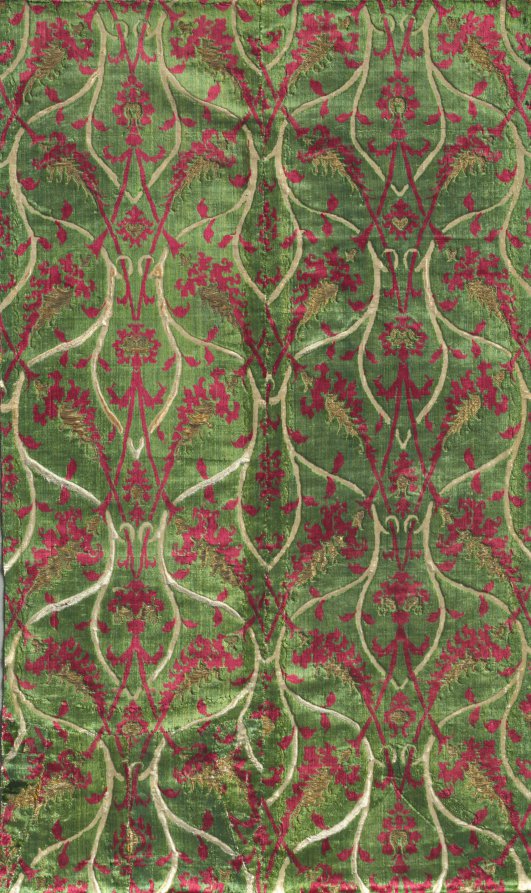
Two-color Velvet with Gold in a Double Curved Lattice Pattern
Cleveland Museum of Art
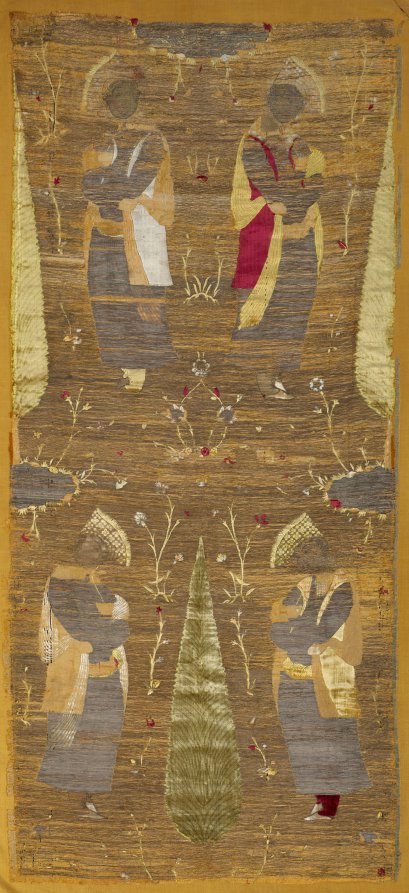
Velvet panel with four youths smelling flowers
Cleveland Museum of Art
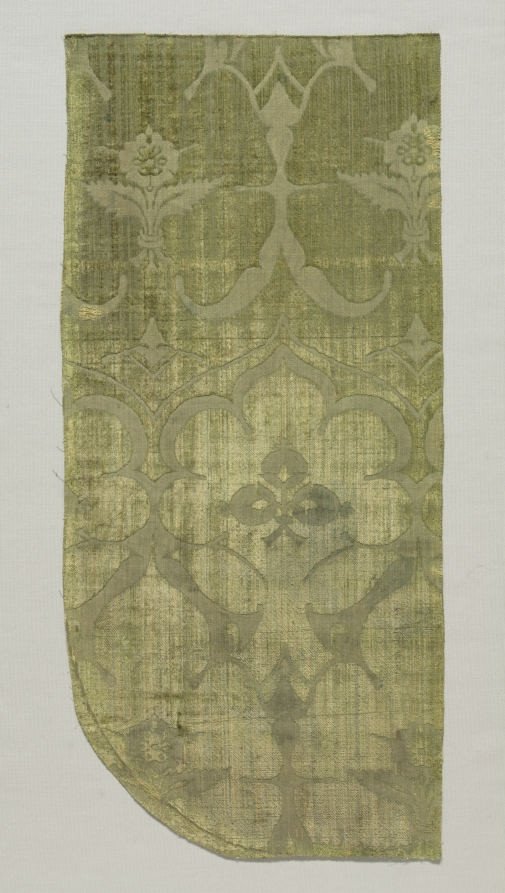
Fragment, probably from a Chasuble
Cleveland Museum of Art
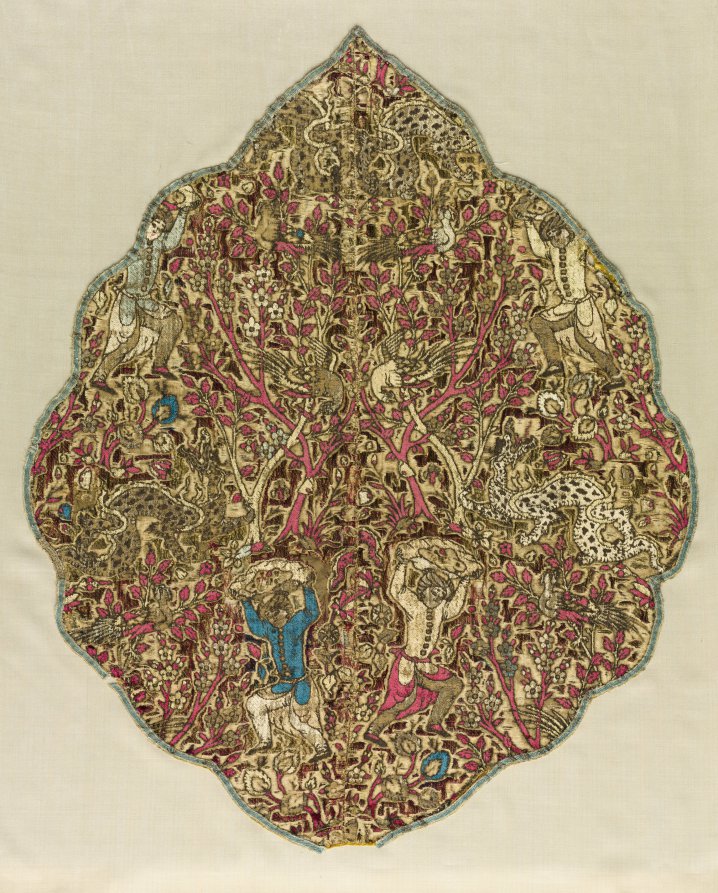
Tent panel of a dragon slayer
Cleveland Museum of Art
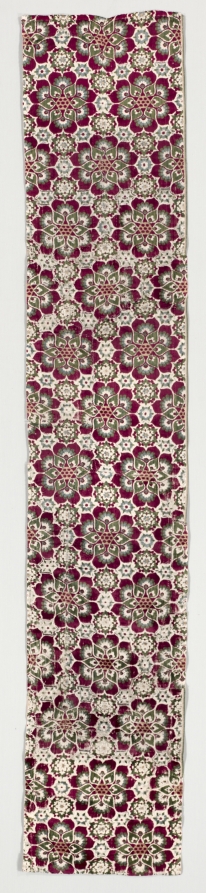
Four-color Velvet with Medici Armorial in Rosettes
Cleveland Museum of Art
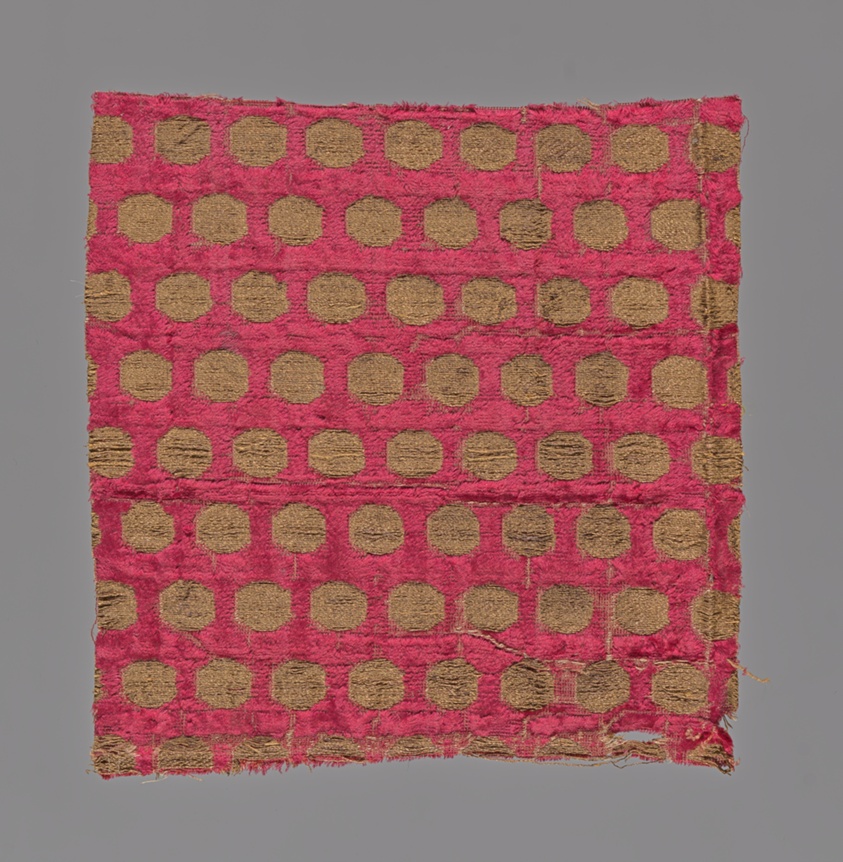
Fragment of Velvet
Art Institute of Chicago
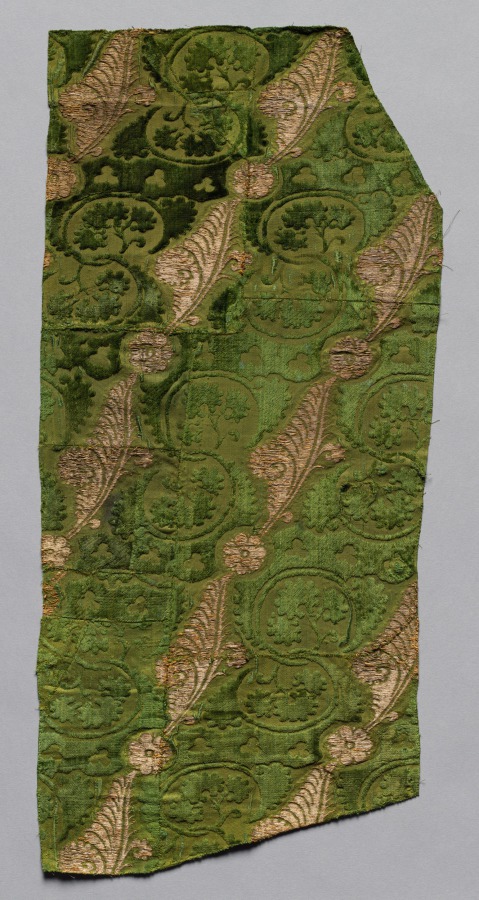
Brocaded Velvet
Cleveland Museum of Art
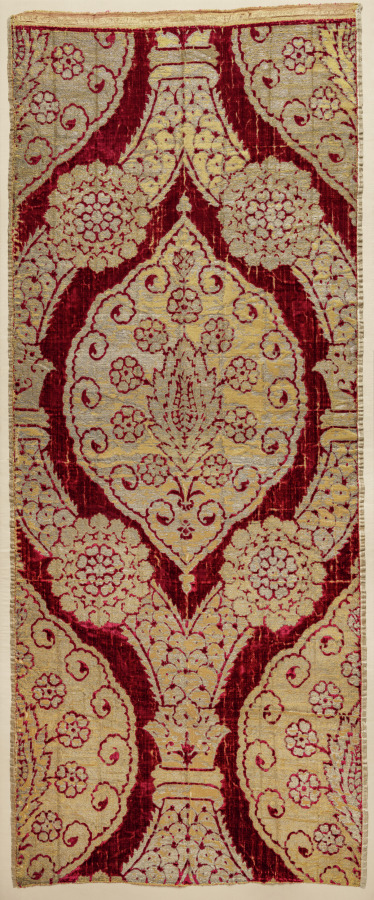
Brocaded velvet with medallions in ogival lattice
Cleveland Museum of Art
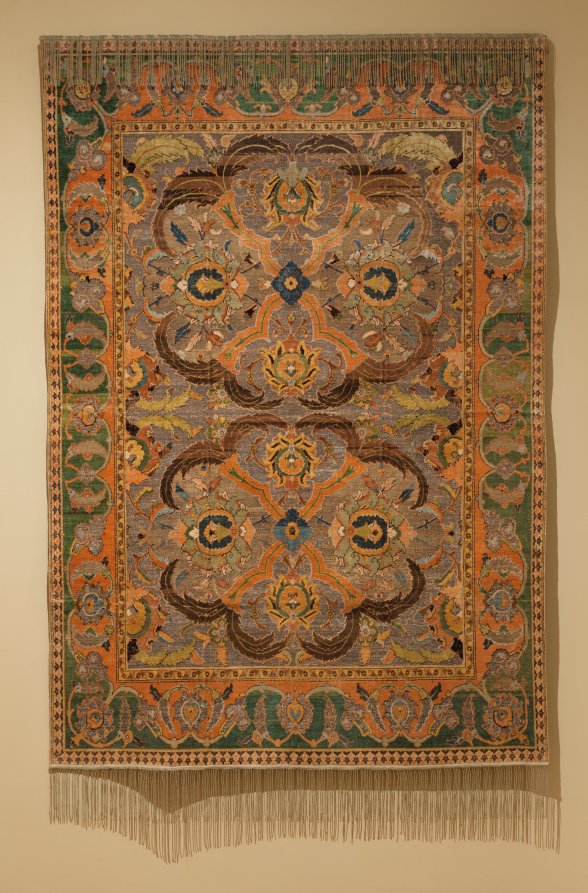
Royal Carpet with Silk and Metal Thread
Cleveland Museum of Art
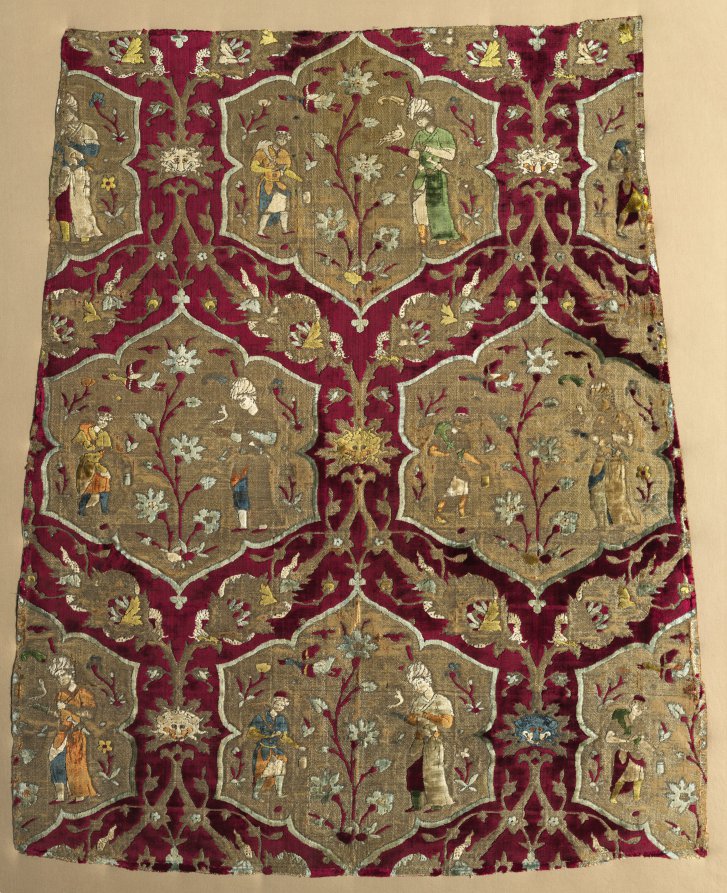
Fragment with falconer and attendant in animated lattice, from a robe
Cleveland Museum of Art
Velvet Fragment
Cleveland Museum of Art