Cleveland Museum of Art
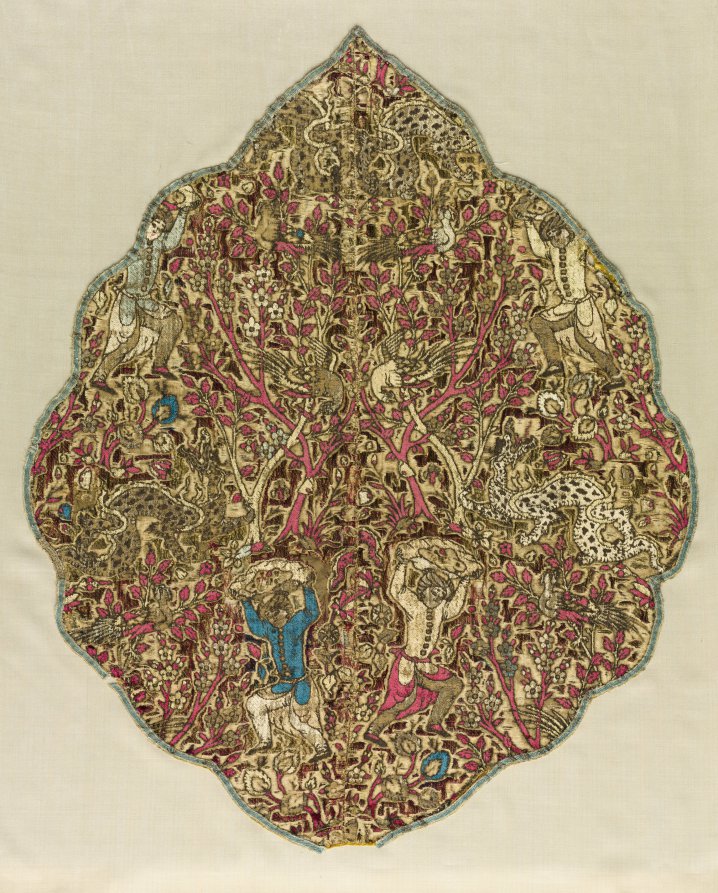
Tent panel of a dragon slayer
- Date
- 1550–99
- Medium
- velvet, cut, voided, brocaded, and pile-warp substitution: silk and gilt-metal strips
- Culture
- Iran, Yazd[?], reign of Shah Tahmasp, Safavid period (1501-1736)
- Department
- Textiles
- Institution
- Cleveland Museum of Art
Iranian luxury textiles of the 16th and 17th centuries are renowned for representing human figures and for creating the most colorful velvets ever woven. Here, a dragon slayer dressed in 16th-century court attire is poised to hurl a boulder at a snarling dragon in a landscape with blossoming fruit trees and perched fowl. Even with faded silk pile this velvet contains many nuanced tones. As many as 12 colors of velvet pile were achieved by weavers who skillfully replaced colored pile warp during weaving. This velvet medallion decorated the interior of an imperial tent, possibly donated by Shah Tahmasp to an Ottoman Turkish sultan. Captured after the Ottoman siege of Vienna in 1683, the medallion was claimed as war booty by the European commander-in-chief Prince Sanguszko of Poland by whose name this and other panels are known. Originally the ivory ground was covered with costly gilt-metal strips, which may have been removed for their monetary value.
The authoritative record is held by Cleveland Museum of Art. LinkedCulture surfaces this object and its connections; it does not alter institutional metadata.
Related across collections
Semantically similar works from Cleveland Museum of Art and other institutions.
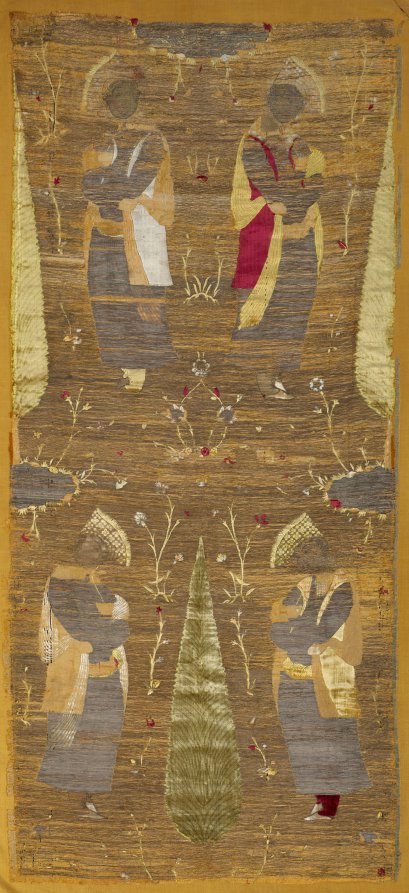
Velvet panel with four youths smelling flowers
Cleveland Museum of Art
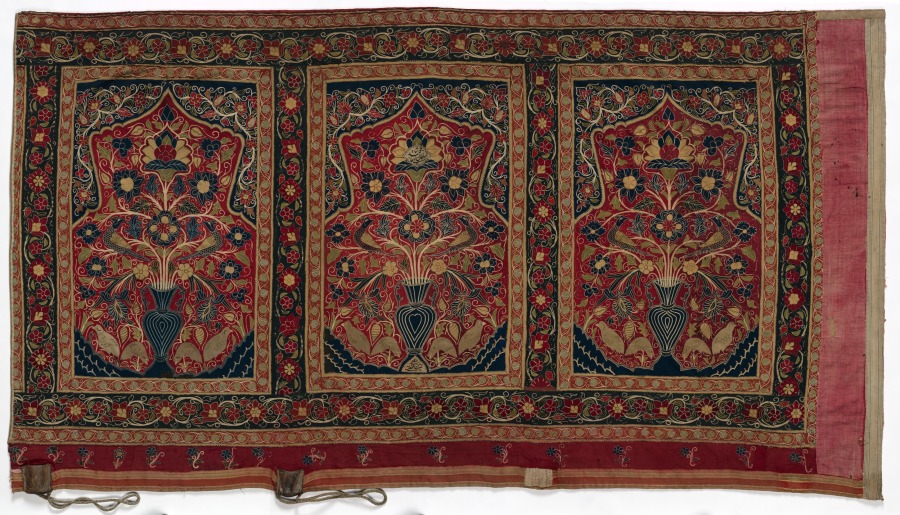
Royal Round Tent made for Muhammad Shah (wall panel with three design units)
Cleveland Museum of Art
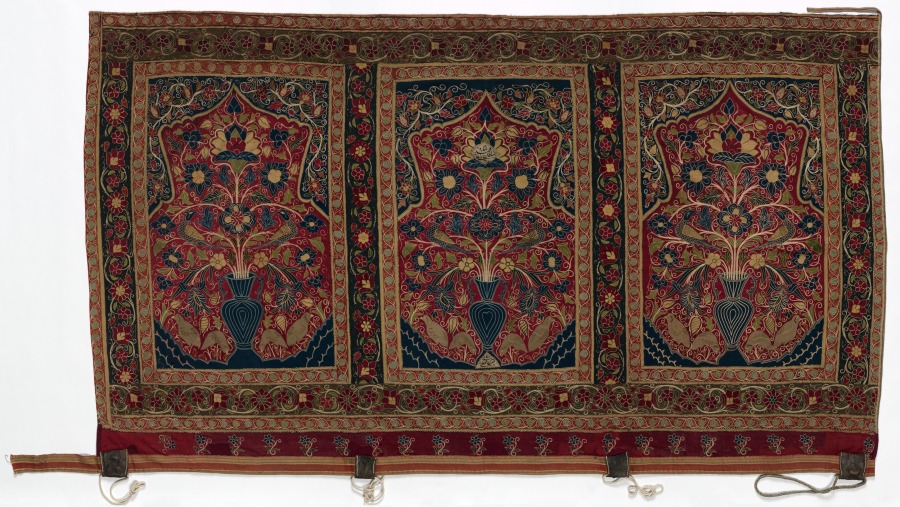
Royal Round Tent made for Muhammad Shah (wall panel with three design units)
Cleveland Museum of Art
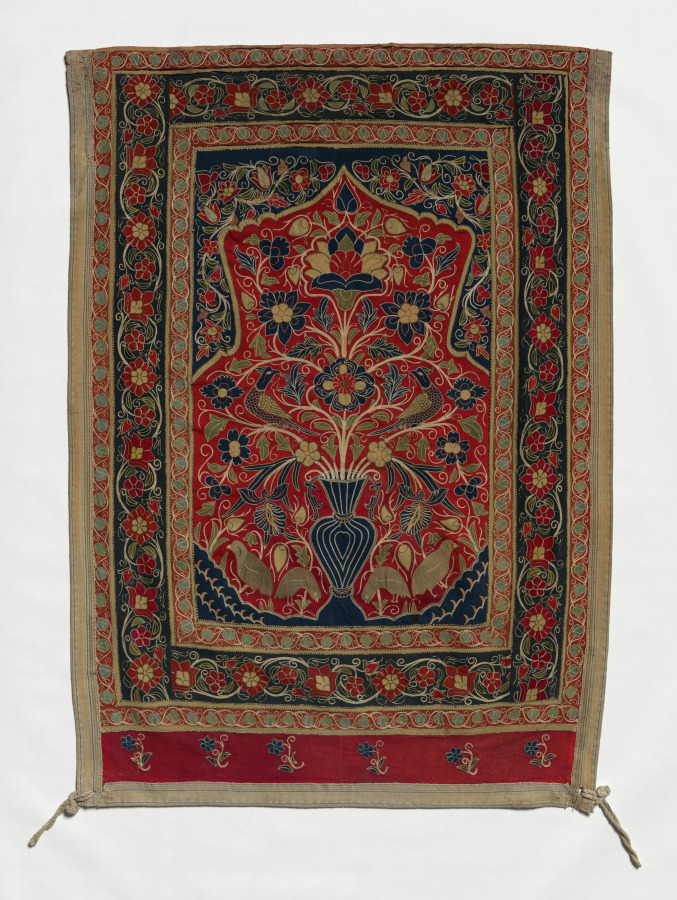
Royal Round Tent made for Muhammad Shah (wall panel with one design unit)
Cleveland Museum of Art
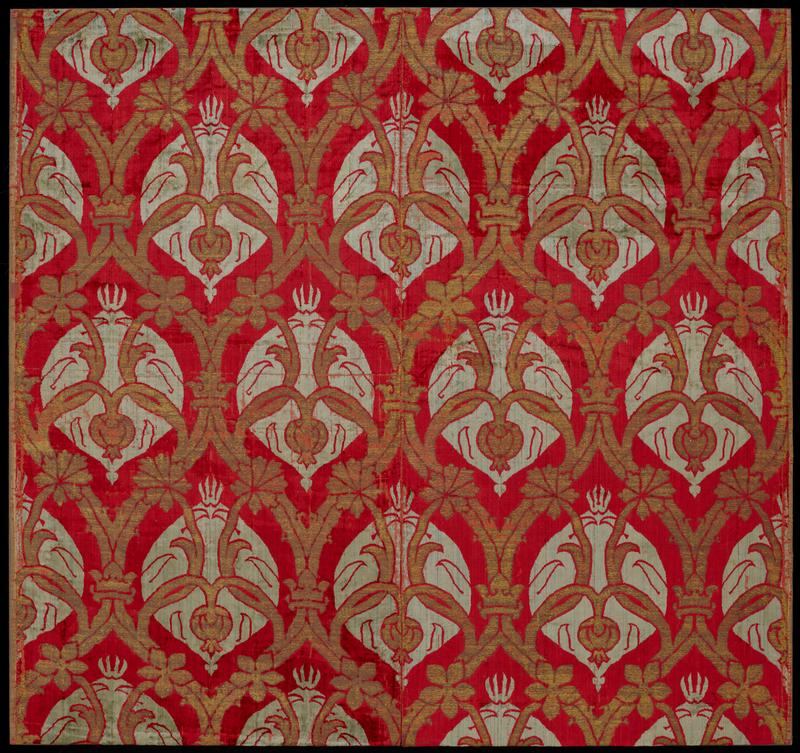
Pair of velvet panels
Minneapolis Institute of Art
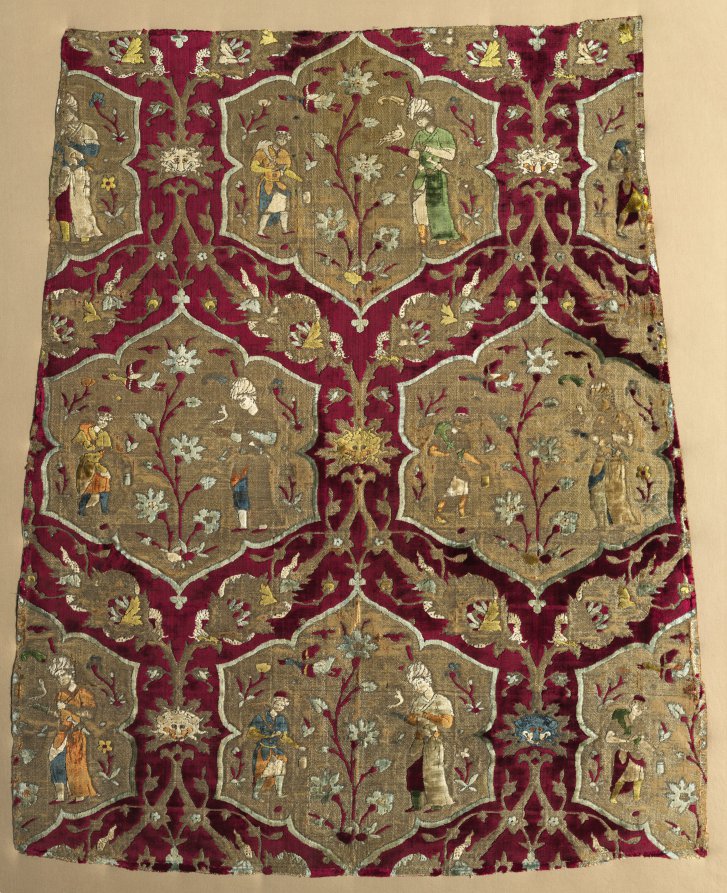
Fragment with falconer and attendant in animated lattice, from a robe
Cleveland Museum of Art
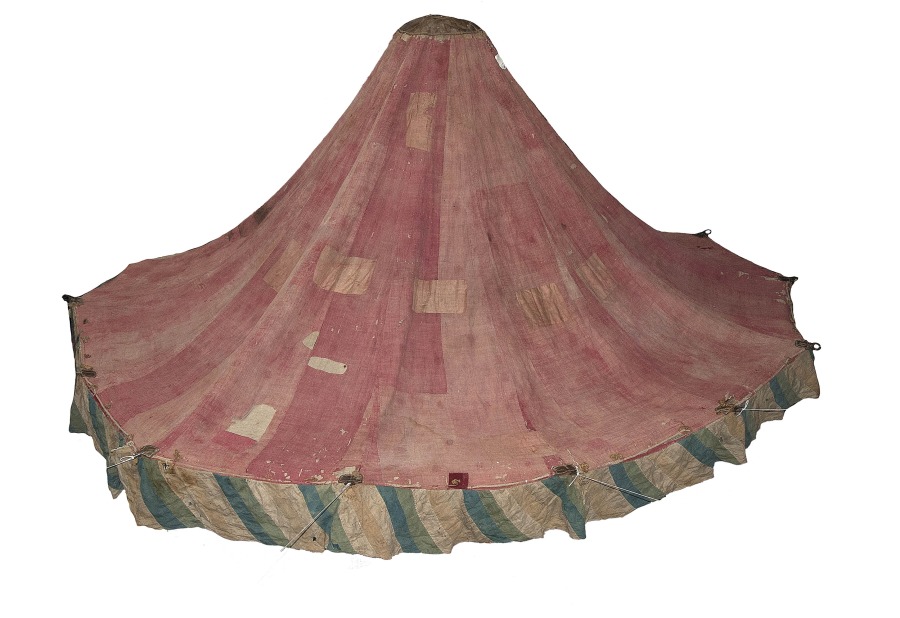
Royal Round Tent made for Muhammad Shah (Roof)
Cleveland Museum of Art
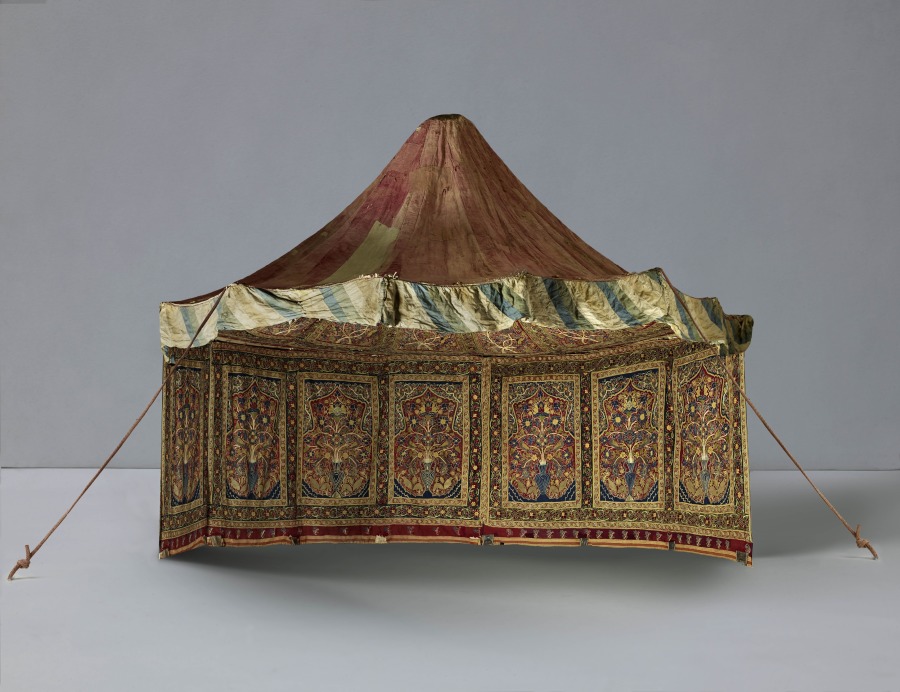
Royal Round Tent Made for Muhammad Shah
Cleveland Museum of Art

Panel
Minneapolis Institute of Art
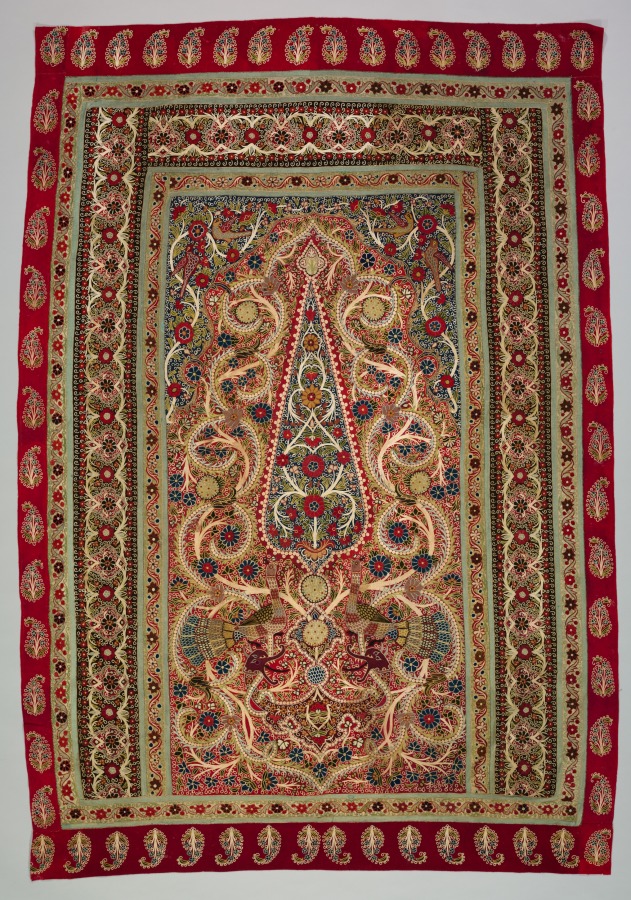
Tent Wall Panel(?)
Cleveland Museum of Art
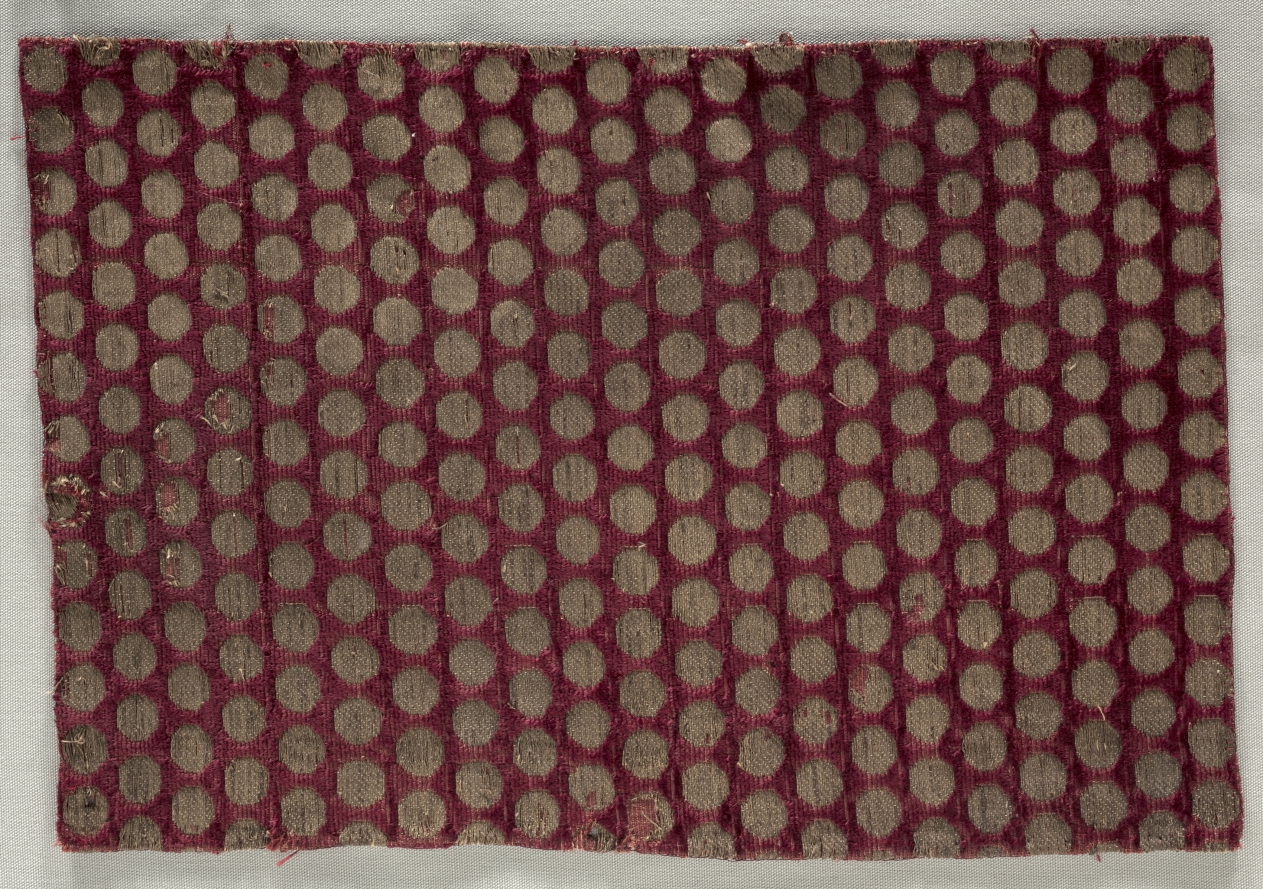
Velvet with gold discs
Cleveland Museum of Art
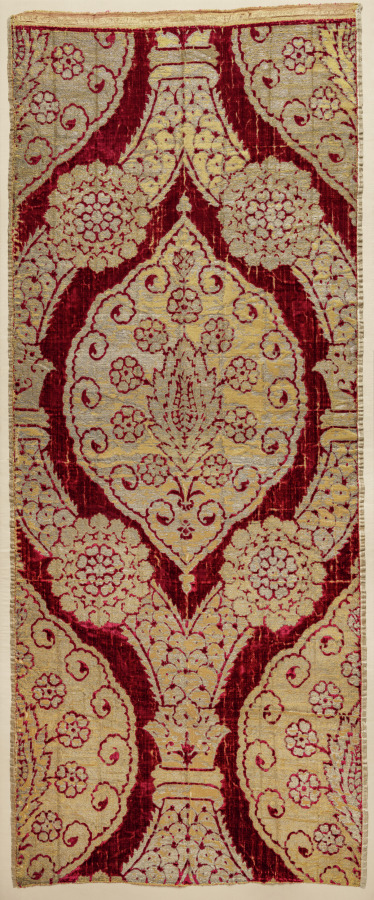
Brocaded velvet with medallions in ogival lattice
Cleveland Museum of Art