Cleveland Museum of Art
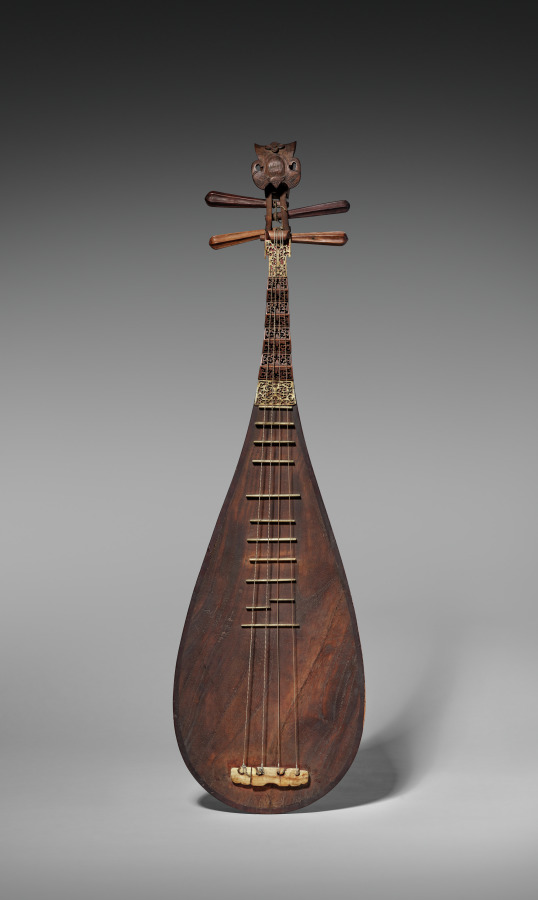
Pipa
- Date
- 1800s
- Medium
- Wood, ivory, bone, gut
- Culture
- China, Qing dynasty (1644-1911)
- Department
- Chinese Art
- Institution
- Cleveland Museum of Art
- Object ID
- 98644
From the Cleveland Museum of Art record
The term pipa , known since the 3rd century BC, describes the playing motion of the right hand: pi , “to play forward” (left), and pa , “to play backward” (right). A type of lute played with the fingers, it is used in opera and storytelling ensembles and has an impressive, virtuosic solo repertoire. Historic imagery, such as wall paintings, documents the spread of the pipa, along the Silk Road from western and central Asia to China. The bat finial here is a commonly used device on 19th-century Chinese lutes symbolizing good luck. The string holder is made of bone.
The authoritative record is held by Cleveland Museum of Art. LinkedCulture surfaces this object and its connections; it does not alter institutional metadata.
Get printable QR codesHide QR codes
Open QR codes for this object page and the museum record. They stay collapsed until needed.
Provenance & credit
As published by the source institution. Coverage varies — not every institution's open-data feed includes ownership history.
- Credit line
- The Charles G. King Jr. collection; Gift of Ralph King in memory of Charles G. King Jr.
- Provenance
- ?–1918: Ralph King [1855–1926], Cleveland, OH, given to the Cleveland Museum of Art | 1918–: The Cleveland Museum of Art, Cleveland, OH
Related across collections
Semantically similar works from Cleveland Museum of Art and other institutions.