Getty Museum
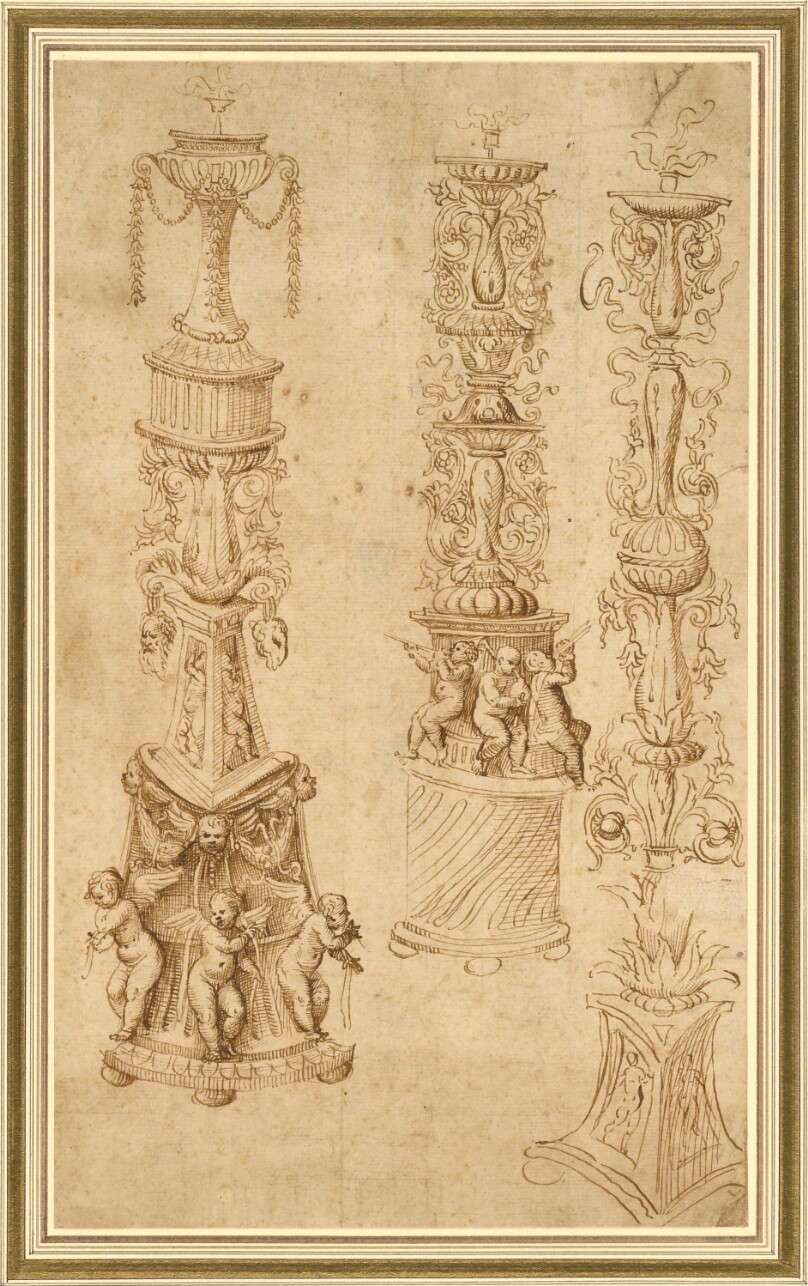
Studies of Three Candlesticks
Creator
Domenico CampagnolaItalian Artist · 1500–1564
All works by this person →A German artisan's son, child prodigy Domenico Campagnola probably learned from his adopted father, who instructed him in painting, drawing, engraving, and woodcutting. After his father's death around 1516, Campagnola was Venice's foremost printmaker. He innovated by cutting woodblocks himself rather than employing a professional woodcutter. His earliest prints and drawings show the influence of G
More on Getty ULAN- Date
- about 1530–1550
- Medium
- Pen and brown ink
- Culture
- Italian
- Department
- Drawings
- Institution
- Getty Museum
- Object ID
- 9ef714a9-4984-455d-b1e5-293571a81b55
From the Getty Museum record
Elaborate stone fixtures carved by the ancient Romans inspired Renaissance artists to create complex decorations called candelabra. These ornamental forms were usually composed of elements drawn from metalwork and architecture. On this sheet, Domenico Campagnola created three designs from stacked vases and pedestals, alternately upright and overturned. He then arranged combinations of putti, human figures, trailing foliage, and bucrania around each form. Artists designed such intricate candelabra not just as functional objects like candle or torch supports; they also appeared as decorative motifs. Such forms ornamented the margins of printed books and filled the edges of frescoes. Parallel hatched lines down the sides of each candelabrum in this drawing give each form a sense of depth. But the clarity of the lines also suggests that the drawings could have transferred for engravings. Pattern books containing prints organized by their ornamental themes became popular in the Renaissance, when craftsmen used these books to create ornaments in a variety of media.
The authoritative record is held by Getty Museum. LinkedCulture surfaces this object and its connections; it does not alter institutional metadata.
Get printable QR codesHide QR codes
Open QR codes for this object page and the museum record. They stay collapsed until needed.
Related across collections
Semantically similar works from Getty Museum and other institutions.