
Minneapolis Institute of Art
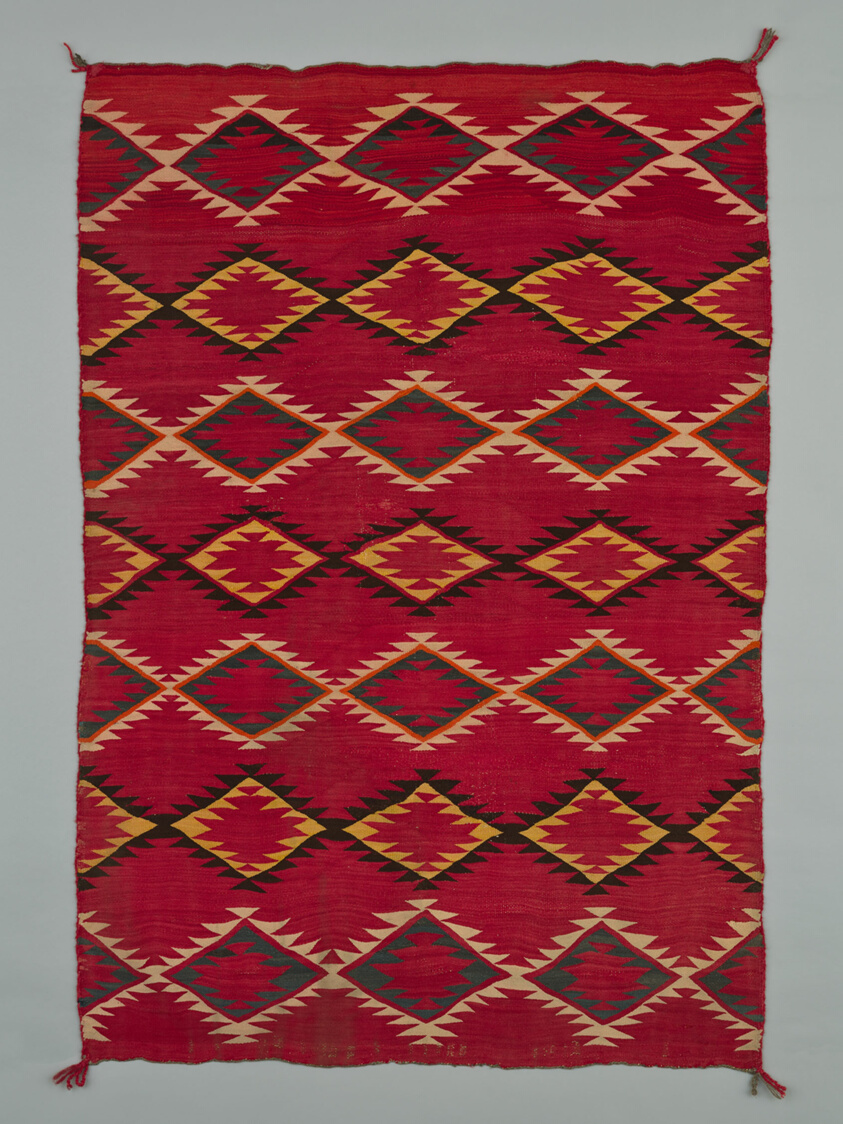
Poncho serape
Diné (Navajo) artist
- Date
- c. 1860
- Medium
- Wool, dye
- Culture
- Navajo
- Department
- Arts of the Americas
- Institution
- Minneapolis Institute of Art
This poncho serape, made by a Navajo woman around 1860, was worn as an outer garment. The wearer would put his or her head through the slit in the middle of the central diamond, and the white hourglass shapes would fall over the arms. The pattern is emblematic of hózhǫ́, a fundamental Navajo concept emphasizing the connection among beauty, symmetry, health, and harmony. Other aspects of this blanket can be traced to cultural and economic exchanges with Spanish and New Mexican communities. The poncho serape was a new garment type for Navajo people, as were new design elements such as the brilliant red woolen yarn from bayeta (baize, or red flannel cloth) imported from Spain, England, and the eastern United States. The cloth was cut and raveled by Navajo weavers, who then rewove the yarn into large textiles to amaze and dazzle the eye. Americas
The authoritative record is held by Minneapolis Institute of Art. LinkedCulture surfaces this object and its connections; it does not alter institutional metadata.
Related across collections
Semantically similar works from Minneapolis Institute of Art and other institutions.

Blanket
Minneapolis Institute of Art

Serape
Minneapolis Institute of Art

Serape
Minneapolis Institute of Art

Serape
Minneapolis Institute of Art

Chief's blanket (Hanoolchadi)
Minneapolis Institute of Art

Chief's blanket (Hanoolchadi)
Minneapolis Institute of Art
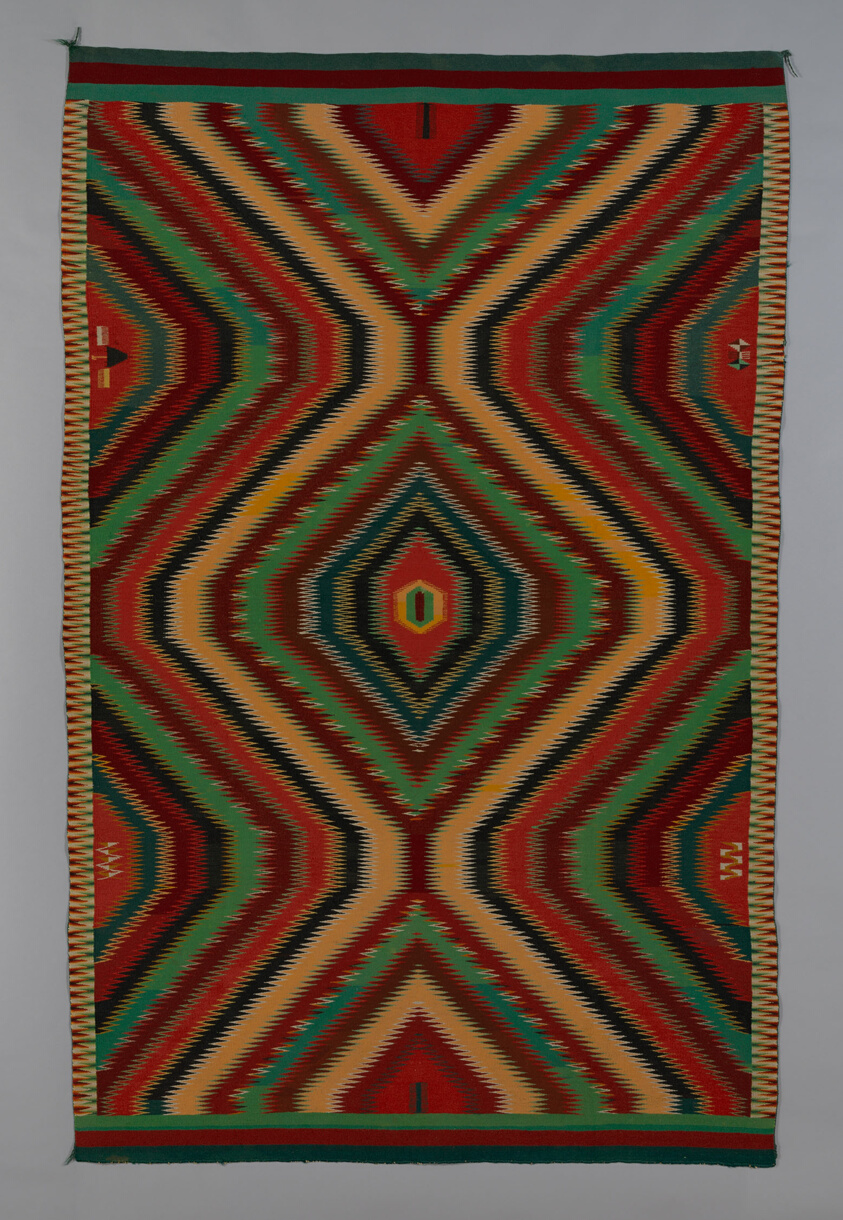
Blanket
Art Institute of Chicago
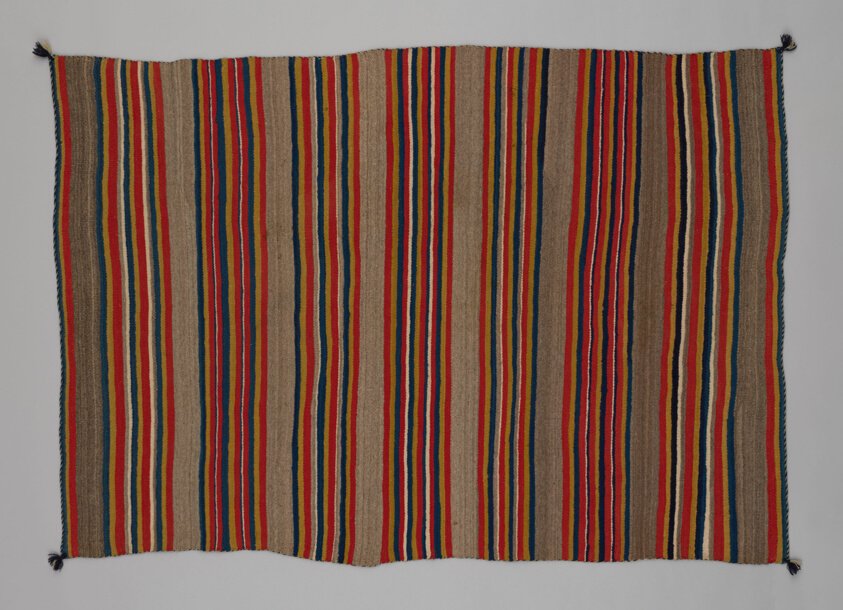
Wearing Blanket
Art Institute of Chicago

Saltillo Serape
Minneapolis Institute of Art
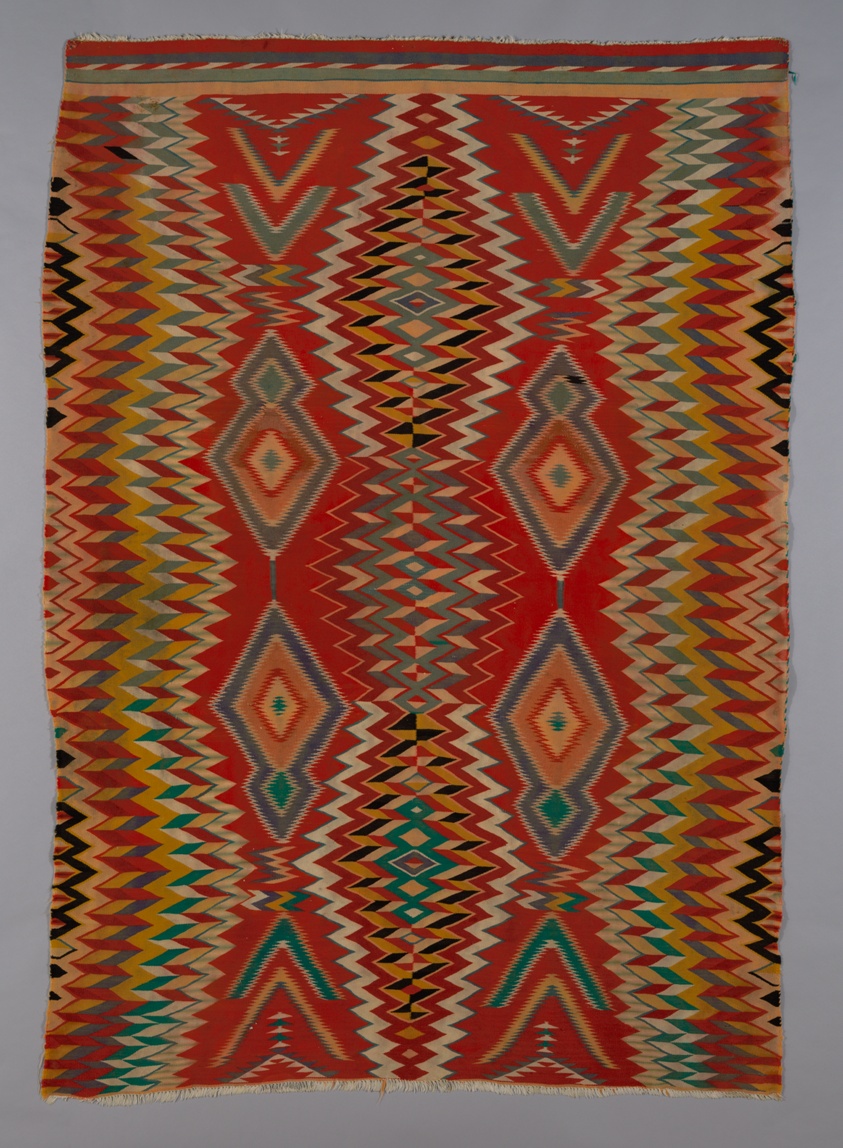
"Germantown Eye-Dazzler" Rug
Art Institute of Chicago
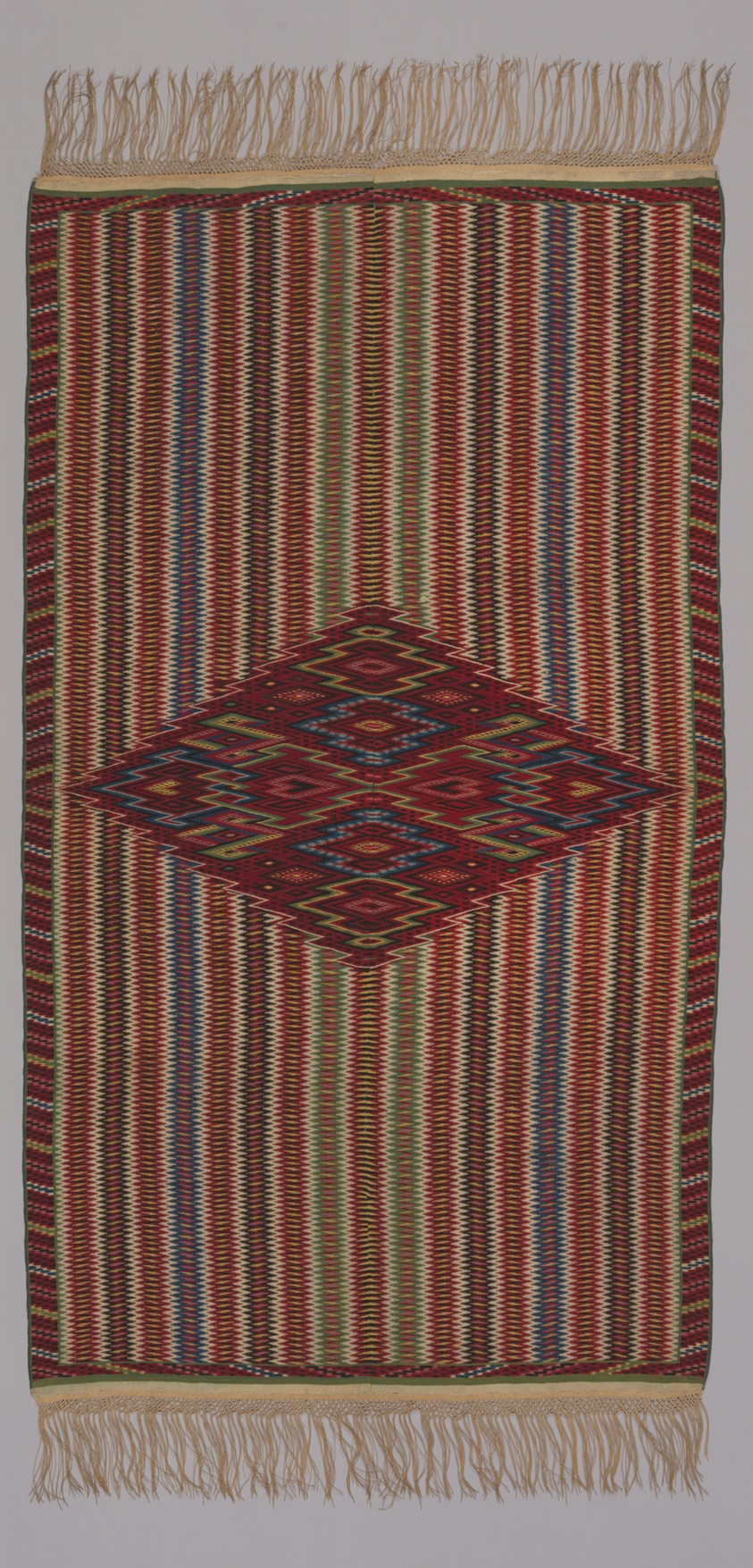
Man's Sarape (Wearing Blanket)
Art Institute of Chicago
Sarape with Serrated Diamond Pattern
Art Institute of Chicago