
Minneapolis Institute of Art
Buddhist priest's robe (kesa)
Japan
- Date
- 18th century
- Medium
- Silk, silver thread
- Department
- Asian Art
- Institution
- Minneapolis Institute of Art
Kesa are outer garments worn by Buddhist priests. Traditionally, they were pieced together from scraps of fabric rescued from old clothing donated by members of the community, an act symbolic of the historical Buddha’s rejection of wealth. Sewing the scraps together serves as an act of meditation as a monk concentrates his attention on the creation of the garment and reverence for the Buddha’s teachings. Kesa, however, can also be quite luxurious, as with the examples here. This is because they were sometimes made from rich fabrics donated by wealthy patrons. The majority of this kesa is made of a green silk brocade with birds and flowering trees in a variety of colored and metallic threads. Additional orange patches show peonies and butterflies depicted in gold and silver thread. Japan, Asia
The authoritative record is held by Minneapolis Institute of Art. LinkedCulture surfaces this object and its connections; it does not alter institutional metadata.
Related across collections
Semantically similar works from Minneapolis Institute of Art and other institutions.

Buddhist priest's robe (kesa)
Minneapolis Institute of Art
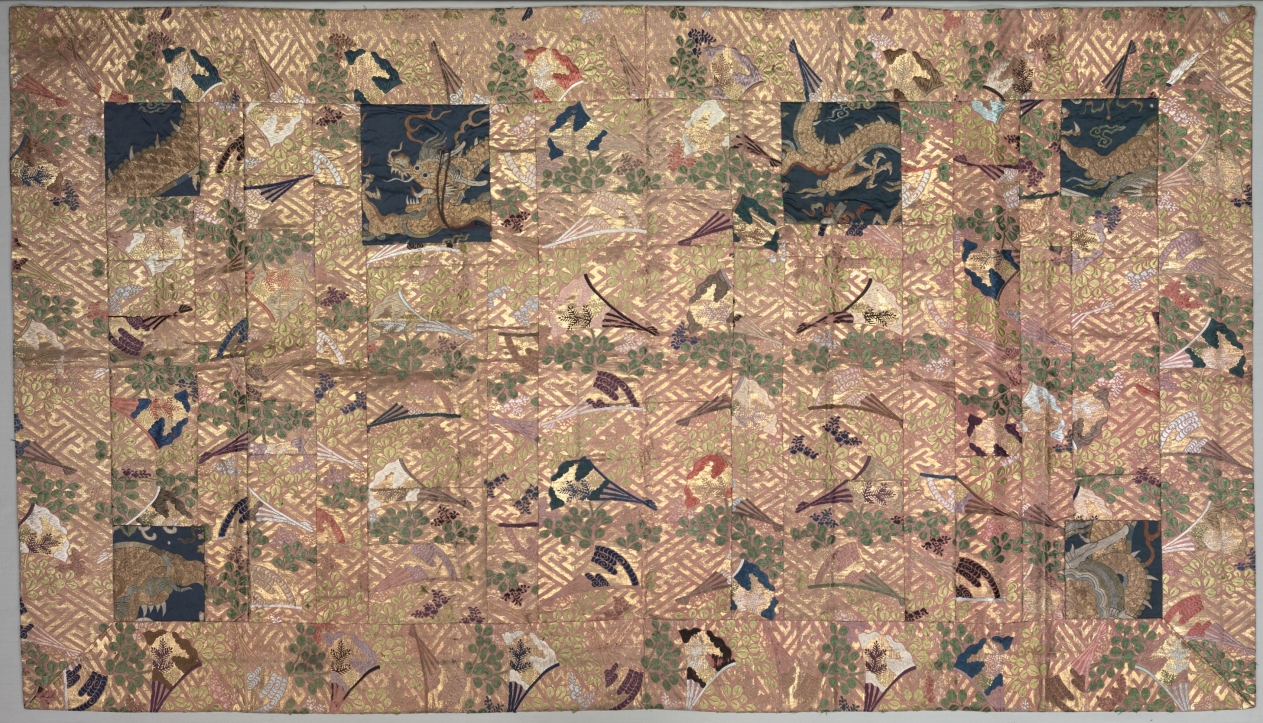
Buddhist Priest Robe (Kesa)
Cleveland Museum of Art
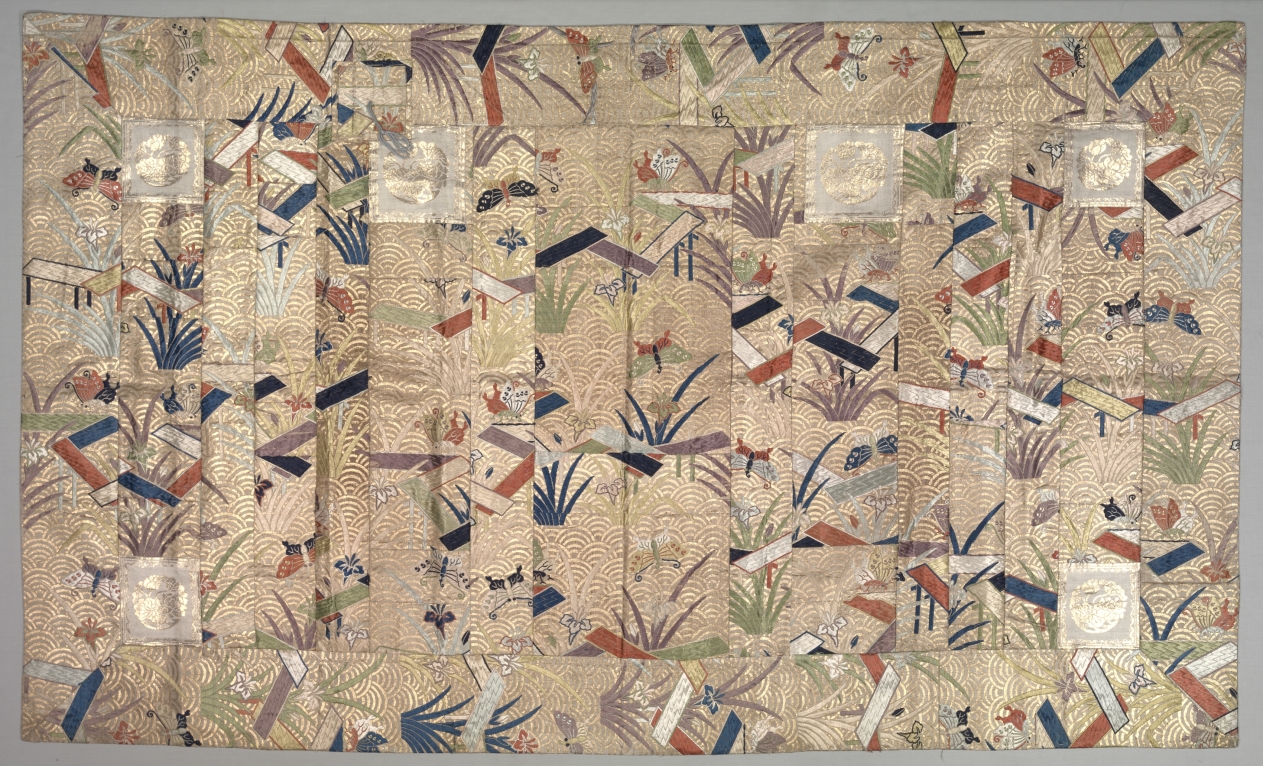
Buddhist Surplice (Kesa)
Cleveland Museum of Art
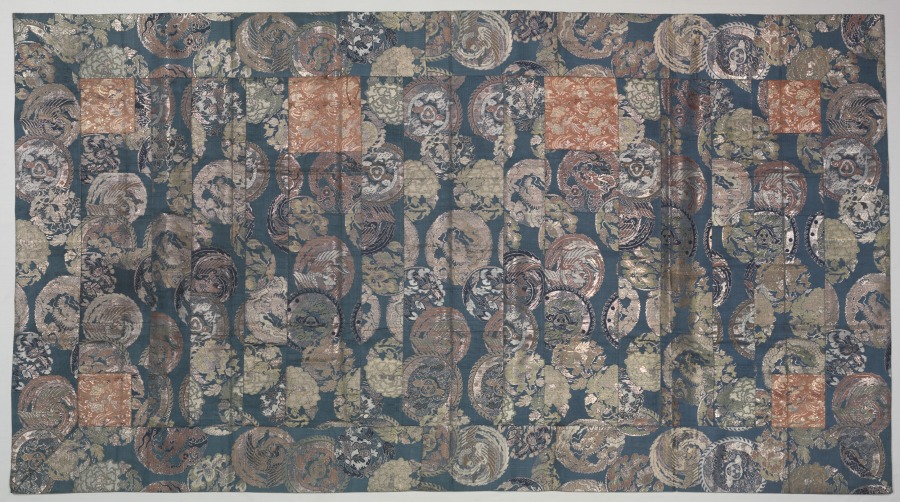
Buddhist Surplice (Kesa)
Cleveland Museum of Art

Buddhist priest’s robe with design of chrysanthemums and peonies
Minneapolis Institute of Art

Buddhist priest's robe (kesa)
Minneapolis Institute of Art

Buddhist priest's robe (kesa)
Minneapolis Institute of Art

Buddhist priest's robe (kesa)
Minneapolis Institute of Art
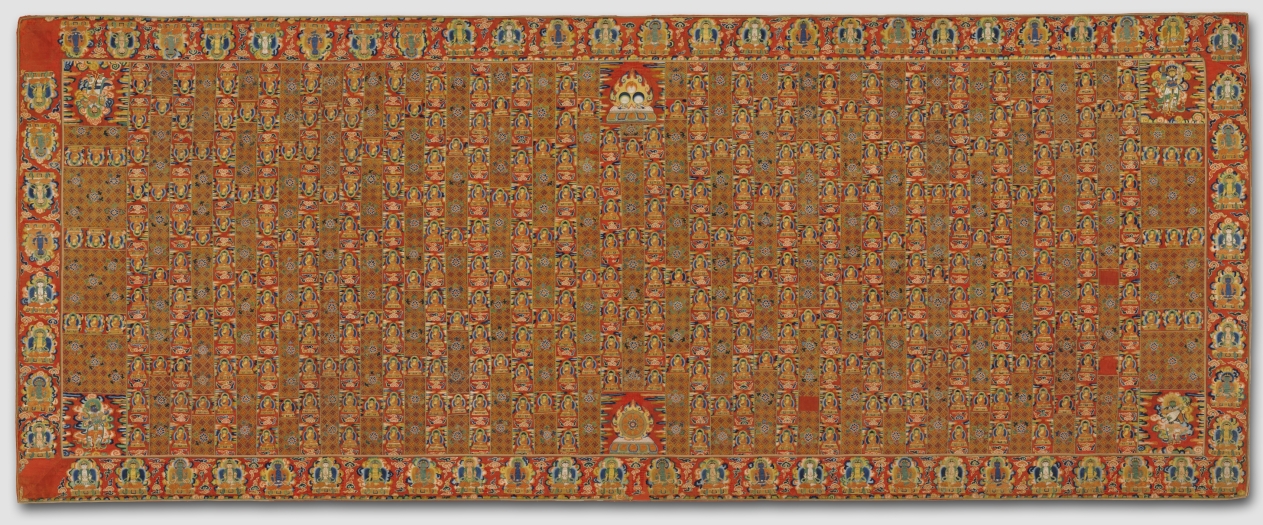
Buddhist Priest's Ceremonial Robe
Cleveland Museum of Art

Buddhist priest's robe (kashaya)
Minneapolis Institute of Art

Buddhist priest's robe (kashaya)
Minneapolis Institute of Art

Buddhist priest's robe (kashaya)
Minneapolis Institute of Art