
Minneapolis Institute of Art
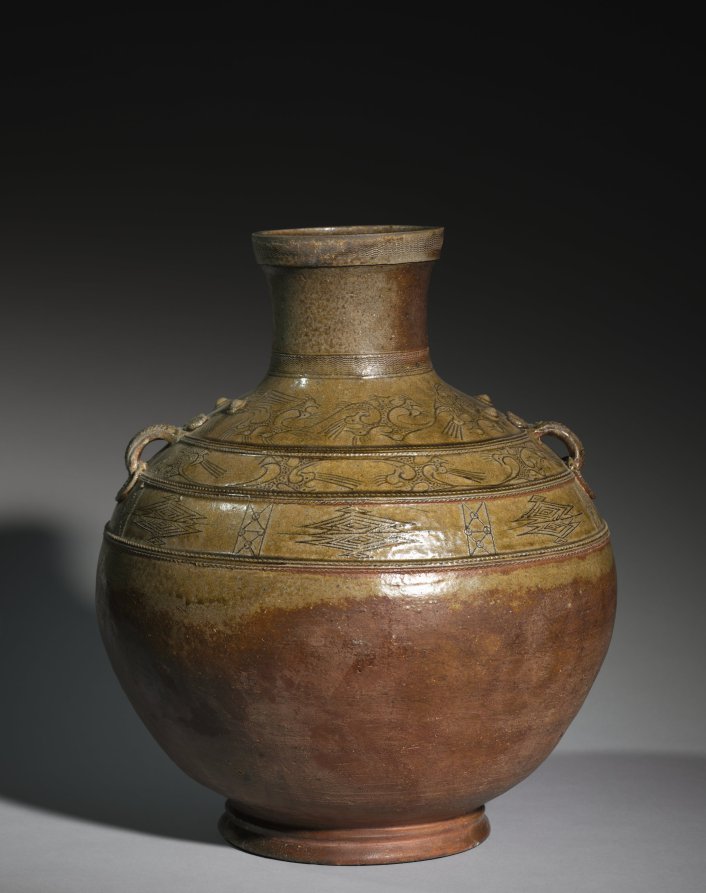
Jar
China
- Date
- 10th century BCE
- Medium
- Stoneware with incised and impressed decor under olive-brown glaze
- Department
- Asian Art
- Institution
- Minneapolis Institute of Art
Glazing techniques improved greatly between the eleventh and eighth centuries BCE. Large quantities of high-fired glazed stonewares similar to this jar have been excavated in the Yangzi River area at Dunxi in Anhui province and at Chuzhou in Zhejiang province. Surface decoration is achieved by incising, impressing with molds, and with wheel-made grooves. The olive-green glaze, derived from a two-percent iron oxide compound, can be considered a form of celadon. The distribution of high-fired glazed ware during Western Zhou was far-reaching with examples found in Hebei, Shandong, Henan, Shanxi, Anhui, Jiangxi, and Zhejiang provinces in north central and south China. Asia
The authoritative record is held by Minneapolis Institute of Art. LinkedCulture surfaces this object and its connections; it does not alter institutional metadata.
Related across collections
Semantically similar works from Minneapolis Institute of Art and other institutions.

Covered jar
Minneapolis Institute of Art

Storage Jar (lei)
Minneapolis Institute of Art
Jar (Hu)
Cleveland Museum of Art

Storage Jar
Minneapolis Institute of Art

Jar and Cover
Minneapolis Institute of Art

Bottle
Minneapolis Institute of Art

Guan Storage Jar
Minneapolis Institute of Art

Jar
Minneapolis Institute of Art

Jar with two animal-mask handles
Minneapolis Institute of Art

Storage Jar and Cover
Minneapolis Institute of Art

Celadon Bowl
Minneapolis Institute of Art

Jar (guan)
Minneapolis Institute of Art