
Minneapolis Institute of Art
Narumi: Famous Arimatsu Tie-dyed Fabric
Utagawa Hiroshige; Publisher: Takenouchi Magohachi
- Date
- c. 1832–33
- Medium
- Woodblock print (nishiki-e), ink and color on paper
- Department
- Asian Art
- Institution
- Minneapolis Institute of Art
The village of Arimatsu was founded in 1608 along the Tōkaidō, Japan’s most important road, which connected Edo (today’s Tokyo) with Kyoto. The area east of what today is the city of Nagoya was uncultivated, and robberies were frequent. Clay in the soil didn’t allow for rice farming, but indigo could be planted. After a long period of military conflicts ended, people became more affluent and were interested in nicer clothes. Before long, tie-dyed textiles (shibori) became Arimatsu’s main enterprise; by the 1640s, “Arimatsu shibori” was known all over the country as a special product purchased by many travelers. Asia
The authoritative record is held by Minneapolis Institute of Art. LinkedCulture surfaces this object and its connections; it does not alter institutional metadata.
Related across collections
Semantically similar works from Minneapolis Institute of Art and other institutions.
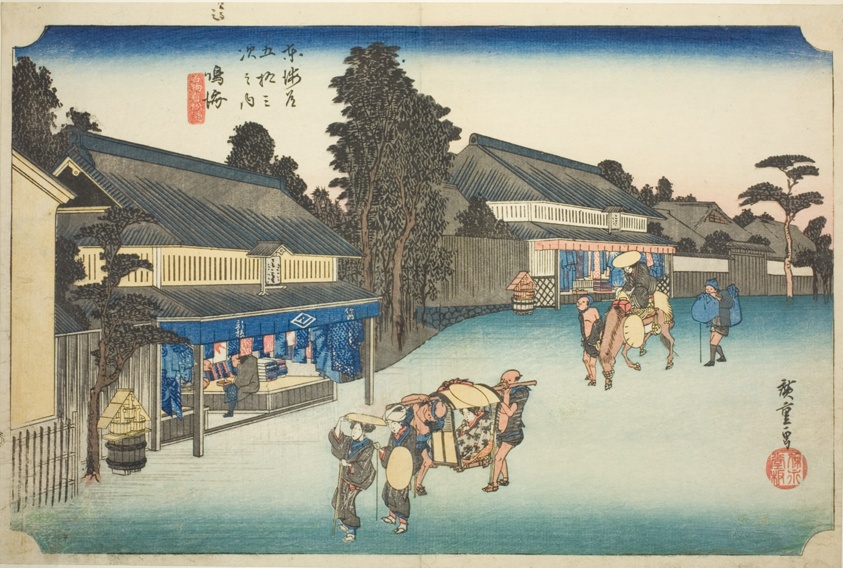
Narumi: Famous Tie-dyed Fabrics of Arimatsu (Narumi, meibutsu Arimatsu shibori), from the series "Fifty-three Stations of the Tokaido (Tokaido gojusan tsugi no uchi)," also known as the Hoeido Tokaido
Art Institute of Chicago
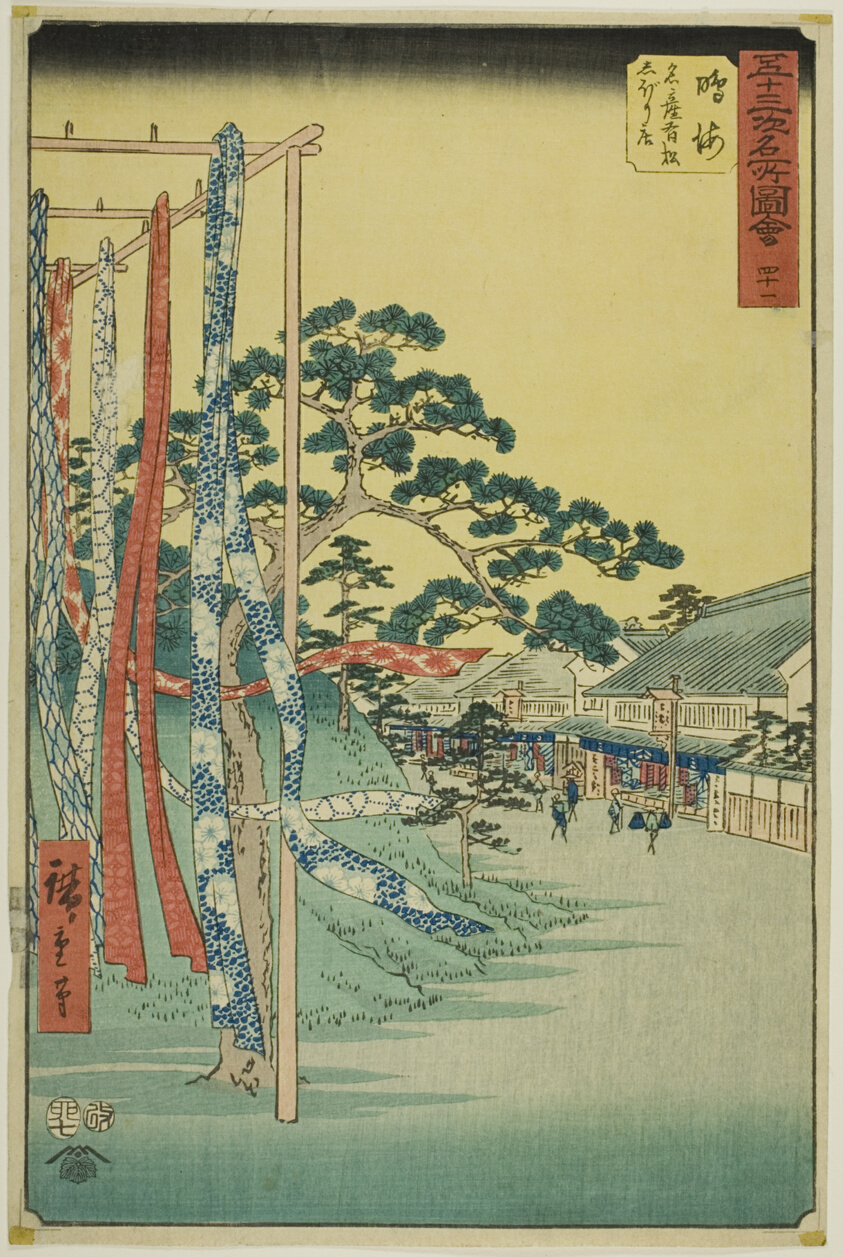
Narumi: Shop wth Famous Arimatsu Tie-dyed Cloth (Narumi, meisan Arimatsu shibori mise), from the series "Famous Sights of Fifty-three Stations (Gojusab tsugi meisho zue)"
Art Institute of Chicago
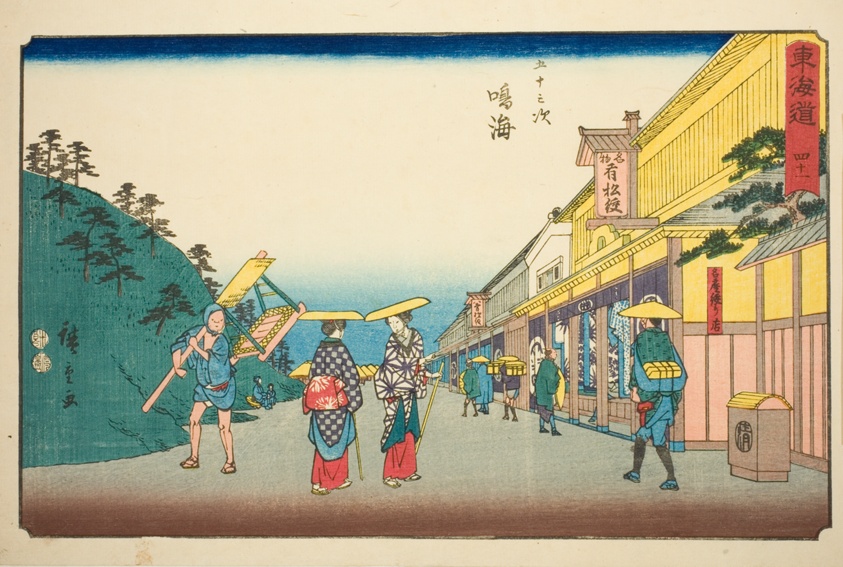
Narumi: Shops Selling the Famous Tie-dyed Fabric (Narumi, meisan shibori mise)—No. 41, from the series "Fifty-three Stations of the Tokaido (Tokaido gojusan tsugi)," also known as the Reisho Tokaido
Art Institute of Chicago

Narumi--Famous Dyed Cloth at Arimatsu
Minneapolis Institute of Art
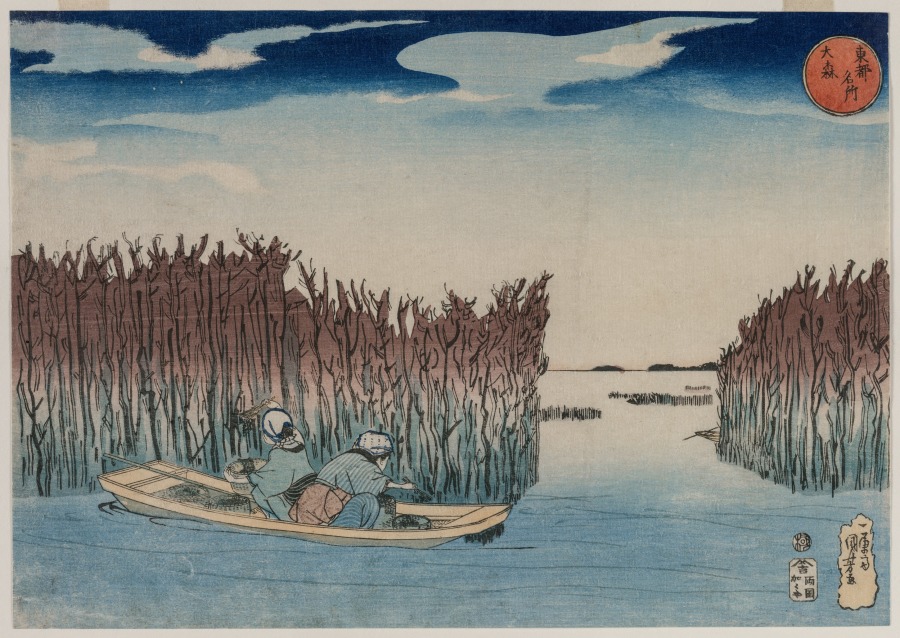
Ōmori, from the series Famous Places in the Eastern Capital
Cleveland Museum of Art
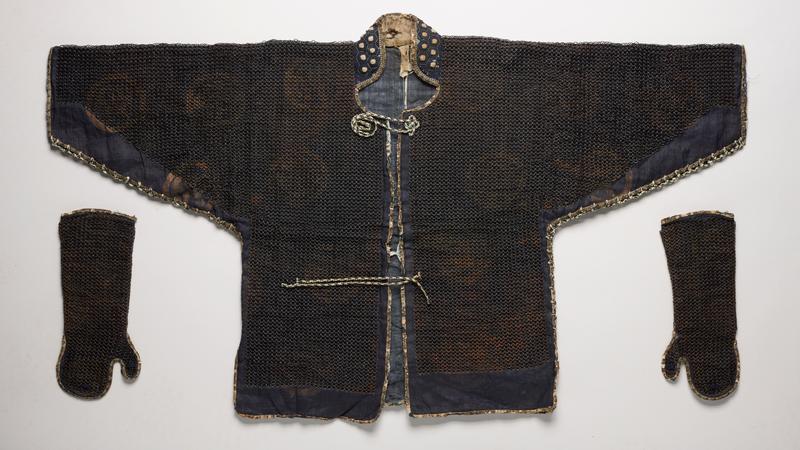
Chain mail gloves
Minneapolis Institute of Art
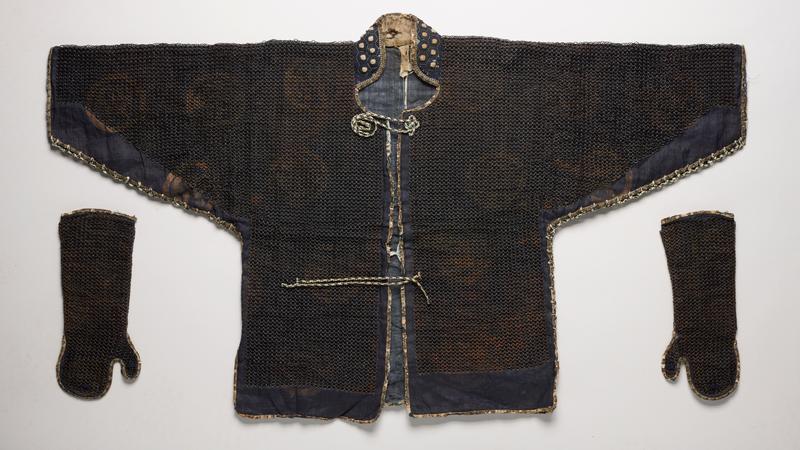
Chain mail coat
Minneapolis Institute of Art

Mariko
Minneapolis Institute of Art

Waterwheel at Onden
Minneapolis Institute of Art
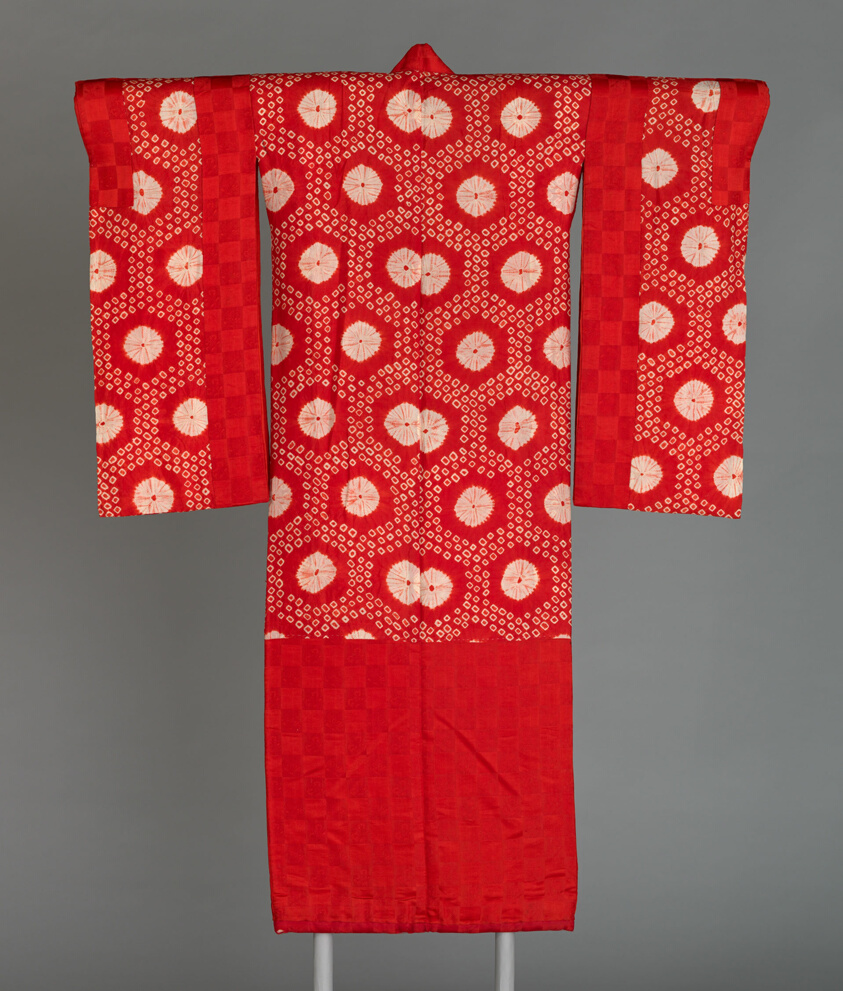
Dônuki
Art Institute of Chicago

Kon‘yachō Dyers’ Quarter in Kanda
Minneapolis Institute of Art

Narumi, meibutsu Arimatsu shibori
Minneapolis Institute of Art