Art Institute of Chicago
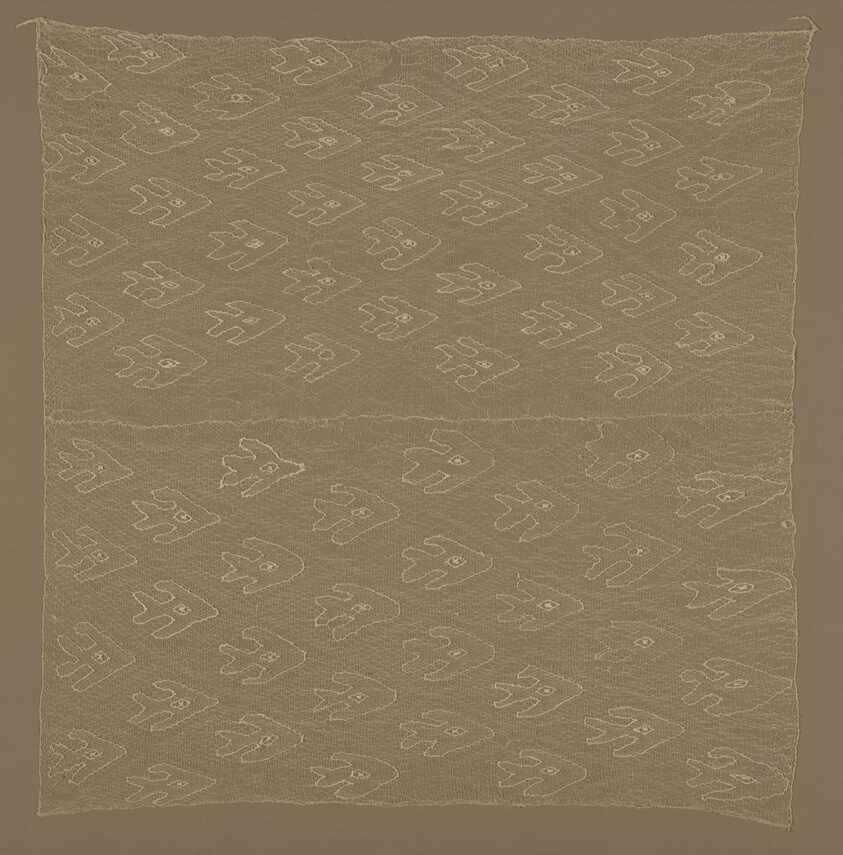
Headcloth
ChancayLinkedCulture matchlcp-02d86ff18499
- Date
- 1000-1476
- Medium
- Cotton, plain gauze weave; embroidered in knotted couching
- Culture
- Peru
- Department
- Textiles
- Institution
- Art Institute of Chicago
- Object ID
- 102176
From the Art Institute of Chicago record
In the ancient Andes, weavers of different societies continually developed distinct techniques to manipulate their looms. Chancay weavers perfected gauze weaving—in which they crossed pairs of vertical warp threads to hold the horizontal wefts in place—in order to make sheer fabrics like this one. They used the natural colors of coastal Andean cotton—now called Pima cotton—spun into very fine threads. Chancay peoples seem to have worn such textiles on their heads, perhaps to shield them from blowing sands in the desert. The garment’s fish designs reflect this maritime locale.
The authoritative record is held by Art Institute of Chicago. LinkedCulture surfaces this object and its connections; it does not alter institutional metadata.
Get printable QR codesHide QR codes
Open QR codes for this object page and the museum record. They stay collapsed until needed.
Provenance & credit
As published by the source institution. Coverage varies — not every institution's open-data feed includes ownership history.
- Credit line
- Gift of Mrs. Edward H. Merrin
- Provenance
- Vivian Merrin, New York, by Jan. 29, 1983 [letter from Vivian Merrin, Jan. 29, 1983; copy in curatorial object file; on loan to the Art Institute of Chicago from June 1, 1983, loan number 393.1983]; given to the Art Institute of Chicago, 1984.
Linked open data
Authority identifiers that link this record into the wider web of cultural data — stable references you can follow to the source.
- Object type
- AAT300209261
Part of a LinkedCulture topic
 Ancient Peruvian Textiles
All objects are textile fragments, garments, or accessories from various pre-Columbian and Inca period cultures of Peru, showcasing diverse weaving techniques and materials including cotton and camelid fibers.
87 objects from 3 institutions
Related across collections
Semantically similar works from Art Institute of Chicago and other institutions.