Art Institute of Chicago
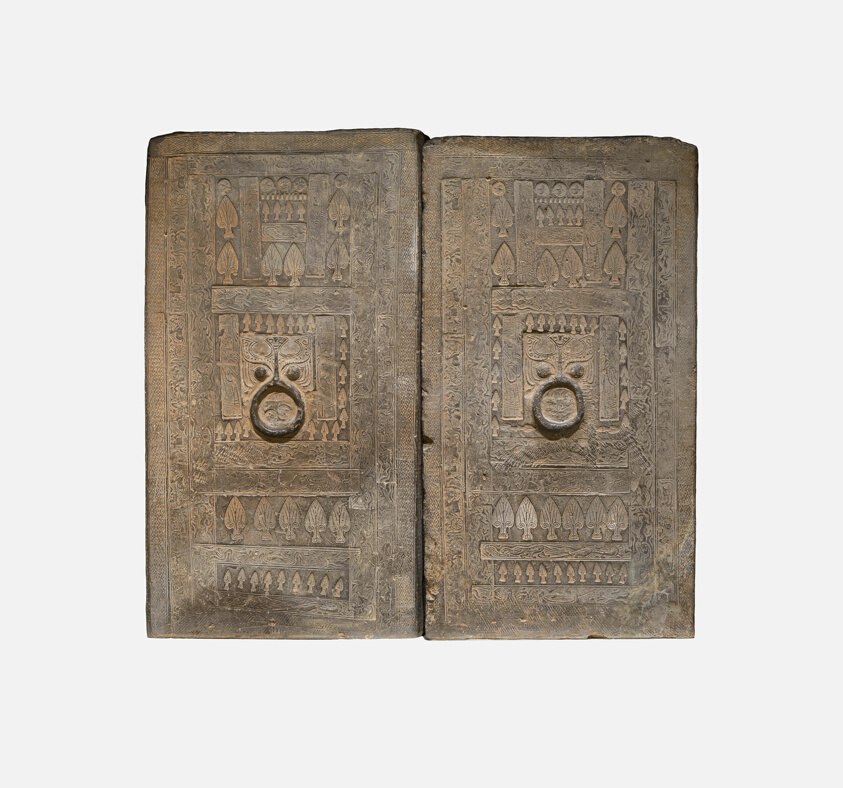
Pair of Tomb Chamber Doors
China; probably from Zhengzhou, Henan provinceLinkedCulture matchlcp-782e0494f209
- Date
- Western Han dynasty (206 B.C.–A.D. 9), 1st century B.C.
- Medium
- Gray earthenware with impressed and carved decoration
- Culture
- China
- Department
- Arts of Asia
- Institution
- Art Institute of Chicago
- Object ID
- 12786
From the Art Institute of Chicago record
In northern China during the Han dynasty, hollow clay bricks were used to construct the small, rectangular chambers of underground tombs. The doors, pillars, and lintel assembled here reconstruct the entrance to such a chamber. Before firing, the bricks were stamped with vigorous images from daily life and from mythology. This combination of subject matters reflects a dualistic view of the human soul: separating at death, one part of the soul was thought to remain in the earthly tomb, while the other ascended to a paradise—the realm of ancestral spirits and of the special beings who have achieved immortality. Guardian images, both realistic and symbolic, are centered on each door. Two long-robed men (identified by inscription as tingzhang, village officials) flank another protective symbol, a ring-snouted monster mask. Surrounding this central square are border strips depicting scenes of entertainment and of animals, hunters, and chariots charging across mountains. Winged xian—immortal, elf-like figures—are also depicted in a mountainous setting. Other emblematic designs that appear repeatedly on these doors include a spade-shaped evergreen tree, designating family continuity and longevity, and a disk enclosing a bird in flight, which can be identified with the sun. On the lintel above, soldiers bearing shields flank a protective monster mask. On either side of this mask, jade disks tied by cords may symbolize prosperity or other auspicious wishes for the soul. Other auspicious symbols include the dragon and phoenix (also known as the Red Bird), identified in Han cosmological texts as the animals of the east and south, respectively.
The authoritative record is held by Art Institute of Chicago. LinkedCulture surfaces this object and its connections; it does not alter institutional metadata.
Get printable QR codesHide QR codes
Open QR codes for this object page and the museum record. They stay collapsed until needed.
Provenance & credit
As published by the source institution. Coverage varies — not every institution's open-data feed includes ownership history.
- Credit line
- Lucy Maud Buckingham Collection
Linked open data
Authority identifiers that link this record into the wider web of cultural data — stable references you can follow to the source.
- Object type
- AAT300301253
Related across collections
Semantically similar works from Art Institute of Chicago and other institutions.