Cleveland Museum of Art
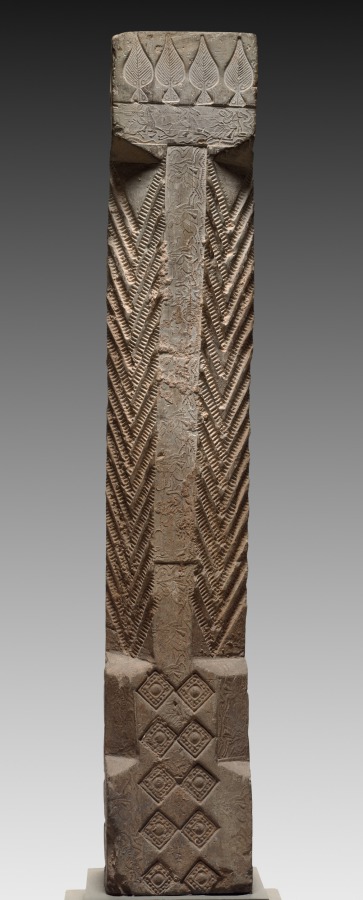
Hollow Tile: Column from Tomb-Chamber Doorway
- Date
- 100–200 CE
- Medium
- earthenware, die-stamped relief
- Culture
- China, Han dynasty (202 BCE–220 CE)
- Department
- Chinese Art
- Institution
- Cleveland Museum of Art
- Object ID
- 95145
From the Cleveland Museum of Art record
Striding tigers (top), racing horsemen (right column), and reverent officials (left column) are stamped into the surface of this underground portal to a tomb. The doorway preserves in stone the post-and-lintel structure, a basic element of Chinese wooden architecture. By the first century CE, a revolution in Chinese tomb construction and furnishing had taken place. Tombs lined with decorated bricks and tiles replace the earlier tombs constructed with only rammed-earth walls. Ceramic surrogates or models of stoves, houses, servants, and pets filled these more durable chambers, symbolically extending the creature comforts of this world into the world after death.
The authoritative record is held by Cleveland Museum of Art. LinkedCulture surfaces this object and its connections; it does not alter institutional metadata.
Get printable QR codesHide QR codes
Open QR codes for this object page and the museum record. They stay collapsed until needed.
Provenance & credit
As published by the source institution. Coverage varies — not every institution's open-data feed includes ownership history.
- Credit line
- Gift of Mr. and Mrs. Ralph King
- Provenance
- ?–1915: Ralph King [1855–1926] and Fanny Tewksbury King [1867–1949], Cleveland, OH, given to the Cleveland Museum of Art | 1915–: The Cleveland Museum of Art, Cleveland, OH
Related across collections
Semantically similar works from Cleveland Museum of Art and other institutions.