Art Institute of Chicago
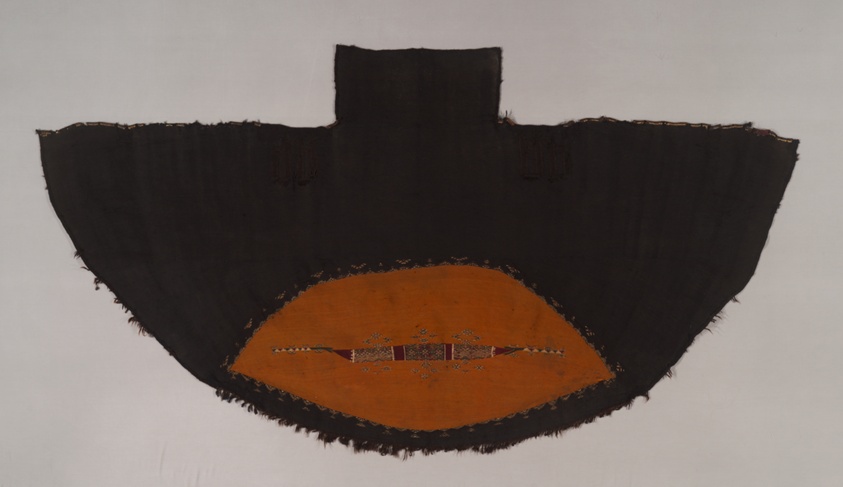
Akhnif (Man's Cape)
Ait Ouaouzguite Confederation
- Date
- Mid–19th century
- Medium
- Wool and cotton: wedge and slit tapestry weave; embroidered with wool and cotton in heavy chain, herring bone, interlacing, and stem stitches; twined and wrapped main warp cut fringe; added wrapped cut fringe and leather binding stitched with hemp
- Culture
- Morocco
- Department
- Textiles
- Institution
- Art Institute of Chicago
This akhnif , or cape, was handwoven by Amazigh women of the Aït Ouaouzguite region in southern Morocco, on a wide vertical loom and woven entirely to shape, beginning upside-down from the hood. Creating the large motif on the back side required precise control of vertical (warp) tension and complex horizontal (weft) turns in the weave to build a curve, techniques reserved for the most skilled weavers. Male artisans later added the leather binding and other finishes. The prominent motif—known locally as irghis n-ukhnif (“the red of the akhnif” or “eye”)—served both as the garment’s visual focus and as a protective sign centered over the wearer’s back. Akhnif cloaks were worn by both Muslim and Jewish men. —Hamza Alioua (Moroccan), independent scholar
The authoritative record is held by Art Institute of Chicago. LinkedCulture surfaces this object and its connections; it does not alter institutional metadata.
Linked open data
Authority identifiers that link this record into the wider web of cultural data — stable references you can follow to the source.
- Object type
- AAT300209261
Related across collections
Semantically similar works from Art Institute of Chicago and other institutions.

Cape
Minneapolis Institute of Art

Cape (Tabrdouhte)
Minneapolis Institute of Art

Cape (Handira)
Minneapolis Institute of Art

Cape (Handira)
Minneapolis Institute of Art
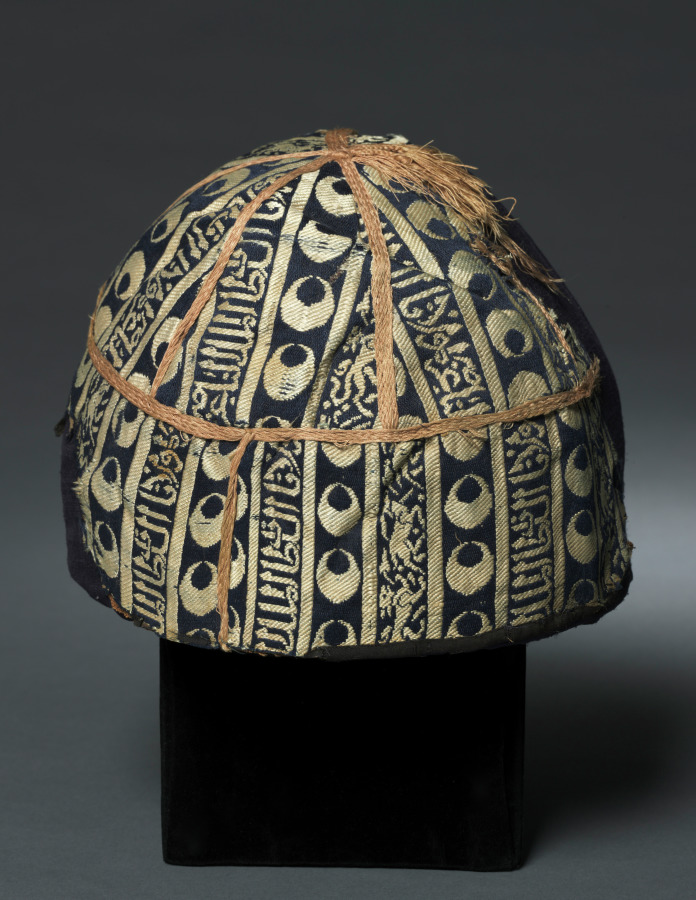
Cap with Striped Inscribed Silk
Cleveland Museum of Art
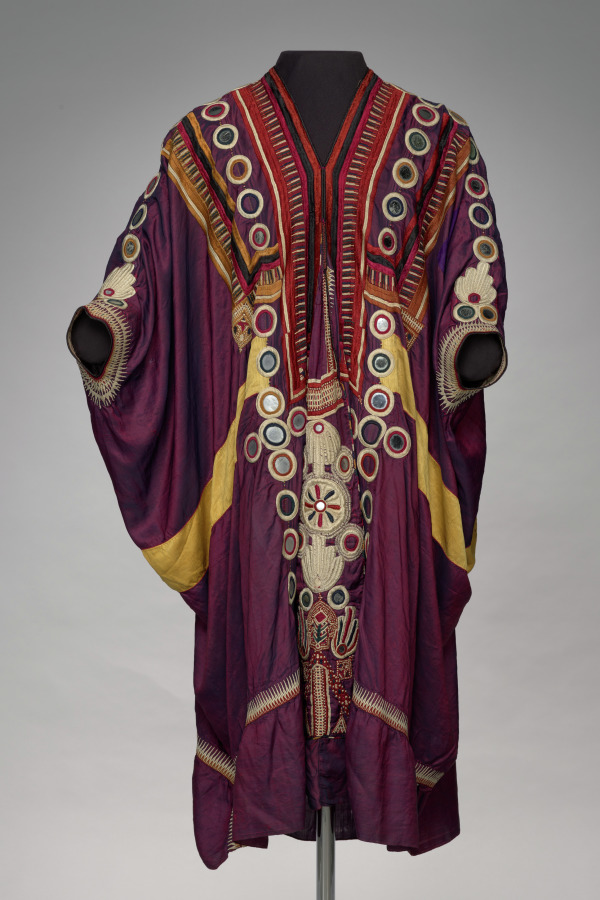
Garment
Cleveland Museum of Art
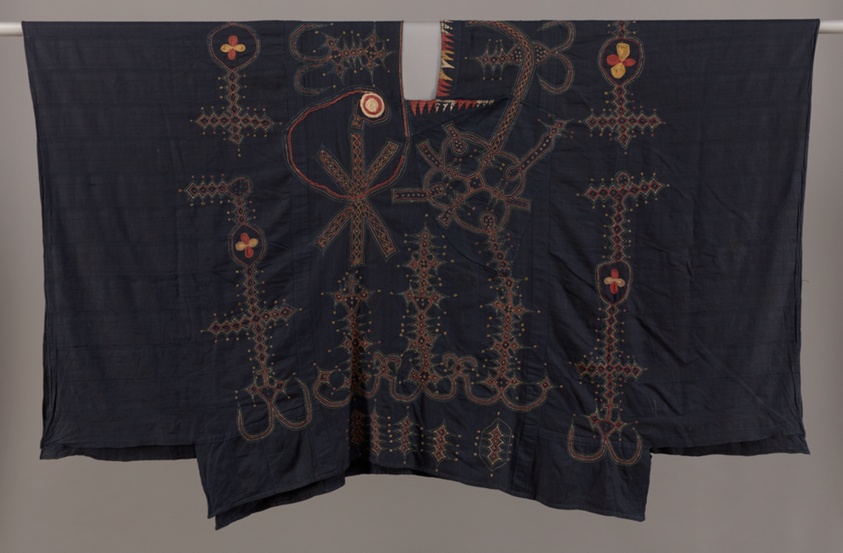
Robe (Boubou Lomasa)
Art Institute of Chicago
Fragment of a Hanging
Art Institute of Chicago

Man's Bag
Minneapolis Institute of Art

Head Scarf (Amendil)
Minneapolis Institute of Art
Fragment of a furnishing textile
Cleveland Museum of Art

Cape
Minneapolis Institute of Art