Art Institute of Chicago
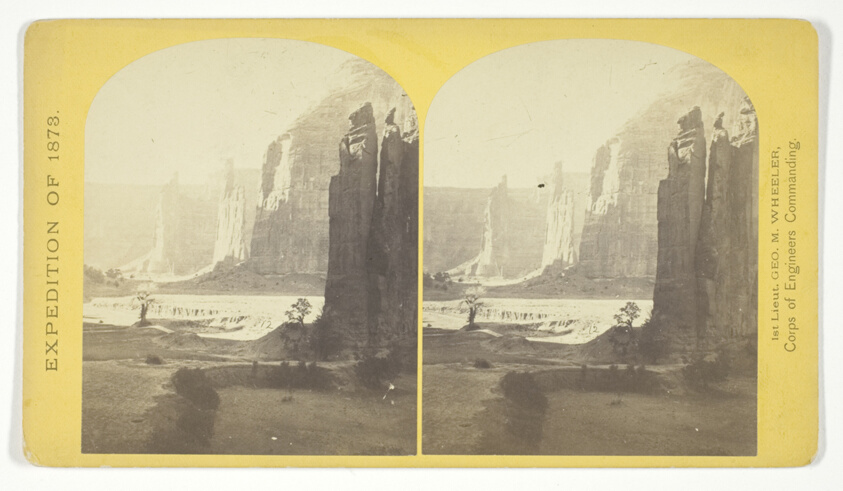
Central portion of Canñon de Chelle, New Mexico. This Canñon is one of the most remarkable in the west, and is noted for its beauty. The walls are of Red Sand-stone, nearly perpendicular, and at this point are 1.200 feet in height, No. 24 from the series "Geographical Explorations and Surveys West of the 100th Meridian"
Timothy O'Sullivan (American, born Ireland, 1840–1882)LinkedCulture matchlcp-f778926c861a
- Date
- 1873
- Medium
- Albumen print, stereo
- Culture
- United States
- Department
- Photography and Media
- Institution
- Art Institute of Chicago
- Object ID
- 210778
The authoritative record is held by Art Institute of Chicago. LinkedCulture surfaces this object and its connections; it does not alter institutional metadata.
Get printable QR codesHide QR codes
Open QR codes for this object page and the museum record. They stay collapsed until needed.
Open this page QR destination: https://linkedculture.org/q/q1.OR-ygWnH6L8TAB0O.QLahxL0L-7-nUToUBbDNHRe_sgkm94JH4r0fpXZwrdrCs3U9BDMDmggLtnGkDEHMi0kVYvv1f4oonry_4aRQbkypl2uMlmuNMJAAsvvhBOMuUqTvkL-N-Kcdov4z2vLpYY3j5V5B9fuzrpxinm606Y36iL5NEabHnURaUf64ZhUPMrFuYKj_U17cXf332xMTvXDgl3VDw2WH4NK7wgbhtlC9xa9pQnL0-RLI7pFYYtWbF0Kqk1fYboqr2oB2lhd9YuQTgokZ2hsBXDuPqYCOHOKWZUEsSee at Art Institute of Chicago QR destination: https://linkedculture.org/q/q1.E8uV9zVIhGjc9nDT.E7jXos8k_clAq7rvcQlUOuINN844HLRUlDUnIZ03S_EKiUjXvf-mQ4P269FM7wc7gI20TCEmi6JU2qs0mrzwn4T549mRDU9kdFGNWjE4Ak8zKOP2zAWrhq2WzYpx00W0lnmt66TJoodC-qJTIUmYnoeUp13Z4yGu0yfgMK59_xypuKA86WIzgBUuPkceVEzJMAAuu1wp_5uNe6qOlvMNglSFQLilczGPlzsim9Fen9dyvKFrk-tXLcSdv6VMl4leIqM198tIrrZYNJo4UGCv-pxScA
Open this page
See at Art Institute of Chicago
Provenance & credit
As published by the source institution. Coverage varies — not every institution's open-data feed includes ownership history.
- Credit line
- Photography Gallery Fund
Linked open data
Authority identifiers that link this record into the wider web of cultural data — stable references you can follow to the source.
- Object type
- AAT300046300
Related across collections
Semantically similar works from Art Institute of Chicago and other institutions.