Art Institute of Chicago
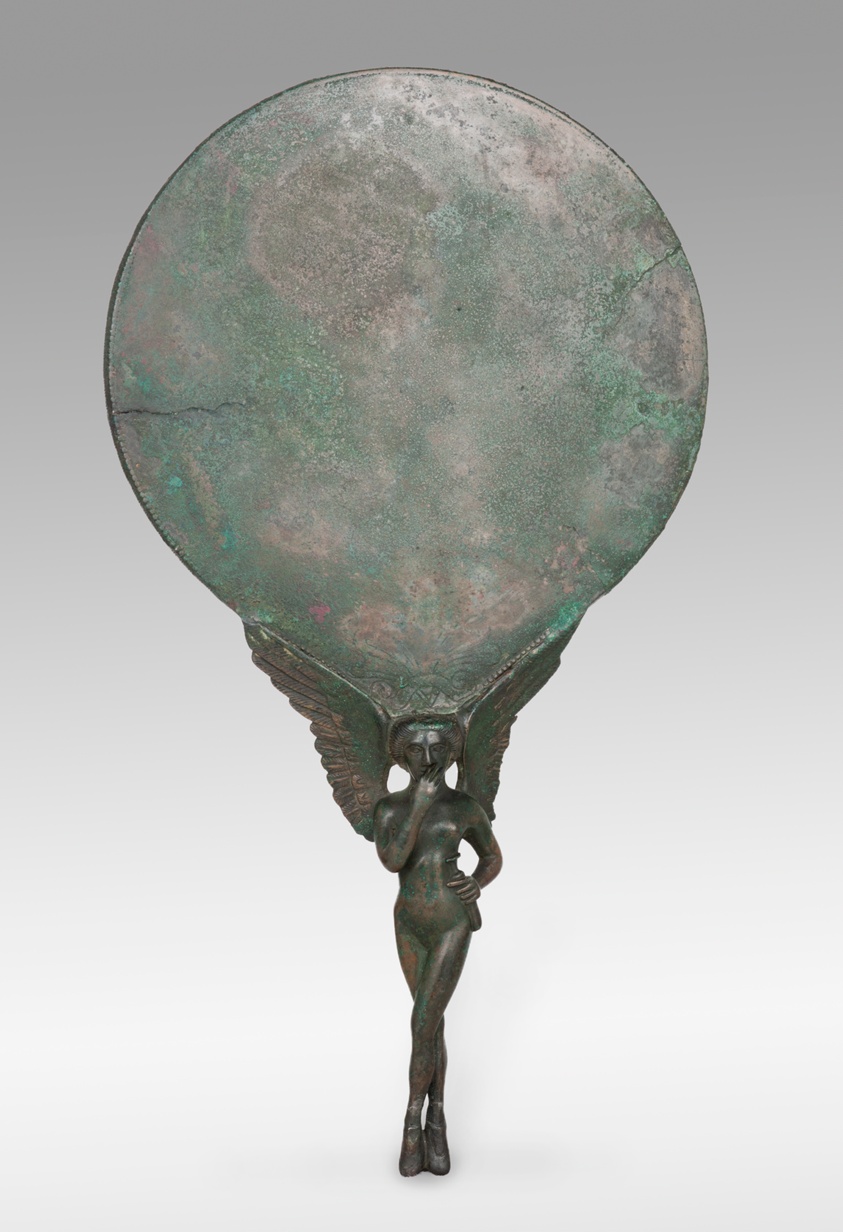
Mirror with a Handle in the Form of a Female Figure
EtruscanLinkedCulture matchlcp-eb3123daa429
- Date
- 3rd century BCE
- Medium
- Bronze
- Culture
- Etruria
- Department
- Arts of Greece, Rome, and Byzantium
- Institution
- Art Institute of Chicago
- Object ID
- 213732
From the Art Institute of Chicago record
In Etruria, bronze mirrors were luxury objects designed primarily for women, who were buried with them for use in the afterlife. The front of the bronze disk would have been highly polished in order to reflect the viewer’s image. This example has a handle in the form of a winged Lasa, a minor deity associated with Turan, the Etruscan goddess of love. Lasa holds an alabastron (container for scented oil) in her left hand. Because Lasa is thought to have been associated with funerary rites, the alabastron might evoke the ceremonial anointing of the dead. An image of Eros, the god of love, is engraved on the back of this reflective disk. Eros was a fitting subject for bronze mirrors, which were given primarily to women, likely as wedding presents. Here, with hammer firmly in hand, Eros stands among carpentry tools, including a second hammer, an adze, a double axe, a chisel, and possibly a double saw. On the left is an amphora (storage jar) and a table. The significance of this unusual scene is not yet understood, but its selection might reflect the Etruscan taste for obscure and rarely illustrated mythological episodes.
The authoritative record is held by Art Institute of Chicago. LinkedCulture surfaces this object and its connections; it does not alter institutional metadata.
Get printable QR codesHide QR codes
Open QR codes for this object page and the museum record. They stay collapsed until needed.
Provenance & credit
As published by the source institution. Coverage varies — not every institution's open-data feed includes ownership history.
- Credit line
- Anonymous loan
Linked open data
Authority identifiers that link this record into the wider web of cultural data — stable references you can follow to the source.
- Object type
- AAT300411641
Related across collections
Semantically similar works from Art Institute of Chicago and other institutions.