Cleveland Museum of Art
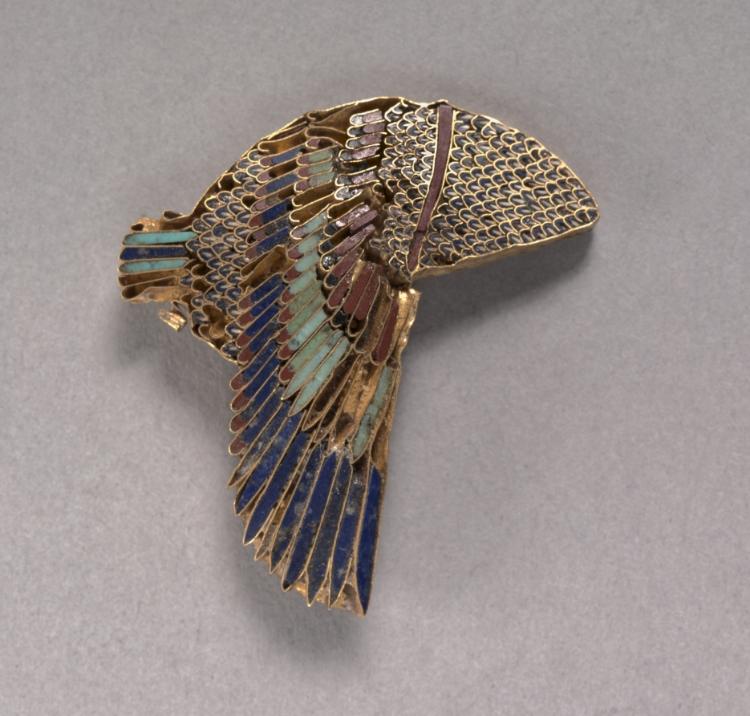
Vulture Headdress Inlay
- Date
- 100–1 BCE
- Medium
- gold and semi-precious stones
- Culture
- Egypt, Greco-Roman period (332 BCE–395 CE), Ptolemaic dynasty (305–30 BCE)
- Department
- Egyptian and Ancient Near Eastern Art
- Institution
- Cleveland Museum of Art
- Object ID
- 101378
From the Cleveland Museum of Art record
The vulture headdress was worn by goddesses and queens. This inlay in the form of a vulture headdress has more than 100 stones: lapis lazuli (dark blue), turquoise (light blue), petrified wood (red), and an unidentified white stone painstakingly cut to shape and separated by thin plates of gold. Body, wing, and tail feathers are carefully distinguished in minute detail. When creating this headdress, artisans used numerous semiprecious stones with inset partitions to keep them separate. To ensure that the stones would stay in place, a resin-like material was used as an adhesive.
The authoritative record is held by Cleveland Museum of Art. LinkedCulture surfaces this object and its connections; it does not alter institutional metadata.
Get printable QR codesHide QR codes
Open QR codes for this object page and the museum record. They stay collapsed until needed.
Provenance & credit
As published by the source institution. Coverage varies — not every institution's open-data feed includes ownership history.
- Credit line
- Gift of the John Huntington Art and Polytechnic Trust
- Provenance
- Said to be from the "Treasure of Dendara." | -1920: Ralph H. Blanchard, Cairo, Egypt, through Howard Carter, sold to the Cleveland Museum of Art | 1920-: The Cleveland Museum of Art, Cleveland, OH
Part of a LinkedCulture topic
 Ancient Egyptian Glass Inlays
These objects are decorative glass and faience inlays from ancient Egypt, primarily from the Ptolemaic Dynasty and Roman Period, used for ornamentation in jewelry, architecture, and other decorative applications.
12 objects from 3 institutions
Related across collections
Semantically similar works from Cleveland Museum of Art and other institutions.