Cleveland Museum of Art
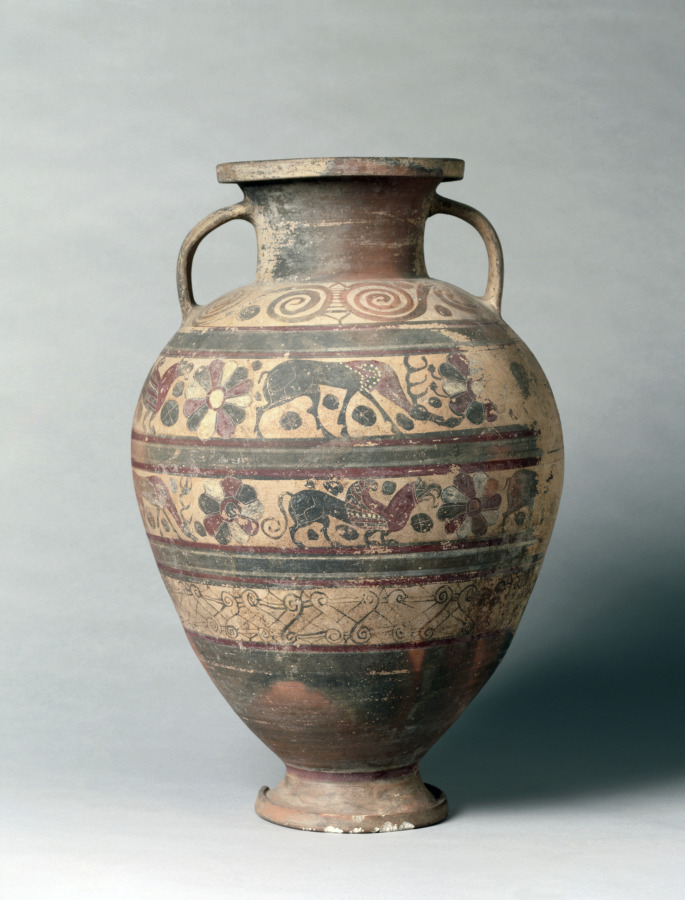
Black-Figure Neck-Amphora (Storage Vessel): Animal Friezes
St. Louis PainterLinkedCulture matchlcp-891c2dc8c943
- Date
- c. 600–580 BCE
- Medium
- ceramic
- Culture
- Etruscan (Etrusco-Corinthian)
- Department
- Greek and Roman Art
- Institution
- Cleveland Museum of Art
- Object ID
- 106855
From the Cleveland Museum of Art record
Although seemingly simple in design, this amphora populated with animals (some mythological) and vegetal ornaments speaks to complex cultural intermingling in the ancient world. Known as “Etrusco-Corinthian,” the vase was made in Vulci, an Etruscan site with local workshops influenced by the Greek pottery imported there. These imports, especially from the ancient city of Corinth, helped to bring certain motifs and creatures borrowed from the Near East—such as the griffins here—to the Italian peninsula. Among several lively Etruscan elements on this vase are flowering rosettes, including one about to be eaten by a stag foraging in the upper band. The same potter and painter (whether one person or two) also made vases now in Saint Louis and Paris.
The authoritative record is held by Cleveland Museum of Art. LinkedCulture surfaces this object and its connections; it does not alter institutional metadata.
Get printable QR codesHide QR codes
Open QR codes for this object page and the museum record. They stay collapsed until needed.
Provenance & credit
As published by the source institution. Coverage varies — not every institution's open-data feed includes ownership history.
- Credit line
- Gift of J. H. Wade
- Provenance
- ?-1924: Ludwig Pollak, Rome, Italy, sold to the Cleveland Museum of Art | 1924-: The Cleveland Museum of Art, Cleveland, OH
Related across collections
Semantically similar works from Cleveland Museum of Art and other institutions.