Cleveland Museum of Art
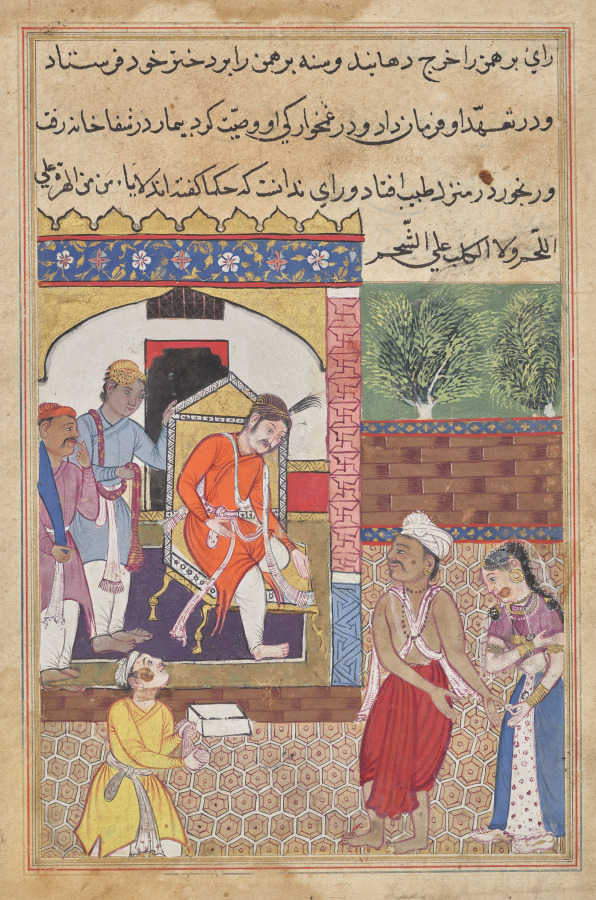
The magician, disguised as a Brahman, visits the king of Babylon, from a Tuti-nama (Tales of a Parrot): Thirty-fifth Night
- Date
- c. 1560
- Medium
- gum tempera, ink, and gold on paper
- Culture
- Mughal India, court of Akbar (reigned 1556–1605)
- Department
- Indian and Southeast Asian Art
- Institution
- Cleveland Museum of Art
The king of Babylon, seated on a throne, receives the Brahman in the form of a woman and the magician in the form of a Brahman. The king agrees to keep the woman (the transformed Brahman) temporarily in his harem as a favor to the Brahman (the disguised magician). Scholars have identified this image as a portrait of Akbar, the third Mughal emperor of India, and the commissioner of this manuscript. He is thought to be identifying himself as the king of Babylon, regarded in the Islamic world as an ancient center of power and culture. In this story, however, the king fell victim to the trickery of his own daughter, her lover, and the magician, making one wonder why Akbar would choose to portray himself in this guise. The identification of this image as a portrait of Akbar remains unresolved. The transformed Brahman, who is in the form of the woman, carries a magical bead in his mouth.
The authoritative record is held by Cleveland Museum of Art. LinkedCulture surfaces this object and its connections; it does not alter institutional metadata.
Related across collections
Semantically similar works from Cleveland Museum of Art and other institutions.
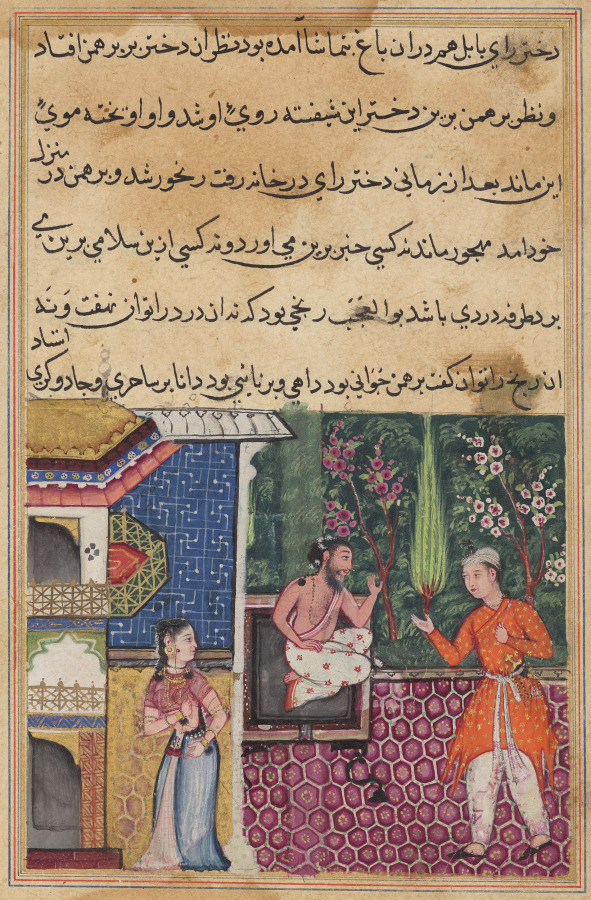
The Brahman gives an account of his falling in love with the king of Babylon’s daughter to his friend, the magician, from a Tuti-nama (Tales of a Parrot): Thirty-fifth Night
Cleveland Museum of Art
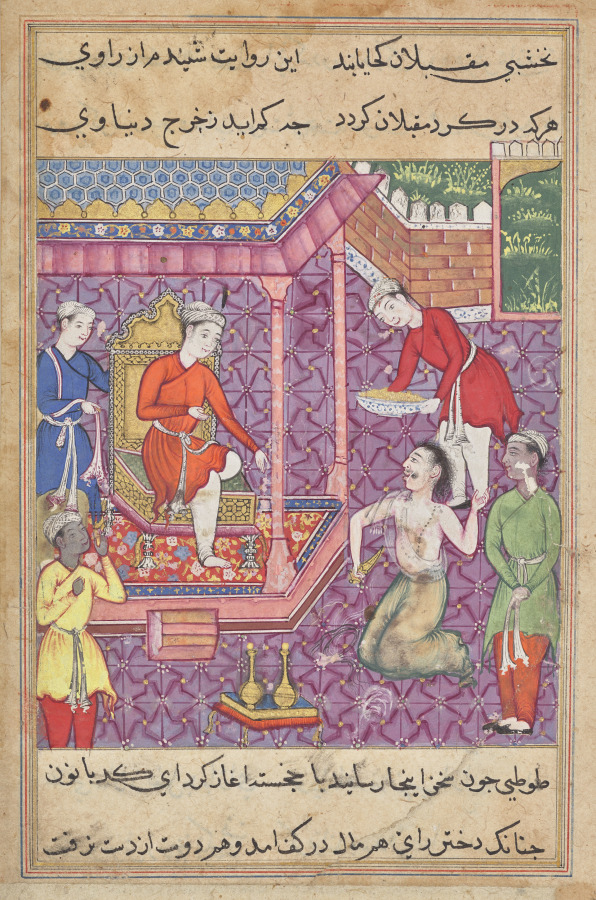
The magician disguised as a Brahman returns to claim his “daughter-in-law,” from a Tuti-nama (Tales of a Parrot): Thirty-fifth Night
Cleveland Museum of Art
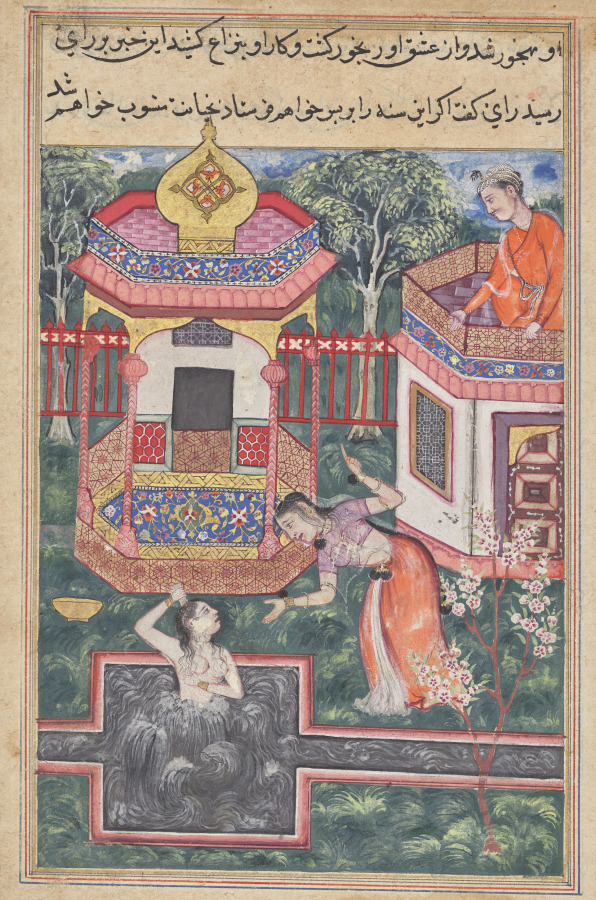
The son of the king of Babylon sees the Brahman transformed into a woman bathing and falls in love with her, from a Tuti-nama (Tales of a Parrot): Thirty-fifth Night
Cleveland Museum of Art
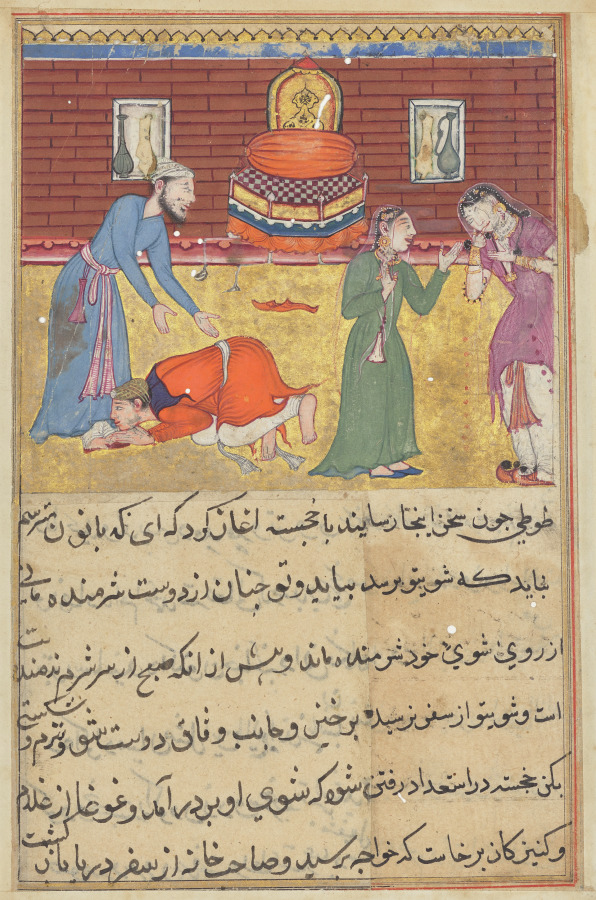
The pious man’s son, now a king, reveals himself to his father; his nurse upbraids his unfaithful mother, from a Tuti-nama (Tales of a Parrot): Fifty-second Night
Cleveland Museum of Art
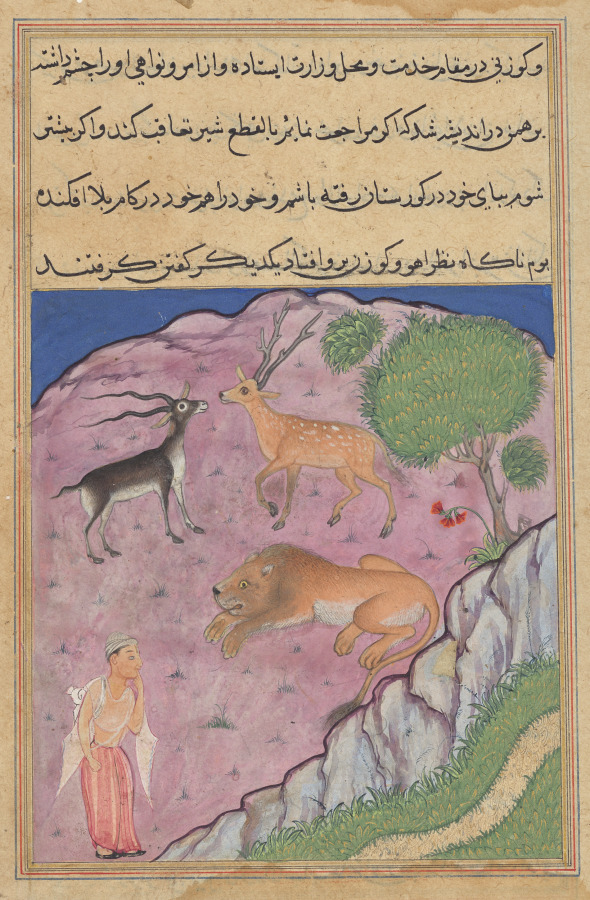
The Brahman comes upon a lion who has a deer and a gazelle as his viziers, from a Tuti-nama (Tales of a Parrot): Twenty-first Night
Cleveland Museum of Art
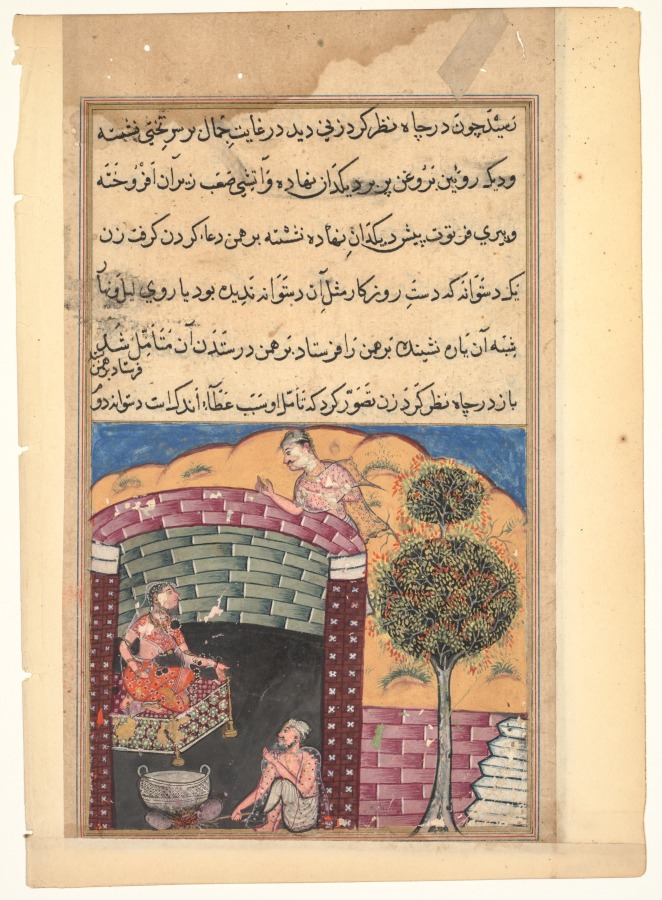
The Brahman gambler sees the daughter of the king of the jinns in a pit together with an old man and a cauldron of boiling oil, from a Tuti-nama (Tales of a Parrot: Seventh Night)
Cleveland Museum of Art
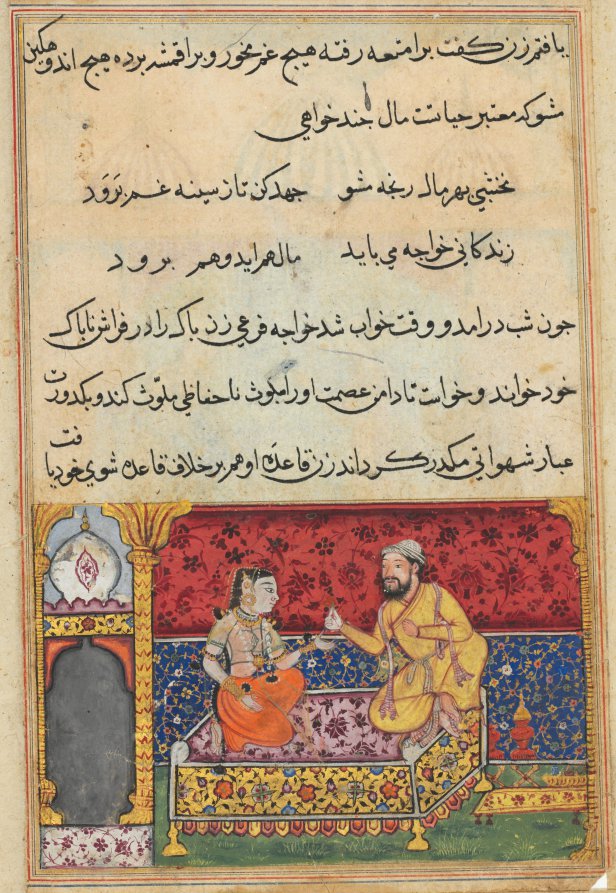
The young man changes himself to look like Mansur, and thus inveigles himself into the bed of Mansur’s wife, but is put off by her, from a Tuti-nama (Tales of a Parrot): Seventeenth Night
Cleveland Museum of Art
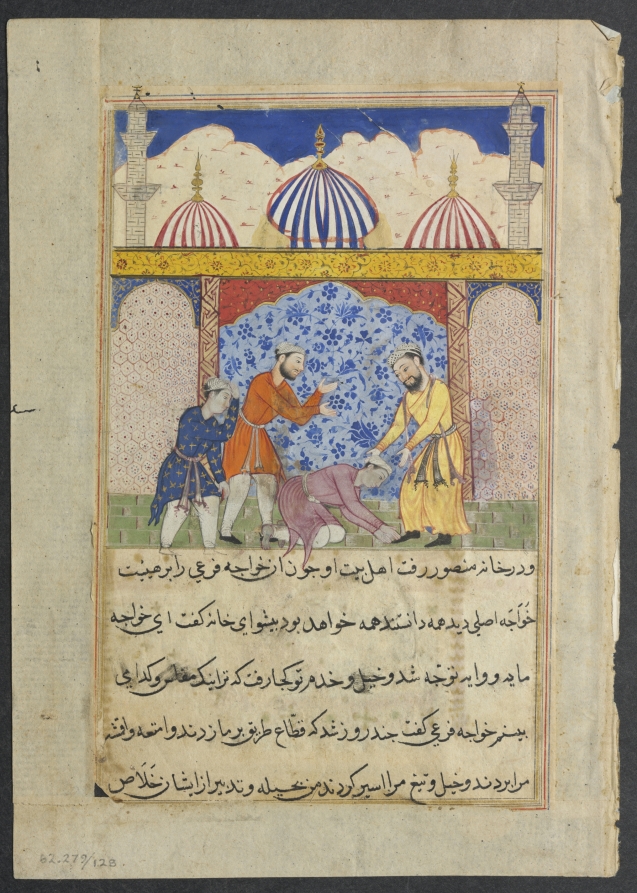
The young man, who has magically taken on the appearance of Mansur the merchant, arrives at his home, from a Tuti-nama (Tales of a Parrot): Seventeenth Night
Cleveland Museum of Art
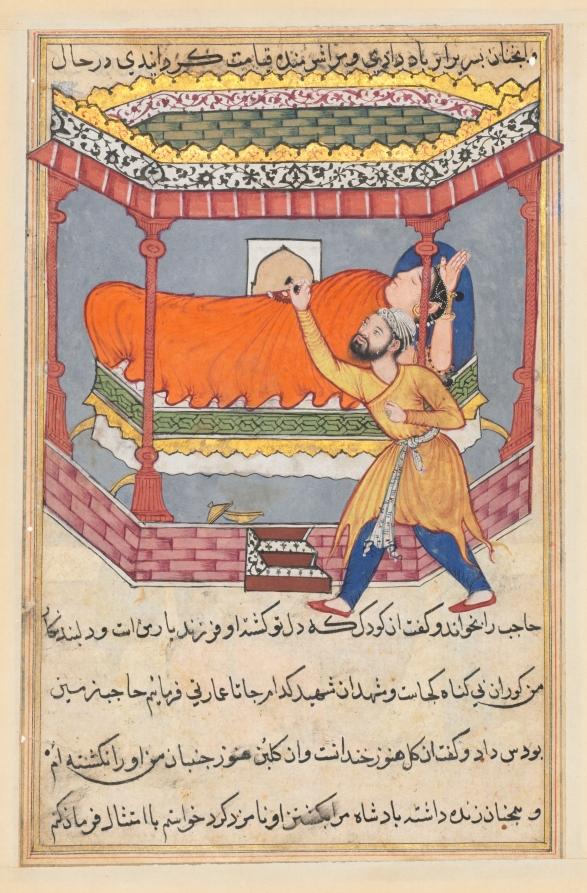
The king places the talisman on his sleeping wife, from a Tuti-nama (Tales of a Parrot): Fiftieth Night
Cleveland Museum of Art
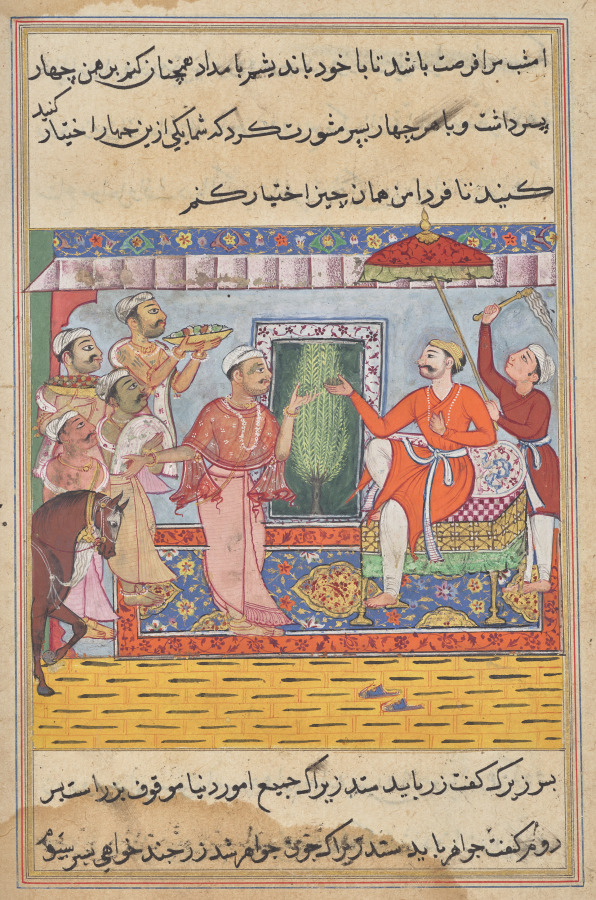
The Brahman, unable to select from the four gifts of the king of the Ocean seeks the Raja’s advice, from a Tuti-nama (Tales of a Parrot): Eleventh Night
Cleveland Museum of Art
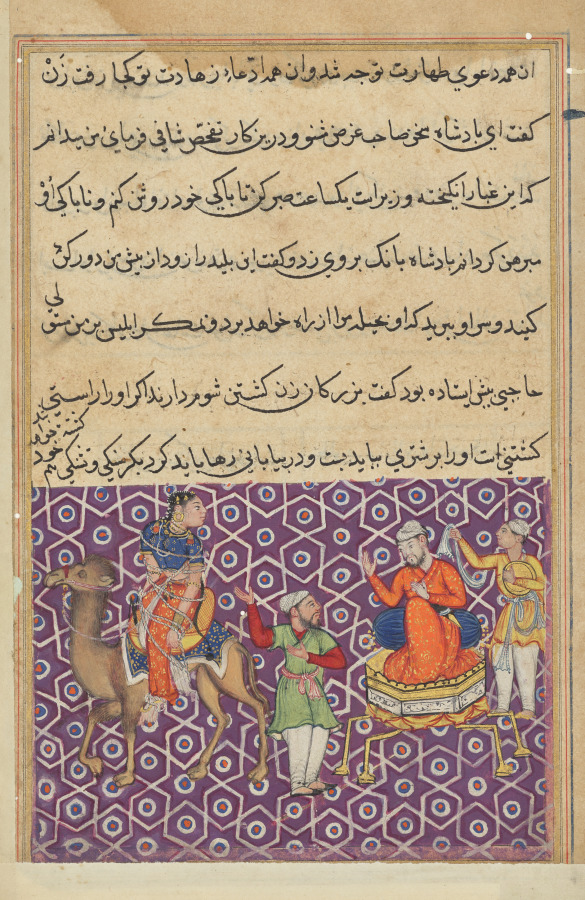
King Bahram, who has married Khassa’s daughter, has her tied to a camel to be abandoned in the desert as a result of false accusations made by Khulasa, from a Tuti-nama (Tales of a Parrot): Fifty-first Night
Cleveland Museum of Art
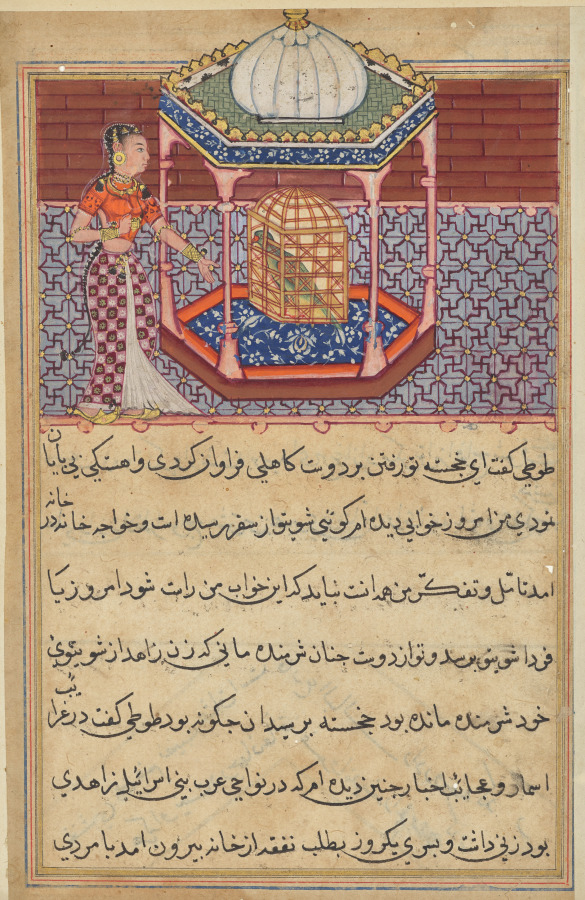
The parrot addresses Khujasta at the beginning of the fifty-second night, from a Tuti-nama (Tales of a Parrot): Fifty-second Night
Cleveland Museum of Art