Cleveland Museum of Art
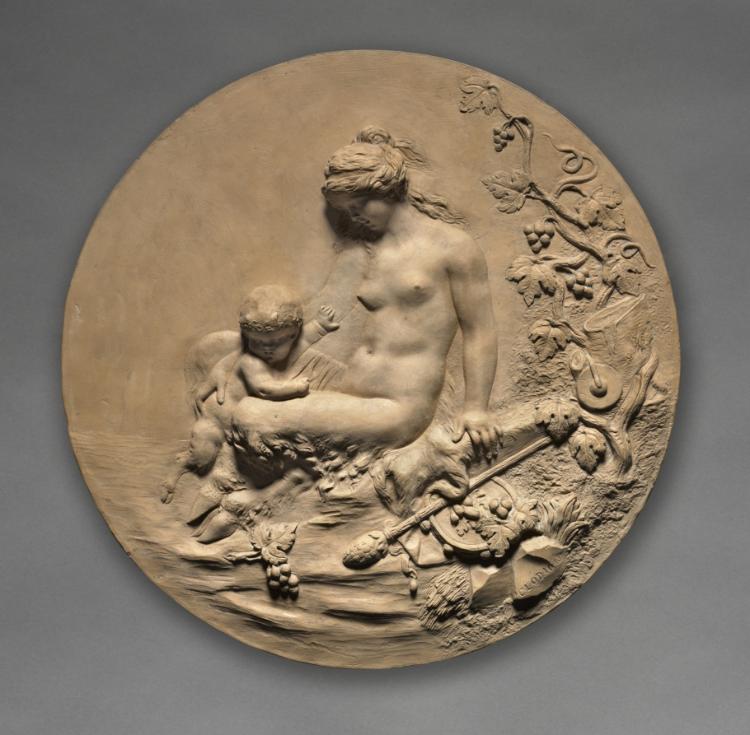
Satyress and Child
ClodionLinkedCulture matchlcp-7bd336c7aab6
- Date
- 1803
- Medium
- terracotta
- Culture
- France, early 19th Century
- Department
- Modern European Painting and Sculpture
- Institution
- Cleveland Museum of Art
- Object ID
- 138880
From the Cleveland Museum of Art record
Born in Nancy to a family of artists, Clodion was one of the leading French sculptors of the ancien régime and Napoleonic era. He went to Paris to study sculpture in 1755 and worked in Rome from 1767 to 1771. Although inspired by the art of classical antiquity, as seen in the mythological subject of this terracotta relief, Clodion continued to model forms with a softness and delicacy reflective of his training during the Rococo period. An invention of European artists of the post-Roman period, a satyress is the female equivalent of the male satyr in classical antiquity. Part human and part goat or horse, the satyress can be recognized by her animal legs and hoofs.
The authoritative record is held by Cleveland Museum of Art. LinkedCulture surfaces this object and its connections; it does not alter institutional metadata.
Get printable QR codesHide QR codes
Open QR codes for this object page and the museum record. They stay collapsed until needed.
Provenance & credit
As published by the source institution. Coverage varies — not every institution's open-data feed includes ownership history.
- Credit line
- Gift of Mr. and Mrs. Ralph King
- Provenance
- Henri B.-Lasquin (sold, Paris, Hôtel Drouot, December 4-6, 1919, lot. 240 | Private collection, (sold, Paris, Galerie Georges Petit, December 5, 1929, lot 25 | Blumka Gallery (New York, New York), by exchange for 1915.387, 1915.72, and 1915.74 (all originally gift of Mr. and Mrs. Ralph E. King) , to the Cleveland Museum of Art.
Related across collections
Semantically similar works from Cleveland Museum of Art and other institutions.