Cleveland Museum of Art
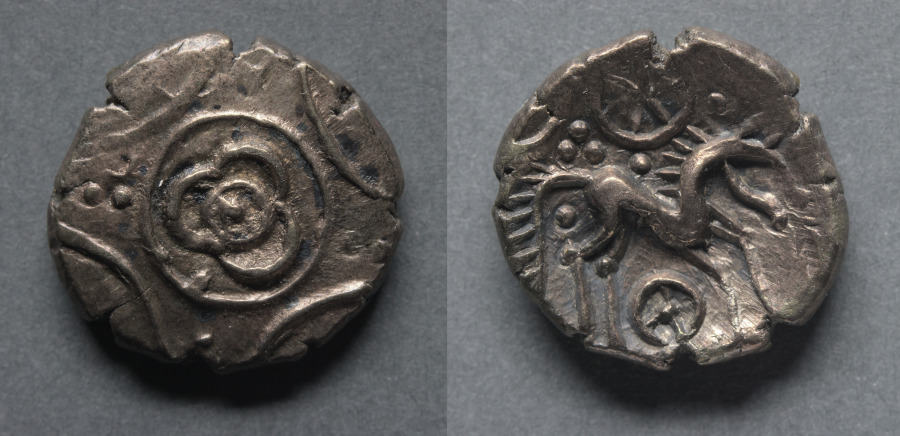
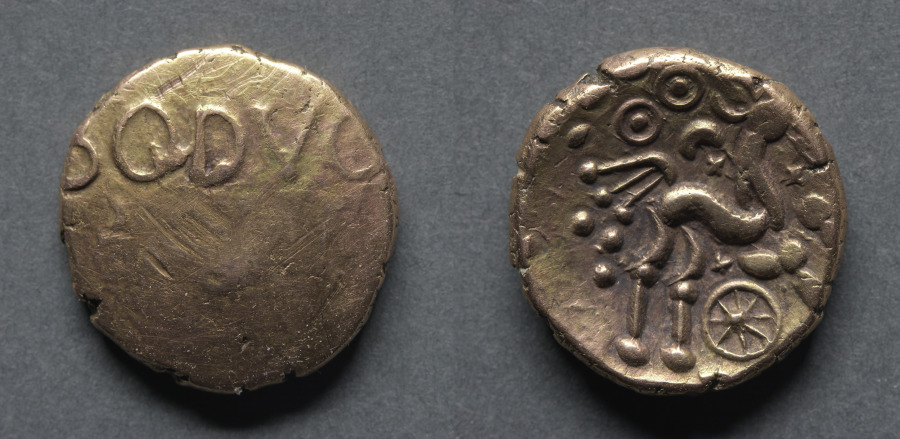
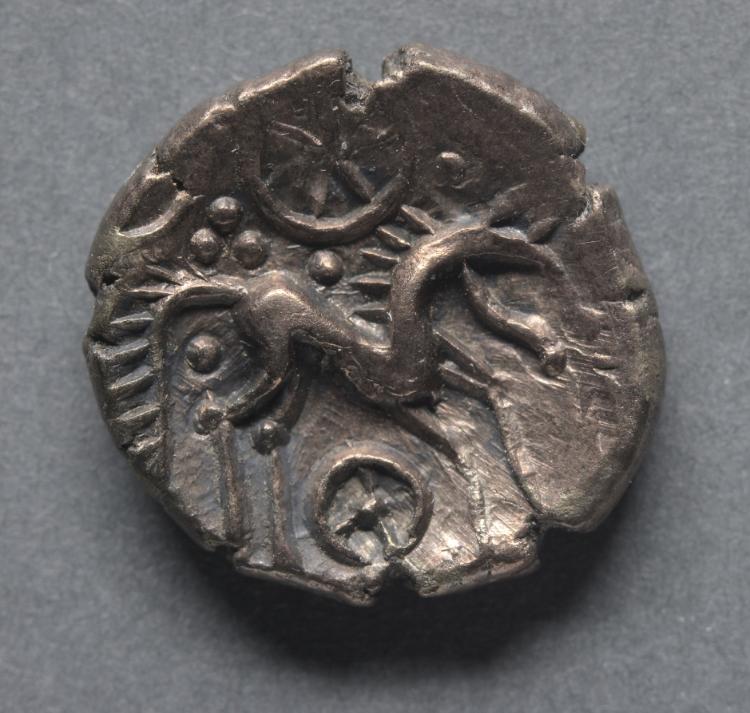
Stater: Three-Petal Flower (obverse); Horse and wheels (reverse)
- Date
- 20 BCE–10 CE
- Medium
- gold
- Culture
- England, Iceni
- Department
- Medieval Art
- Institution
- Cleveland Museum of Art
The Iceni were a native tribe inhabiting Norfolk, Suffolk, and parts of Cambridgeshire. They were described by the Romans as powerful, unbroken by war. In AD 61 the king of the Iceni, Prasutagus, died, leaving his apparently considerable wealth to his two daughters and to the Roman Emperor, as joint heirs. However, while the Roman legions under Aulus Plautius were in Wales taking drastic steps to exterminate Druidism, Boadicea, the widow of Prasutagus, was ill-treated by the Romans and her two daughters were outraged. The Iceni rose in revolt and helped by their neighbors the Trinovantes, they overran the Roman settlements. It is said that 70,000 Romans were massacred at Camulodunum, and the Iceni, with Boadicea in a war chariot at their head, sacked and burned Verulamium (St. Albans, Hertfordshire), and London. Suetonius, one of the leading Roman generals, returned from the west with all possible speed and came up with the Iceni in the northwest of Roman London. Here a great battle was fought, resulting in a complete victory for the disciplined Roman forces; thousands of Britons were killed. The site of this battle is supposed to have been near what is now Kings Cross, in central London, commemorated by Battle Bridge Road. The obverse design may be a rose, a flower that appears on many earlier, mostly Greek, coins.
The authoritative record is held by Cleveland Museum of Art. LinkedCulture surfaces this object and its connections; it does not alter institutional metadata.
Related across collections
Semantically similar works from Cleveland Museum of Art and other institutions.
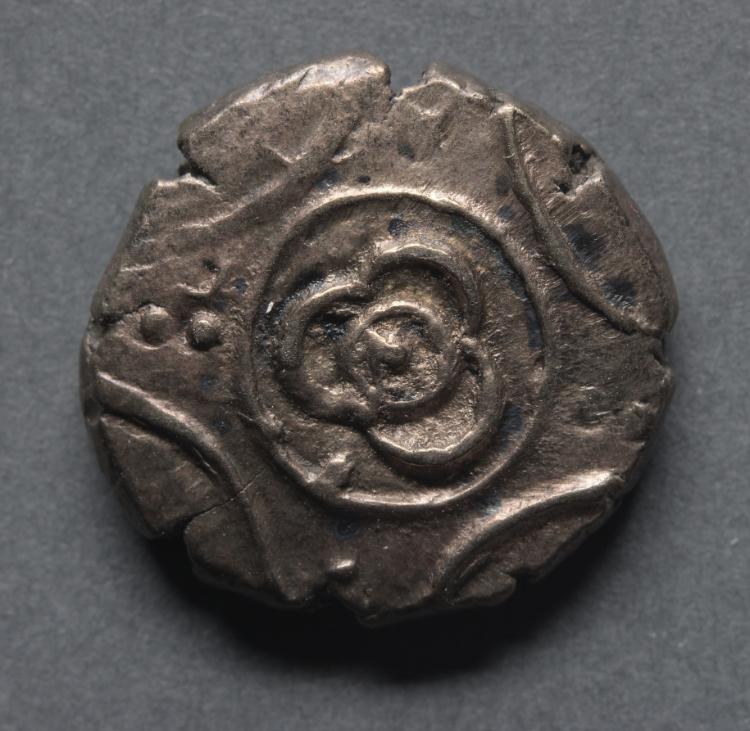
Stater: Three-Petal Flower (obverse)
Cleveland Museum of Art

The Abduction of the Sabines
Getty Museum
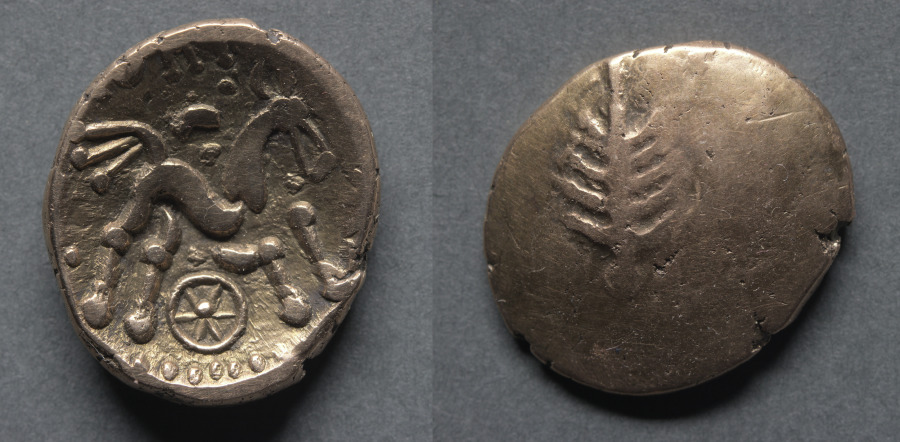
Catti Stater: Tree Symbol on Plain Field (obverse); Horse and Wheel (reverse)
Cleveland Museum of Art
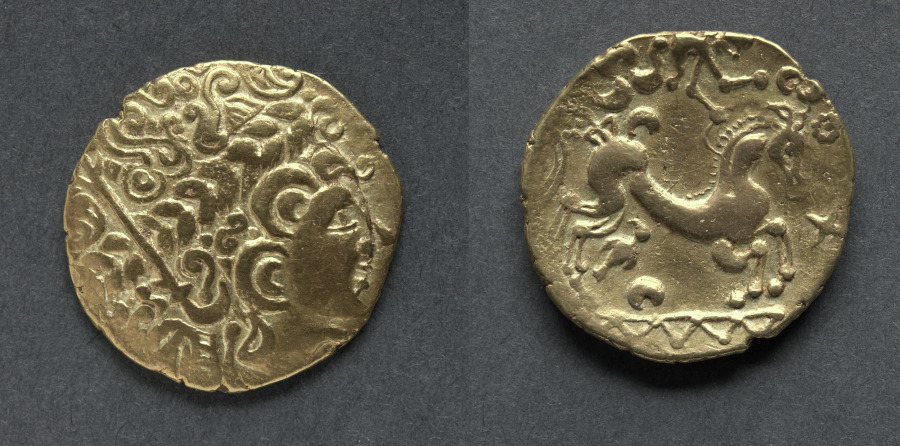
Stater: Head (obverse); Horse with Victory (reverse)
Cleveland Museum of Art
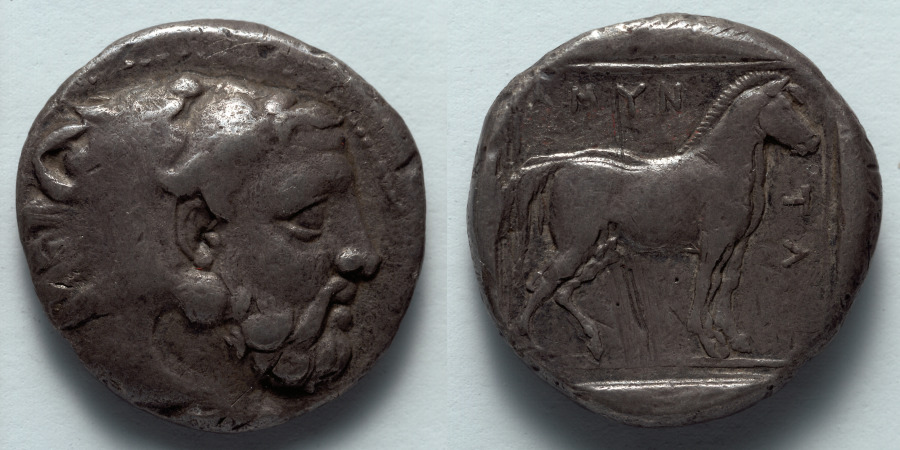
Stater: Head of Bearded Herakles (obverse); Horse (reverse)
Cleveland Museum of Art
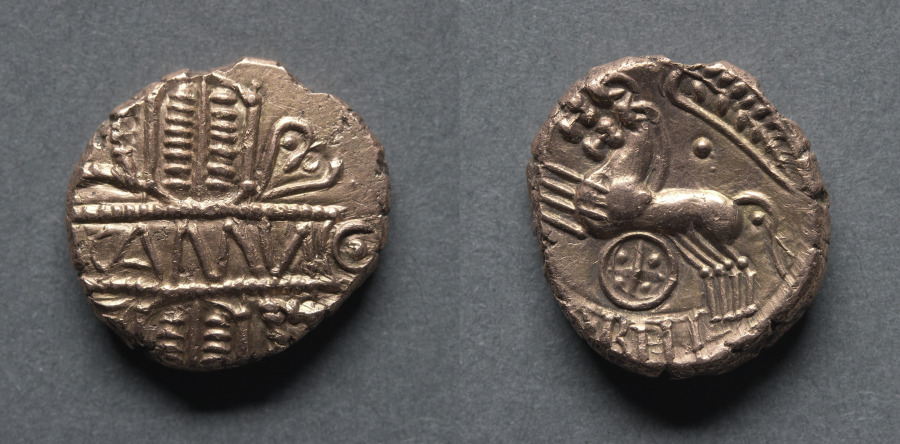
Cunobeline Stater: Tablet on Wreath (reverse); Two Horses and Wheel (reverse)
Cleveland Museum of Art

The Sacrifice of Iphigenia
Minneapolis Institute of Art
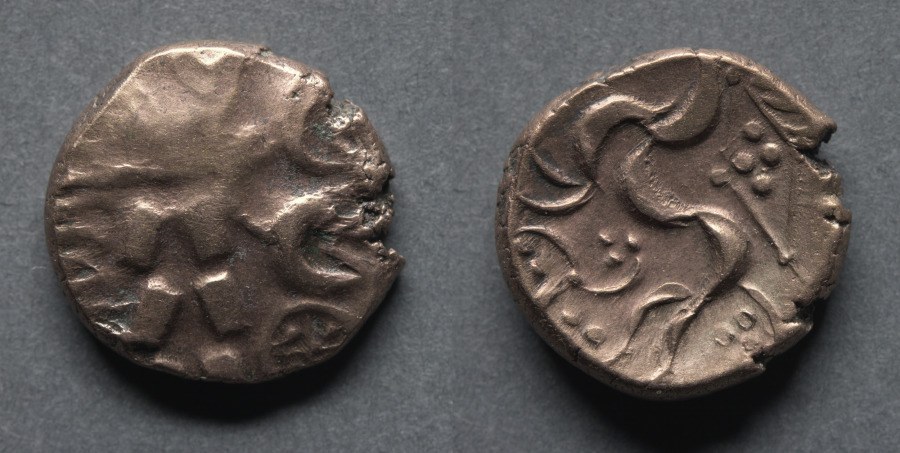
Stater: Wreath, Crescents, and Wheel (obverse); Horse and Diamond (reverse)
Cleveland Museum of Art
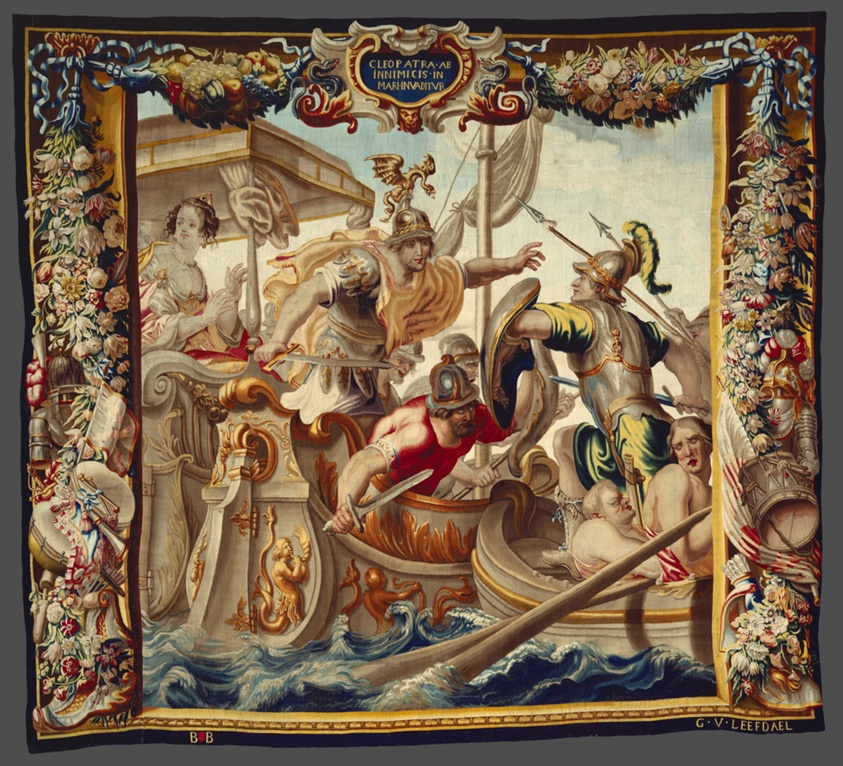
The Battle of Actium from The Story of Caesar and Cleopatra
Art Institute of Chicago
Stater: BODVOC on plain field (obverse); Horse, Wheel, and Crescent (reverse)
Cleveland Museum of Art

The Suicide of Lucretia
Getty Museum
Stater: Horse and wheels (reverse)
Cleveland Museum of Art