Cleveland Museum of Art
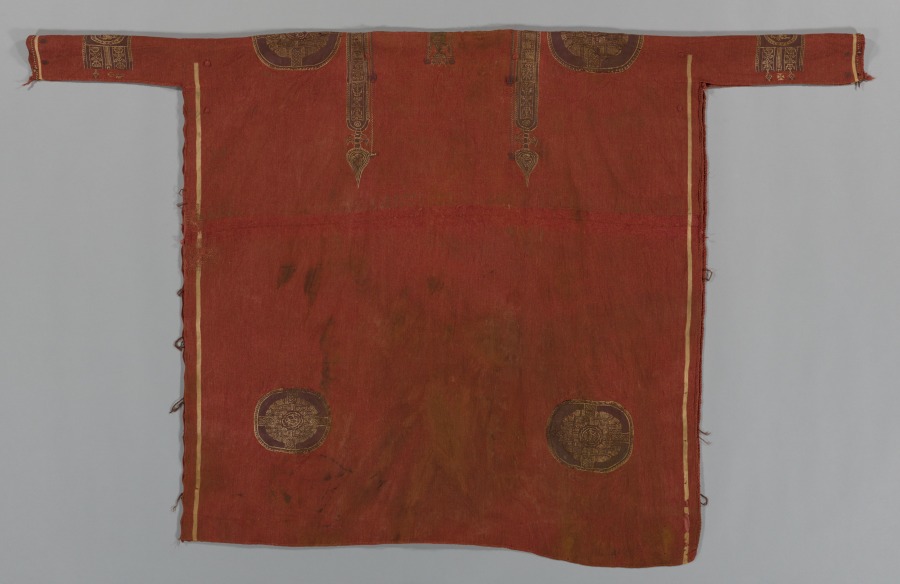
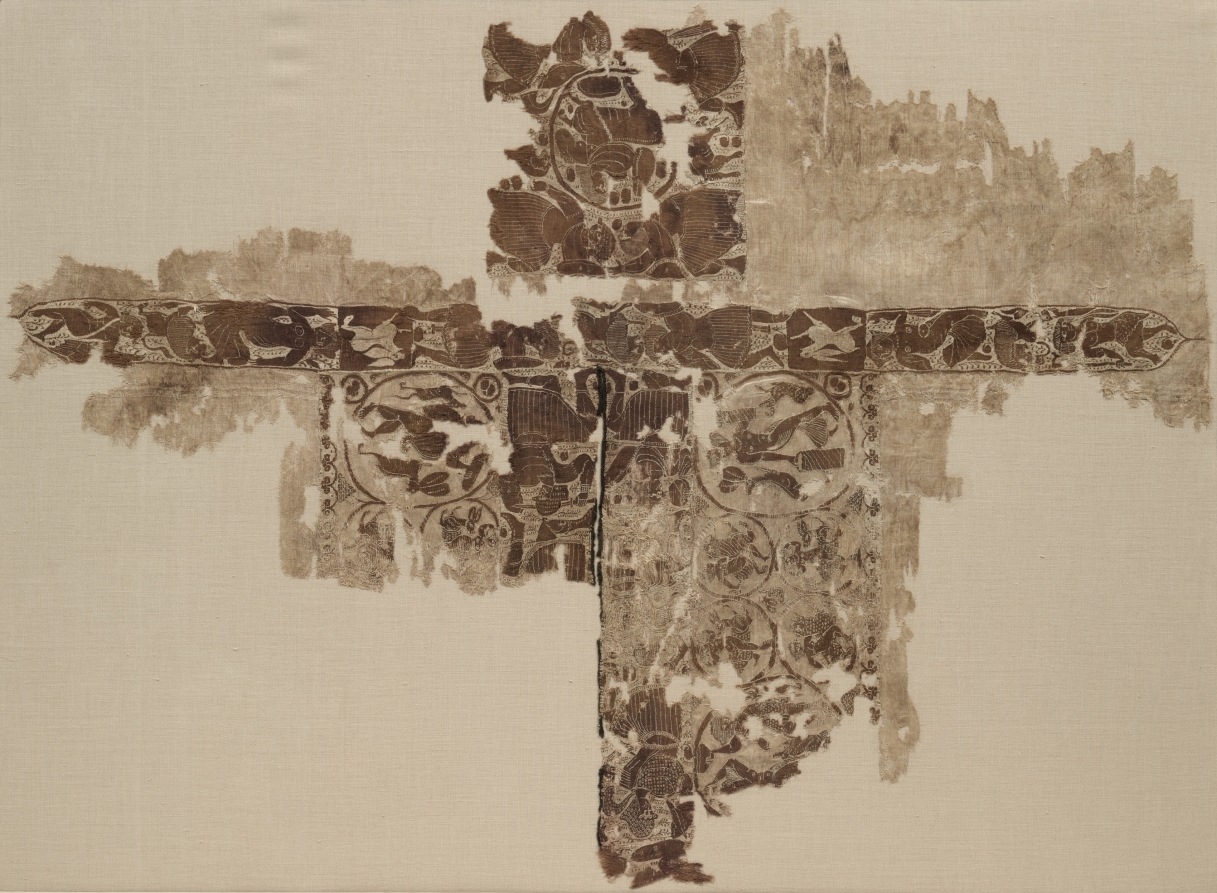
Luxurious Woolen Tunic with Decorated Bands and Roundels
- Date
- 600s-700s
- Medium
- weft-faced plain weave with slit-and dovetailed-tapestry weave, supplementary weft wrapping, embroidery; undyed linen, dyed wool
- Culture
- Egypt, Umayyad period (661–750)
- Department
- Textiles
- Institution
- Cleveland Museum of Art
Since the mid-200s CE tunics were the main garments worn in Egypt. This unisex tunic is decorated on the front and back with the same geometric and figural motifs, including men on horseback hunting and geometric braided knots that were believed to protect the wearer from harm. A red background was favored in the early Islamic period. Made of thick wool for cooler weather, it was woven in one complete piece with the front, back, and sleeves in this exact shape and size. The tunic’s owner repaired it on the left side and shortened it nearly two inches by sewing a fold around the waist. The discoloration and deterioration indicate the garment may have been used in a burial.
The authoritative record is held by Cleveland Museum of Art. LinkedCulture surfaces this object and its connections; it does not alter institutional metadata.
Related across collections
Semantically similar works from Cleveland Museum of Art and other institutions.
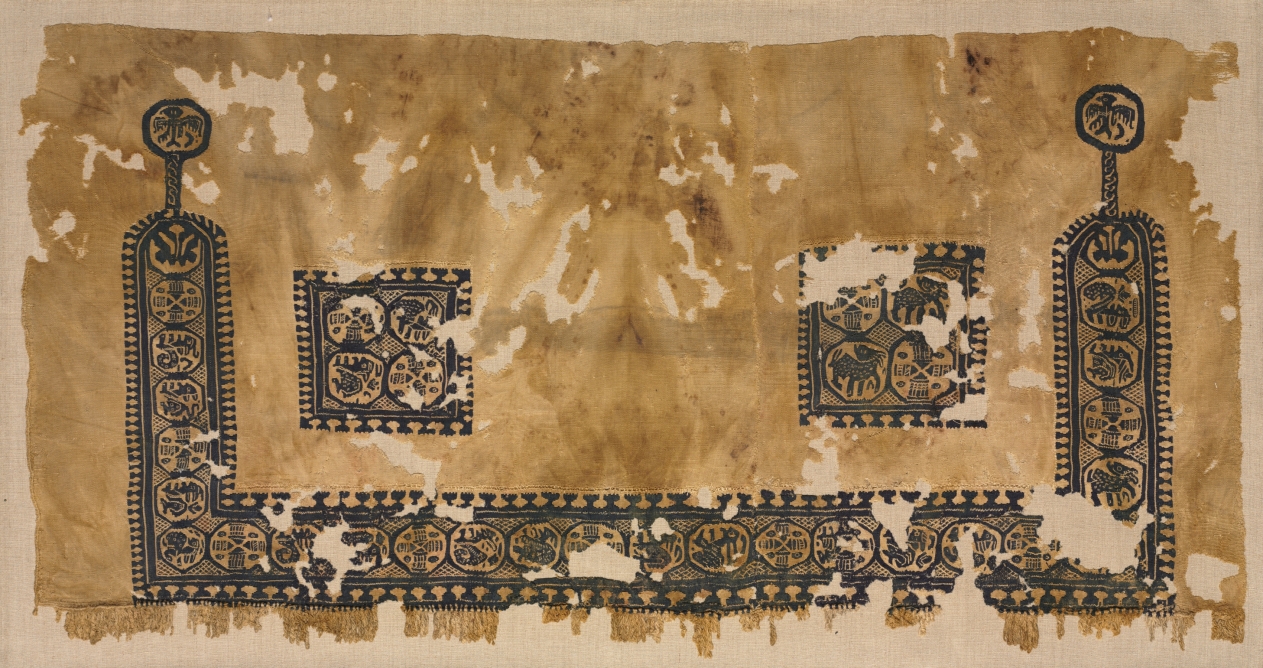
Lower Section of a Tunic
Cleveland Museum of Art
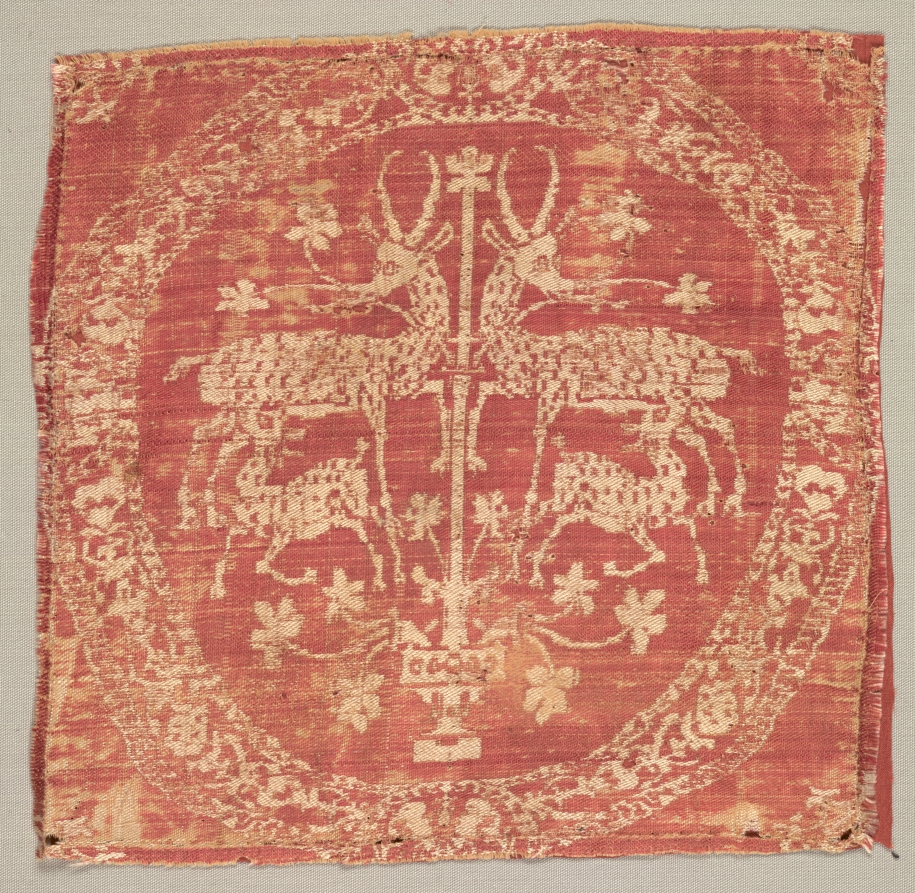
Square Ornament from a Tunic
Cleveland Museum of Art
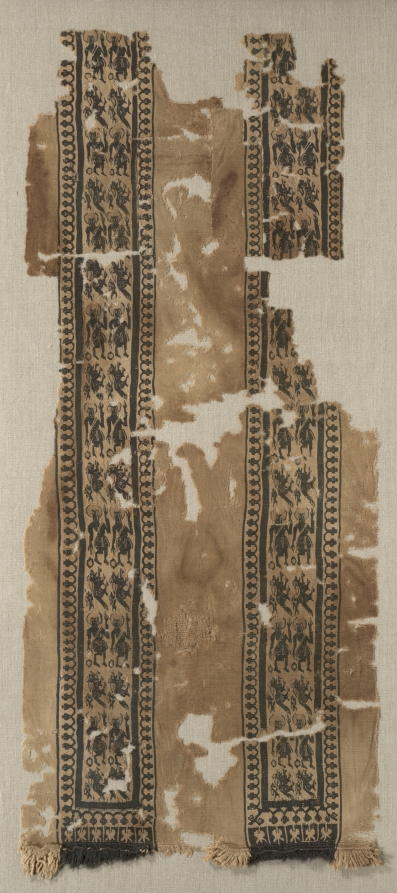
Fragment of a Tunic
Cleveland Museum of Art
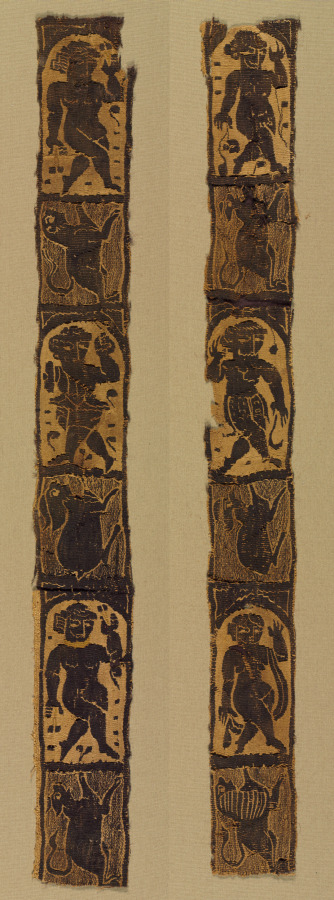
Ornamental Shoulder Bands from a Tunic
Cleveland Museum of Art
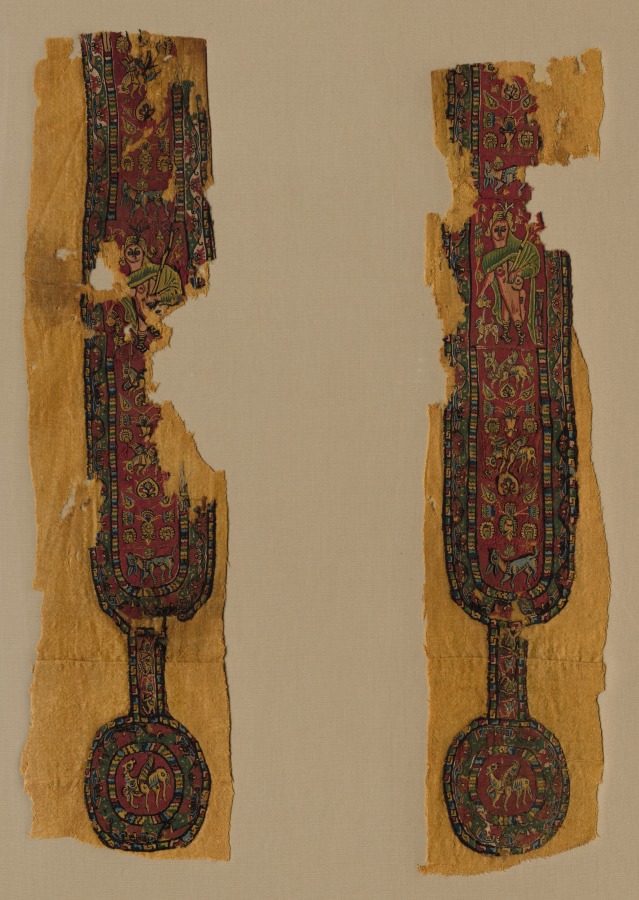
Decorations and Sleeve from a Tunic
Cleveland Museum of Art
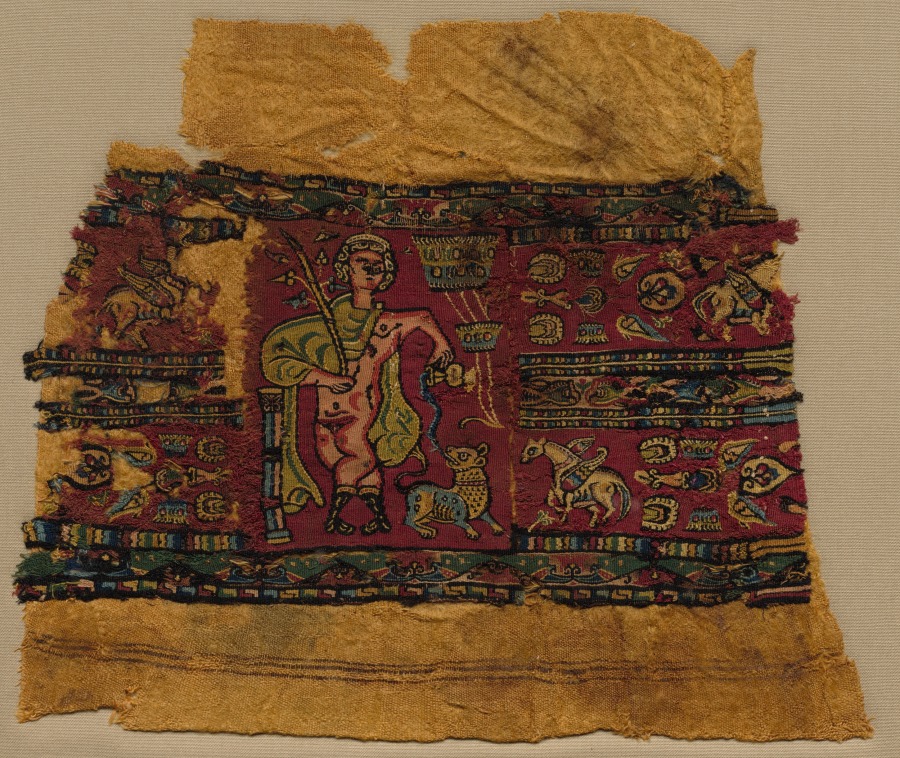
Sleeve from a Tunic
Cleveland Museum of Art
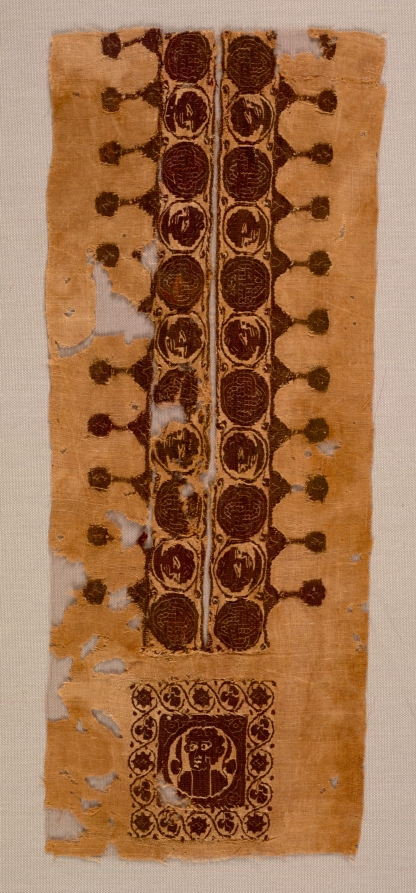
Neck and Shoulder Decoration from a Tunic
Cleveland Museum of Art
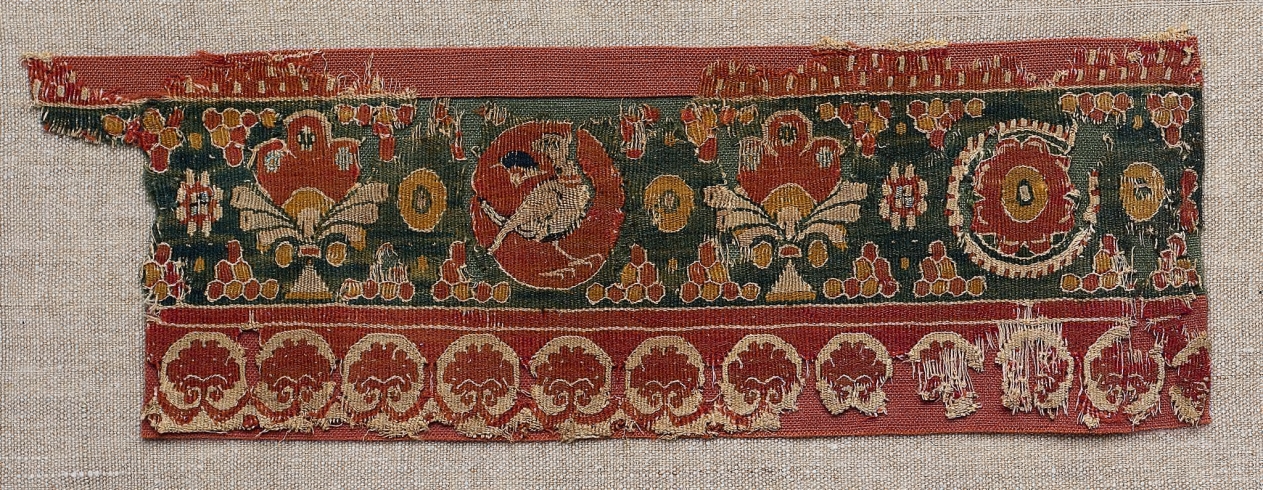
Decorated Band from a Tunic or Curtain
Cleveland Museum of Art
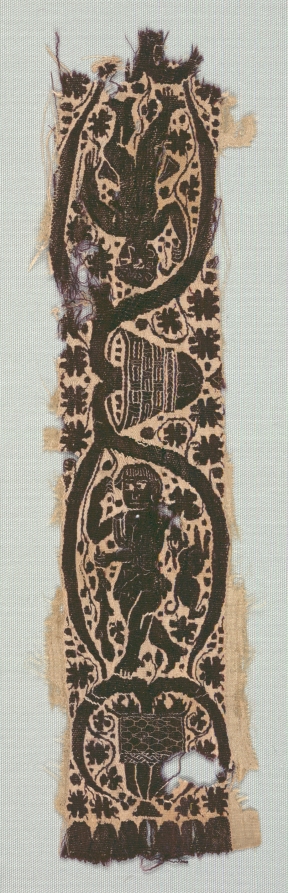
Rare Silk Tunic Fragment with Ornamental Sleeve Band
Cleveland Museum of Art
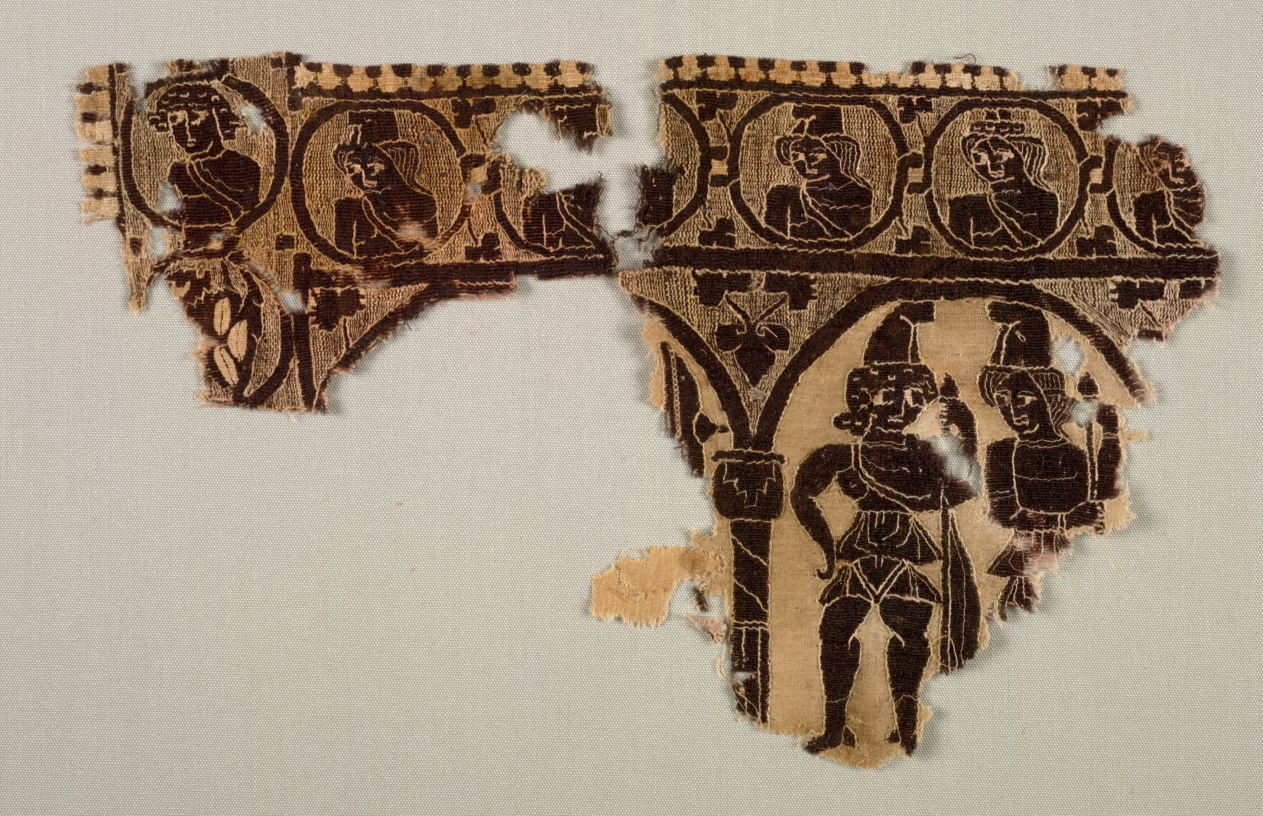
Neck Ornament of a Tunic
Cleveland Museum of Art
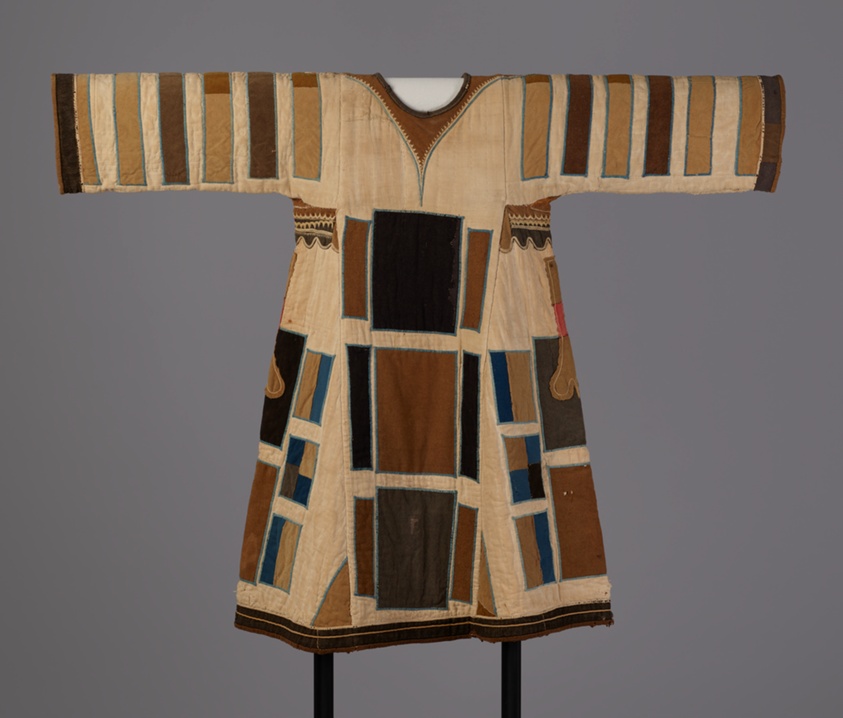
Tunic (Jibbeh)
Art Institute of Chicago
Fragment of a Tunic
Cleveland Museum of Art