Art Institute of Chicago
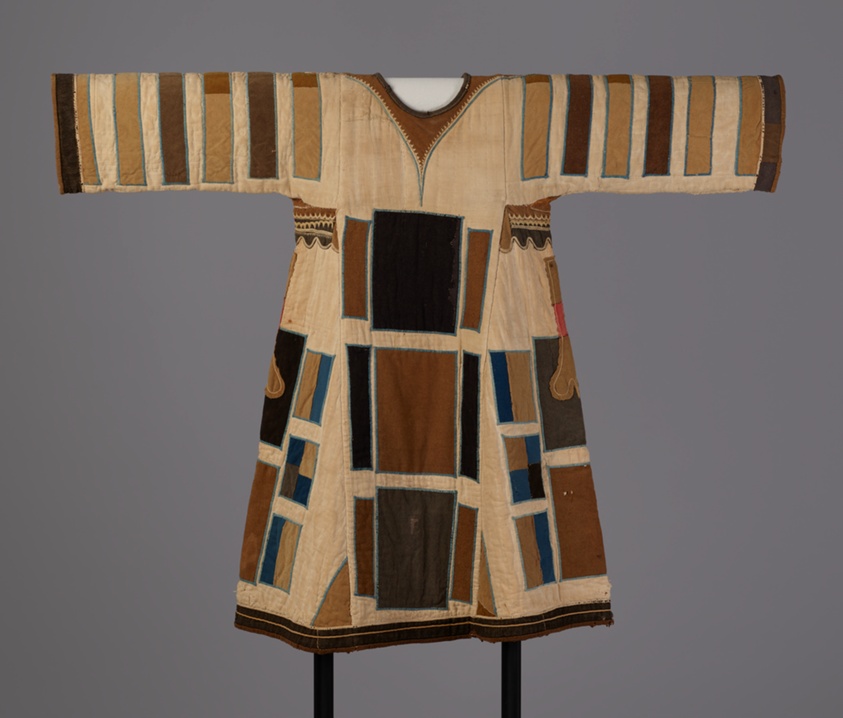
Tunic (Jibbeh)
Mahdiyya State, Sudan
- Date
- 1885/99
- Medium
- Layers of cotton, plain weave; pieced and quilted; appliquéd with wool and wool and cotton plain weaves and wool twill weaves; embroidered with cotton in chain, cross, and a derivative of herringbone stitches; applied plied yarn edging; lined with cotton plain weaves; pieced
- Culture
- Sudan
- Department
- Textiles
- Institution
- Art Institute of Chicago
Sudanese soldiers wore these tailored tunics to mark their role in the Mahdist state’s fight for independence from British and Egyptian rule in the late 19th century. Appliqué elements, such as the sewn shapes seen here, have long held religious significance in Sudan when they appear as talismanic pockets. They also reference the woolen patches haphazardly applied to homemade garments that Sufi followers wore to declare their contempt for worldly goods. The orderly design of this tunic symbolizes a unified army. The clean lines and uniform arrangement of patches symbolize the Mahdi’s efforts to centralize and organize military loyalties, while still honoring soldiers’ long-held Sufi beliefs.
The authoritative record is held by Art Institute of Chicago. LinkedCulture surfaces this object and its connections; it does not alter institutional metadata.
Linked open data
Authority identifiers that link this record into the wider web of cultural data — stable references you can follow to the source.
- Object type
- AAT300209261
Related across collections
Semantically similar works from Art Institute of Chicago and other institutions.

Army tunic
Minneapolis Institute of Art
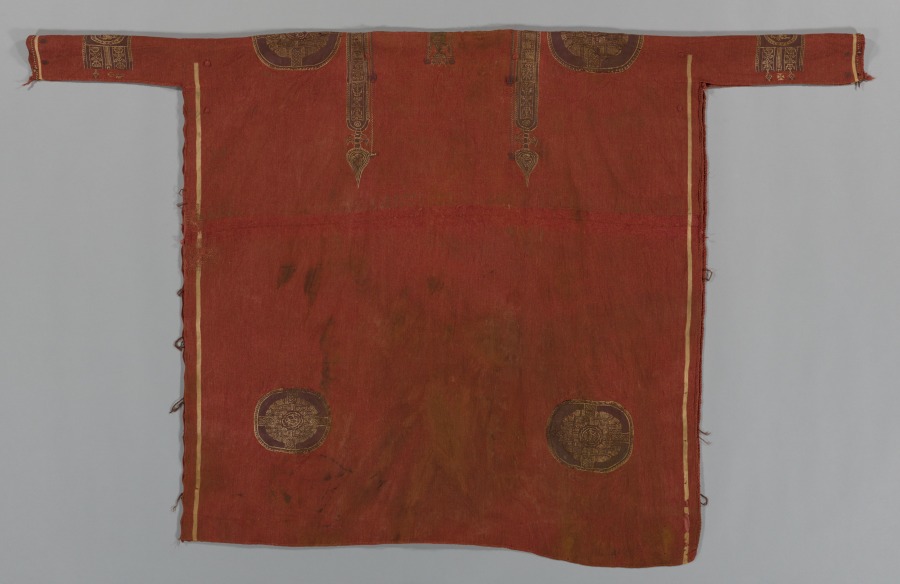
Luxurious Woolen Tunic with Decorated Bands and Roundels
Cleveland Museum of Art

Status blade
Minneapolis Institute of Art

Prestige blade
Minneapolis Institute of Art
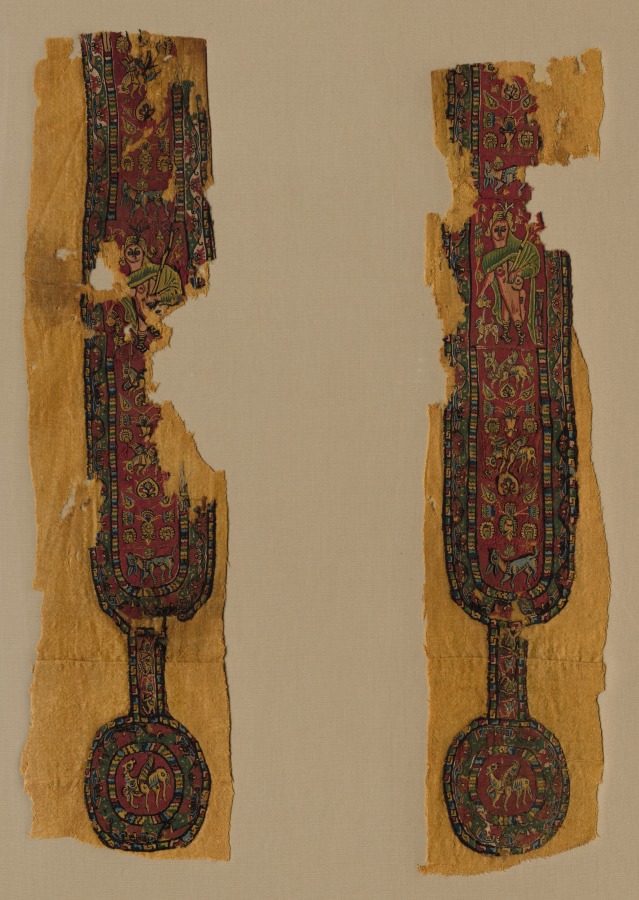
Decorations and Sleeve from a Tunic
Cleveland Museum of Art
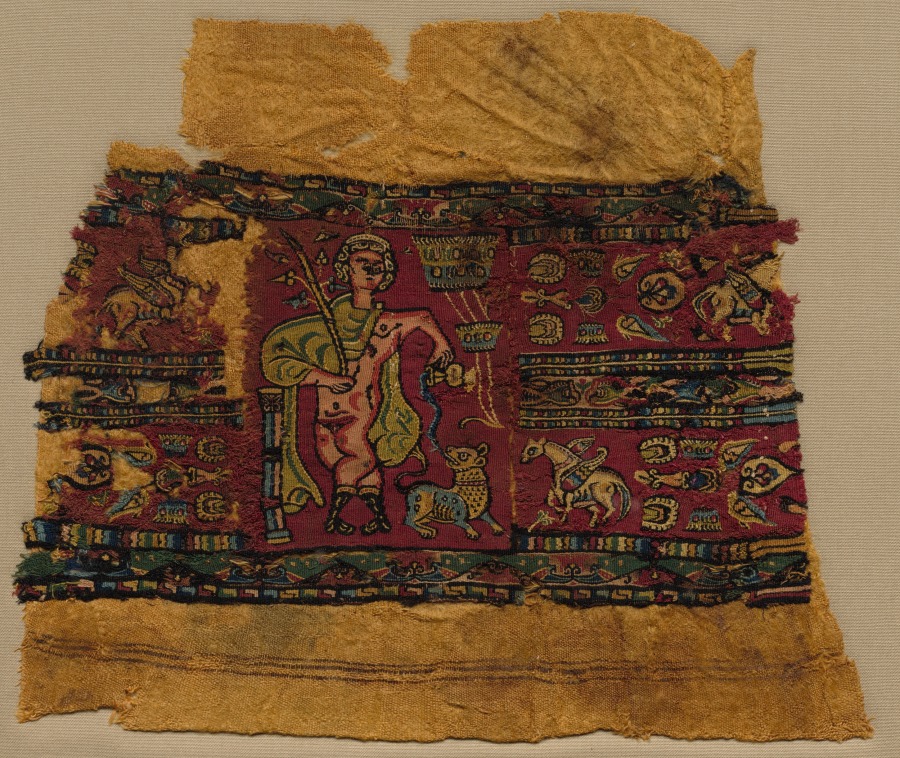
Sleeve from a Tunic
Cleveland Museum of Art
Tunic
Art Institute of Chicago
Tunic
Art Institute of Chicago
Cap with Striped Inscribed Silk
Cleveland Museum of Art
Fragment of a Tunic
Cleveland Museum of Art
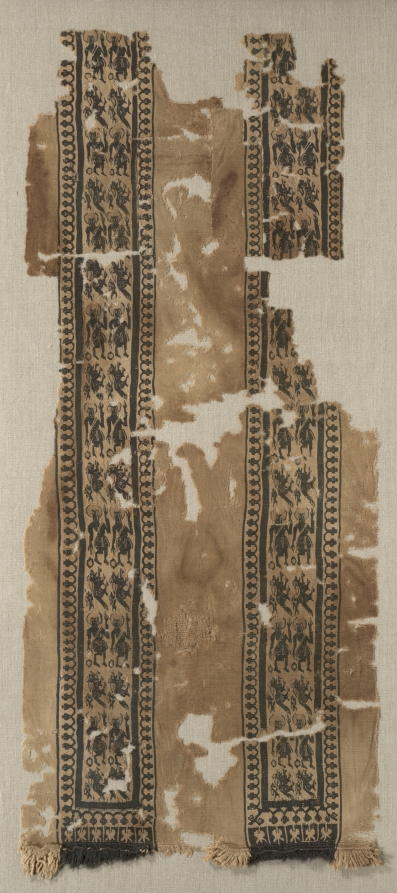
Fragment of a Tunic
Cleveland Museum of Art
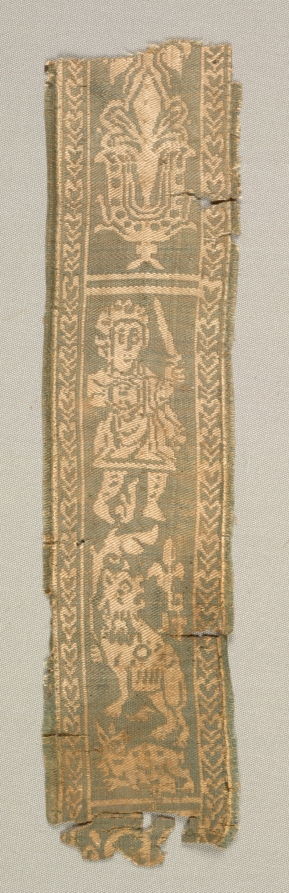
Silk Decorative Tunic Band with a Hunter
Cleveland Museum of Art