
Minneapolis Institute of Art
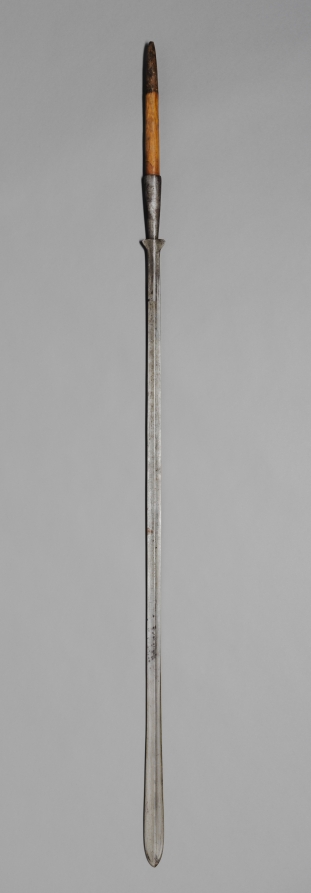
Prestige blade
Mahdist
- Date
- late 19th century
- Medium
- Metal, leather
- Department
- Arts of Global Africa
- Institution
- Minneapolis Institute of Art
These prestige blades belonged to soldiers of the 19th-century Sudanese Mahdist army, at a time when Sudan was under Turkish-Egyptian colonial rule. In 1881, Muhammad Ahmad (1844-1885), a Sudanese religious leader, was heralded as Mahdi (lit. “Guided One” in Arabic) or messianic redeemer of the Islamic faith. He and his successor led successful military campaigns against Ottoman Turkish occupying forces. Members of the Mahdi military carried forked and branched blades inspired by the shape of Central African throwing knives. Unlike their Central African counterparts, these blades were not meant as weapons but as emblems of rank. Most of the engravings on these blades are not in Arabic and are illegible to humans. They may, like the wavy inscriptions on the tunic nearby, be addressing the supernatural jinn, or spirits, imploring them for assistance in the anticolonial battle. The shorter blade has Arabic calligraphy etched within medallions. One of these contains a verse from chapter 61 of the Qur’an, called Ranks or al-Safs: “Victory from God and an imminent conquest, ” an exhortation to the fighter.
The authoritative record is held by Minneapolis Institute of Art. LinkedCulture surfaces this object and its connections; it does not alter institutional metadata.
Related across collections
Semantically similar works from Minneapolis Institute of Art and other institutions.

Status blade
Minneapolis Institute of Art
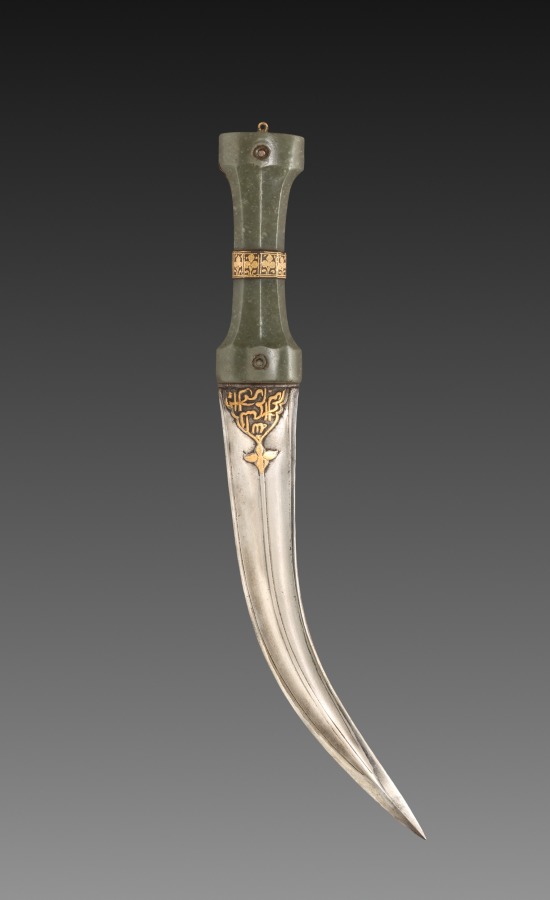
Dagger
Cleveland Museum of Art
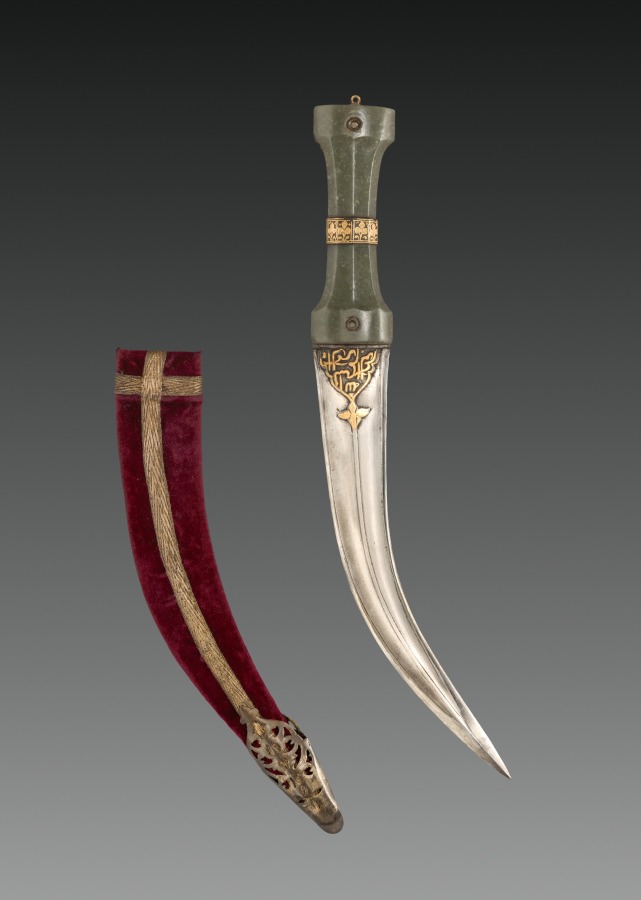
Khanjar dagger
Cleveland Museum of Art

Army tunic
Minneapolis Institute of Art
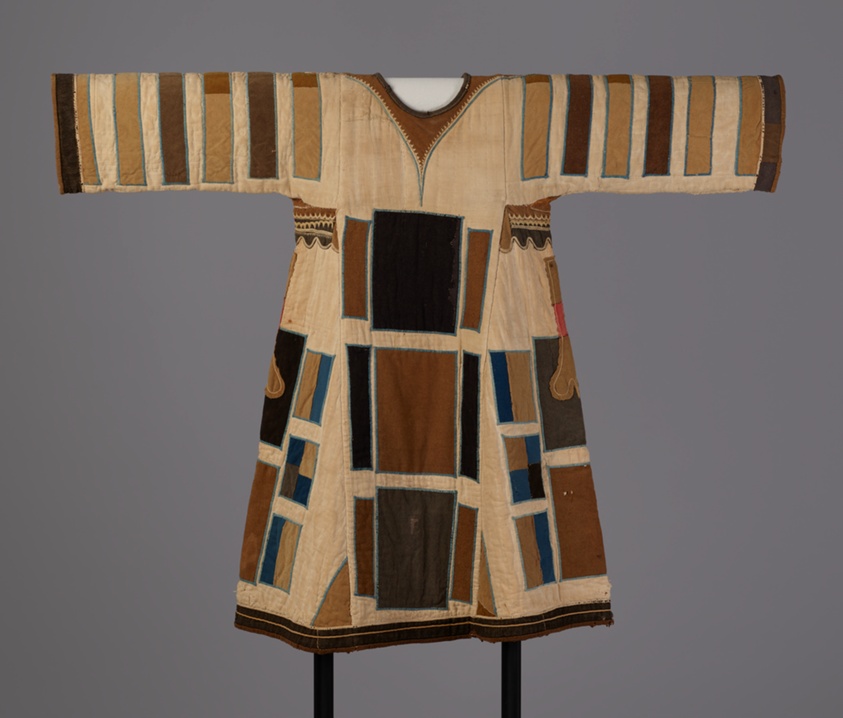
Tunic (Jibbeh)
Art Institute of Chicago
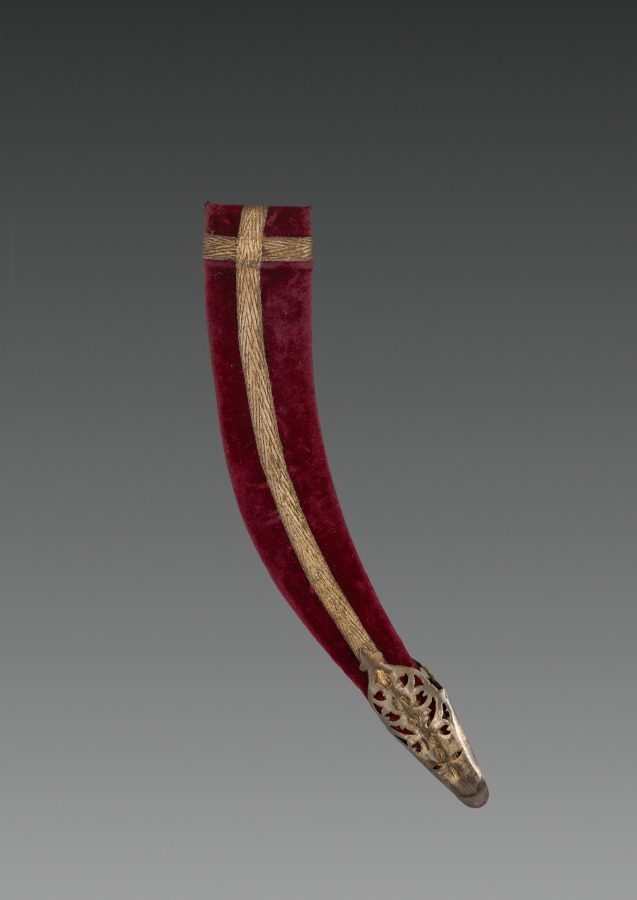
Dagger (red velvet case)
Cleveland Museum of Art
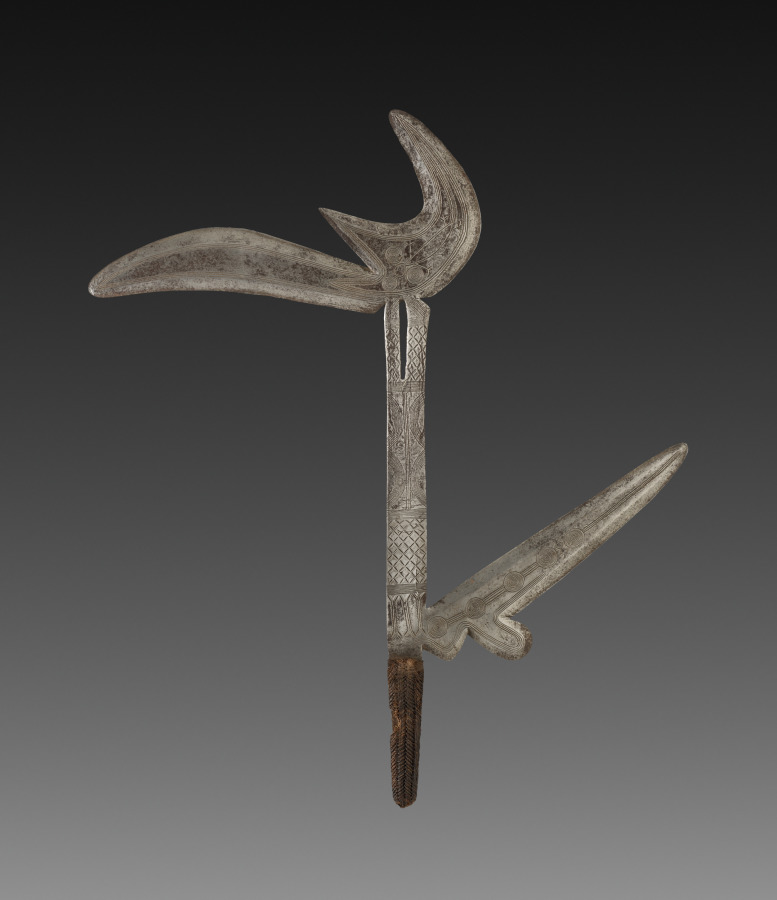
Throwing Knife / Prestige Scepter (pingha)
Cleveland Museum of Art
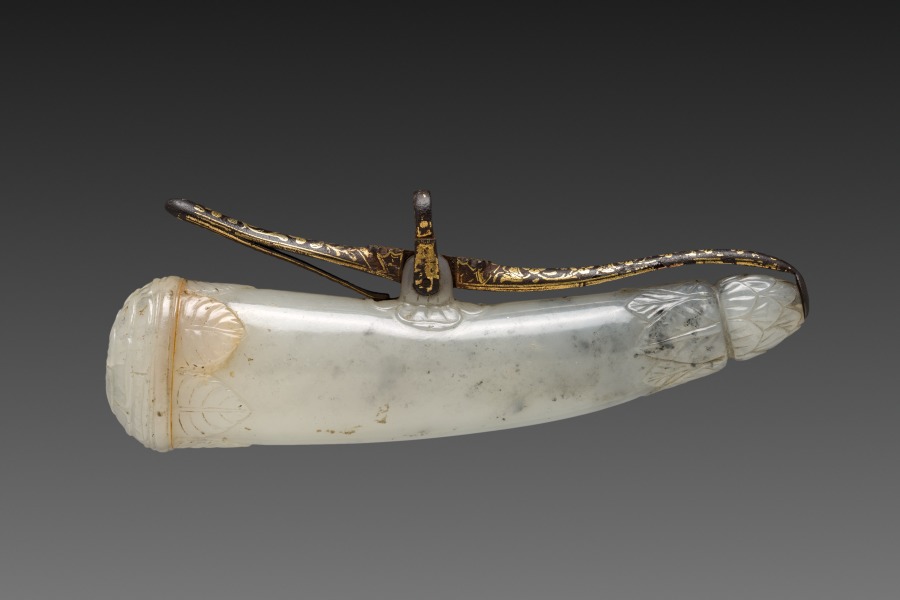
Powder horn
Cleveland Museum of Art
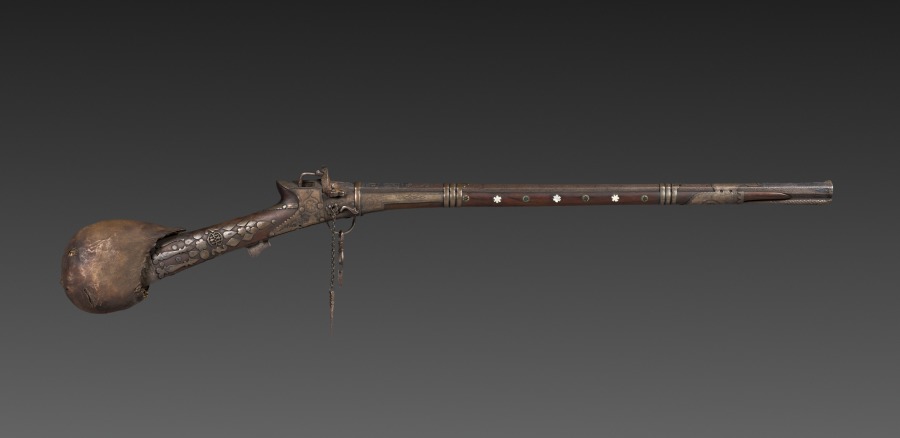
Matchlock Musket
Cleveland Museum of Art
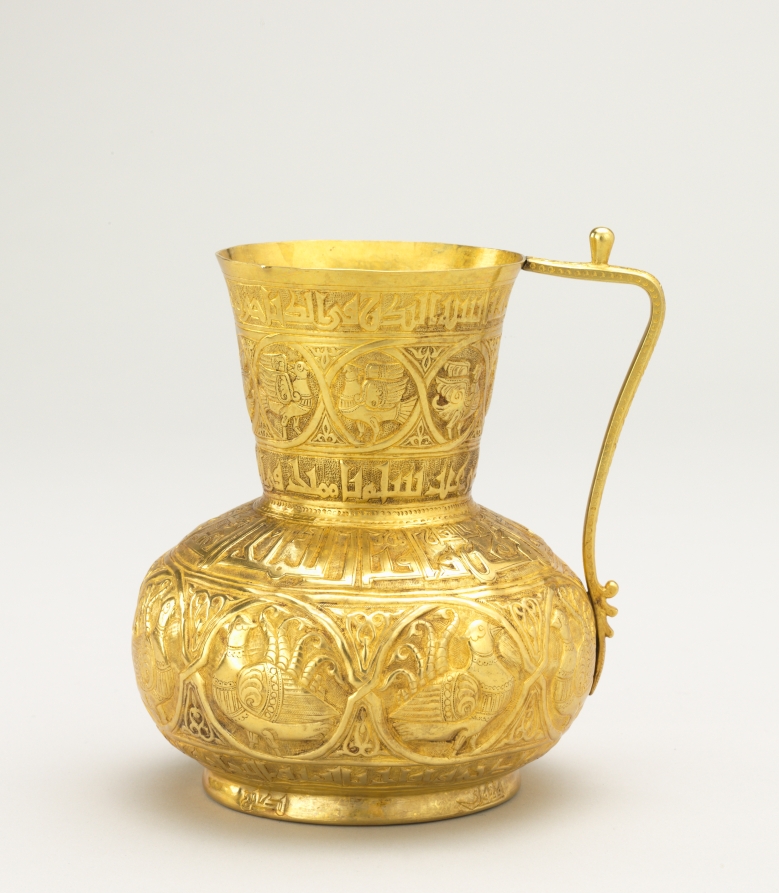
Jug
Cleveland Museum of Art
![Parade Partisan (from the Bodyguard of August Wilhelm, Duke of Brunswick- Wolfenbüttel [1662-1731])](https://openaccess-cdn.clevelandart.org/2007.165/2007.165_web.jpg)
Parade Partisan (from the Bodyguard of August Wilhelm, Duke of Brunswick- Wolfenbüttel [1662-1731])
Cleveland Museum of Art
Fragment of a Spear (eng'erempe or eremet)
Cleveland Museum of Art