Cleveland Museum of Art
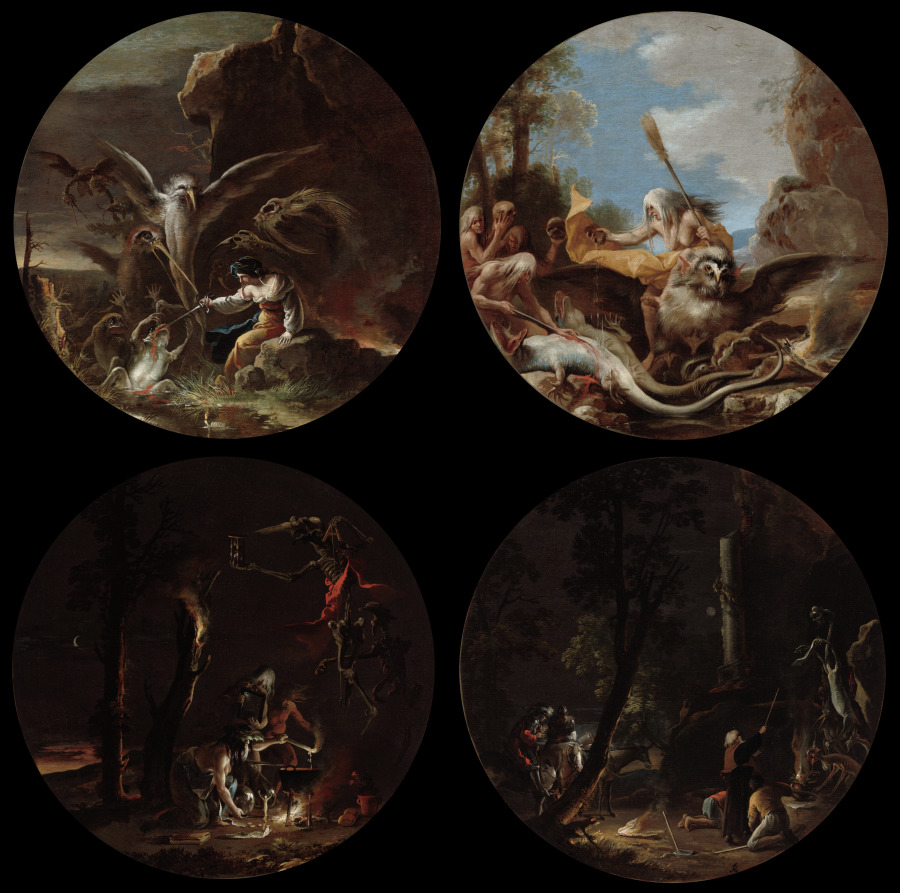
Scenes of Witchcraft
Salvator RosaLinkedCulture matchlcp-31853ba897b4
- Date
- c. 1645–1649
- Medium
- oil on canvas
- Culture
- Italy, 17th century
- Department
- European Painting and Sculpture
- Institution
- Cleveland Museum of Art
- Object ID
- 149104
From the Cleveland Museum of Art record
A huge upturn in interest in witchcraft emerged during the 1500s in Europe, but by the middle of the next century—at least among the cultured elite of Florence—a backlash arose against the many accusations of sorcery. Artists and writers explored the topic more out of curiosity and amusement, chief among them the poet, painter, and satirist Salvator Rosa, who examined witchcraft with gusto in numerous poems and works of art, including these four paintings. They show a range witch types, from the beautiful enchantress to the old crone to the male sorcerer, and represent activities commonly associated with black magic: levitation, love potions, devil worship, the invocation of demons, and transformation. A common subject in Italian art of the 1600s, transformation was usually seen in interpretations of myths based on Ovid's ancient Latin text, the Metamophoses . Rosa found a novel way to exploit this idea, drawing attention to his own ability to transform paint and canvas into a disturbing, nightmarish world. The artist chose the painting's shape to reference the foundational role of the circle in practicing magic.
The authoritative record is held by Cleveland Museum of Art. LinkedCulture surfaces this object and its connections; it does not alter institutional metadata.
Get printable QR codesHide QR codes
Open QR codes for this object page and the museum record. They stay collapsed until needed.
Provenance & credit
As published by the source institution. Coverage varies — not every institution's open-data feed includes ownership history.
- Credit line
- Purchase from the J. H. Wade Fund
- Provenance
- by 1967: Niccolini Family (Florence, Italy). | Private collection (Florence, Italy). | 1977: Heim Gallery (London, England), sold to the Cleveland Museum of Art.
Related across collections
Semantically similar works from Cleveland Museum of Art and other institutions.